Kabbalah and Exodus

 63
63

Kabbalah and Exodus

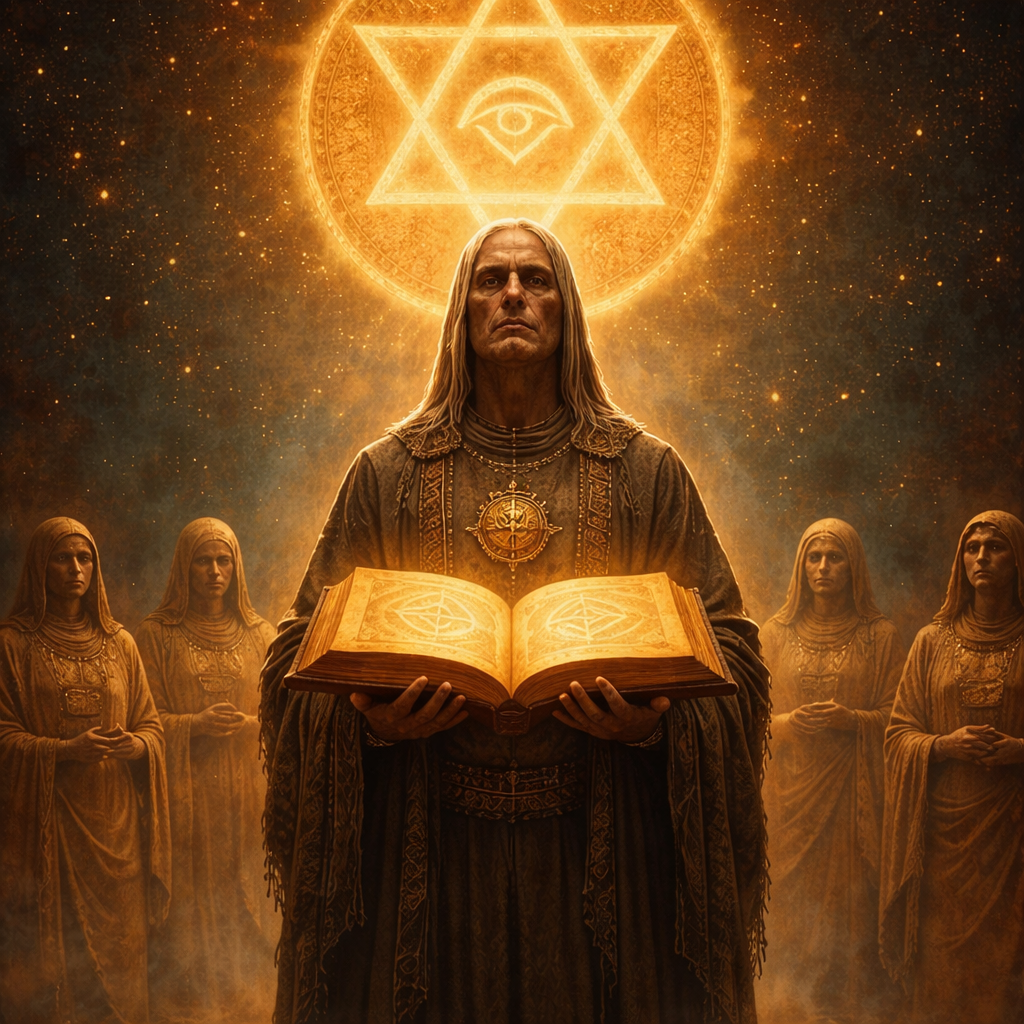

By Balthazar Finch (Senior Critic, Occult Philosophy) — Z'ev ben Shimon Halevi's "Kabbalah and Exodus" is a masterful unveiling of the esoteric heart beating within the biblical narrative. Halevi masterfully transmutes the familiar Exodus story into a profound Kabbalistic allegory, illuminating the soul's journey towards liberation. His insightful interpretations breathe new life into ancient symbols, revealing layers of hidden meaning previously accessible only to initiates. This work is a testament to his profound scholarship and deep spiritual insight, offering a rich tapestry of esoteric knowledge. Essential reading for serious students of Kabbalah, biblical mysticism, and the perennial wisdom traditions. Its clarity and depth make it a landmark contribution.
📝 Description
63
Z'ev ben Shimon Halevi published "Kabbalah and Exodus" to map the biblical Exodus onto Kabbalistic stages of the soul.
In "Kabbalah and Exodus," Z'ev ben Shimon Halevi interprets the biblical story of the Israelites' escape from Egypt through the framework of Kabbalistic mysticism. He treats the Exodus not simply as a historical account but as an allegory for the individual soul's path. Halevi suggests that the narrative represents a spiritual process, moving from a state of limitation or 'bondage' towards spiritual awakening and connection with the divine.
The book details how specific events and symbols within the Exodus story can be understood as stages in this inner transformation. For instance, the plagues are presented as initiatory challenges, and the parting of the Red Sea becomes a symbolic crossing into a higher state of awareness. The receiving of the Torah is seen as a moment of profound spiritual realization. Halevi's approach aims to reveal a deeper, symbolic meaning embedded within the familiar biblical text.
This work is situated within the tradition of Jewish mysticism, specifically Kabbalah, which seeks to understand the hidden nature of God and the universe through symbolic interpretation of religious texts. Halevi applies Kabbalistic concepts, such as the sefirot (divine emanations) and the ascent of the soul, to the narrative of the Exodus. It connects the macrocosmic events of ancient Israel's liberation with the microcosmic journey of individual spiritual development, a common theme in esoteric traditions that see universal principles reflected in both cosmic and personal experience.
💡 Why Read This Book?
Uncover the hidden Kabbalistic layers of the Exodus story, transforming a familiar narrative into a profound allegory for spiritual liberation. Halevi's work offers a unique pathway into Jewish mysticism, revealing the soul's journey through symbolic trials and towards divine union. Ideal for seekers, scholars of esotericism, and practitioners of contemplative traditions.
⭐ Reader Reviews
Honest opinions from readers who have explored this book.
❓ Frequently Asked Questions
What is Kabbalah and how does it relate to Exodus?
Kabbalah is the mystical tradition of Judaism, seeking to understand the divine nature and creation through esoteric interpretation of scripture. In this book, Halevi applies Kabbalistic principles to the Exodus narrative, revealing it as a profound allegory for the soul's journey from spiritual bondage to freedom.
Is this book suitable for beginners to Kabbalah?
While the subject matter is deep, Halevi's accessible prose makes "Kabbalah and Exodus" a rewarding read for those new to Kabbalah, provided they approach it with an open mind and a willingness to explore symbolic language.
What are the main themes explored in this book?
The book explores themes of spiritual liberation, the soul's journey, divine intervention, the symbolism of biblical events as initiatory stages, and the interconnectedness of the human and divine realms through the lens of Kabbalistic cosmology.
How does this interpretation differ from traditional biblical scholarship?
Traditional scholarship often focuses on historical and literary analysis. Halevi's approach delves into the symbolic and metaphysical dimensions, interpreting the Exodus as a blueprint for inner transformation and spiritual awakening, rather than solely a historical account.
What is the significance of the Exodus in Kabbalistic thought?
In Kabbalah, the Exodus symbolizes the soul's departure from the 'Egypt' of ego and material attachment, its passage through the 'Red Sea' of illusion, and its journey towards receiving divine wisdom and achieving spiritual freedom.
🔮 Key Themes & Symbolism
The Exodus as Soul's Liberation
This theme posits the biblical Exodus from Egypt not as a mere historical event, but as a profound metaphor for the individual soul's journey from the bondage of the material world and egoic limitations towards spiritual freedom and union with the Divine. Halevi elucidates how each stage of the Israelites' journey—from slavery to the Promised Land—mirrors the inner processes of spiritual awakening, purification, and the overcoming of internal obstacles that hinder our connection to the sacred.
Kabbalistic Symbolism in Biblical Narrative
Halevi masterfully deciphers the intricate web of symbolism embedded within the Exodus narrative through the framework of Kabbalistic cosmology. He reveals how seemingly simple events and characters are imbued with deeper, multi-layered meanings, corresponding to the Sephirot, divine emanations, and the various planes of existence. The plagues, the Red Sea crossing, and the manna in the desert are reinterpreted as powerful initiatory symbols guiding the seeker through the stages of spiritual evolution and cosmic understanding.
The Path to Divine Consciousness
Central to the book is the exploration of the Exodus as a blueprint for achieving divine consciousness. By understanding the spiritual principles at play in the liberation of the Israelites, readers are guided towards their own inner transformation. The journey from Egypt represents a descent into the depths of the psyche to confront and transmute lower energies, culminating in the reception of divine wisdom (Torah) and the establishment of a conscious relationship with the Infinite, mirroring the Kabbalistic concept of Tikkun (rectification).
💬 Memorable Quotes
Direct passages from the work, attributed to the author.
“Egypt is the land of the ego.”
— This highlights the Kabbalistic understanding of Egypt as representing the self-centered consciousness and material attachments from which the soul must depart to begin its spiritual journey.
“The Red Sea is the veil between worlds.”
— This suggests the parting of the Red Sea symbolizes the overcoming of illusion and the crossing into a higher state of awareness, a crucial step in spiritual progression.
“The Promised Land is the state of conscious union.”
— This signifies the ultimate goal of the spiritual path—not just a physical destination, but a state of enlightened awareness and direct communion with the Divine.
💡 Key Ideas
Editorial paraphrase of the work's core concepts — not direct quotes.
The Exodus is the great symbol of man's liberation.
This quote captures the central thesis, framing the Exodus not just as a historical event for a people, but as a universal metaphor for individual spiritual freedom from inner limitations.
Manna is the food of the soul.
This quote points to the divine sustenance and spiritual nourishment that the soul receives when it is aligned with higher principles during its journey.
🌙 Esoteric Significance
Tradition
This work is deeply rooted in the Kabbalistic tradition, specifically drawing from the Lurianic Kabbalah and its emphasis on cosmic processes, divine emanations (Sephirot), and the rectification of creation (Tikkun). Halevi's interpretation aligns with the understanding of biblical narratives as encoded spiritual maps guiding the soul through various stages of consciousness and divine interaction.
Symbolism
Key symbols explored include: Egypt (the area of the ego and material illusion), the plagues (stages of purification and confrontation with shadow aspects), the Red Sea (the threshold of spiritual transformation, overcoming limitations), the desert (the wilderness of spiritual seeking and testing), manna (divine nourishment), and the Promised Land (the state of spiritual realization and conscious union with God).
Modern Relevance
In an age often characterized by existential searching and a disconnect from the sacred, "Kabbalah and Exodus" offers clear insights into personal spiritual growth and the nature of true liberation. It provides a framework for understanding life's challenges as initiatory steps and a path towards a more meaningful, conscious existence, making the ancient wisdom of Kabbalah directly applicable to the modern seeker's journey.
👥 Who Should Read This Book
This useful text is essential for dedicated students and scholars of Kabbalah and Jewish Mysticism seeking a profound, allegorical interpretation of the Exodus. It will deeply resonate with spiritual seekers yearning to understand the soul's journey towards liberation and divine consciousness. Practitioners of contemplative disciplines will find rich symbolic material for meditation and inner work. While accessible to beginners willing to engage with symbolic language, it offers advanced insights for those already familiar with esoteric concepts.
📜 Historical Context
Written during a period of renewed interest in esoteric traditions and comparative mysticism in the late 20th century, Z'ev ben Shimon Halevi's "Kabbalah and Exodus" emerged as a significant contribution to contemporary Kabbalistic scholarship. The author, a prominent interpreter of Jewish mysticism, drew upon decades of study and personal practice to bridge the gap between ancient texts and modern seekers. The book's publication coincided with a growing desire for deeper spiritual understanding beyond superficial religious observance, offering a sophisticated yet accessible exploration of Kabbalistic principles. Halevi's work resonated with a global audience interested in the perennial wisdom found in diverse mystical traditions, positioning it as a vital text for understanding the esoteric dimensions of the biblical narrative within its historical and spiritual milieu.
📔 Journal Prompts
Reflect on a personal 'Exodus' from a state of spiritual or emotional bondage. What were the 'plagues' you faced, and how did you cross your 'Red Sea'?
How can the concept of Egypt as the 'land of the ego' inform your daily interactions and self-perception?
Identify a biblical symbol from the Exodus narrative that speaks to you personally. Explore its potential meaning in your own life's journey.
Consider the 'manna' that sustains you spiritually. What practices or insights provide you with divine nourishment?
What does the 'Promised Land' represent in your personal spiritual aspirations, and what steps can you take to move closer to that state of conscious union?
🗂️ Glossary
Kabbalah
The esoteric mystical tradition of Judaism, focused on understanding the nature of God, creation, and the soul through symbolic interpretation of scripture and divine emanations.
Sephirot
The ten divine emanations or attributes through which God is said to reveal himself and interact with creation, forming the central structure of Kabbalistic cosmology.
Tikkun
A core Kabbalistic concept referring to the 'rectification' or 'repair' of the world and the divine sparks scattered within creation, often achieved through spiritual practices and ethical living.
Shekhinah
The feminine aspect of the Divine Presence, often understood as God's immanence in the world and a dwelling place for the divine spirit, particularly present in moments of prayer and community.
Ein Sof
The Kabbalistic term for the 'Infinite' or 'Without End,' representing the absolute, unknowable, and transcendent aspect of God before any manifestation or emanation.
This book appears in 1 collection
🔮 Readers Also Liked
Browse all →








More by Z'ev ben Shimon Halevi
All books →





From the “Kabbalah” Collection
View all →





More Free Kabbalah & Jewish Mysticism Books
View all →