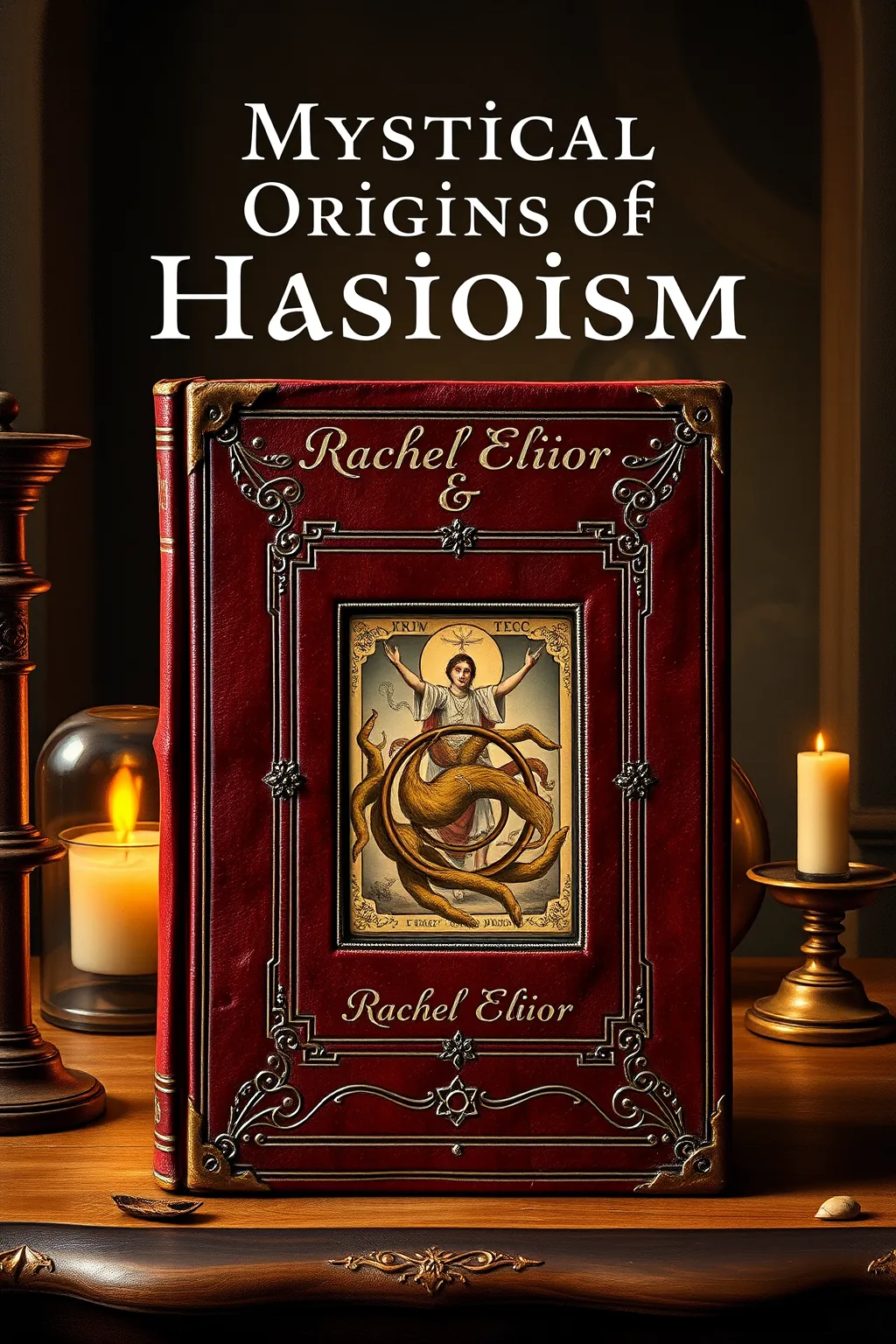
Mystical Origins of Hasidism
 61
61

Mystical Origins of Hasidism



Celeste Moreau (Divination & Symbolism Reviewer) — Rachel Elior's 'Mystical Origins of Hasidism' is a seminal work, a masterclass in tracing the esoteric lineage of a profound spiritual phenomenon. Elior navigates the complex currents of Kabbalah with unparalleled clarity, revealing the mystical blueprints that informed Hasidism's emergence. Her scholarly yet accessible prose illuminates the ecstatic core of this movement, emphasizing the seeker's direct experience of the Divine. This book is indispensable for scholars of Jewish mysticism and for practitioners seeking a deeper understanding of the spiritual technologies that empower authentic devotion. A truly illuminating read for anyone drawn to the hidden wisdom of the soul.
📝 Description
61
Rachel Elior traces Hasidism's roots to Kabbalah and early ecstatic visions in her 2006 work.
Rachel Elior's "Mystical Origins of Hasidism" examines the hidden spiritual currents that shaped this Jewish movement. The book traces Hasidism's lineage through Kabbalistic thought and the experiences of its first followers. Elior details the concepts of divine immanence, the desire for connection with the Infinite, and the role of ecstatic prayer and contemplation.
The author also illuminates the symbolic language, mystical cosmologies, and philosophical ideas that informed this spiritual awakening. The book explains the symbolic language, mystical cosmologies, and philosophical ideas that shaped this spiritual awakening. It looks at the spark of the divine within all creation.
This book situates Hasidism within the broader stream of Jewish mysticism, particularly its Kabbalistic foundations. It highlights how Hasidism drew from earlier esoteric traditions, adapting concepts of divine presence in the world and the possibility of direct spiritual experience. Elior connects Hasidism to a lineage of ecstatic piety and mystical cosmology that sought to bridge the gap between the human and the divine.
💡 Why Read This Book?
Uncover the profound Kabbalistic roots of Hasidism, revealing its esoteric heart and ecstatic devotional practices. This book is for the serious seeker, the diligent scholar, and the practitioner yearning for authentic connection to the Divine. Explore hidden symbolism, mystical cosmologies, and the philosophical underpinnings that fueled this transformative spiritual movement, offering a pathway to deeper self-understanding and divine communion.
⭐ Reader Reviews
Honest opinions from readers who have explored this book.
❓ Frequently Asked Questions
What is Kabbalah and how does it relate to Hasidism?
Kabbalah is the esoteric tradition of Jewish mysticism, exploring the divine nature and creation through symbolic interpretation. It provides the foundational mystical framework and cosmological concepts that deeply influenced and informed the development of Hasidism.
Who were the key figures in the early development of Hasidism?
Early Hasidism was shaped by figures like Rabbi Israel Baal Shem Tov, the founder, and his disciples, such as Rabbi Dov Ber of Mezeritch, who disseminated and systematized its teachings, emphasizing ecstatic prayer and divine immanence.
What does 'ecstatic devotion' mean in the context of Hasidism?
Ecstatic devotion refers to a state of intense spiritual fervor and joy achieved through prayer, meditation, and communal singing, aiming for a direct, unmediated experience of God's presence in the world.
Is this book suitable for beginners in Jewish mysticism?
While comprehensive, the book's depth may be best appreciated by those with some familiarity with Jewish thought or a strong interest in esoteric traditions. However, its clear explanations make it accessible to dedicated beginners.
What are the primary mystical concepts explored in the book?
The book explores concepts like divine immanence (God's presence in all things), the soul's ascent, the power of prayer to influence the divine realms, and the importance of joy and ecstatic experience in spiritual life.
🔮 Key Themes & Symbolism
The Kabbalistic Collection
This theme looks at the intricate web of Kabbalistic teachings that provided the spiritual and intellectual bedrock for Hasidism. It examines how concepts such as the Sefirot, Ein Sof (the Infinite), and the divine emanations were reinterpreted and integrated into the ecstatic devotional practices of the Hasidic movement. The focus is on the transmission of hidden knowledge and the symbolic language used to describe the ineffable divine nature and its relationship with the created world.
Ecstasy and Divine Immanence
Here, the emphasis shifts to the core experience of Hasidism: ecstatic devotion and the profound awareness of God's immanence. The book explores how early Hasidic masters cultivated states of intense spiritual joy and fervor through prayer, song, and contemplation, aiming for direct communion with the divine. This theme highlights the belief that the divine is not distant but palpably present in every aspect of existence, accessible through a transformed consciousness.
The Soul's Journey and Transformation
This crucial theme investigates the Hasidic understanding of the human soul and its spiritual journey. It explores the concept of teshuvah (repentance) not just as regret but as a transformative process of returning to one's divine essence. The book illuminates how Hasidic practices are designed to purify the soul, elevate consciousness, and facilitate a reunion with the divine source, emphasizing the individual's active role in spiritual growth and awakening.
💬 Memorable Quotes
Direct passages from the work, attributed to the author.
“Joy is the secret of prayer.”
— This highlights the importance of an ecstatic and joyful approach to spiritual practice in Hasidism, viewing happiness as a conduit for effective and meaningful communion with the Divine.
“To see the world through the eyes of God.”
— This points to a transformative perspective, advocating for a view of reality imbued with divine presence and meaning, transcending ordinary perception.
“The spark of the divine resides in all.”
— This emphasizes the inherent holiness and spiritual potential within every individual and aspect of creation, a foundational tenet of Hasidic philosophy.
“Wisdom is found in the silence between words.”
— This suggests that true understanding and esoteric knowledge often lie beyond literal interpretation, residing in intuition and contemplative insight.
💡 Key Ideas
Editorial paraphrase of the work's core concepts — not direct quotes.
The divine is not in the heavens, but within the heart.
This quote signifies the core Hasidic belief in God's immanence, suggesting that true spiritual connection is found not through external searching but through inner contemplation and experience.
🌙 Esoteric Significance
Tradition
This book is deeply rooted in the esoteric tradition of Jewish mysticism, specifically Kabbalah. It explores how the complex cosmological frameworks, the symbolic language of the Zohar, and the concepts of divine emanations and the soul's journey were adapted and infused with ecstatic fervor to form the bedrock of Hasidism.
Symbolism
Key symbols explored include the divine light (Or), the Tree of Life (Etz Chaim) as a map of consciousness, the concept of 'devekut' (cleaving to God), and the transformative power of prayer and song. These symbols are presented not as mere allegories but as active conduits for experiencing the divine presence.
Modern Relevance
In an age often characterized by spiritual seeking and a desire for authentic experience, the mystical principles of Hasidism offer profound relevance. The emphasis on joy, immanence, and the inherent divinity within all beings provides a powerful framework for navigating modern life with greater presence, purpose, and connection.
👥 Who Should Read This Book
This clear text is essential for scholars of Jewish studies, comparative religion, and mysticism seeking a rigorous yet accessible exploration of Hasidism's origins. Spiritual seekers drawn to the power of ecstatic devotion and the Kabbalistic path will find clear insights and practical wisdom. Practitioners of contemplative traditions looking to deepen their understanding of divine immanence and joyful engagement with the sacred will also benefit immensely. Even those new to Jewish mysticism will find Elior's clear prose a welcoming gateway into this rich spiritual heritage.
📜 Historical Context
This work emerges from the turbulent socio-religious field of 18th-century Eastern Europe, a period marked by widespread spiritual yearning and disillusionment following the failures of Sabbateanism. It was within this context that Hasidism arose, offering a powerful antidote to spiritual despair and intellectual rigidity. The movement provided a vibrant, accessible path to divine connection, emphasizing joy, personal devotion, and the immanence of God. Elior's scholarship situates Hasidism not as a radical departure but as a profound resurgence and reinterpretation of ancient Kabbalistic wisdom, breathing new life into mystical traditions for a generation seeking authentic spiritual experience and communal solace.
📔 Journal Prompts
Reflect on a personal experience of divine immanence. Where did you feel God's presence most strongly?
How can the concept of 'joy as the secret of prayer' be integrated into your daily spiritual practice?
Explore the symbolic meaning of 'light' in your own spiritual journey. What does divine light represent to you?
Consider the idea of the 'soul's journey.' What are the significant 'stops' or transformations you have experienced?
In what ways can you 'see the world through the eyes of God' in your everyday interactions?
🗂️ Glossary
Kabbalah
The esoteric tradition of Jewish mysticism, focused on understanding the divine nature, creation, and the path to spiritual enlightenment through symbolic interpretation and contemplation.
Sefirot
The ten divine emanations or attributes through which God reveals Himself and interacts with the created world, forming a central concept in Kabbalistic cosmology.
Ein Sof
The Kabbalistic term for God as the Infinite, Unknowable, and Absolute Being, the ultimate source from which all existence emanates.
Devekut
A Hebrew term meaning 'cleaving' or 'attachment,' referring to the state of intense spiritual communion and intimate connection with God sought in Jewish mysticism.
Tzaddik
A righteous individual, often a spiritual leader in Hasidism, believed to serve as a conduit between God and the community, guiding disciples on their spiritual path.
This book appears in 1 collection
🔮 Readers Also Liked
Browse all →









More by Rachel Elior
All books →




From the “Kabbalah” Collection
View all →







More Free Kabbalah & Jewish Mysticism Books
View all →