From Yoga to Kabbalah
 61
61

From Yoga to Kabbalah

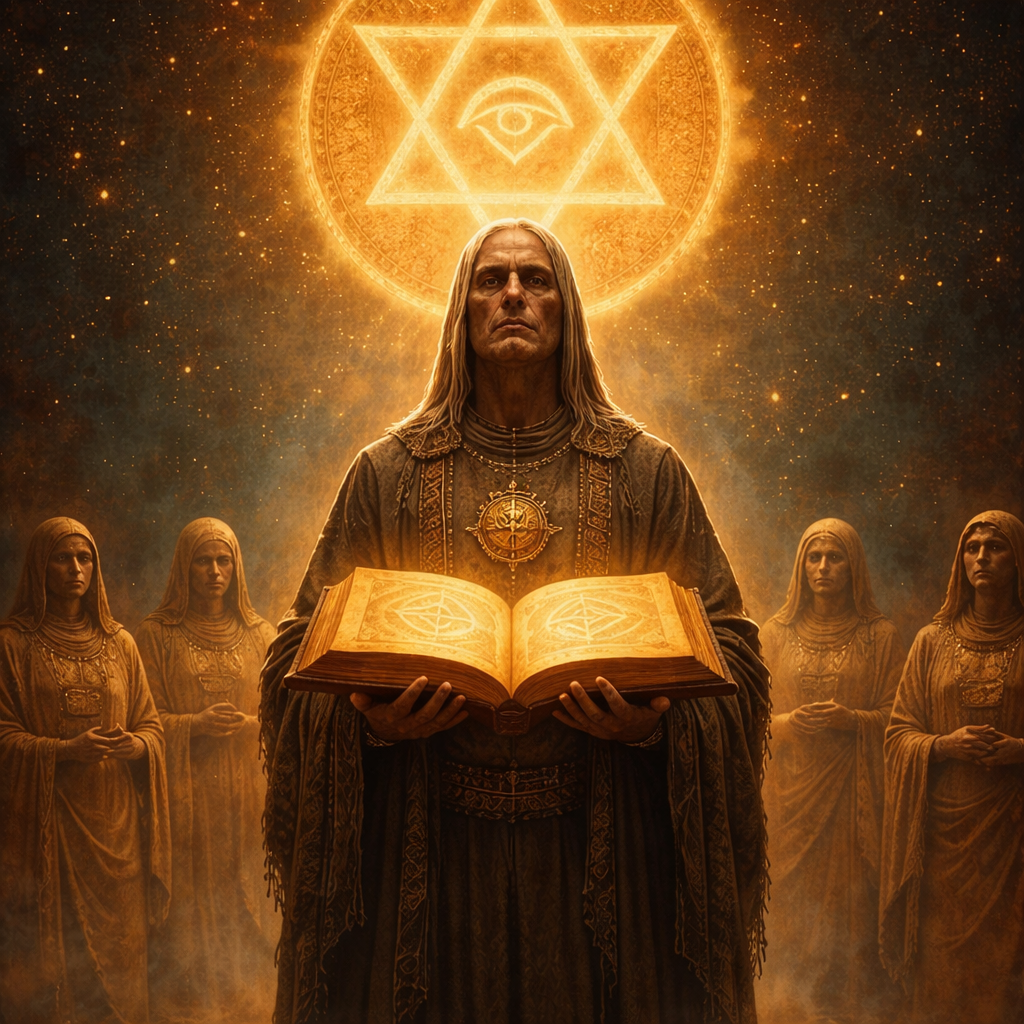

Véronique Altglas's 'From Yoga to Kabbalah' is a revelatory exploration, a scholarly yet deeply spiritual bridge between two potent mystical traditions. Balthazar Finch, Senior Critic at Occult Philosophy, finds Altglas's synthesis both groundbreaking and remarkably intuitive. She navigates the complex symbolism of both Kabbalistic Sephiroth and Yogic chakras with exquisite precision, revealing their shared cosmic architecture. The book's strength lies in its sensitive portrayal of how these traditions, despite their distinct historical trajectories, offer complementary paths to divine communion and inner transformation. For students of comparative mysticism, esoteric practitioners, and anyone seeking to understand the universal threads of spiritual seeking, this work is an indispensable and profound contribution.
📝 Description
61
Véronique Altglas's 2017 book connects Hindu Yoga and Jewish Kabbalah.
Véronique Altglas's "From Yoga to Kabbalah" examines the links between Hindu Yoga and Jewish Kabbalah. The book details how these two distinct traditions share common symbols, practices, and philosophical ideas. Altglas shows that despite different origins, both traditions aim for a similar spiritual goal within the human spirit.
The author points out parallels like the Tree of Life and yogic chakras, and the journey toward self-realization mirroring the ascent through divine emanations. Mystical union achieved through disciplined practice is also a shared theme. This work is for individuals interested in comparative mysticism, spiritual practitioners, and those seeking a deeper understanding of spiritual development.
Altglas suggests a universal language within the sacred, inviting readers to see how humanity's search for transcendence and hidden knowledge is interwoven. The book aims to broaden perceptions of spiritual lineages, revealing an underlying unity across cultures and history.
This book situates itself within the study of comparative mysticism, a field that analyzes shared ideas and practices across diverse spiritual and religious traditions. It specifically bridges the gap between Western esoteric traditions, represented here by Kabbalah, and Eastern contemplative systems, such as Hindu Yoga. By drawing connections between these seemingly distant paths, Altglas engages with the broader esoteric project of identifying universal spiritual principles that transcend cultural and historical boundaries.
💡 Why Read This Book?
Uncover the hidden kinship between Yoga and Kabbalah, two of humanity's most profound spiritual lineages. 'From Yoga to Kabbalah' illuminates shared symbols, practices, and philosophical quests for the divine. Ideal for seekers exploring comparative mysticism, scholars of esoteric traditions, and practitioners seeking a richer, more integrated understanding of spiritual paths. Discover universal truths woven across cultures.
⭐ Reader Reviews
Honest opinions from readers who have explored this book.
❓ Frequently Asked Questions
What is the primary focus of 'From Yoga to Kabbalah'?
The book meticulously explores the surprising and profound connections, shared symbols, and parallel philosophical quests found between the ancient practices of Hindu Yoga and the esoteric wisdom of Jewish Kabbalah.
Who is the intended audience for this book?
This work is crafted for earnest spiritual seekers, scholars of comparative mysticism and religious studies, and practitioners of Yoga or Kabbalah who wish to deepen their understanding of these traditions and their universal resonance.
Does the book suggest a blending of these practices?
While it highlights profound connections and potential for synergistic understanding, the book primarily focuses on illuminating the inherent parallels and shared esoteric principles rather than advocating for a literal fusion of practices.
What kind of knowledge can a reader expect to gain?
Readers can expect to gain insights into the universal language of spiritual symbolism, the architecture of consciousness as understood in both traditions, and a deeper appreciation for the common human yearning for transcendence.
Is this book suitable for beginners in either tradition?
Yes, the book is written in an accessible yet scholarly manner, making it suitable for beginners interested in comparative spirituality, while still offering substantial depth for those already familiar with Yoga or Kabbalah.
🔮 Key Themes & Symbolism
The Tree of Life and the Chakra System
This theme looks at the intricate mapping of the divine emanations on the Kabbalistic Tree of Life and its striking resonance with the energetic centers of the human body, the chakras, in Hindu Yoga. Altglas meticulously traces how both systems describe an ascent, a journey through distinct levels of consciousness and divine manifestation, offering a comparative analysis of their symbolic languages and their shared goal of spiritual realization and integration with the divine.
Mystical Union and Divine Ascent
The book explores the shared pursuit of 'devekut' (cleaving to God) in Kabbalah and 'samadhi' (union) in Yoga. It examines the practices, disciplines, and meditative states employed by both traditions to achieve a transcendental connection with the divine. Altglas highlights how various techniques, from contemplative prayer and mystical contemplation to yogic postures and breathwork, serve as pathways to overcome the limitations of the ego and merge with the Absolute, revealing a universal blueprint for spiritual liberation.
Symbolism and Universal Archetypes
This theme focuses on the profound symbolic language employed by both Kabbalah and Yoga. Altglas unpacks common archetypes, such as the divine light, the cosmic egg, and the journey of the soul, demonstrating how these symbols function across different cultural and religious contexts to convey fundamental spiritual truths. The analysis reveals an underlying unity in the human psyche's interpretation of the sacred, suggesting that these traditions speak a common, albeit often veiled, language of the soul's longing for the infinite.
💬 Memorable Quotes
Direct passages from the work, attributed to the author.
“The serpent of wisdom coils within both the Torah and the Vedas.”
— This metaphor suggests that the hidden, profound knowledge of spiritual truth is present in both Jewish scripture and Hindu texts, waiting to be unveiled.
“Each Sephiroth finds its echo in the lotus of the embodied spirit.”
— This highlights the parallel between the divine emanations on the Kabbalistic Tree of Life and the energy centers (chakras) within the human form in Yoga.
“The breath is the bridge between the mortal and the divine.”
— This emphasizes the shared importance of prana (life force/breath) in both traditions as a tool for spiritual connection and transcendence.
“In the silence, the letters of the divine alphabet and the hum of the cosmic mantra converge.”
— This speaks to the ultimate unity of spiritual experience, where the distinct languages of Kabbalah and Yoga dissolve into a singular, profound awareness.
“The path inward is the shortest route to the stars.”
— This captures the core esoteric principle that true spiritual exploration is an internal journey, leading to cosmic understanding and connection.
🌙 Esoteric Significance
Tradition
This book is deeply rooted in the esoteric traditions of both Kabbalah and Yoga, viewing them not as isolated systems but as interconnected pathways to divine knowledge and spiritual transformation. It explores the hidden layers of meaning, the symbolic language, and the practical disciplines that characterize these mystical lineages, positioning them as complementary expressions of a universal spiritual impulse seeking to bridge the gap between the human and the divine.
Symbolism
The esoteric significance of 'From Yoga to Kabbalah' lies in its decoding of shared symbolic systems. It examines how the Kabbalistic Tree of Life, with its ten Sephiroth and twenty-two pathways, mirrors the energetic architecture of the human body as described in Yoga through its chakras and nadis. This comparative symbolic analysis reveals a common cosmological framework and a shared understanding of the forces that govern existence and consciousness, providing a visual and conceptual language for the spiritual journey.
Modern Relevance
In our increasingly interconnected world, 'From Yoga to Kabbalah' offers profound modern relevance by demonstrating the universal nature of spiritual seeking. It challenges rigid notions of religious exclusivity and reveals the underlying unity in humanity's quest for meaning, transcendence, and inner peace. For contemporary practitioners and thinkers, it provides a framework for integrating diverse spiritual insights, fostering a more holistic understanding of consciousness and the interconnectedness of all things, and offering practical wisdom for reading through the complexities of modern life.
👥 Who Should Read This Book
This key work is essential for the dedicated spiritual seeker eager to explore the universal threads of mystical thought. Scholars of comparative religion and esoteric traditions will find Altglas's rigorous analysis and insightful connections useful for their research. Practitioners of Yoga and Kabbalah, whether beginners or advanced, will discover new dimensions to their chosen path, enhancing their understanding of its depth and its place within a broader spiritual landscape. Anyone interested in the profound dialogue between Eastern and Western mysticism, and the hidden harmonies that bind seemingly disparate wisdom traditions, will find this book deeply rewarding.
📜 Historical Context
The historical context for 'From Yoga to Kabbalah' is rich, spanning centuries of intellectual and spiritual ferment. Kabbalah emerged from medieval Jewish mysticism, developing complex theological and cosmological systems, particularly flourishing from the 12th century onwards. Its esoteric interpretations of Torah sought hidden meanings and pathways to divine connection. Meanwhile, Hindu Yoga, with roots stretching back millennia, evolved through various schools, emphasizing physical discipline, meditation, and philosophical inquiry to achieve liberation. The period of significant cross-cultural exchange, particularly during colonial eras and the rise of global interest in Eastern philosophies in the 19th and 20th centuries, created fertile ground for scholars and seekers to draw parallels. Altglas's work situates itself within this ongoing dialogue, recognizing that while distinct in origin, these traditions often address similar existential questions and offer complementary insights into the human condition and the nature of reality.
📔 Journal Prompts
Reflect on a personal experience where you felt a connection between two seemingly unrelated concepts or practices. How did this expand your understanding?
Compare and contrast the concept of 'divine emanation' in Kabbalah with the Yogic understanding of cosmic energy (Prana). What similarities do you perceive?
Imagine the Kabbalistic Tree of Life superimposed onto a diagram of the Yogic chakra system. What new insights or questions arise from this visualization?
How might the disciplined practice of Yoga inform one's study and contemplation of Kabbalistic texts or symbols, and vice versa?
Consider the idea of 'hidden knowledge.' How has your understanding of this concept evolved after engaging with the themes of this book?
🗂️ Glossary
Sephiroth
The ten divine emanations or attributes described in Kabbalistic cosmology, forming the structure of the Tree of Life, through which God reveals Himself and interacts with the creation.
Chakras
Energy centers within the subtle body in Hindu yogic traditions, believed to be points of intersection of spiritual, physical, and mental energies, influencing one's well-being and consciousness.
Devekut
A Hebrew term in Kabbalah signifying intense spiritual devotion and 'cleaving' to God, achieved through prayer, meditation, and contemplation.
Samadhi
A state of profound meditative consciousness or ecstatic union with the divine in Hindu Yoga, representing ultimate spiritual realization and liberation.
Ein Sof
The Kabbalistic concept of God as the 'Infinite' or 'Without End,' the unknowable, transcendent source of all existence before any manifestation.
This book appears in 1 collection
🔮 Readers Also Liked
Browse all →









From the “Kabbalah” Collection
View all →






More Free Kabbalah & Jewish Mysticism Books
View all →