Scuse Me While I Kiss the Sky
 78
78

Scuse Me While I Kiss the Sky
David Henderson’s revised biography, 'Scuse Me While I Kiss the Sky, offers a commendably thorough examination of Jimi Hendrix. The book’s signal strength lies in its integration of Hendrix’s own words, drawn from numerous interviews, which lend an unparalleled authenticity to the narrative. Henderson masterfully positions these direct accounts, allowing the guitarist to articulate his experiences and creative philosophies. A notable passage detailing the recording sessions for 'Electric Ladyland' vividly illustrates the experimental ethos and collaborative friction that defined Hendrix's studio work. However, the sheer volume of detail, while comprehensive, occasionally risks overwhelming the reader, making the narrative feel dense rather than fluid. Despite this, the work succeeds in presenting a nuanced portrait, moving beyond the rock god persona to reveal the thoughtful artist grappling with his immense talent and the pressures of his time. Henderson provides a valuable, if occasionally exhaustive, account of a pivotal cultural figure.
📝 Description
78
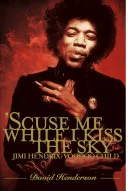
### What It Is 'Scuse Me While I Kiss the Sky: Jimi Hendrix: Voodoo Child, first published in 2008 and revised by David Henderson, functions as a comprehensive biography of the iconic guitarist. This updated edition integrates original interview material, where Hendrix himself speaks extensively, with newly acquired information. The author's approach allows Hendrix's voice to be a central, driving force throughout the narrative, effectively making the musician a co-author.
### Who It's For This work is intended for readers interested in a deep exploration of Jimi Hendrix's life and career, particularly those seeking to understand the man behind the myth. It appeals to music historians, fans of 1960s counterculture, and individuals interested in biography that incorporates extensive primary source material. Those curious about the intersection of artistic genius and personal struggles will find substantial content here.
### Historical Context The book situates Hendrix within the vibrant and turbulent cultural landscape of the late 1960s. It addresses the period following his untimely death in 1970, a time when comprehensive biographical details were often scarce or difficult to verify. Henderson's research aims to rectify this by presenting a more complete picture, drawing on information that has become accessible over the decades, placing Hendrix's artistic and personal trajectory within the context of significant social and musical shifts of his era.
### Key Concepts Central to the book is the concept of the "Voodoo Child," a persona that encapsulates Hendrix's mystique, musical innovation, and the almost supernatural talent he displayed. The work examines the pressures of fame, the creative process, and the spiritual or mystical undertones that permeated his music and life. It also explores the complexities of legacy and how a figure can be mythologized after death, contrasting the public image with the private individual.
💡 Why Read This Book?
• Gain an intimate understanding of Jimi Hendrix’s creative process through his own extensive interview excerpts, offering insights into his musical philosophy that surpass superficial fan accounts. • Explore the cultural milieu of the late 1960s, particularly the psychedelic rock scene and counterculture movements, as depicted through Hendrix's experiences in London and New York. • Appreciate the challenges of biographical research in the decades following a major artist's death, learning how Henderson unearthed and compiled information unavailable for years after 1970.
⭐ Reader Reviews
Honest opinions from readers who have explored this book.
❓ Frequently Asked Questions
What makes the revised edition of 'Scuse Me While I Kiss the Sky different from the original?
The revised edition, first published in 2008, includes newly acquired information and updates that were not available in the original publication. Henderson expanded the text, ensuring Hendrix's voice, through extensive interviews, remains central to the narrative.
Does the book focus solely on Jimi Hendrix's music?
No, while music is central, the book delves into Hendrix's personal life, his creative process, his struggles with fame, and his experiences within the counterculture of the late 1960s, providing a holistic view.
How does the author incorporate Jimi Hendrix's own voice?
David Henderson extensively uses transcripts from Hendrix's own interviews. This allows Hendrix to narrate significant portions of his life and career, giving the biography a unique, first-person perspective woven throughout.
What period of Jimi Hendrix's life does the biography cover?
The biography covers Hendrix's life from his early musical development through his meteoric rise to international fame and his untimely death in 1970, with particular emphasis on his most influential years.
Is this book suitable for someone new to Jimi Hendrix?
Yes, while it offers depth for existing fans, its comprehensive nature and focus on Hendrix's own words make it an excellent entry point for understanding his life, impact, and the context of his music.
What is the significance of the 'Voodoo Child' aspect in the title?
The title references Hendrix's iconic song and persona, 'Voodoo Child (Slight Return).' It points to the almost mystical, supernatural quality attributed to his guitar playing and his legendary status in music history.
🔮 Key Themes & Symbolism
The Artist's Voice
This biography prioritizes Jimi Hendrix's direct testimony, culled from extensive interviews. The work emphasizes how Hendrix himself described his artistic intentions, his influences, and his perception of his own burgeoning legend. By allowing Hendrix's voice to dominate, Henderson reconstructs the narrative not just as an external account, but as a self-told story, making the guitarist the primary narrator of his own extraordinary journey.
Myth vs. Reality
A central theme is the dissection of the Jimi Hendrix myth versus the man. The book seeks to uncover the individual behind the icon, exploring the pressures of extreme fame, the creative anxieties, and the personal struggles that accompanied his global recognition. Henderson works to provide a grounded perspective, detailing Hendrix’s life circumstances and internal world in the wake of his passing in 1970.
Cultural Impact of the 1960s
Hendrix's story is inextricably linked to the counterculture and psychedelic movements of the late 1960s. The book places his career trajectory within this vibrant, tumultuous period, examining how social, political, and artistic currents shaped his music and persona. It illustrates how Hendrix became a symbol for a generation seeking new forms of expression and consciousness.
The Creative Process
Henderson explores Hendrix's innovative approach to guitar playing and music production. The work details his studio experiments, his conceptualization of sound, and his relentless pursuit of new musical territories. This focus highlights the technical and artistic genius that revolutionized rock music and continues to influence musicians today.
💬 Memorable Quotes
“Hendrix could easily be described as the coauthor of this work.”
— This statement highlights the unique methodology of the biography, emphasizing the extensive use of Hendrix's own words from interviews, which forms the backbone of the narrative and offers direct insight into his perspective.
“Henderson now offers information that was initially difficult to obtain in the years following Hendrix's death.”
— This points to the book's value as a corrective historical document, addressing the scarcity of detailed biographical facts in the immediate aftermath of Hendrix's passing in 1970.
“The definitive biography of the man behind the legend.”
— This blurb-like assertion suggests the book aims for a comprehensive and authoritative account, seeking to provide a complete picture of Jimi Hendrix beyond his public image.
“It melds the original text, which featured Hendrix's voice in complete interviews, with new material.”
— This describes the book's structure: a fusion of earlier biographical content, rich with Hendrix's own speech, and subsequent research and updated information.
“With the passage of time, orig...”
— This incomplete phrase from the original blurb suggests that the revised edition benefits from historical distance, allowing for a more complete and nuanced understanding of events and information that were once obscured.
🌙 Esoteric Significance
Tradition
While not strictly adhering to a formal esoteric tradition, 'Scuse Me While I Kiss the Sky engages with themes that resonate with Hermetic and alchemical thought. The transformation of base elements (musical notes, raw talent) into something transcendent (legendary music, cultural icon) mirrors alchemical processes. The Voodoo Child persona itself suggests a connection to primal forces and a mystical essence, aligning with certain occult interpretations of genius and extraordinary ability.
Symbolism
The electric guitar, in Hendrix's hands, becomes a powerful symbol, representing not just an instrument but a conduit for sonic exploration and spiritual expression, akin to a shaman's drum. The very act of 'kissing the sky' in the title evokes a yearning for transcendence, a desire to break earthly bounds and connect with higher or altered states of consciousness, a common motif in mystical traditions.
Modern Relevance
Contemporary musicians and scholars continue to draw inspiration from Hendrix’s innovative techniques and his fusion of blues, rock, and psychedelic elements. His approach to sonic experimentation and performance continues to inform modern music production and live artistry. Furthermore, discussions around artistic genius, the pressures of fame, and the enduring power of cultural icons remain highly relevant, making Hendrix's story a continued case study for understanding the intersection of art, celebrity, and the human condition.
👥 Who Should Read This Book
• Fans of Jimi Hendrix seeking a deeply researched biography that prioritizes the artist's own voice and perspective on his life and work. • Students of 1960s counterculture and the psychedelic music scene interested in how Hendrix’s career reflected and influenced the era’s social and artistic movements. • Readers interested in the complexities of fame and artistic legacy, particularly how an artist’s myth is constructed and maintained after their death.
📜 Historical Context
David Henderson’s 'Scuse Me While I Kiss the Sky emerges from the fertile ground of late 1960s rock and roll, a period defined by seismic shifts in music, culture, and consciousness. Published initially in 2008, its revised edition tackles the challenge of chronicling Jimi Hendrix, a figure whose legend grew exponentially following his death in 1970. In the decades after Hendrix’s passing, comprehensive biographical details were often fragmented or subject to speculation. Henderson’s work directly confronts this, seeking to assemble a more complete narrative using information that became accessible over time. This biography engages with the psychedelic movement and the burgeoning counterculture, movements that provided both the backdrop and the fuel for Hendrix’s meteoric rise. While figures like Bob Dylan were already established icons, Hendrix represented a new frontier in musical expression and cultural influence, his impact extending far beyond rock music into broader artistic and social spheres. The book's effort to reconstruct Hendrix's life narrative serves as a testament to the enduring fascination with his artistry and the difficulty in fully capturing such a potent cultural force.
📔 Journal Prompts
Jimi Hendrix's persona as 'Voodoo Child,' its implications for his artistry.
The impact of the late 1960s cultural milieu on Hendrix's creative output.
Henderson's challenge in compiling information unavailable immediately after 1970.
The balance between Hendrix's public legend and his private experiences.
The transformative power of music as explored through Hendrix's guitar innovations.
🗂️ Glossary
Voodoo Child
A persona and song title associated with Jimi Hendrix, often interpreted as representing his powerful, almost mystical musical abilities and his larger-than-life stage presence.
Psychedelic Rock
A musical genre prominent in the late 1960s, characterized by experimental sounds, often influenced by drug use, aiming to replicate or enhance hallucinatory experiences through music.
Counterculture
A subculture whose values and norms of behavior differ substantially from those of mainstream society, particularly prominent in the 1960s with movements advocating for peace, freedom, and alternative lifestyles.
Electric Ladyland
The title of Jimi Hendrix's third studio album, released in 1968, renowned for its experimental production and groundbreaking soundscapes.
1970
The year of Jimi Hendrix's untimely death, marking a significant loss for the music world and initiating the process of mythologizing his life and career.
London
The city where Jimi Hendrix first gained significant international attention and began his ascent to superstardom in the late 1960s.
New York
A key location in Hendrix's career, particularly associated with his performances at venues like the Cafe Wha? and his later work and life in the city.