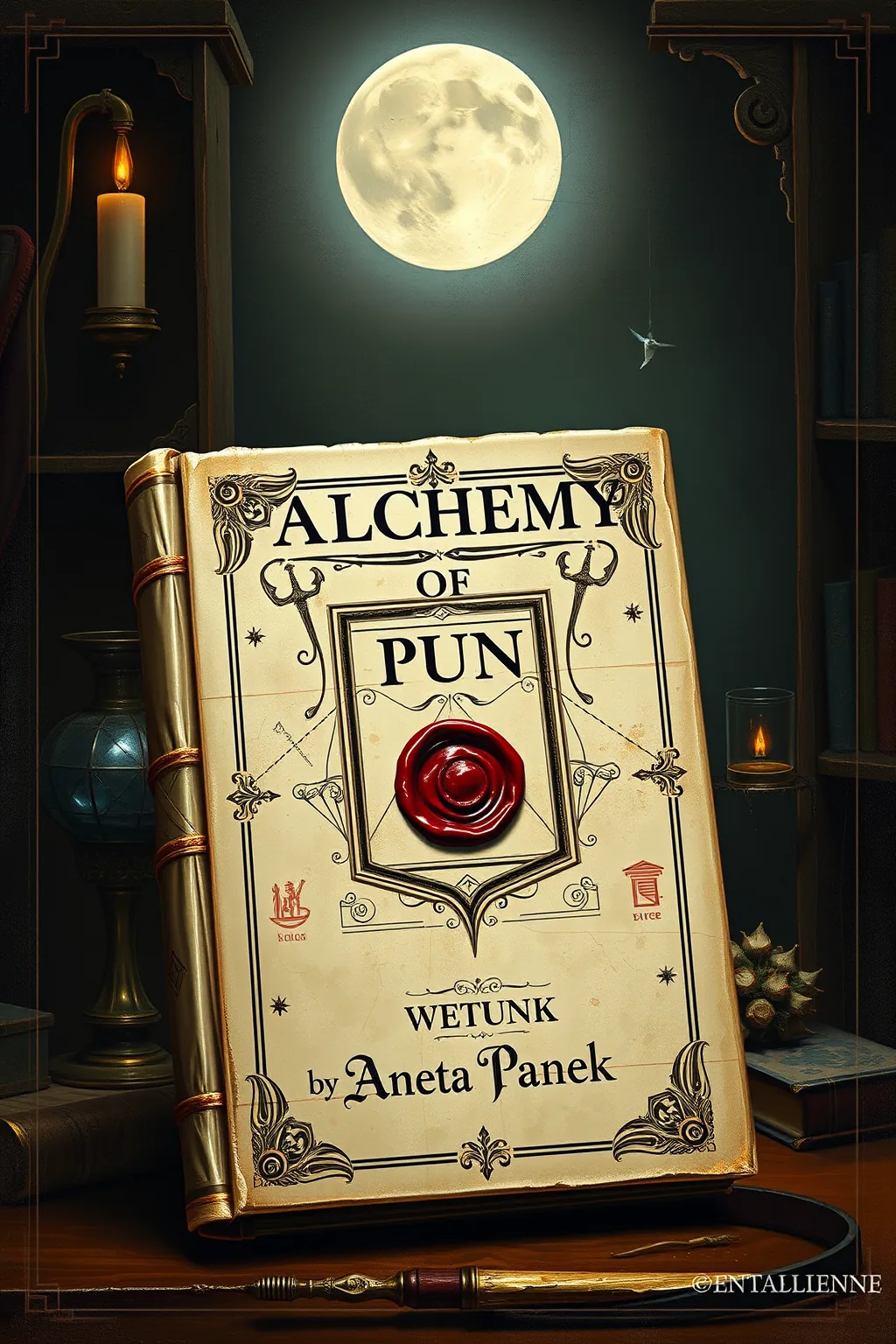
Alchemy of Punk
 78
78

Alchemy of Punk
Aneta Panek's "Alchemy of Punk" offers a bracingly academic yet intuitively resonant exploration of punk's deeper currents. The thesis successfully bridges the perceived chasm between the raw, often nihilistic energy of punk and its surprisingly ancient roots. Panek's assertion that punk embodies a Dionysian art, a modern danse macabre, is particularly compelling, reframing the genre as a vital, life-affirming scream against existential dread. While the opera component, not directly accessible in the text, is alluded to, the textual analysis itself is rigorous. The book's limitation, if any, lies in its dense academic prose, which may deter casual readers. However, for those willing to engage, the analysis of punk's poetics and its lineage, stretching back to medieval troubadours, provides a unique lens. Panek's work stands as a significant contribution to understanding punk's cultural and philosophical weight.
📝 Description
78
Aneta Panek's 2022 work connects punk rock's raw intensity to medieval song traditions.
Aneta Panek's 2022 PhD thesis, "Alchemy of Punk," examines punk rock not just as music, but as a form of Dionysian art and a modern "danse macabre." The work traces punk's lineage through medieval troubadours, minnesingers, and beggar's operas. Panek argues that punk represents a continuation of performative, often transgressive vocal expression rather than a complete break from historical artistic forms.
The book is intended for scholars in cultural studies, musicology, and esoteric traditions. Readers interested in the philosophical roots of counter-culture movements or the radical reinvention of established artistic forms will find value. Advanced students and researchers in performance studies are also a key audience. Panek situates punk within a long historical arc, connecting it to medieval song traditions and the broader concept of performative vocal expression.
This work situates punk rock within a lineage of transgressive and ecstatic artistic expression that resonates with certain esoteric traditions. By connecting punk to the Dionysian impulse and the medieval 'danse macabre,' Panek highlights a recurring theme in Western esotericism: the use of art and performance to confront mortality and societal norms, often through cathartic or ecstatic means. The book examines how these ancient impulses manifest in modern, raw forms of expression, suggesting a continuity of spiritual and artistic seeking across centuries.
💡 Why Read This Book?
• Gain insight into punk's genealogical connections to medieval troubadours and minnesingers, understanding its roots in performative, poetic traditions far predating the 20th century. • Grasp the concept of punk as a "danse macabre," a celebration of life through performative, screamed poetry, offering a new framework for interpreting its cathartic and subversive nature. • Explore Aneta Panek's application of Dionysian art principles to punk, revealing its potential for ecstatic expression and radical reinvention beyond typical musical analysis.
⭐ Reader Reviews
Honest opinions from readers who have explored this book.
❓ Frequently Asked Questions
What is the primary argument of Aneta Panek's "Alchemy of Punk"?
The book argues that punk rock embodies Dionysian art and acts as a modern "danse macabre," a performative scream that celebrates life through its subversive poetics and genealogical links to ancient artistic traditions.
Which historical artistic traditions does "Alchemy of Punk" connect to punk rock?
Panek traces punk's lineage to medieval troubadours, minnesingers, madrigals, beggar's operas, and murder ballads, highlighting its roots in performative and often transgressive vocal expression.
How does the book interpret punk's poetry?
The work views punk's poetry as performative and screamed, framing it as a central element of its Dionysian nature and its function as a "danse macabre" that confronts mortality by affirming life.
What is the significance of the "danse macabre" concept in relation to punk?
The "danse macabre" concept is used to illustrate how punk, through its raw energy and performative art, engages with themes of death and mortality as a way to intensely celebrate life.
What academic fields does "Alchemy of Punk" engage with?
The book draws from cultural studies, musicology, performance studies, and esoteric/philosophical traditions to analyze punk rock's artistic and cultural impact.
When was Aneta Panek's "Alchemy of Punk" first published?
Aneta Panek's "Alchemy of Punk" was first published on 2022-12-05, originating as part of her PhD work.
🔮 Key Themes & Symbolism
Punk as Dionysian Embodiment
This theme posits punk rock as a modern manifestation of Dionysian art, characterized by ecstatic, often chaotic, and cathartic expression. Panek argues that punk's performative poetry and raw energy embody the spirit of Dionysus, the Greek god of wine, revelry, and theatre. This interpretation moves beyond analyzing punk solely as a musical or political movement, positioning it as a vital, life-affirming force that channels primal energy and facilitates collective effervescence through its unique sonic and lyrical output.
The Danse Macabre as Life Affirmation
Panek reinterprets the medieval "danse macabre" (dance of death) not as a morbid obsession, but as a profound affirmation of life through the confrontation with mortality. Applied to punk, this concept suggests that the genre's aggressive aesthetics and lyrical themes, which often touch upon death, decay, and societal breakdown, serve as a powerful means of celebrating existence in its rawest form. The performative, screamed poetry becomes a ritualistic act that acknowledges finitude while intensely asserting vitality.
Genealogy of Subversive Performance
This theme traces punk's lineage through historical performance traditions, demonstrating that its subversive spirit is not entirely novel. Panek connects punk's poetics and motifs to earlier forms such as troubadour songs, minnesinger poetry, madrigals, beggar's operas, and murder ballads. This historical mapping reveals punk as part of a continuum of artistic practices that have challenged societal norms and explored transgressive themes through vocal performance and poetic expression, emphasizing its role in the ongoing reinvention of art.
Performative Screamed Poetry
The book highlights "performative, screamed poetry" as a central element of punk's artistic identity and its connection to esoteric traditions. This form of vocalization is presented as a direct conduit for primal energy and emotional expression, far removed from conventional lyrical delivery. Panek explores how this technique functions as a tool for catharsis, rebellion, and the embodiment of the Dionysian spirit, making the act of singing or shouting itself a significant artistic and spiritual practice.
💬 Memorable Quotes
Direct passages from the work, attributed to the author.
“punk as an embodiment of Dionysian art; a danse macabre celebrating life through performative, screamed poetry.”
— This core assertion frames punk not just as music, but as a profound artistic and spiritual expression. It links the genre to ancient ecstatic traditions (Dionysian) and medieval memento mori (danse macabre), reinterpreting its abrasive nature as a life-affirming confrontation with existence.
“investigates punk’s poetics and motifs, genealogy, and subversive reinvention.”
— This statement outlines the analytical scope of Panek's work, emphasizing a deep dive into the structure, recurring ideas, historical roots, and transformative power inherent in punk's artistic output.
“Reaching as far back as the Middle Ages and exploring the tradition of troubadours, minnesingers, madrigals, beggar’s operas, and murder ballads...”
— This highlights the extensive historical research undertaken, situating punk within a long tradition of performative vocal arts that often carried social commentary or transgressive themes, thus challenging its perception as a purely modern phenomenon.
“understanding punk as an embodiment of Dionysian art”
— This interpretation focuses on punk's capacity for raw, untamed, and ecstatic expression, aligning it with the ancient Greek concept of Dionysian art, which celebrates liberation, passion, and the breaking of conventional boundaries.
“a danse macabre celebrating life through performative, screamed poetry.”
— This concise phrase expresses the book's central paradox: that punk's engagement with themes of death and chaos (danse macabre) is ultimately a vigorous affirmation of life, expressed through its distinctive vocal style.
🌙 Esoteric Significance
Tradition
The work engages implicitly with esoteric thought by framing punk through the lens of Dionysian art, a concept rooted in ancient mystery cults and later explored in philosophical traditions like Nietzsche's. It connects to the esoteric understanding of art as a vehicle for ecstatic experience, catharsis, and the revelation of primal forces. While not explicitly Gnostic or Hermetic, it shares with these traditions an interest in transformative processes and the uncovering of hidden meanings within cultural phenomena.
Symbolism
The "danse macabre" serves as a potent symbol, representing the confrontation with mortality not as an end, but as a catalyst for intense life affirmation. "Screamed poetry" functions symbolically as a direct, unmediated expression of the id or the Dionysian impulse, bypassing intellectual filters to convey raw emotion and primal energy. These symbols highlight punk's role as a vehicle for confronting existential realities and celebrating the sheer force of being.
Modern Relevance
Contemporary thinkers exploring the philosophy of music, performance art, and radical cultural critique can find resonance in Panek's work. Scholars examining the role of art in societal transformation, or those interested in the aesthetics of noise and transgression, draw upon such analyses. The concept of punk as a form of embodied, ecstatic expression is relevant to current discussions on performance studies and the spiritual dimensions of non-traditional art forms.
👥 Who Should Read This Book
• Scholars of cultural studies and musicology seeking to understand punk beyond its typical genre classifications, particularly those interested in its historical and philosophical underpinnings. • Practitioners and students of performance art and theatre who are exploring the boundaries of vocal expression, catharsis, and audience engagement through "screamed poetry." • Readers interested in esoteric philosophy and the application of concepts like Dionysian art and the "danse macabre" to contemporary cultural movements, offering a unique lens on subversion and life affirmation.
📜 Historical Context
Published in 2022, Aneta Panek's "Alchemy of Punk" emerged in an academic landscape increasingly interested in the intersection of counter-culture, performance, and philosophical inquiry. The work positions punk not as an isolated 1970s phenomenon but as the latest iteration in a long lineage of subversive artistic expression. Panek consciously engages with a historiography that sometimes overlooks the artistic and spiritual dimensions of punk, contrasting with purely sociological or musicological analyses prevalent in earlier decades. By tracing punk's genealogy back to medieval troubadours and minnesingers, she directly challenges the notion of punk as a purely post-war, Western invention, drawing parallels to traditions studied by scholars of medieval literature and performance. The book's reception within academic circles would likely engage with critical theory and performance studies, potentially contrasting with more mainstream rock criticism.
📔 Journal Prompts
Punk's genealogy from troubadours to screamed poetry.
The danse macabre as life celebration in punk.
Dionysian art embodied in punk performance.
Subversive reinvention through punk poetics.
The cathartic power of screamed poetry.
🗂️ Glossary
Dionysian Art
In the context of this work, refers to artistic expression characterized by ecstatic, passionate, and often chaotic energy, drawing from the spirit of the ancient Greek god Dionysus, associated with wine, revelry, and theatre.
Danse Macabre
Literally "dance of death," a medieval allegorical motif depicting death leading people from all walks of life in a dance. Here, reinterpreted as a celebration of life through confronting mortality.
Poetics
The principles and theory of poetry, or the aesthetic qualities of literary or artistic expression. In this context, it refers to the specific stylistic and thematic elements of punk lyrics and performance.
Genealogy
The study of origins and historical lineage. Here, it's used to trace the historical roots and influences of punk rock's artistic and performative traditions.
Subversive Reinvention
The act of challenging and transforming established norms, structures, or artistic forms through radical means. Punk's approach to music, lyrics, and performance exemplifies this.
Troubadours
Medieval lyric poets and musicians who composed and performed epic poems and songs, primarily in Occitan, often dealing with themes of courtly love and chivalry.
Beggar's Opera
A type of ballad opera that satirized contemporary society and politics, popular in 18th-century Britain. Notably, John Gay's 'The Beggar's Opera' (1728) is a key example.