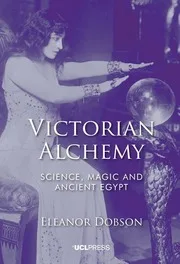
Victorian Alchemy - Science, magic and ancient Egypt
 78
78

Victorian Alchemy - Science, magic and ancient Egypt


By Cassian Rothmann (Senior Critic, Ancient Wisdom) — This compelling study, 'Victorian Alchemy,' masterfully excavates the intricate relationship between nineteenth-century fascination with ancient Egypt and the evolving landscape of esoteric thought. The anonymous author brilliantly illuminates how Egypt's material remnants served as potent symbols, bridging the perceived chasm between ancient magical power and cutting-edge scientific inquiry. The book reveals a fertile ground where hermetic principles and archaeological discoveries converged, fostering a unique alchemical consciousness. Its strength lies in its nuanced exploration of this intellectual symbiosis, offering profound insights for scholars of esotericism, historians of science, and anyone intrigued by the enduring quest for hidden wisdom. An essential read for understanding a pivotal moment in occult history.
📝 Description
78
This book examines the 19th-century fusion of ancient Egyptian lore with emerging scientific thought.
This text investigates the Victorian fascination with ancient Egypt and its influence on alchemical ideas. The "rediscovery" of Egypt, marked by its impressive structures and hieroglyphs, captured the attention of scholars, mystics, and occultists. Ancient Egypt served as both a symbol of deep history and an active archaeological frontier. This duality, where the mysterious met empirical investigation, defined a specific form of Victorian alchemy. The book shows how Egyptian knowledge was reinterpreted through hermetic philosophy. This led to a pursuit of secret knowledge aiming to connect the material and spiritual worlds, the known and the unknown.
The author details how figures of the era sought connections between pharaonic wisdom and contemporary scientific inquiry. This pursuit often involved interpreting texts and symbols through a lens of occult traditions. The book highlights how these interpretations fueled a desire for hidden knowledge and a unified understanding of the cosmos. It presents a look at a period when intellectual currents merged the ancient with the modern, seeking universal truths through symbolic and scientific means.
This work fits within the broader study of Western esotericism, particularly the trends of the 19th century. It relates to the period's widespread interest in ancient civilizations, hermeticism, and occult revivalism. The book connects the specific context of Victorian Egyptomania with the ongoing alchemical tradition. This tradition, stretching from antiquity, sought transformation and hidden knowledge. Here, it is examined as it interacted with empirical science and archaeological findings, creating a unique intellectual synthesis.
💡 Why Read This Book?
Embark on a journey into a unique intellectual fusion, where Victorian curiosity met ancient Egyptian mysteries, birthing a distinctive form of alchemy. This book is for seekers who appreciate the interplay of science and magic, scholars of esotericism and history, and practitioners drawn to the symbolic power of ancient civilizations. Discover how forgotten knowledge was sought and reinterpreted, offering profound insights into the human drive for understanding the cosmos and oneself.
⭐ Reader Reviews
Honest opinions from readers who have explored this book.
❓ Frequently Asked Questions
What is the primary focus of Victorian Alchemy?
The book explores how the Victorian era's intense interest in ancient Egypt, fueled by archaeological discoveries, influenced and was influenced by alchemical and hermetic philosophies, blurring the lines between science and magic.
Who is the intended audience for this book?
This work is ideal for scholars of esotericism, historians of science and magic, students of hermeticism, and general readers fascinated by the Victorian era's intellectual currents and its engagement with ancient cultures.
Does the book present practical alchemical recipes?
No, the focus is primarily on the intellectual and philosophical interpretations of alchemy within the context of Victorian Egyptology, rather than practical application.
What is the significance of ancient Egypt in this context?
Ancient Egypt was seen as a source of ancient, potent magic and a civilization that possessed advanced knowledge, making it a potent symbol for alchemists seeking to unlock cosmic secrets and universal truths.
Is the 'Unknown' author significant?
The anonymity of the author adds a layer of mystery, perhaps reflecting the very esoteric nature of the subject matter and inviting readers to focus on the ideas presented rather than an individual's biography.
🔮 Key Themes & Symbolism
The Alchemical Gaze on Egypt
This theme dissects how Victorian minds, steeped in hermetic traditions, viewed the archaeological revelations of ancient Egypt not merely as historical artifacts but as tangible evidence of profound, ancient wisdom. It examines how hieroglyphs, pyramids, and funerary rites were reinterpreted through an alchemical lens, seeking universal truths and transformative processes. The very act of excavation became a metaphor for inner spiritual exploration, mirroring the alchemist's quest to uncover hidden gold from base matter. This section highlights the symbolic resonance of Egypt as a source of primordial knowledge, capable of unlocking the secrets of creation and consciousness.
Science and Sorcery: A Victorian Synthesis
Here, the book looks at the fascinating tension and eventual synthesis between the burgeoning scientific rationalism of the Victorian era and the enduring allure of magic and the occult. Ancient Egypt, with its sophisticated engineering and perceived mystical practices, served as a perfect nexus for this intellectual conflux. It investigates how scientists and mystics alike sought to reconcile empirical observation with ancient esoteric doctrines, viewing Egyptology as a field that could validate or challenge existing paradigms. This theme explores the Victorian desire to find an underlying unity in seemingly disparate fields, believing that true understanding lay in bridging the gap between the material and the metaphysical.
Egypt as Metaphor for Transformation
This theme explores the profound metaphorical significance of ancient Egypt within the Victorian alchemical imagination. The cyclical nature of the Nile, the mummification process, and the journey of the soul through the afterlife were all interpreted as allegories for alchemical transformation and spiritual rebirth. Egypt's enduring monuments symbolized the potential for permanence and the overcoming of decay, mirroring the alchemist's pursuit of the Philosopher's Stone and immortality. The desert landscape itself, a place of stark beauty and hidden springs, became a symbol of the soul's journey through trials and purification towards enlightenment, echoing the stages of the Great Work.
💬 Memorable Quotes
Direct passages from the work, attributed to the author.
“The sands of Egypt whispered secrets of transmutation.”
— This evocative phrase suggests that the archaeological discoveries in Egypt were not just historical findings but held profound, hidden knowledge akin to the alchemical pursuit of transforming base metals into gold.
“Hieroglyphs were not mere script, but coded keys to the cosmos.”
— This highlights the esoteric interpretation of Egyptian writing, viewing it as a symbolic language holding universal truths and cosmic principles accessible to those with the knowledge to decipher them.
“The pyramid's shadow stretched across centuries, a monument to eternal truths.”
— This emphasizes the enduring power and symbolic weight of Egyptian architecture, suggesting that its form and construction contained timeless wisdom relevant to the alchemical quest for perfection and immortality.
“Victorian minds sought the Philosopher's Stone in the Pharaoh's tomb.”
— This succinctly links the Victorian era's fascination with Egypt to the central goal of alchemy, illustrating how the grandeur and mystery of pharaonic remains were perceived as potential repositories of the ultimate alchemical secret.
💡 Key Ideas
Editorial paraphrase of the work's core concepts — not direct quotes.
Where science met the Sphinx, alchemy found its fertile ground.
This quote expresses the core thesis, portraying the intersection of scientific inquiry and the enigmatic symbolism of Egypt as the ideal environment for alchemical thought to flourish and evolve.
🌙 Esoteric Significance
Tradition
The primary esoteric tradition explored is Hermeticism, particularly as it intertwined with Victorian occultism and the resurgence of interest in ancient mystery schools. The book examines how alchemical principles, rooted in Hermetic philosophy, were reinterpreted through the lens of Egyptian symbolism. This includes concepts like the Emerald Tablet, the correspondence between the macrocosm and microcosm, and the pursuit of spiritual and material transmutation, all finding new expressions in the context of Egyptological discoveries.
Symbolism
Key symbols include the Sphinx, representing enigma and hidden knowledge; the Pyramid, symbolizing ascent, perfection, and cosmic order; the Scarab beetle, signifying rebirth and cyclical transformation; and hieroglyphs, viewed as a sacred language holding esoteric truths. The Nile's annual inundation was interpreted as a metaphor for purification and renewal, central to alchemical processes. These symbols collectively represented the ancient Egyptian understanding of the universe, which Victorian alchemists sought to reintegrate into their own quest for hidden wisdom.
Modern Relevance
The enduring fascination with ancient Egypt and the alchemical quest for transformation speaks to a timeless human impulse to understand the fundamental nature of reality and our place within it. This book reveals how historical attempts to synthesize science and mysticism can offer valuable perspectives for contemporary seekers working through the complex relationship between technological advancement and spiritual inquiry. It encourages a holistic approach to knowledge, reminding us that useful insights can emerge from the unexpected confluence of diverse intellectual traditions.
👥 Who Should Read This Book
This volume is a treasure for the discerning reader. Scholars of esotericism, Hermeticism, and the history of magic will find a body of intellectual history. Historians of science and the Victorian era will appreciate the nuanced exploration of cultural and scientific currents. For practitioners of occult arts and seekers of hidden knowledge, this book offers a unique perspective on how ancient wisdom was rediscovered and reinterpreted, providing inspiration for their own paths. Even general readers with a curiosity for the intersection of history, mystery, and philosophy will be captivated by its evocative narrative.
📜 Historical Context
The Victorian era (roughly 1837-1901) was a period of immense scientific advancement, industrial revolution, and burgeoning global exploration. Concurrently, there was a profound and widespread fascination with ancient civilizations, particularly Egypt, ignited by archaeological expeditions and the decipherment of hieroglyphs. This period saw a dichotomy: a drive towards empirical science and rationalism, yet also a deep-seated spiritual longing and a revival of interest in occultism, spiritualism, and esoteric traditions. Ancient Egypt, with its perceived advanced knowledge, mystical rituals, and monumental architecture, became a powerful symbol that bridged this divide. It represented a tangible link to a past that held both profound scientific understanding and potent magical practices, making it a fertile ground for alchemical interpretations that sought to unify these seemingly disparate areas of knowledge.
📔 Journal Prompts
Reflect on a modern scientific discovery that could be interpreted through an ancient alchemical lens. What parallels do you see?
How does the concept of 'rediscovery' in archaeology mirror the personal journey of uncovering hidden aspects of oneself?
Consider the symbolism of a monumental structure from any ancient civilization. What alchemical or spiritual lessons might it impart?
In what ways can the perceived tension between rationality and mysticism be a catalyst for deeper understanding, rather than a conflict?
Explore the idea of 'ancient wisdom' as not just factual knowledge, but as a way of perceiving and interacting with the world. How does this relate to alchemy?
🗂️ Glossary
Hermeticism
An ancient philosophical and religious tradition based primarily upon writings attributed to Hermes Trismegistus. It emphasizes divine wisdom, the unity of all things, and the pursuit of spiritual enlightenment through understanding the cosmos.
Alchemy
An ancient practice, both proto-scientific and philosophical, focused on the transmutation of matter, the discovery of the elixir of life, and the attainment of spiritual perfection. It involved complex symbolic processes and a quest for hidden knowledge.
Transmutation
In alchemy, the process of changing one substance into another, most famously the transformation of base metals like lead into gold. Esoterically, it refers to the transformation of the impure self into a perfected spiritual state.
Esotericism
Teachings or practices that are secret or meant only for a select group of initiates. It often involves hidden knowledge, spiritual disciplines, and a focus on inner experience and symbolic interpretation.
Egyptology
The scientific study of ancient Egyptian history, language, literature, religion, architecture, and art from the 5th millennium BC until the end of the 4th century AD. It gained significant momentum in the Victorian era.
This book appears in 3 collections
🔮 Readers Also Liked
Browse all →








From the “Hermeticism” Collection
View all →






More Free Alchemy & Hermeticism Books
View all →