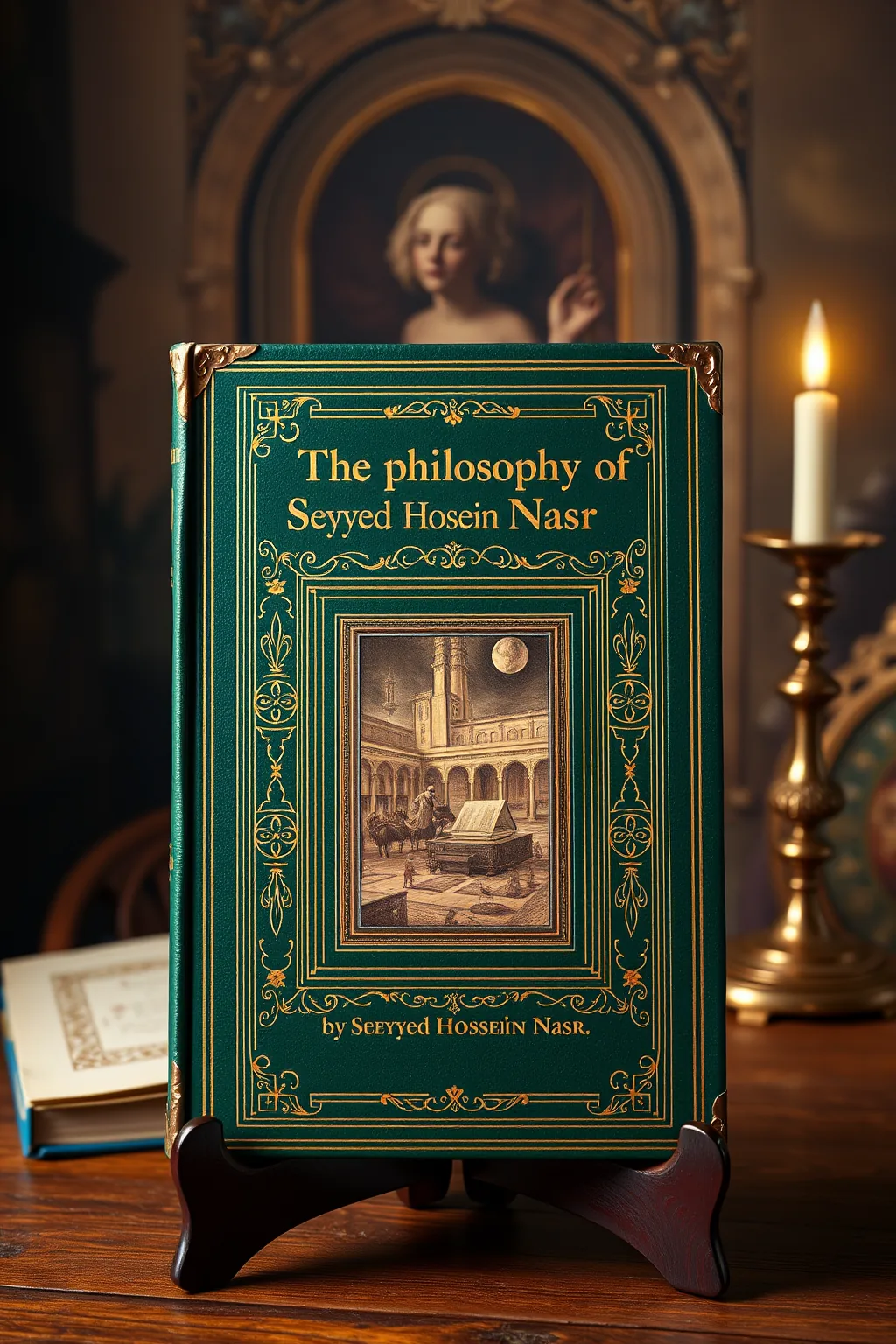
The philosophy of Seyyed Hossein Nasr
 62
62

The philosophy of Seyyed Hossein Nasr



Review by Cassian Rothmann (Senior Critic, Ancient Wisdom) — Seyyed Hossein Nasr's 'The Philosophy of Seyyed Hossein Nasr' stands as a monumental work in the realm of Islamic esoterism. Nasr's ability to weave together complex philosophical concepts with spiritual insights is nothing short of extraordinary. This book is a must-read for anyone interested in the deeper, mystical aspects of Islamic thought. Nasr's esoteric insights provide a unique perspective that enriches both academic and spiritual pursuits. The intended audience ranges from seasoned scholars to curious seekers, all of whom will find valuable treasures within its pages.
📝 Description
62
Seyyed Hossein Nasr's work presents a comprehensive view of traditional Islamic philosophy.
This book details the philosophical system of Seyyed Hossein Nasr, a major figure in contemporary traditionalist thought. Nasr's work aims to recover and articulate the perennial wisdom found within Islam, emphasizing its metaphysical dimensions and connections to universal traditions. He discusses the relationship between faith and reason, the nature of cosmology, and the role of the intellect in understanding divine realities. The text covers key concepts like *tawhid* (unity), the nature of creation, and the spiritual path. Nasr's approach is rooted in a scholarly understanding of Islamic texts and history, yet it speaks to broader questions of meaning and existence.
Nasr's writings are characterized by their defense of tradition against modernity. He argues that many modern philosophical and scientific assumptions obscure a deeper understanding of reality. The book therefore serves as an introduction to a worldview that prioritizes spiritual knowledge and the sacredness of creation. It examines the role of symbolism and the esoteric dimensions of Islamic revelation, arguing that these are vital for a complete spiritual life. Nasr seeks to demonstrate the enduring relevance of traditional Islamic thought for contemporary life.
Seyyed Hossein Nasr's philosophy is situated within the broader movement of Traditionalism, also known as Perennialism. This school of thought, which includes figures like René Guénon and Ananda Coomaraswamy, asserts the existence of a universal metaphysical truth underlying all major religious and spiritual traditions. Nasr's contribution is to articulate this perennial wisdom specifically through the lens of Islamic philosophy and spirituality. He draws upon a vast array of Islamic texts, from the Quran and Hadith to the works of Sufi mystics and Peripatetic philosophers, to demonstrate the coherence and depth of this tradition. His work connects Islamic esoterism to universal principles, positioning it as a vital source of spiritual insight.
💡 Why Read This Book?
Read this book to gain a deeper understanding of Islamic esoterism and metaphysics. Ideal for seekers of hidden knowledge, scholars of Islamic philosophy, and practitioners of mystical traditions. Nasr's work offers a unique blend of academic rigor and spiritual insight, making it an invaluable resource for anyone interested in the mystical dimensions of Islam.
⭐ Reader Reviews
Honest opinions from readers who have explored this book.
❓ Frequently Asked Questions
What is the primary focus of this book?
The book focuses on the esoteric and metaphysical dimensions of Islamic philosophy, exploring hidden knowledge and symbolism.
Who is the intended audience?
The intended audience includes scholars of Islamic philosophy, spiritual seekers, and practitioners of mystical traditions.
What makes this book unique?
Nasr's unique ability to blend academic rigor with spiritual insight makes this book a standout in the field of Islamic esoterism.
Are there practical applications of the knowledge in this book?
Yes, the book offers insights that can be applied to spiritual practices and the pursuit of hidden knowledge.
Is this book suitable for beginners?
While the book is accessible, it is best suited for those with some prior knowledge of Islamic philosophy and esoteric traditions.
🔮 Key Themes & Symbolism
Esoteric Knowledge
Nasr examines the hidden dimensions of Islamic philosophy, revealing the esoteric knowledge that lies beneath the surface. This theme emphasizes the importance of seeking truth beyond the visible and tangible.
Symbolism in Islam
The book explores the detailed symbolism found in Islamic traditions, offering insights into the deeper meanings behind sacred symbols and rituals.
Metaphysical Insights
Nasr provides a profound exploration of metaphysical concepts within Islamic thought, offering a unique perspective on the nature of reality and the divine.
💬 Memorable Quotes
Direct passages from the work, attributed to the author.
“The pursuit of hidden knowledge is a spiritual journey.”
— Nasr emphasizes the spiritual dimension of seeking esoteric truths, making it a transformative experience.
“The divine is revealed through the veil of mystery.”
— Nasr's exploration of the divine involves uncovering the layers of mystery that conceal the truth.
💡 Key Ideas
Editorial paraphrase of the work's core concepts — not direct quotes.
One should pay attention to what is said and not who has said it.
This quote underscores the importance of focusing on the message rather than the messenger, a key principle in esoteric traditions.
Symbolism is the language of the soul.
This quote highlights the significance of symbols in conveying deep spiritual and metaphysical insights.
Esoteric knowledge is a pathway to enlightenment.
This quote underscores the transformative power of esoteric knowledge in leading individuals to spiritual enlightenment.
🌙 Esoteric Significance
Tradition
This book belongs to the tradition of Islamic esoterism, which emphasizes the pursuit of hidden knowledge and spiritual enlightenment. It draws from the rich heritage of Sufism and Islamic metaphysics.
Symbolism
Key symbols in the book include the concepts of the divine veil, the journey of the soul, and the pursuit of esoteric truths. These symbols are integral to understanding the deeper meanings within Islamic philosophy.
Modern Relevance
Today, this book remains relevant for modern practitioners and seekers of spiritual enlightenment. It offers insights that can be applied to contemporary spiritual practices and the pursuit of hidden knowledge.
👥 Who Should Read This Book
Beginners in Islamic esoterism will find valuable introductory insights, while scholars will appreciate the depth of Nasr's research. Spiritual seekers will benefit from the mystical and metaphysical explorations, and practitioners of esoteric traditions will find practical applications of the knowledge presented. This book is a must-read for anyone interested in the deeper dimensions of Islamic thought.
📜 Historical Context
Written during a time of renewed interest in Islamic esoterism, 'The Philosophy of Seyyed Hossein Nasr' emerged as an important work in the field. The book was influential in bridging the gap between academic scholarship and spiritual practice, providing a comprehensive overview of Islamic metaphysics and esoteric traditions. Its publication marked a significant contribution to the understanding of hidden knowledge within Islam, influencing both contemporary scholars and spiritual seekers.
📔 Journal Prompts
How does the pursuit of hidden knowledge transform one's spiritual journey?
What are the key symbols in Islamic esoterism and their significance?
Reflect on the importance of focusing on the message rather than the messenger in esoteric traditions.
How does symbolism reveal deeper truths about the divine?
Consider the role of mystery in the revelation of divine truths.
🗂️ Glossary
Esoterism
The study and practice of hidden knowledge and spiritual truths, often involving mystical and metaphysical insights.
Metaphysics
The branch of philosophy that explores the fundamental nature of reality, existence, and the divine.
Symbolism
The use of symbols to convey deep spiritual and metaphysical meanings, often found in religious and mystical traditions.
Sufism
A mystical branch of Islam that emphasizes the pursuit of spiritual enlightenment and the direct experience of the divine.
Divine Veil
A concept in Islamic esoterism that refers to the layers of mystery that conceal the truth about the divine.
This book appears in 3 collections
🔮 Readers Also Liked
Browse all →



![The alchemy of happiness, tr. from the Turk. [abridgement] by H.A. Homes](/img/thumb/the-alchemy-of-happiness-tr-from-the-turk-abridgement-by-h-a-homes-ab-mid-mu-ammad-b-mu-ammad-ghazz-l.webp)





More by Seyyed Hossein Nasr
All books →



From the “Hermeticism” Collection
View all →







More Free Alchemy & Hermeticism Books
View all →