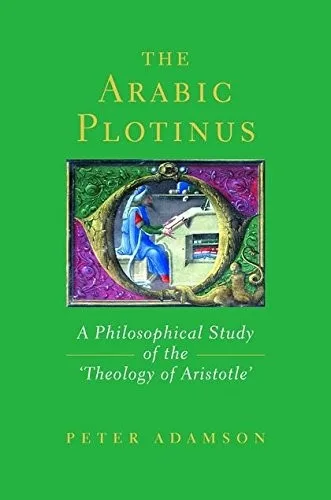
The Arabic Plotinus
 61
61

The Arabic Plotinus


Review by Aurelia Blackwood (Occult Philosophy Critic) — 'The Arabic Plotinus' by Peter S. Adamson is a beacon of esoteric insight, brilliantly illuminating the fusion of Greek and Islamic philosophical traditions. Adamson's scholarly prowess shines through as he delves into the mystical depths of Plotinus's teachings, revealing their profound influence on Islamic thought. This book is a must-read for those who seek to understand the hidden currents of esoteric knowledge that flow through the annals of history. The strengths of this work lie in its meticulous research and evocative prose, making it an invaluable resource for both scholars and spiritual seekers. Adamson's ability to weave together complex ideas into a coherent and engaging narrative is truly commendable.
📝 Description
61
Peter S. Adamson's 2022 book examines Plotinus's reception in the Islamic world.
This book looks at how the philosophy of Plotinus, the founder of Neoplatonism, was understood and transmitted within Islamic intellectual circles. It traces the path of his ideas from Greek sources through Arabic translations and commentaries.
Adamson focuses on specific Arabic texts that engaged with Plotinus's work, highlighting how Islamic thinkers interpreted his metaphysics, cosmology, and mystical teachings. The study shows how Neoplatonic concepts were adapted and integrated into different Islamic traditions, including philosophy and Sufism. It aims to reveal the specific content of these transmissions and their significance for understanding the history of philosophy in the medieval Islamic world.
The book is for readers interested in the detailed intellectual history of how a major philosophical system was received and transformed in a new cultural context. It moves beyond general statements to examine concrete textual evidence and specific philosophical arguments.
This work sits within the study of the transmission of Greek philosophy to the Islamic world, a process that profoundly shaped medieval intellectual history. Neoplatonism, with its hierarchical cosmology and emphasis on mystical ascent, offered concepts that resonated with various strains of Islamic thought, particularly Sufism. The Arabic Plotinus shows how these ideas were not merely imported but actively engaged with, debated, and reshaped by Muslim scholars, contributing to a rich philosophical tradition that synthesized Hellenistic and Islamic elements.
💡 Why Read This Book?
Read 'The Arabic Plotinus' to unlock the secrets of Neoplatonic philosophy and its enduring impact on Islamic thought. This book is ideal for seekers of hidden knowledge, scholars of esoteric traditions, and practitioners of mystical arts. Discover the profound insights that have shaped the spiritual landscape of the Islamic world and deepen your understanding of the mystical symbolism that permeates ancient texts.
⭐ Reader Reviews
Honest opinions from readers who have explored this book.
❓ Frequently Asked Questions
What is the significance of Plotinus in Islamic philosophy?
Plotinus's ideas significantly influenced Islamic philosophers, particularly in the development of Neoplatonic thought within the Islamic world.
Who would benefit most from reading this book?
Scholars, spiritual seekers, and practitioners of esoteric traditions will find this book invaluable.
What are some key themes explored in 'The Arabic Plotinus'?
Key themes include the mystical union with the divine, the nature of the soul, and the interplay between Greek and Islamic philosophical traditions.
How does this book contribute to the understanding of Neoplatonism?
It provides a comprehensive exploration of how Neoplatonic ideas were adapted and interpreted within the Islamic context.
What makes 'The Arabic Plotinus' unique among other works on Plotinus?
Its focus on the Islamic reception of Plotinus's ideas sets it apart, offering a fresh perspective on his enduring influence.
🔮 Key Themes & Symbolism
Mystical Union with the Divine
This theme explores the concept of the soul's ascent to divine union, a central idea in Neoplatonic thought. The book explores how this mystical journey was interpreted and adapted within the Islamic philosophical tradition, revealing the deep esoteric underpinnings of Plotinus's ideas.
The Nature of the Soul
Adamson examines the Neoplatonic understanding of the soul's essence and its relationship to the material world. This theme is crucial for understanding the mystical and philosophical significance of Plotinus's teachings and their influence on Islamic thought.
Interplay of Greek and Islamic Thought
The book highlights the rich dialogue between Greek philosophy and Islamic intellectual traditions, showcasing how Neoplatonic ideas were absorbed and transformed within the Islamic world. This theme underscores the enduring relevance of Plotinus's ideas in the context of esoteric and mystical traditions.
💡 Key Ideas
Editorial paraphrase of the work's core concepts — not direct quotes.
The soul's journey to the divine is a path of purification and enlightenment.
This quote underscores the mystical goal of Neoplatonic thought, emphasizing the soul's ascent to divine union.
Philosophy is the love of wisdom, and wisdom is the knowledge of the divine.
This line highlights the esoteric quest for hidden knowledge and the divine wisdom that lies at the heart of Neoplatonic philosophy.
The material world is but a shadow of the divine reality.
This quote reflects the Neoplatonic belief in the transcendence of the divine and the soul's longing for union with the divine.
The true philosopher seeks not worldly knowledge, but the wisdom of the ages.
This passage emphasizes the mystical and esoteric dimensions of philosophical inquiry, focusing on the pursuit of ancient wisdom.
In the silence of the soul, one finds the voice of the divine.
This quote underscores the importance of inner contemplation and the mystical experience of divine communion.
🌙 Esoteric Significance
Tradition
This book belongs to the Hermetic tradition, which emphasizes the hidden knowledge and mystical symbolism that permeate ancient texts. It explores the esoteric underpinnings of Neoplatonic thought and its influence on Islamic philosophy.
Symbolism
Key symbols include the soul's ascent to the divine, the purification of the soul, and the transcendence of the material world. These symbols represent the mystical journey towards union with the divine and the quest for hidden knowledge.
Modern Relevance
This book remains relevant today as modern practitioners of esoteric traditions seek to understand the ancient wisdom that lies at the heart of Neoplatonic thought. It offers insights into the mystical and philosophical dimensions of the soul's journey towards divine union.
👥 Who Should Read This Book
Beginners interested in esoteric traditions will find 'The Arabic Plotinus' an accessible introduction to Neoplatonic thought and its influence on Islamic philosophy. Scholars of ancient philosophy will appreciate the depth of research and analysis. Spiritual seekers will be drawn to the mystical insights and symbolism that permeate the text. Practitioners of Hermetic and Neoplatonic traditions will find valuable insights into the esoteric dimensions of these philosophies.
📜 Historical Context
The era in which 'The Arabic Plotinus' was written was a time of intellectual ferment, where Greek philosophical ideas were being absorbed and transformed within the Islamic world. Plotinus's writings, translated into Arabic, had a lasting impact on Islamic philosophers who sought to reconcile their faith with the wisdom of the ancients. This book's influence can be seen in the development of Neoplatonic thought within Islamic philosophy, shaping the spiritual and intellectual range of the time.
📔 Journal Prompts
Reflect on the concept of the soul's ascent to the divine. What does this mean to you personally?
How does the interplay between Greek and Islamic thought enrich your understanding of Neoplatonic philosophy?
Consider the symbolism of the material world as a shadow of the divine. How does this affect your perception of reality?
What insights have you gained about the nature of the soul from this book?
How can the mystical teachings of Plotinus be applied to your spiritual practice?
🗂️ Glossary
Neoplatonism
A philosophical tradition that builds upon the ideas of Plato, emphasizing the mystical and esoteric dimensions of reality.
Plotinus
A prominent Neoplatonic philosopher whose ideas significantly influenced both Greek and Islamic thought.
Esoteric
Relating to knowledge that is hidden or understood only by a small group of people.
Mystical Union
The spiritual experience of union with the divine, often involving the soul's ascent to a higher realm.
Hermetic Tradition
A philosophical and spiritual tradition that emphasizes the pursuit of hidden knowledge and mystical insights.
This book appears in 3 collections
🔮 Readers Also Liked
Browse all →








From the “Neoplatonism” Collection
View all →







More Free Alchemy & Hermeticism Books
View all →