Il pendolo di Foucault
 74
74

Il pendolo di Foucault



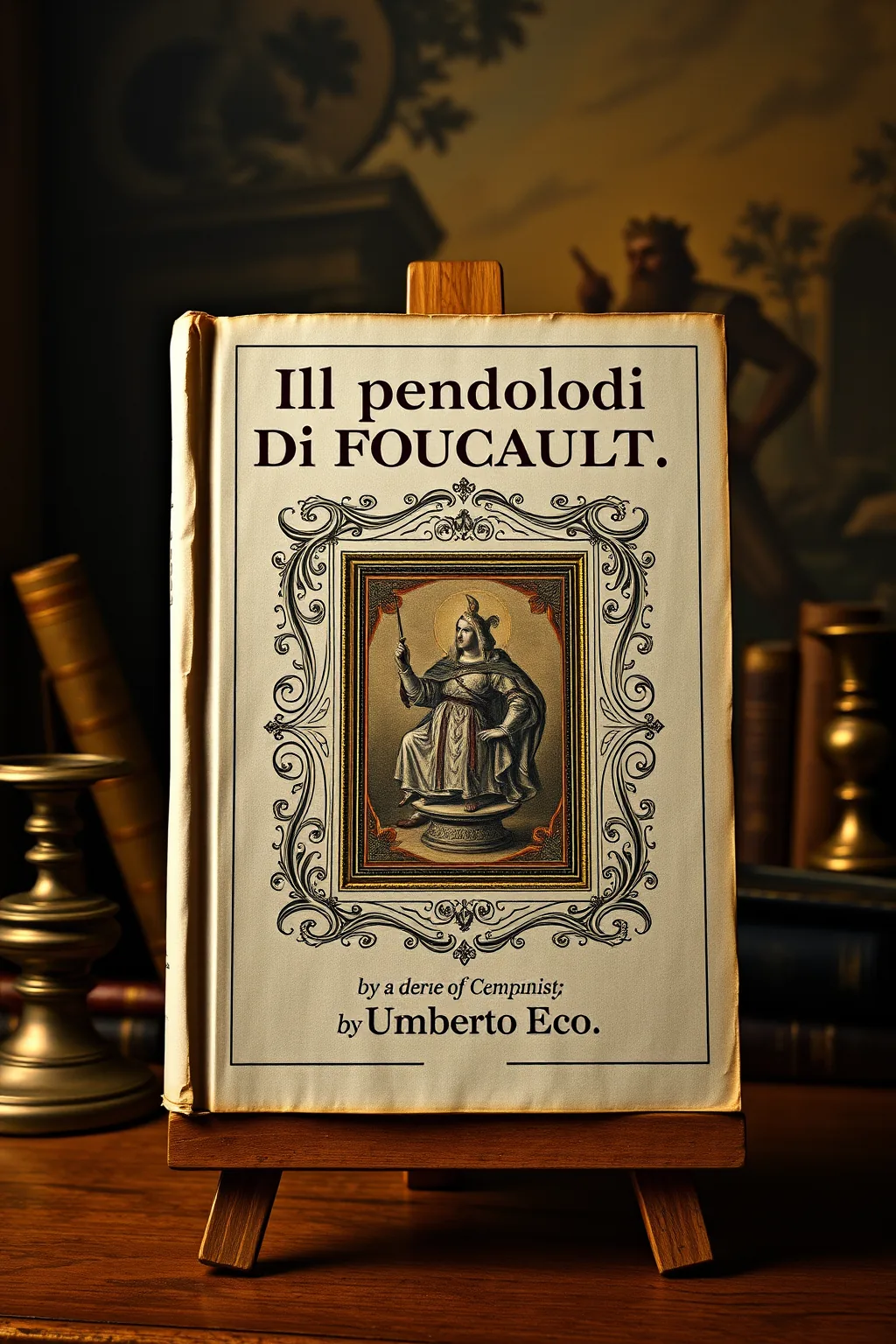
Umberto Eco's 'Il pendolo di Foucault' is a masterclass in esoteric literature, seamlessly blending historical intrigue with mystical symbolism. The novel's strength lies in its meticulous research and the author's ability to weave complex themes into a compelling narrative. Eco's exploration of the Templars, semiotics, and medieval history provides deep insights into the occult world, making it a must-read for scholars and practitioners of Hermeticism. The book's esoteric insights are particularly illuminating, offering a rich tapestry of hidden knowledge and ancient rituals. Ideal for those with a penchant for the mysterious and the mystical, 'Il pendolo di Foucault' is a treasure trove of esoteric wisdom.
📝 Description
74
Umberto Eco published 'Il pendolo di Foucault' in 1988.
In 'Il pendolo di Foucault,' Umberto Eco sets his story in a Milan publishing house where three editors invent a grand conspiracy theory. They connect disparate historical events and secret societies, from the Knights Templar to the Rosicrucians, creating a fictional occult web. As their game escalates, the lines between their fabricated myth and reality begin to blur, drawing them into dangerous obsessions.
The narrative follows Belbo, Casaubon, and Diotallevi as they construct this elaborate hoax. The titular Foucault pendulum becomes a central symbol, representing the perceived connections and eternal cycles they believe govern the universe. Their creation takes on a life of its own, leading to unforeseen consequences and a confrontation with those who might believe the fiction too readily.
Eco's novel engages with traditions of Western esotericism, particularly the lore surrounding the Knights Templar and various occult orders. It examines how these narratives are constructed, propagated, and how they can gain a perceived reality. The book touches on hermeticism and gnosticism through its characters' attempts to find hidden meanings and patterns in history. It plays with the idea of a hidden order or plan governing events, a common theme in esoteric thought, but does so with a critical, postmodern eye.
💡 Why Read This Book?
Why read this book — Umberto Eco's 'Il pendolo di Foucault' is essential reading for seekers of hidden knowledge, scholars of medieval history, and practitioners of the occult. The book's rich exploration of alchemical symbolism and Templar lore offers a unique perspective on the esoteric traditions that have shaped our world. Ideal for those fascinated by the interplay between historical fact and mystical fiction, 'Il pendolo di Foucault' provides a deep dive into the enigmatic world of secret societies and ancient rituals.
⭐ Reader Reviews
Honest opinions from readers who have explored this book.
❓ Frequently Asked Questions
What is the main theme of 'Il pendolo di Foucault'?
The main theme revolves around the quest for hidden knowledge and the exploration of esoteric symbolism, particularly through the lens of the Templars and alchemy.
Is this book suitable for beginners in esoteric studies?
While it provides rich insights, beginners might find the depth of esoteric content challenging. It's best suited for those with some prior knowledge.
How does Eco integrate historical facts with mystical elements?
Eco masterfully weaves historical facts about the Templars and medieval history with mystical elements, creating a narrative that blurs the lines between reality and fiction.
What is the significance of the Foucault Pendulum in the book?
The Foucault Pendulum symbolizes the eternal motion of the universe and the quest for hidden truths, serving as a central motif in the novel.
Why is this book important for students of semiotics?
The book delves deeply into semiotics, exploring the power of symbols and their role in shaping our understanding of the world, making it a valuable resource for semiotics students.
🔮 Key Themes & Symbolism
The Quest for Hidden Knowledge
The novel's central theme is the quest for hidden knowledge, particularly through the exploration of ancient rituals and secret societies. Eco examines the esoteric world of the Templars, alchemy, and occult symbolism, inviting readers to question the nature of reality and the power of hidden truths.
The Power of Symbolism
Eco's work is rich with symbolic imagery, from the Foucault Pendulum to the various alchemical symbols scattered throughout the narrative. These symbols serve as keys to unlocking deeper layers of meaning, making the book a valuable collection for those interested in the mystical and the esoteric.
The Blurred Lines Between Truth and Fiction
One of the most compelling aspects of 'Il pendolo di Foucault' is its exploration of the blurred lines between historical fact and fictional narrative. Eco masterfully combines real events and mystical elements, challenging readers to question what they believe to be true.
💬 Memorable Quotes
Direct passages from the work, attributed to the author.
“The Pendulum was the instrument of God.”
— The Foucault Pendulum symbolizes the eternal motion of the universe and the quest for hidden truths.
“The universe is full of magical things patiently waiting for our wits to grow sharper.”
— Eco's words invite readers to embrace the mystical and the esoteric, recognizing the hidden magic in the world around us.
“The Grail is a symbol of the quest for spiritual enlightenment.”
— The Holy Grail serves as a metaphor for the journey towards hidden knowledge and spiritual fulfillment.
💡 Key Ideas
Editorial paraphrase of the work's core concepts — not direct quotes.
The plan was to discover the Absolute Masters of the World.
This line underscores the novel's exploration of hidden power structures and the quest for ultimate knowledge.
The Temple was the heart of the world.
This quote highlights the central role of the Templars in the novel's esoteric themes.
🌙 Esoteric Significance
Tradition
Il pendolo di Foucault' belongs to the Hermetic tradition, looking at the mysteries of alchemy, the Templars, and the quest for hidden knowledge. Eco's exploration of these themes provides useful insights into the esoteric world, making it a valuable resource for practitioners and scholars of Hermeticism.
Symbolism
Key symbols in the book include the Foucault Pendulum, representing the eternal motion of the universe, and various alchemical symbols that serve as keys to unlocking deeper layers of meaning. The Templars and the Holy Grail are also central symbols, embodying the quest for spiritual enlightenment and hidden truths.
Modern Relevance
Today, 'Il pendolo di Foucault' remains relevant for its exploration of the enduring quest for hidden knowledge and the power of esoteric symbolism. Modern practitioners and scholars continue to draw upon Eco's insights, recognizing the book's value in understanding the mystical and the occult.
👥 Who Should Read This Book
Beginners in esoteric studies might find the depth of content challenging, but those with some prior knowledge will find it enriching. Scholars of medieval history and semiotics will appreciate Eco's meticulous research and integration of historical facts with mystical elements. Spiritual seekers and practitioners of the occult will be drawn to the novel's exploration of ancient rituals and secret societies. Ideal for readers fascinated by the interplay between historical fact and mystical fiction, 'Il pendolo di Foucault' offers a deep dive into the enigmatic world of hidden knowledge.
📜 Historical Context
Written in the late 20th century, 'Il pendolo di Foucault' reflects Umberto Eco's fascination with the intersection of historical fact and mystical fiction. Published in 1988, the book emerged during a time of renewed interest in esoteric traditions and the occult, influenced by the counterculture movements of the 1960s and 1970s. Eco's work stands as a proof of the enduring appeal of secret societies and ancient rituals, offering a unique perspective on the esoteric traditions that have shaped our world. Its influence can be seen in subsequent works of esoteric literature and in the ongoing quest for hidden knowledge.
📔 Journal Prompts
Reflect on the significance of the Foucault Pendulum in your own quest for hidden knowledge.
How do the symbols in 'Il pendolo di Foucault' resonate with your understanding of the esoteric world?
Consider the blurred lines between truth and fiction in the novel and how they apply to your own beliefs.
Explore the role of the Templars in the book and their significance in the quest for spiritual enlightenment.
What insights does 'Il pendolo di Foucault' offer about the power of secret societies and ancient rituals?
🗂️ Glossary
Foucault Pendulum
A device demonstrating the rotation of the Earth, symbolizing the eternal motion of the universe and the quest for hidden truths.
Templars
The Knights Templar, a medieval order known for their involvement in esoteric rituals and the quest for hidden knowledge.
Alchemy
An ancient practice involving the transformation of matter, often symbolizing spiritual and personal transformation.
Holy Grail
A legendary artifact symbolizing the quest for spiritual enlightenment and hidden truths.
Hermeticism
An esoteric tradition based on the writings of Hermes Trismegistus, focusing on the pursuit of hidden knowledge and spiritual wisdom.
This book appears in 3 collections
🔮 Readers Also Liked
Browse all →







More by Umberto Eco
All books →




From the “Hermeticism” Collection
View all →








More Free Alchemy & Hermeticism Books
View all →