Yoga Anatomy
 76
76

Yoga Anatomy
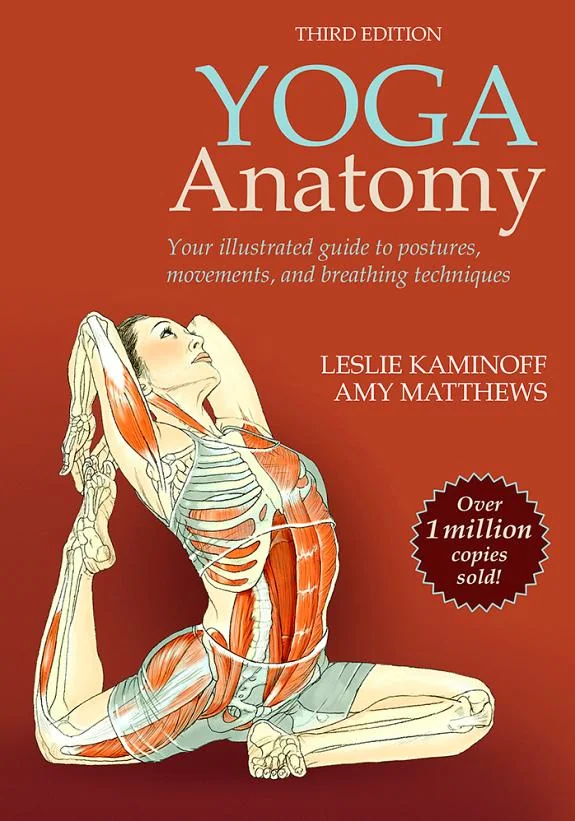
Leslie Kaminoff and Amy Matthews' Yoga Anatomy, Third Edition, presents a visually striking and intellectually rigorous examination of the physical architecture of yoga. Its strength lies undeniably in the clarity and precision of its anatomical illustrations, which bring the often abstract biomechanics of asana to life. The book excels at dissecting complex movements, such as the transition into a Sun Salutation, into understandable components of muscular and skeletal action. However, while the anatomical detail is superb, the integration of this knowledge into the subtler, energetic aspects often associated with yoga feels somewhat secondary. The focus remains predominantly on the physical body. The discussion on the pelvis, for instance, offers a foundational understanding of its role in various poses, but could perhaps explore its symbolic or energetic interpretations more thoroughly. Ultimately, Yoga Anatomy stands as an indispensable, albeit physically focused, reference for serious practitioners and teachers.
📝 Description
76
Yoga Anatomy, Third Edition, published in 2021, connects the body's form to yoga's dynamic expression.
Yoga Anatomy, by Leslie Kaminoff and Amy Matthews, offers a detailed look at the physical structures supporting yoga practice. The third edition, released in 2021, uses full-color illustrations to break down common yoga postures and movements. It explains the muscular and skeletal mechanics at play, aiming to clarify biomechanical principles for practitioners and teachers. This resource is useful for yoga instructors who want to improve their teaching and sequencing, and for dedicated students looking to refine their alignment and avoid injury. Physical therapists and other movement educators will also find value in its approach to the human body in a yoga context. The book is accessible to those new to anatomy, as long as they have a serious interest in yoga.
Published in 2007 with a third edition in 2021, Yoga Anatomy arrived as detailed anatomical study became more integrated into yoga. While anatomical texts existed, this work specifically applied those principles to yoga's unique movements. It provided clear illustrations and practical guidance, contributing to a safer and more informed approach to practice. This focus on the body's mechanics within a spiritual discipline reflects a broader trend of rationalizing and understanding the physical vessel for enhanced spiritual development.
💡 Why Read This Book?
• Gain a precise understanding of skeletal and muscular actions in specific yoga poses, moving beyond generic alignment cues to informed practice, as detailed in sections like the analysis of Trikonasana. • Learn to identify potential anatomical risks in common yoga movements and discover modifications to enhance safety and effectiveness, directly informed by the biomechanical explanations provided. • Appreciate the evolution of anatomical study within yoga, understanding how the 2007 original publication by Kaminoff and Matthews contributed to a more informed pedagogical approach.
⭐ Reader Reviews
Honest opinions from readers who have explored this book.
❓ Frequently Asked Questions
What makes the third edition of Yoga Anatomy different from previous versions?
The Third Edition, first published in 2021, features updated content and enhanced full-color anatomical illustrations, providing even greater clarity on the relationship between yoga and anatomy. It refines the explanations of common yoga movements and poses.
Is Yoga Anatomy suitable for complete beginners to yoga?
While comprehensive, the book's detailed anatomical focus might be best appreciated by those with some foundational yoga experience or a strong interest in biomechanics. Beginners may find it most beneficial when used alongside a qualified instructor.
How does Yoga Anatomy help prevent injuries in yoga practice?
By illustrating the specific muscular and skeletal actions involved in each pose, the book helps practitioners understand proper alignment, identify potential strain points, and learn safer ways to move, thereby reducing the risk of injury.
What is the primary focus of the anatomical illustrations in Yoga Anatomy?
The illustrations meticulously depict the underlying skeletal structures, major muscle groups, and joint movements engaged in various yoga poses. They are designed to offer an 'inside look' at the mechanics of each posture.
Who are the authors of Yoga Anatomy, and what is their background?
Leslie Kaminoff and Amy Matthews are experienced yoga educators and anatomical specialists. Kaminoff, a yoga teacher since 1985, and Matthews, a movement educator, collaborated to bring their expertise to this widely respected text.
Does Yoga Anatomy discuss the energetic or spiritual aspects of yoga?
The book's primary emphasis is on the physical anatomy and biomechanics of yoga. While it touches on how physical understanding can enhance practice, it does not deeply explore the energetic or spiritual dimensions typically found in other texts.
🔮 Key Themes & Symbolism
Skeletal Articulation
The work meticulously details how the skeletal framework, including major bones like the pelvis and spine, articulates and supports the body in various yoga postures. It emphasizes understanding bony landmarks and joint mechanics, explaining how movements like flexion, extension, and rotation occur within poses. This focus provides a concrete basis for alignment, moving beyond subjective feeling to objective structural understanding, crucial for both safety and efficacy in practice.
Muscular Engagement
A core theme is the precise role of specific muscle groups – agonists, antagonists, and stabilizers – in executing and holding yoga asanas. The book illustrates which muscles are activated, stretched, or inhibited in poses like Virabhadrasana II. This detailed analysis allows practitioners to consciously engage muscles for strength, stability, and flexibility, offering a deeper proprioceptive awareness and control over their physical form.
Applied Biomechanics
Yoga Anatomy translates complex biomechanical principles into practical applications for yoga practitioners. It explains concepts such as force distribution, leverage, and joint compression within the context of specific movements and postures. Understanding these principles helps users optimize their alignment, prevent common injuries associated with improper form, and enhance the therapeutic benefits of their practice through informed movement.
Anatomical Illustration as Pedagogy
The book leverages detailed, full-color anatomical illustrations as a primary teaching tool. These visuals serve to explain the internal workings of the body during yoga practice, making complex anatomical relationships accessible. This visual pedagogy is central to the work's effectiveness, transforming abstract anatomical knowledge into readily understandable insights applicable to the physical experience of yoga.
💬 Memorable Quotes
Direct passages from the work, attributed to the author.
“Anatomical illustrations... offer an inside look into each pose.”
— This statement highlights the book's central pedagogical strategy: using detailed visuals to reveal the hidden muscular and skeletal actions occurring within common yoga postures, making the practice more understandable and informed.
“The relationship between yoga and anatomy is brought to life.”
— This phrase suggests that the book effectively bridges the gap between theoretical anatomical knowledge and the practical, embodied experience of yoga, making the connection tangible and accessible for practitioners.
“Detailed, full-color anatomical illustrations.”
— This descriptive element points to the high quality and visual richness of the book's diagrams, which are crucial for conveying complex anatomical information clearly and effectively to a wide audience.
“Understanding the structures and principles underlying common movements.”
— This concept underscores the book's commitment to providing foundational knowledge, enabling readers to grasp *why* certain alignments or movements are recommended in yoga, based on physiological truths.
💡 Key Ideas
Editorial paraphrase of the work's core concepts — not direct quotes.
The book provides a deep understanding of the structures and principles underlying common movements in yoga.
This paraphrased concept emphasizes the work's goal of moving beyond superficial instruction to educate readers on the fundamental anatomical mechanics that govern yoga practice, fostering a more knowledgeable and safer approach.
🌙 Esoteric Significance
Tradition
While not strictly adhering to a specific esoteric lineage like Kabbalah or Hermeticism, Yoga Anatomy engages with the perennial philosophical underpinnings of yoga as a mind-body discipline. It aligns with the yogic tradition's historical emphasis on understanding the physical form as a vessel for deeper consciousness and self-awareness. By grounding practice in physiological reality, it complements practices that explore subtle energy bodies (prana, chakras), providing a tangible framework for their manifestation.
Symbolism
The human body itself functions as a potent symbol within many esoteric traditions, representing the microcosm mirroring the macrocosm. The detailed anatomical illustrations in Yoga Anatomy can be seen as a modern, scientific interpretation of this symbolism. Specific structures like the spine, often symbolizing the Tree of Life or a channel for spiritual ascent, are presented with precise biomechanical function, grounding the symbolic in the physical reality of movement and posture.
Modern Relevance
Contemporary yoga instructors, physical therapists, and movement scientists frequently cite Kaminoff and Matthews' work. It informs modern approaches to therapeutic yoga, injury prevention, and somatic education. Thinkers and practitioners focused on embodied cognition and the science of mindfulness often draw upon the detailed anatomical understanding provided, seeing it as a crucial bridge between subjective experience and objective physiological processes in practices aimed at well-being.
👥 Who Should Read This Book
• Yoga instructors seeking to enhance their teaching with precise anatomical knowledge, enabling them to offer safer, more effective alignment cues and modifications. • Dedicated yoga practitioners aiming to deepen their self-awareness, refine their technique, and understand the biomechanics behind injury prevention and improved posture. • Movement educators, physical therapists, and bodyworkers interested in the practical application of anatomical principles within the context of yoga and related disciplines.
📜 Historical Context
The first edition of Yoga Anatomy, released in 2007, arrived during a significant phase in yoga's Western popularization, marked by an increasing demand for more rigorous, evidence-based instruction. While anatomical study had always been implicitly part of medicine and physiotherapy, its systematic application to yoga pedagogy was gaining traction. Authors like Ray Long were simultaneously publishing detailed anatomical analyses of yoga poses. Kaminoff and Matthews' work distinguished itself by its accessible, full-color illustrations and its direct focus on the practicalities of common asanas. Unlike purely theoretical anatomical texts, it aimed to serve yoga teachers and practitioners directly. Its reception was notably positive within the yoga community, quickly becoming a standard reference, contrasting with the more esoteric or philosophical texts that had previously dominated the field for many Western practitioners.
📔 Journal Prompts
The mechanics of the Pelvis in foundational poses.
Understanding the role of the Erector Spinae in spinal extension.
How the concept of joint compression manifests in your practice.
The interplay between agonist and antagonist muscles during a transition.
Reflecting on the Sacroiliac Joint's stability during Tadasana.
🗂️ Glossary
Asana
A Sanskrit term referring to a physical posture or pose practiced in yoga, intended to promote stability, comfort, and awareness in the body.
Agonist Muscle
A muscle that is primarily responsible for producing a specific movement at a joint; it contracts to create the desired action.
Antagonist Muscle
A muscle that opposes the action of the agonist muscle. It relaxes to allow movement and helps control the speed and smoothness of the motion.
Biomechanics
The study of the mechanical laws relating to the movement or structure of the living organism's body. In yoga, it applies physics principles to understand movement and force.
Stabilizer Muscles
Muscles that support or stabilize the body's trunk or limbs during movement, preventing unwanted motion and maintaining posture.
Skeletal System
The framework of bones and cartilage that supports and protects an organism's body, providing structure for movement and muscle attachment.
Joint Compression
The force exerted on a joint when surfaces are pressed together, which can be therapeutic when managed correctly in yoga but potentially harmful if excessive.
This book appears in 1 collection
🔮 Readers Also Liked
Browse all →









From the “Hatha Yoga” Collection
View all →









More Free Occult Philosophy Books
View all →