ECKANKAR
 79
79

ECKANKAR
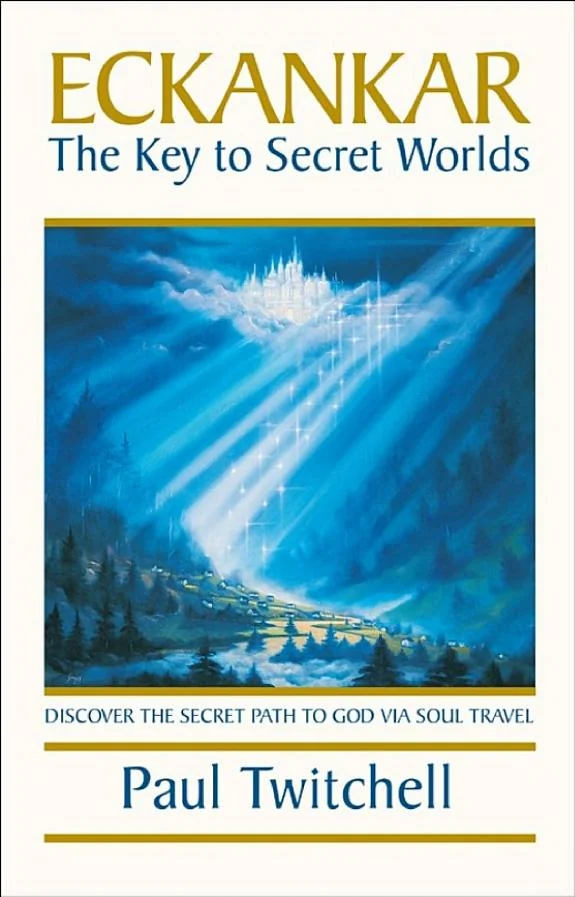
Paul Twitchell’s ECKANKAR attempts to map the internal cosmos, a laudable goal given humanity’s persistent inquiries into its own nature. The book positions "Soul Travel" as the key to unlocking this inner universe, a concept introduced with a compelling sense of urgency for those feeling adrift in the modern world. Twitchell’s writing effectively captures a sense of spiritual seeking, particularly in its critique of a life lived without a clear sense of purpose. However, the work’s assertions regarding the "Shariyat-Ki-Sugmand" and the role of the "Mahanta" can feel dogmatic, lacking the nuanced exploration one might expect from a critique of established dogma. The strength lies in its direct address of existential ennui; its limitation is a reliance on specific doctrines without extensive comparative philosophical grounding. Ultimately, ECKANKAR offers a distinct spiritual framework for those predisposed to its particular path.
📝 Description
79
Paul Twitchell's ECKANKAR introduces 'Soul Travel' as a method for exploring the inner universe.
Published in its current form in 2016, ECKANKAR by Paul Twitchell describes a path of spiritual liberation, not a religion. Twitchell posits an 'inner universe' as a vast frontier, contrasting it with the mysteries of human purpose and identity that trouble modern life. The book proposes 'Soul Travel,' a technique for conscious out-of-body experience, as a way to explore this inner dimension.
This text is for individuals questioning their earthly purpose and seeking a deeper understanding of love, wisdom, and freedom. It appeals to those who have not found answers through conventional means and are curious about alternative spiritual methods for exploring consciousness and the soul. The work centers on the 'Shariyat-Ki-Sugmand,' a spiritual law, and the role of the 'Mahanta,' the Living ECK Master. It emphasizes the divine spark within everyone and the possibility of direct spiritual realization.
Eckankar, founded by Paul Twitchell in 1965, emerged within the mid-20th century spiritual milieu that saw heightened interest in Eastern philosophies and mysticism. This period also included figures exploring altered states of consciousness. Eckankar positioned itself with other movements like Scientology and Transcendental Meditation, all offering routes to spiritual fulfillment beyond mainstream religious structures.
💡 Why Read This Book?
• You will learn about the specific ECKANKAR concept of "Soul Travel," a technique for conscious exploration of inner planes, distinct from astral projection as understood in other traditions, as detailed in the book's early chapters. • Gain an understanding of the "Mahanta," the Living ECK Master, and their role as a guide within the ECKANKAR system, a concept central to the path described by Paul Twitchell. • Discover the ECKANKAR interpretation of spiritual liberation, which focuses on direct realization through the "Shariyat-Ki-Sugmand" rather than adherence to external religious structures, offering a unique perspective on spiritual progression.
⭐ Reader Reviews
Honest opinions from readers who have explored this book.
❓ Frequently Asked Questions
What is the primary goal of ECKANKAR as presented by Paul Twitchell?
The primary goal of ECKANKAR, according to Paul Twitchell's work, is to guide the individual soul toward self-realization and eventual liberation from the cycle of rebirth through "Soul Travel" and direct experience of the divine.
When was ECKANKAR founded and by whom?
ECKANKAR was founded by Paul Twitchell in 1965. The book ECKANKAR, first published in its current iteration in 2016, elaborates on the principles he established.
What does 'Soul Travel' mean in the context of ECKANKAR?
In ECKANKAR, 'Soul Travel' refers to the conscious projection of the soul, or pure consciousness, out of the physical body to explore higher spiritual realms and gain direct knowledge.
Is ECKANKAR a religion, and what is the 'Mahanta'?
ECKANKAR is described as a "religion of the home of God" or a "path of ECK." The "Mahanta" is the Living ECK Master, the spiritual guide for ECK students on the path.
What is the 'Shariyat-Ki-Sugmand' mentioned in ECKANKAR?
The "Shariyat-Ki-Sugmand" is presented as the spiritual law or scripture of ECKANKAR, guiding initiates on their journey towards God-realization through the teachings of the Living ECK Master.
How does ECKANKAR address the search for love, wisdom, and freedom?
ECKANKAR proposes "Soul Travel" and direct spiritual experience under the guidance of the Mahanta as the means to find genuine love, wisdom, and freedom, suggesting these are found within the "inner universe."
🔮 Key Themes & Symbolism
The Inner Universe
The work posits an 'inner universe' as a vast frontier, analogous to outer space explored in the 20th century, yet largely unknown. This internal cosmos is presented as the true area of spiritual exploration. It's where the soul's journey toward understanding its origins and destiny unfolds. The book suggests that conventional searches for meaning often overlook this profound inner dimension, leading to a "black hole of mystery and speculation" about human existence and purpose.
Soul Travel
Central to ECKANKAR is the concept of "Soul Travel," a technique for conscious out-of-body experience. This is not merely dreaming or imagination, but the actual projection of the soul to explore different planes of existence. The book frames this as a creative exercise to unlock the soul's inherent abilities and gain direct spiritual knowledge, leading individuals to understand their true nature as divine beings separate from the physical form.
The Living ECK Master
The path of ECKANKAR emphasizes the necessity of a contemporary spiritual guide, known as the "Mahanta" or the Living ECK Master. This figure is presented as essential for working through the inner worlds safely and effectively. The Mahanta's role is to reveal the "Shariyat-Ki-Sugmand" and lead disciples toward God-realization, distinguishing ECKANKAR from paths that rely solely on ancient texts or impersonal divine forces.
Spiritual Liberation
The ultimate aim presented is spiritual liberation – freedom from the limitations of the physical body and the cycle of reincarnation. This liberation is achieved not through blind faith or ritual, but through direct experience and self-awareness cultivated via the techniques taught within ECKANKAR. The book suggests that true wisdom, love, and freedom are inherent qualities of the soul, accessible through conscious spiritual practice.
💬 Memorable Quotes
Direct passages from the work, attributed to the author.
“What on earth am I doing here?”
— This question expresses the existential seeking the book addresses, highlighting a common human feeling of disorientation and a desire for purpose in a fast-paced world.
“The rockets of the twentieth century ushered man into the exciting frontiers of outer space.”
— This opening statement sets a metaphorical stage, contrasting the external exploration of space with the neglected potential of humanity's 'inner universe'.
“Our search for love, wisdom, and freedom has so far been mostly in vain.”
— This highlights the perceived failure of conventional methods to satisfy fundamental human desires, positioning ECKANKAR as a potential solution.
“Then our eyes catch sight of the enchanting words Soul Travel!”
— This phrase introduces the core concept of ECKANKAR with a sense of wonder and possibility, suggesting a direct path to spiritual discovery.
“ECKankar offers simple, creative exercises that unlock the...”
— This suggests that the path to spiritual understanding within ECKANKAR involves practical, accessible techniques rather than complex dogma.
🌙 Esoteric Significance
Tradition
ECKANKAR draws from and synthesizes elements of various esoteric traditions, including Vedanta, Sufism, and Kabbalah, while presenting itself as a unique and ancient path. It positions itself as the "Ancient Path of the Masters," distinct from organized religions. Its emphasis on the Living Master and direct experience aligns with certain Gnostic and Hermetic principles of inner knowing, yet it frames its teachings, particularly "Soul Travel," as a specific and direct method for soul liberation.
Symbolism
Key symbols in ECKANKAR include the "Light and Sound" (ECK), representing the divine creative forces of the universe. The "Shariyat-Ki-Sugmand" functions as a sacred guiding principle, akin to a spiritual law. The "Mahanta," the Living ECK Master, serves as a living symbol of divine guidance on the path, embodying the presence of God in human form for disciples.
Modern Relevance
Contemporary spiritual seekers exploring consciousness, out-of-body experiences, and non-dualistic paths often find elements of ECKANKAR's teachings. Thinkers and practitioners interested in the intersection of consciousness studies, comparative religion, and personal spiritual development may engage with its concepts. The emphasis on subjective experience and direct realization continues to resonate with individuals seeking alternatives to traditional religious structures.
👥 Who Should Read This Book
• Individuals grappling with existential questions about purpose and identity, seeking to explore their "inner universe" beyond conventional philosophical or religious answers. • Practicing spiritual explorers interested in "Soul Travel" and techniques for conscious out-of-body experiences as a means of spiritual growth. • Students of comparative religion and esoteric traditions looking to understand unique spiritual paths that emphasize a living guide and direct divine experience.
📜 Historical Context
The ideas presented in ECKANKAR, particularly the concept of "Soul Travel," gained traction in the milieu of the mid-20th century. This era was marked by a widespread interest in Eastern religions, mysticism, and the expansion of consciousness, influenced by figures like Aldous Huxley and the Beat Generation's explorations. Paul Twitchell founded ECKANKAR in 1965, a period when numerous spiritual movements emerged, including Transcendental Meditation and Scientology, each offering alternative paths to enlightenment. Unlike purely philosophical inquiries or traditional religious frameworks, ECKANKAR proposed a direct, experiential path guided by a living master. The spiritual landscape was fertile ground for such movements, as many sought meaning beyond the perceived materialism of the post-war West. While not directly engaged by major academic scholars at the time of its founding, the movement represented a significant current within the New Age and countercultural spiritual shifts.
📔 Journal Prompts
The concept of the 'inner universe' as a frontier: What personal experiences suggest its existence?
ECKANKAR's view of 'Soul Travel': How might conscious exploration of non-physical states alter one's perspective on reality?
The role of the 'Mahanta': Reflect on the significance of a living spiritual guide in one's personal journey.
Reflecting on the "Shariyat-Ki-Sugmand": What does spiritual law mean to you outside of formal religious codes?
Considering the search for love, wisdom, and freedom: Where have past searches fallen short, and why?
🗂️ Glossary
ECK
The divine Life Force or Spirit, often associated with the "Light and Sound" of God, central to ECKANKAR teachings.
Soul Travel
The ability of the soul (consciousness) to consciously leave the physical body and journey to other worlds or planes of existence.
Mahanta
The Living ECK Master, the spiritual guide for ECKANKAR students, representing God in human form.
Shariyat-Ki-Sugmand
The spiritual law or scripture of ECKANKAR, guiding the soul on its path to God-realization.
Inner Universe
The vast, unexplored area of consciousness and spirit within each individual, as distinct from the physical or outer universe.
ECKist
A student or follower of ECKANKAR.
Planes of Existence
Different levels or domains of reality that the soul can journey through, ranging from the physical to the highest spiritual planes.
This book appears in 1 collection
🔮 Readers Also Liked
Browse all →









From the “Soul Travel” Collection
View all →








More Free Occult Philosophy Books
View all →