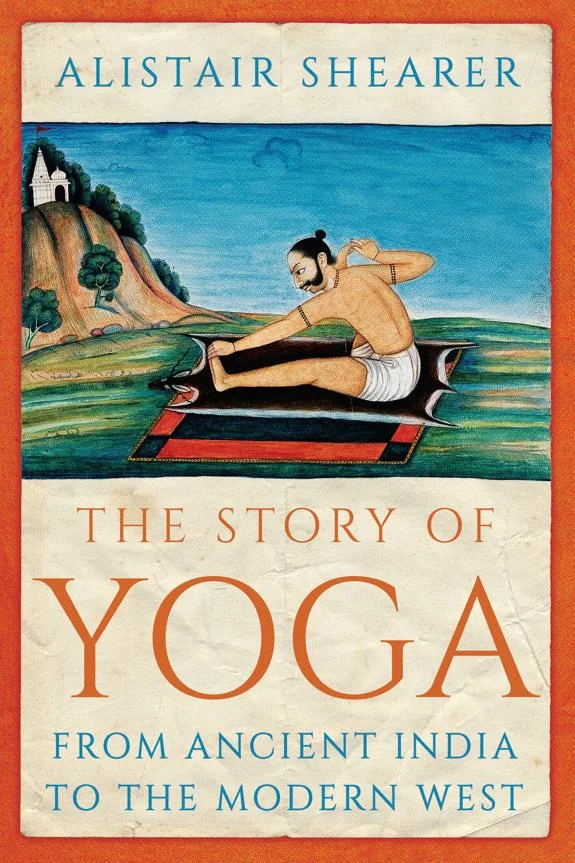
The Story of Yoga
 83
83

The Story of Yoga
Alistair Shearer's "The Story of Yoga" offers a much-needed historical survey, charting yoga's remarkable journey from ancient India to global ubiquity. The author adeptly navigates the complex lineage, detailing pivotal moments like Swami Vivekananda's 1893 Parliament of Religions address, which significantly boosted Eastern philosophy's profile in America. Shearer’s strength lies in meticulously documenting this transmission, highlighting how distinct schools of yoga emerged and diversified. A potential limitation is the book's broad scope, which occasionally leads to a more descriptive than deeply analytical treatment of specific philosophical currents. The discussion of early 20th-century Hatha Yoga revivalists, for instance, provides a solid overview but could benefit from a deeper dive into their esoteric motivations. Despite this, "The Story of Yoga" stands as a valuable, factually rich account of a global phenomenon. Verdict: An indispensable historical narrative for understanding yoga's multifaceted evolution.
📝 Description
83
Alistair Shearer's 2020 book traces yoga's journey from ancient India to global practice.
Alistair Shearer’s "The Story of Yoga" examines how a complex Indian discipline spread worldwide. The book follows yoga from its ancient origins and philosophical development in texts like Patanjali's Yoga Sutras to its current status as a widespread physical and spiritual practice. Shearer details the movements and individuals responsible for transmitting yoga across different continents and cultures.
The work situates yoga's global diffusion within specific historical periods. This includes the impact of Indian nationalism and the interest shown by Transcendentalists in Eastern thought during the late 19th century. Shearer recounts how figures such as Swami Vivekananda introduced yoga philosophy to the West. He also describes the popularization of Hatha Yoga by teachers in the mid-20th century, acknowledging the effects of colonial encounters and the later reinterpretation of yogic traditions.
Shearer's account engages with core yogic concepts like asana, pranayama, and dhyana, highlighting the shift from classical texts' holistic approach to the modern Western focus on physical postures. The book connects yoga to philosophical schools such as Samkhya and Vedanta, providing context for its deeper, less commonly understood aspects. This places the narrative within a tradition of interpreting and transmitting esoteric knowledge across different eras and societies.
💡 Why Read This Book?
• Gain a concrete understanding of yoga's historical trajectory, learning about figures like Swami Vivekananda and the specific period of Hatha Yoga's Western popularization in the mid-20th century. • Discover how yoga's philosophical depth, as found in texts like the Yoga Sutras of Patanjali, was reinterpreted and often simplified during its global diffusion. • Appreciate the nuanced interplay between tradition and adaptation by examining the specific ways yogic practices transformed when moving from Indian philosophical contexts to Western physical culture.
⭐ Reader Reviews
Honest opinions from readers who have explored this book.
❓ Frequently Asked Questions
When was Alistair Shearer's "The Story of Yoga" first published?
Alistair Shearer's "The Story of Yoga" was first published in 2020, offering a contemporary perspective on the historical development of this ancient practice.
What are the primary historical periods covered in "The Story of Yoga"?
The book covers yoga's journey from its ancient Indian roots, through its philosophical development, and into its modern global popularization, highlighting key periods such as the late 19th century and the mid-20th century.
Does "The Story of Yoga" discuss the philosophical underpinnings of yoga?
Yes, the work explores core yogic concepts such as asana, pranayama, and dhyana, and situates them within their philosophical schools like Samkhya and Vedanta.
Who were some influential figures mentioned in the book regarding yoga's spread?
The book discusses influential figures like Swami Vivekananda, who played a significant role in introducing Indian philosophy, including yoga, to the West in the late 1800s.
How does the book differentiate between ancient yoga and modern yoga?
Shearer's work examines the shift in emphasis from the holistic yogic path described in classical texts to the predominant focus on physical postures in contemporary Western practice.
Is "The Story of Yoga" suitable for beginners curious about yoga's history?
Absolutely. It provides a clear, factual narrative that is accessible to beginners while offering depth for those with prior knowledge of yoga's historical and philosophical context.
🔮 Key Themes & Symbolism
Global Transmission
This theme focuses on the intricate process by which yoga, originating in India, transitioned into a worldwide phenomenon. Shearer details the specific channels of transmission, from scholarly exchanges and spiritual movements in the late 19th century, exemplified by figures like Swami Vivekananda, to the post-war popularization of Hatha Yoga. It examines the cultural adaptations and sometimes misinterpretations that occurred as yoga encountered diverse global audiences, moving beyond its original philosophical and spiritual context.
Philosophical Evolution
The work looks at the intellectual currents that shaped yoga's philosophical identity. It traces the evolution from early Vedic conceptions to the systematic codification in Patanjali's Yoga Sutras and the influence of Vedanta. A significant aspect explored is how these profound philosophical underpinnings were often sidelined in the West in favor of physical practices, prompting an examination of what constitutes 'yoga' across different eras and cultures.
Modern Reinterpretation
A central theme is the modern Western reinterpretation of yoga, particularly the emphasis on asana. Shearer contrasts this with the classical yogic path that integrated ethical precepts, meditation, and breath control. The book analyzes the forces—including physical culture movements and therapeutic applications—that led to this shift, exploring how ancient techniques are adapted and sometimes secularized to fit contemporary lifestyles and wellness trends.
Cultural Exchange and Appropriation
This theme addresses the complex dynamics of cultural exchange, including instances of appropriation, as yoga migrated across the globe. The book acknowledges the role of colonialism in shaping initial encounters and the subsequent efforts by Indian gurus and Western practitioners to either preserve or redefine yogic traditions. It highlights how yoga became a site for negotiating cultural identities and spiritual aspirations.
💬 Memorable Quotes
Direct passages from the work, attributed to the author.
“Yoga's journey from ancient India to global ubiquity.”
— This concisely captures the overarching narrative arc of the book, emphasizing the vast geographical and temporal scope of yoga's transformation from a localized spiritual discipline to a worldwide practice.
“The shift from holistic yogic path to focus on physical postures.”
— This highlights a core analytical point made by Shearer, contrasting the comprehensive spiritual and ethical framework of classical yoga with its modern Western manifestation, which often prioritizes physical asanas.
“Swami Vivekananda's role in introducing yoga philosophy to the West.”
— This points to a specific historical moment and individual crucial to yoga's early international dissemination, particularly the introduction of its philosophical and spiritual dimensions beyond India.
“The influence of Hatha Yoga revivalists in the mid-20th century.”
— This references a key period and group of practitioners who were instrumental in popularizing the physical aspects of yoga in the West, shaping the practice as many know it today.
“Yoga's adaptation across diverse global audiences.”
— This interpretation underscores the theme of cultural negotiation, acknowledging that yoga's meaning and practice have been significantly altered and diversified as it has been adopted by various cultures worldwide.
🌙 Esoteric Significance
Tradition
While not strictly adhering to a single esoteric lineage, "The Story of Yoga" engages with the philosophical underpinnings that inform various esoteric traditions, particularly those influenced by Indian thought such as Theosophy and later New Age movements. Shearer traces the lineage of concepts like *pranayama* and *dhyana* from classical texts like the Yoga Sutras of Patanjali, which have been foundational for many Western esotericists seeking deeper meditative and energetic practices beyond mere physical exercise.
Symbolism
Key symbols explored implicitly include the lotus flower, representing purity and spiritual awakening, and the concept of the 'eight limbs' of yoga, a structured path towards enlightenment. The book also touches upon the symbolism inherent in different *asanas* and *pranayama* techniques, viewed not just as physical postures or breathing exercises, but as tools for altering consciousness and aligning the practitioner with subtler universal forces, a concept resonant within many esoteric frameworks.
Modern Relevance
Contemporary thinkers and schools focusing on integrated wellness, mindfulness, and somatic psychology draw heavily on the historical trajectory detailed by Shearer. While some modern yoga instruction may secularize the practice, the underlying techniques for breath control and focused awareness continue to be explored in therapeutic and self-development contexts. Shearer’s work provides the historical grounding for understanding how these ancient practices, once esoteric, are now globally disseminated and reinterpreted for modern spiritual and psychological well-being.
👥 Who Should Read This Book
• Aspiring yoga teachers seeking a robust historical and philosophical foundation beyond immediate postural instruction. • Scholars of comparative religion and philosophy interested in the cross-cultural transmission of spiritual practices and ideas. • Practitioners curious about the evolution of yoga, wanting to understand how modern Hatha Yoga relates to its ancient textual origins and diverse historical interpretations.
📜 Historical Context
Published in 2020, Alistair Shearer's "The Story of Yoga" arrived at a moment when yoga was a firmly established global phenomenon, yet its historical roots were often obscured. The book situates its narrative against the backdrop of the late 19th century, a period marked by burgeoning interest in Eastern spirituality in the West, notably through figures like Swami Vivekananda who addressed the Parliament of Religions in Chicago in 1893. This era saw competing intellectual currents, with Western traditions grappling with modernity while simultaneously seeking alternative spiritual frameworks. Shearer details the subsequent decades, including the mid-20th century rise of Hatha Yoga popularizers, who significantly reshaped the practice's perception. While the book doesn't focus on a specific reception event, its comprehensive historical tracing implicitly engages with scholars of religious studies and comparative philosophy, offering a counterpoint to more esoteric or purely practical accounts of yoga.
📔 Journal Prompts
The transmission of yoga from India to the West.
Patanjali's Yoga Sutras and the concept of dhyana.
The shift in emphasis from holistic yogic path to physical postures.
Swami Vivekananda's influence on global yoga discourse.
The historical context of Hatha Yoga's popularization.
🗂️ Glossary
Asana
Literally 'seat' or 'posture' in Sanskrit. In contemporary yoga, it most commonly refers to the physical postures practiced for health, flexibility, and spiritual development.
Pranayama
A Sanskrit term encompassing the control and regulation of breath, considered a vital component of yogic practice for influencing vital energy (prana) and consciousness.
Dhyana
Meditation or contemplation. In classical yoga, it is the seventh limb of the eightfold path, representing sustained, unbroken concentration on an object or idea.
Yoga Sutras of Patanjali
An foundational ancient Indian text compiling aphorisms on yoga, attributed to the sage Patanjali. It systematically outlines the theory and practice of yoga, including the eight limbs.
Hatha Yoga
A branch of yoga that typically involves physical postures (asanas), breath control (pranayama), and meditation. It is often seen as a preparatory path for more advanced yogic practices.
Samkhya
An ancient Indian philosophical system that posits a dualistic reality of spirit (Purusha) and matter (Prakriti). It significantly influenced the development of yoga philosophy.
Vedanta
A major school of Indian philosophy based on the Upanishads, Brahma Sutras, and Bhagavad Gita. It explores themes of reality, consciousness, and the nature of the self.
This book appears in 1 collection
🔮 Readers Also Liked
Browse all →








From the “Hatha Yoga” Collection
View all →








More Free Occult Philosophy Books
View all →