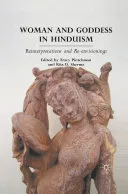
Woman and Goddess in Hinduism
 71
71

Woman and Goddess in Hinduism
Pintchman and Sherma’s work, 'Woman and Goddess in Hinduism,' is a welcome intervention for its deliberate methodological stance. By foregrounding theological and activist approaches over more traditional historical or anthropological ones, the authors carve out a distinct space for understanding the feminine in Hinduism. This is particularly evident in their exploration of how divine female figures are not merely objects of worship but active agents whose conceptualization can fuel social change. The book’s strength lies in this purposeful engagement with the *telos* of Hindu feminine divinity—its potential for transformative action. However, this singular focus, while its own merit, can sometimes leave the reader wishing for a more robust engagement with the historical and literary nuances that have shaped these traditions over millennia. A passage discussing the theological underpinnings of the goddess Kali, for instance, highlights her potent symbolism of destruction and liberation, but could benefit from a deeper historical grounding of her evolving iconography. Nevertheless, the work offers a valuable, if specialized, perspective on Hindu feminine divinity.
📝 Description
71
Published in 2011, 'Woman and Goddess in Hinduism' examines the feminine principle in Hindu traditions.
T. Pintchman and R. Sherma's book focuses on the theological and activist dimensions of the feminine principle in Hinduism. It analyzes how the divine feminine is understood and how these concepts influence contemporary religious engagement. The authors move beyond purely historical or anthropological views to consider the practical and lived aspects of these ideas. This work is for scholars and practitioners interested in Hindu theology, particularly concerning gender and divinity. It will resonate with those who approach religious texts and traditions through social activism and theological construction, rather than solely historical or literary study. Students of comparative religion examining divine feminine archetypes will also find value here.
The text considers the complex character of the divine feminine in Hinduism. It distinguishes between the human woman and the divine Goddess, while also showing their connection. The book looks at how theological systems shape ideas about female power, agency, and spiritual authority within Hindu society. It investigates the roles of goddesses such as Durga, Kali, and Lakshmi, and their manifestations in ritual and practice.
This work engages with the study of the divine feminine, a subject often found within esoteric traditions that explore spiritual power and cosmology through female deities. While rooted in the academic study of Hinduism, its focus on theological construction and lived practice aligns with traditions that seek direct experience or transformative understanding of the sacred feminine. It places Hindu goddesses within a broader conversation about divine archetypes that resonate across various spiritual paths, connecting textual analysis with the practical application of spiritual concepts.
💡 Why Read This Book?
• Gain a unique theological framework for understanding the divine feminine in Hinduism, moving beyond mere historical or anthropological study as presented in the book's emphasis on theological and activist methods. • Explore how concepts of Hindu goddesses, such as the multi-faceted nature of figures like Kali, can inform and inspire contemporary social activism, as detailed in the work's activist-oriented analysis. • Understand the intricate relationship between the human woman and the divine Goddess within Hindu traditions, a core concept explored through theological lenses, providing a distinct perspective from the book's 2011 publication date.
⭐ Reader Reviews
Honest opinions from readers who have explored this book.
❓ Frequently Asked Questions
What specific methodologies does 'Woman and Goddess in Hinduism' prioritize?
The book by Pintchman and Sherma prioritizes theological and activist methodologies. It aims to analyze Hindu understandings of the feminine by focusing on how these concepts are constructed theologically and how they can inform social action, rather than solely through historical or anthropological lenses.
When was 'Woman and Goddess in Hinduism' first published?
The book 'Woman and Goddess in Hinduism' by T. Pintchman and R. Sherma was first published on August 29, 2011. This 2011 publication date situates it within contemporary discussions on gender, religion, and activism.
Does the book focus on specific Hindu goddesses?
While the book broadly examines Hindu understandings of the feminine, it likely engages with various divine female figures and their theological representations. The original blurb emphasizes multilayered explorations, suggesting a comprehensive rather than narrowly focused approach to Hindu goddesses.
Who are the authors of 'Woman and Goddess in Hinduism'?
The authors are T. Pintchman and R. Sherma. Their collaborative work in this 2011 publication offers a specific perspective on the feminine divine within Hindu traditions.
What is the main distinction of this book compared to other studies on Hindu goddesses?
Its primary distinction lies in its methodological emphasis: it prioritizes theological and activist approaches over historical, anthropological, or literary ones. This allows for an examination of the *application* and *construction* of divine feminine concepts, not just their historical presence.
Is the book suitable for beginners in Hinduism studies?
While it offers a focused perspective, its emphasis on theological and activist methodologies might be more directly accessible to those with some background in religious studies or theological analysis. Beginners might find it more rewarding after establishing foundational knowledge.
🔮 Key Themes & Symbolism
Divine Feminine Theology
This theme centers on the conceptualization of the Goddess in Hinduism, not merely as a mythological figure but as a theological construct with wide implications. The work, published in 2011, explores how these divine feminine principles are articulated within Hindu traditions, emphasizing their role in shaping religious thought and practice. It moves beyond descriptive accounts to analyze the theological frameworks that underpin devotion and understanding of female divinity, examining the inherent power and agency attributed to these figures.
Activist Dimensions of Divinity
The book highlights the connection between theological understanding of the feminine divine and its potential for inspiring social action. It explores how the concepts of goddesses and feminine power within Hinduism are not confined to ritual or doctrine but can serve as a basis for activism and reform. This perspective, emphasized by the authors' methodological choice, suggests that the divine feminine can be a potent force for challenging existing social norms and advocating for change within contemporary society.
Human and Divine Interplay
A core concept is the intricate relationship between the human woman and the divine Goddess in Hindu traditions. The work examines how these two aspects are understood as interconnected, with the divine feminine influencing human experience and vice versa. This exploration, central to the book's 2011 publication, aims to provide a multilayered understanding that acknowledges both the transcendent nature of the Goddess and her immanent presence in the lives of individuals and communities.
Methodological Focus
The book's distinctiveness stems from its intentional focus on theological and activist methodologies, setting it apart from purely historical, anthropological, or literary analyses. This approach allows for a concentrated examination of how Hindu feminine divinity is understood and applied. By prioritizing these lenses, Pintchman and Sherma offer a critical perspective on how religious ideas about the feminine can be both constructed and mobilized in the modern world.
💬 Memorable Quotes
Direct passages from the work, attributed to the author.
“The work emphasizes theological and activist methods over historical, anthropological, and literary ones.”
— This statement defines the book's unique scholarly approach, signaling a departure from conventional analyses of religious traditions. It suggests a focus on the 'why' and 'how' of belief and practice, particularly concerning the divine feminine's role in shaping thought and action.
“Explorations of Hindu understandings of the Feminine, both human and divine.”
— This highlights the dual focus of the book: examining the divine female principle in its transcendent form (Goddess) and its immanent manifestation within human experience (woman). It points to a nuanced understanding of gender and divinity in Hinduism.
“The book aims to illuminate the theological construction of female divinity.”
— This interpretation suggests that the authors are concerned with how religious ideas about goddesses are built and maintained within the Hindu tradition, focusing on the intellectual and spiritual frameworks involved.
“Multilayered perspectives on the Feminine in Hinduism.”
— This indicates that the book does not present a singular or simplistic view but rather offers a complex, complex examination of the various ways the feminine is understood and experienced within the diverse range of Hindu traditions.
💡 Key Ideas
Editorial paraphrase of the work's core concepts — not direct quotes.
The divine feminine as a basis for social engagement.
This paraphrase points to the activist dimension, implying that the book explores how concepts related to goddesses and feminine power can motivate and inform efforts towards social change and reform.
🌙 Esoteric Significance
Tradition
While Hinduism itself is a broad spiritual tradition, this work engages with its esoteric dimensions by focusing on the theological and symbolic representations of the divine feminine. It doesn't strictly adhere to a Western esoteric lineage like Hermeticism or Kabbalah but examines the internal esoteric currents within Hinduism. The emphasis on the Goddess as a source of power and transformative energy aligns with broader esoteric interests in divine archetypes and their manifestations beyond exoteric religious practice.
Symbolism
The book likely explores symbols associated with Hindu goddesses, such as the trident (Trishul) often linked to Shiva and Shakti, representing creation, preservation, and destruction, or the lotus flower (Padma), symbolizing purity, beauty, and spiritual enlightenment, often depicted as the seat of goddesses like Lakshmi. The concept of Shakti itself, the divine feminine creative energy, is a central symbolic motif representing cosmic power and dynamism.
Modern Relevance
Contemporary thinkers and practitioners interested in Goddess spirituality, ecofeminism, and postcolonial theology draw inspiration from Hindu traditions. Works like Pintchman and Sherma's 2011 publication help bridge the gap between ancient theological concepts and modern applications, informing discussions on divine feminine archetypes, gender liberation, and the intersection of spirituality and social activism in various global spiritual and academic circles.
👥 Who Should Read This Book
• Students of comparative religion and theology: Gain a specialized understanding of how Hindu traditions conceptualize the divine feminine, with a focus on theological construction and activist potential. • Scholars of gender studies and feminism: Explore how religious doctrines related to goddesses can be analyzed through a lens of power, agency, and social change, moving beyond historical documentation. • Practitioners seeking deeper theological grounding: Benefit from an examination of Hindu feminine divinity that emphasizes its theological depth and its capacity to inspire and inform contemporary spiritual and social engagement.
📜 Historical Context
Published in 2011, 'Woman and Goddess in Hinduism' by T. Pintchman and R. Sherma entered a scholarly landscape where the study of Hindu goddesses was well-established, with figures like Wendy Doniger having already explored their complex roles in myth and society. However, this work distinguished itself by deliberately foregrounding theological and activist methodologies. This approach aligned with emerging trends in feminist theology and postcolonial studies, which sought to move beyond purely descriptive or historical accounts to engage with how religious doctrines and figures could be interpreted for contemporary relevance and social justice. While many scholars were examining Hindu traditions through anthropological or literary lenses, Pintchman and Sherma’s focus on theological construction and activist application offered a distinct contribution, aiming to understand the dynamic interplay between divine feminine concepts and their potential to inspire action in the modern world. The reception of such works within academia often involves debates about methodological purity, but the emphasis on theology and activism provided a critical lens for understanding religious traditions.
📔 Journal Prompts
The theological construction of the divine feminine: how does this concept challenge or affirm your own beliefs?
Analyze the activist potential inherent in the concept of Shakti as discussed in the book.
Reflect on the interplay between human and divine feminine representations presented by Pintchman and Sherma.
Consider the methodological choices made by the authors regarding theological and activist approaches.
How does the book's exploration of the Feminine, both human and divine, offer a new perspective on traditional gender roles?
🗂️ Glossary
Shakti
In Hinduism, Shakti refers to the primordial cosmic energy, the divine feminine creative power that permeates the universe. It is often personified as the consort of male deities, representing the dynamic force of creation, sustenance, and destruction.
Divine Feminine
Encompasses the various goddesses and feminine principles worshipped and conceptualized within Hindu traditions. It represents aspects of divinity associated with female power, nurturing, creation, destruction, and cosmic order.
Theological Method
An approach to studying religion that focuses on the doctrines, beliefs, and systematic understanding of God or the divine. In this context, it means analyzing how Hindu concepts of the feminine are articulated and understood through religious thought.
Activist Method
A critical approach that examines how religious or philosophical ideas can inform and motivate social action, reform, or advocacy. It looks at the practical implications and applications of beliefs in the real world.
Feminine Principle
A concept referring to qualities, attributes, or energies traditionally associated with the female gender, often contrasted with the masculine principle. In this book, it specifically relates to the divine feminine in Hinduism.
Goddess
A female deity. In Hinduism, goddesses are central figures of worship and theological discourse, embodying diverse powers and aspects of the divine, such as Lakshmi (wealth), Durga (strength), and Kali (time/destruction).
Human Woman
Refers to the human female as distinct from the divine feminine principle. The book explores the relationship and interplay between these two aspects within Hindu traditions.