Search for Bridey Murphy

 83
83

Search for Bridey Murphy
Morey Bernstein's "Search for Bridey Murphy" remains a fascinating artifact of mid-20th-century parapsychological interest, presenting a case that captivated a nation. The strength of the book lies in its straightforward presentation of the hypnotic sessions and Bernstein's earnest, almost journalistic, attempt to verify the details of Bridey Murphy's alleged life in Cork. He meticulously lists alleged facts – street names, family members, specific events – and then follows threads to corroborate them, lending an air of empirical investigation to the proceedings. However, the book's primary limitation is its inherent bias; Bernstein is clearly invested in demonstrating the reality of reincarnation, which colors his interpretation of the evidence. The most compelling aspect is the sheer detail provided, such as Bridey's recollection of the "Lagan Lovell" pub or her descriptions of daily life in Cork. While the veracity of the claims remains debated, the book's enduring power is its ability to make the extraordinary seem plausible through careful, albeit subjective, documentation. It stands as a pivotal, if ultimately inconclusive, document in the history of reincarnation research.
📝 Description
83
Morey Bernstein's 1956 book detailed hypnotic regressions claiming past-life memories.
Morey Bernstein's "Search for Bridey Murphy" recounts hypnotic sessions with Virginia Tighe, who under hypnosis described a past life as Bridey Murphy, an Irish woman from Cork in the 19th century. The book presents these accounts, Bernstein's subsequent investigation into their historical accuracy, and the public reaction. Tighe, a housewife, under hypnosis by Bernstein, recounted details of a life lived in Ireland, including specific names, places, and events. Bernstein, a businessman with an interest in psychical research, sought to verify these details, leading to a period of intense public fascination with reincarnation.
The book became a cultural phenomenon in the mid-1950s, sparking widespread debate and interest in past-life regression. It tapped into a public curiosity about consciousness, memory, and the possibility of lives lived before. While many were captivated by the narrative, skeptics questioned the validity of the memories and Bernstein's methodology. The ensuing media attention and public discourse made "Search for Bridey Murphy" a significant event in the history of parapsychology and popular culture.
Published in 1956, "Search for Bridey Murphy" emerged during a post-war era receptive to spiritualism and psychic phenomena. This period saw increased interest in consciousness studies beyond materialistic science, with figures like J.B. Rhine conducting research into psychic abilities. The book tapped into existing beliefs in reincarnation and survival of consciousness, amplified by the sensational nature of Tighe's alleged memories. It resonated with a public seeking answers to existential questions and exploring alternative belief systems, placing it within the broader tradition of spiritualist inquiry and the investigation of unexplained phenomena.
💡 Why Read This Book?
• Learn about the specific methodology of hypnotic regression used in the 1950s to explore past lives, as detailed in Bernstein's approach with Virginia Tighe. • Understand the historical impact of the Bridey Murphy case on public perception and media coverage of reincarnation phenomena, particularly its rise to prominence in 1956. • Examine Bernstein's investigative techniques as he attempted to verify Bridey Murphy's alleged past life details, such as specific locations in Cork, Ireland.
⭐ Reader Reviews
Honest opinions from readers who have explored this book.
❓ Frequently Asked Questions
When was "Search for Bridey Murphy" originally published?
The original publication date for Morey Bernstein's "Search for Bridey Murphy" was 1956. This marked its initial release and the beginning of its widespread public impact.
Who was Bridey Murphy?
Bridey Murphy is the name used by Virginia Tighe, a woman who, under hypnosis in the 1950s, claimed to recall a past life as an Irish woman named Bridey Murphy from Cork in the 19th century.
What is the central claim of the book?
The central claim is that the detailed recollections of 'Bridey Murphy' during hypnotic regression sessions provide evidence for reincarnation and the survival of consciousness.
What methods did Morey Bernstein use in his research?
Morey Bernstein primarily used hypnotic regression to induce past-life recall in his subject, Virginia Tighe, and then conducted extensive research to verify the details she provided.
Was the Bridey Murphy case proven to be true?
The Bridey Murphy case remains highly controversial. While Bernstein presented evidence he believed supported reincarnation, skeptics offered alternative explanations, such as cryptomnesia or confabulation.
What was the public reaction to the book?
The book and the case generated immense public interest and media attention, becoming a national phenomenon in the United States and sparking widespread discussion about reincarnation.
🔮 Key Themes & Symbolism
Reincarnation and Hypnosis
The book is fundamentally an exploration of reincarnation, presented through the lens of hypnotic regression. Bernstein details how subjects, under hypnosis, can access memories of previous existences. The Bridey Murphy case serves as the primary example, where Virginia Tighe's persona under hypnosis exhibits memories and personality traits attributed to an Irish woman from the 1800s. This theme examines the potential of hypnosis not just as a therapeutic tool, but as a gateway to exploring the continuity of consciousness across lifetimes, raising questions about the nature of identity and memory.
Verification and Skepticism
A significant aspect of the book involves Bernstein's efforts to verify the details of Bridey Murphy's alleged life. He meticulously cross-references her statements with historical records, genealogical information, and geographical data pertaining to 19th-century Cork. This theme highlights the tension between extraordinary claims and the need for empirical evidence. The work invites readers to consider the challenges of validating such phenomena, acknowledging that while some details might be corroborated, alternative explanations like cryptomnesia or confabulation are also part of the discourse surrounding the case.
Cultural Impact of the 1950s
"Search for Bridey Murphy" was a product of its time, reflecting a mid-20th-century fascination with the paranormal, spiritualism, and the mysteries of the human mind. The book's immense popularity and the subsequent media frenzy surrounding the Bridey Murphy case illustrate the cultural appetite for exploring subjects beyond conventional scientific understanding. This theme examines how the book became a cultural touchstone, influencing public discourse on life after death and consciousness, and demonstrating the power of a compelling narrative to capture the collective imagination during the post-war era.
The Nature of Memory
Beyond reincarnation, the book implicitly probes the nature of memory itself. It grapples with whether memories accessed under hypnosis are truly from a past life or represent a complex form of unconscious recollection (cryptomnesia) of information previously encountered but forgotten. Bernstein presents Bridey's detailed recollections of Irish life, customs, and familial relationships, prompting questions about how memories are stored, accessed, and potentially resurface. The book encourages reflection on the vast, often untapped, reservoir of the human mind and the origins of its contents.
💬 Memorable Quotes
Direct passages from the work, attributed to the author.
“Under hypnosis, Virginia Tighe claimed to be Bridey Murphy, an Irish woman from Cork.”
— This statement captures the core premise of the book: the alleged retrieval of a past identity and life experiences through the technique of hypnotic regression.
“Bernstein investigated Bridey's recounted details of 19th-century Irish life.”
— This highlights the investigative aspect of the work, where the author sought to validate the extraordinary claims made by the subject under hypnosis against historical facts.
“The Bridey Murphy case sparked widespread debate on reincarnation.”
— This points to the significant cultural and intellectual impact of the book and the case, which propelled discussions about past lives and consciousness into the mainstream.
“The book questions the origins of memories accessed in deep hypnosis.”
— This interpretation focuses on the underlying mystery of memory and consciousness, suggesting the book examines how and why certain memories, real or imagined, can surface.
“Skepticism arose regarding the veracity of Bridey's recollections.”
— This acknowledges the controversy surrounding the case, indicating that not all observers accepted Bernstein's interpretation, proposing alternative explanations for the phenomena.
🌙 Esoteric Significance
Tradition
While not directly tied to a specific, codified esoteric lineage like Hermeticism or Kabbalah, "Search for Bridey Murphy" resonates strongly with traditions that explore the continuity of consciousness beyond physical death. It aligns with beliefs found in Theosophy and various Eastern philosophies that posit reincarnation as a fundamental aspect of existence. The book's focus on empirical investigation, albeit through subjective hypnotic states, places it within the broader field of psychical research that sought to bridge spiritualist beliefs with more scientific methodologies, attempting to provide verifiable evidence for metaphysical concepts.
Symbolism
The primary "symbol" in the book is the persona of Bridey Murphy herself, representing a potential bridge to the past and the survival of identity. Her reported life in 19th-century Cork, with its specific details of daily routines, social customs, and familial relationships, functions symbolically as a window into a tangible, albeit alleged, past existence. The act of hypnotic regression can be seen as a symbolic journey into the subconscious, a descent into layers of memory that transcend ordinary waking consciousness. The investigation into the historical accuracy of Bridey's accounts symbolizes the human quest to validate the unseen and the intangible.
Modern Relevance
The legacy of "Search for Bridey Murphy" endures in contemporary discussions surrounding past-life regression therapy, a practice still utilized by some therapists to address psychological issues. The book continues to be referenced in literature and documentaries exploring paranormal phenomena and the history of parapsychology. Modern thinkers and practitioners in fields related to consciousness studies, transpersonal psychology, and even certain spiritual communities still cite the Bridey Murphy case as a significant, albeit controversial, historical example of alleged reincarnation evidence, demonstrating its lasting influence on how we consider the possibilities of life, memory, and consciousness.
👥 Who Should Read This Book
• Students of parapsychology and the history of consciousness research, seeking foundational case studies from the mid-20th century. • Individuals interested in the phenomenon of reincarnation and past-life recall, looking for a detailed account of a historically significant case. • Skeptics and researchers of anomalous phenomena, who can analyze Bernstein's methodology and the subsequent critiques of the Bridey Murphy case.
📜 Historical Context
Published in 1956, "Search for Bridey Murphy" emerged in an era ripe for exploring the unusual. The mid-20th century saw significant public and academic interest in parapsychology, fueled by researchers like J.B. Rhine at Duke University who were investigating psychic phenomena. This period followed the spiritualist movements of earlier decades and coincided with a general cultural curiosity about consciousness, the afterlife, and alternative explanations for human experience. The book tapped into this zeitgeist, presenting a compelling narrative that seemed to offer tangible evidence for reincarnation. The reception was immediate and fervent; it became a bestseller, and the Bridey Murphy case was dissected in newspapers, magazines, and on radio and television. While figures like Rhine were cautiously exploring psychic abilities, Bernstein's work presented a more sensational, narrative-driven case that captured public imagination. The book's success also drew sharp criticism from skeptics who proposed that Tighe's memories could be explained by cryptomnesia, the unconscious recall of forgotten information, rather than literal past-life recall. This debate positioned the Bridey Murphy case as a landmark event in the popular understanding of paranormal claims.
📔 Journal Prompts
Bridey Murphy's alleged memories of 19th-century Cork.
Virginia Tighe's experiences under hypnosis.
Morey Bernstein's investigative methods.
The public reception of the Bridey Murphy case.
The concept of cryptomnesia in relation to hypnotic recall.
🗂️ Glossary
Hypnotic Regression
A technique used in hypnotherapy where a subject is guided to recall past events, experiences, or, in this context, alleged past lives, while in a state of hypnosis.
Reincarnation
The philosophical or religious concept that the non-physical essence of a living being starts a new life in a different physical form or body after biological death.
Cryptomnesia
A psychological phenomenon where forgotten memories resurface, often without the individual being aware that the memory is a recollection of something previously learned or experienced.
Parapsychology
A field of study that investigates paranormal phenomena, including extrasensory perception (ESP) and psychokinesis, as well as traditional spiritualist claims such as telepathy and reincarnation.
Cork, Ireland
The Irish city and county that Bridey Murphy allegedly hailed from in the 19th century, serving as a focus for Morey Bernstein's verification efforts.
Virginia Tighe
The subject of Morey Bernstein's hypnotic regression sessions, who claimed to be Bridey Murphy under hypnosis.
Post-war America
The period in American history following World War II (roughly 1945 onwards), characterized by economic growth, social change, and a burgeoning interest in new ideas and phenomena.
🔮 Readers Also Liked
Browse all →







More by Morey Bernstein
All books →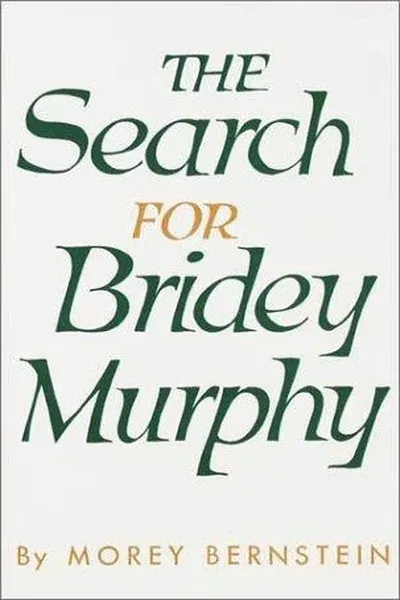
More Free Occult Philosophy Books
View all →