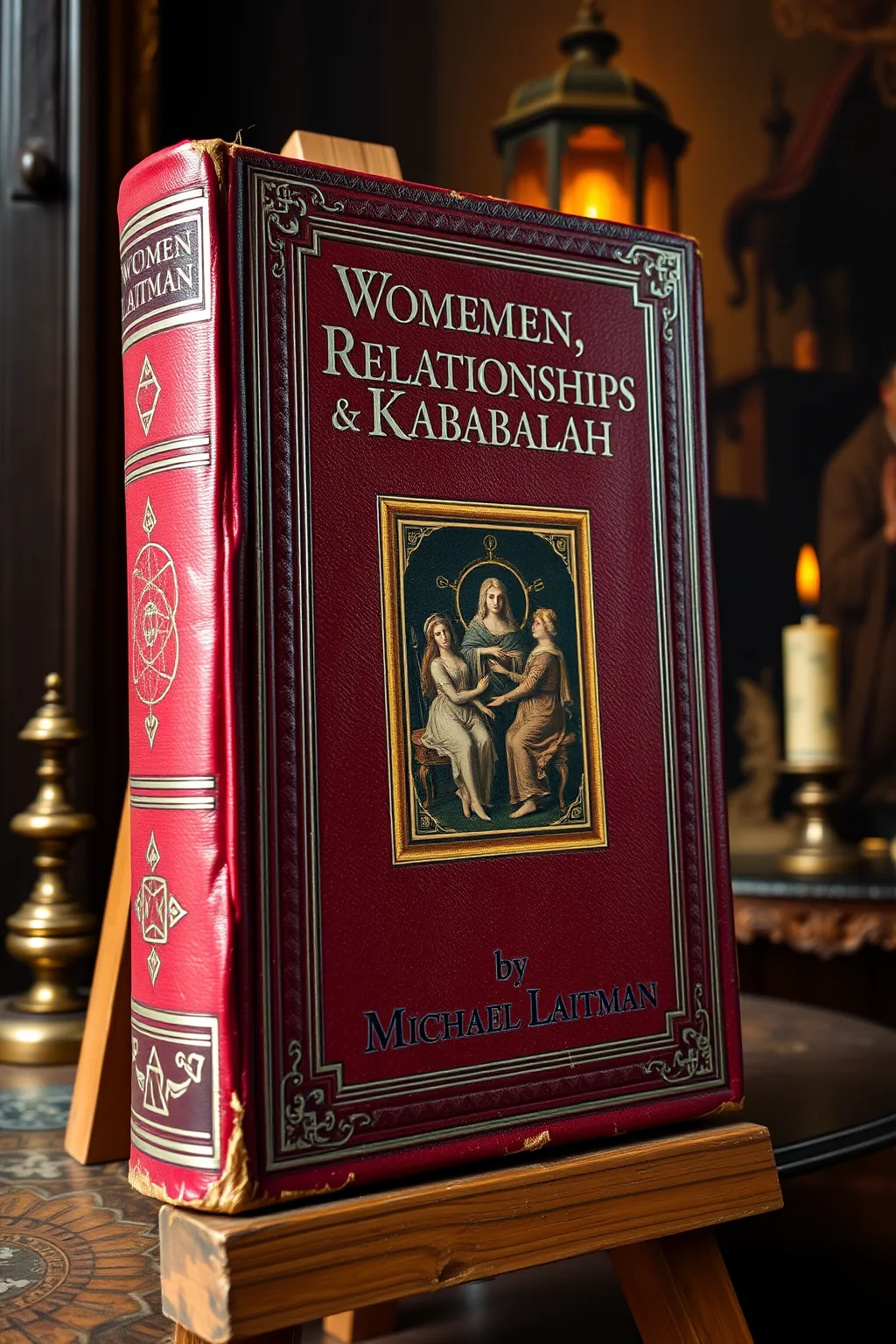
Women, Relationships & Kabbalah
 61
61

Women, Relationships & Kabbalah

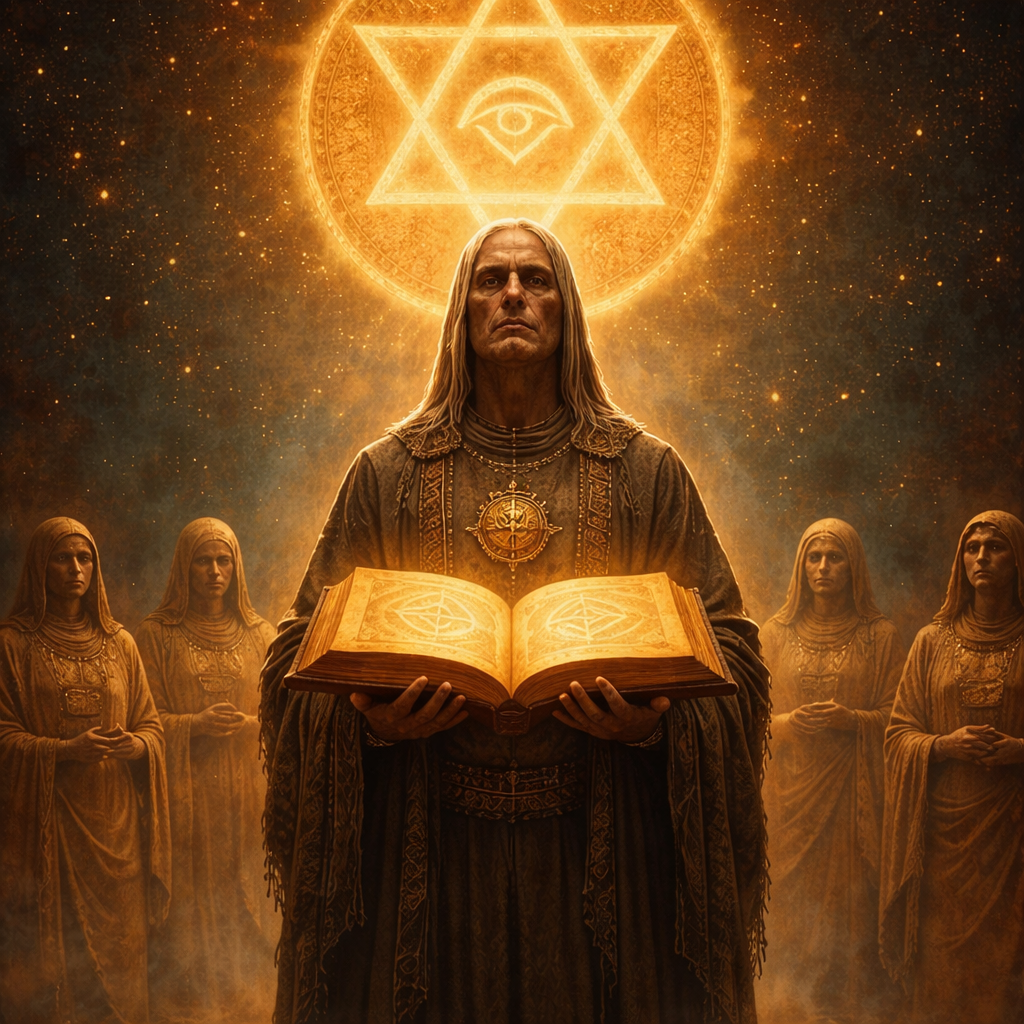

Sophia Crane (Associate Editor) — Michael Laitman's 'Women, Relationships & Kabbalah' offers a rare and illuminating journey into the heart of Jewish mysticism, specifically its application to the most intimate human bonds. Laitman masterfully deciphers the symbolic language of Kabbalah, revealing profound spiritual insights into the feminine and masculine principles that govern both the cosmos and our personal lives. This text is a vital resource for serious students of Kabbalah and anyone seeking to understand the spiritual dimensions of relationships. Its strength lies in its ability to connect abstract mystical concepts to tangible human experiences, making ancient wisdom accessible and deeply relevant.
📝 Description
61
Michael Laitman's 2014 book examines Kabbalah's view on relationships and spiritual growth.
This book looks at the spiritual meaning of human connections through the lens of Kabbalah. Laitman explains how the balance of male and female energies in relationships reflects the basic forces of creation. It goes beyond social commentary to investigate the spiritual structure of desire, love, and partnership, presenting them as ways to advance spiritually.
The text shows how the Sefirot, or divine emanations, affect our relationships. Understanding these emanations can change our earthly connections into tools for spiritual development. The book is for serious students who want to find hidden knowledge in religious texts and within themselves. It offers a new perspective on the sacred nature of every interaction, aiming for a better grasp of our role in the universe.
This work is situated within the Jewish mystical tradition of Kabbalah, specifically drawing from Lurianic Kabbalah's emphasis on emanations (Sefirot) and the dynamics of spiritual correction. It connects these concepts to the formation and purpose of human relationships, viewing them not just as social constructs but as microcosms of cosmic principles and potential vehicles for spiritual attainment. The book interprets scriptural and mystical ideas to explain the underlying spiritual structure of human interaction.
💡 Why Read This Book?
Unveil the hidden spiritual blueprint of relationships through the lens of Kabbalah. This book offers a profound, esoteric understanding of love, desire, and connection, revealing them as sacred pathways to spiritual evolution. Ideal for seekers, scholars, and practitioners of mysticism who desire to integrate ancient wisdom into their personal lives and relationships, fostering deeper connection and spiritual growth.
⭐ Reader Reviews
Honest opinions from readers who have explored this book.
❓ Frequently Asked Questions
What is the core Kabbalistic concept explored regarding relationships?
The core concept is the revelation of the spiritual roots of relationships, viewing them as a reflection of the divine interaction between the masculine (giving) and feminine (reception) principles, essential for spiritual ascent and the attainment of unity.
Is prior knowledge of Kabbalah required to read this book?
While a foundational understanding can enhance the experience, Laitman's clear explanations make the esoteric concepts accessible to earnest seekers willing to engage with spiritual exploration.
How does this book connect relationships to spiritual growth?
It posits that by understanding the spiritual dynamics within relationships, particularly the interplay of masculine and feminine energies, individuals can fulfill their spiritual purpose and achieve higher states of consciousness.
What kind of 'hidden knowledge' does the book reveal?
The book reveals hidden knowledge about the underlying spiritual structure of relationships, the symbolic meaning of male-female dynamics in creation, and how these energies, when harmonized, lead to spiritual perfection.
Who is the intended audience for this book?
The intended audience includes those interested in Kabbalah, Jewish mysticism, spiritual development, and individuals seeking a deeper, esoteric understanding of human relationships and their role in spiritual evolution.
🔮 Key Themes & Symbolism
The Divine Androgyne: Kabbalistic Blueprint of Partnership
This theme examines the Kabbalistic understanding of the universe as born from the union of complementary forces, often symbolized as masculine (giving, light) and feminine (reception, vessel). The book posits that human relationships are a microcosm of this cosmic principle. It explores how the balanced interplay and harmonious integration of these energies within individuals and between partners are not merely social constructs but essential requirements for spiritual attainment and the realization of the divine plan. This esoteric perspective offers a profound reinterpretation of gender roles and interpersonal dynamics, framing them as divinely ordained pathways toward unity and spiritual perfection.
Desire as a Spiritual Engine: The Kabbalistic Perspective
The book re-examines desire, often seen negatively, as a fundamental spiritual engine within Kabbalah. It reveals how the innate human yearning for connection, love, and fulfillment, particularly in relationships, is a direct reflection of the soul's inherent desire to cleave to the Creator. Laitman guides readers to understand that the 'desire to receive' is not inherently flawed but must be directed towards spiritual elevation. By harmonizing desires within relationships, individuals can transform personal aspirations into a collective aspiration for spiritual unity, thereby unlocking profound personal and collective spiritual growth.
The Sefirot in Interpersonal Dynamics: Unveiling Sacred Connections
This central theme illuminates how the ten divine emanations, or Sefirot, are not abstract concepts but active forces shaping human relationships. The book meticulously maps the influence of each Sefirah—from Chessed (loving-kindness) and Gevurah (discipline) to Tiferet (beauty and balance)—onto the complexities of partnership. Readers will discover how understanding these emanations provides a framework for navigating conflicts, fostering love, and achieving spiritual symmetry within their connections, transforming mundane interactions into opportunities for experiencing divine presence and spiritual reciprocity.
💬 Memorable Quotes
Direct passages from the work, attributed to the author.
“Within every woman lies the vessel of reception; within every man, the light of bestowal.”
— This points to the inherent spiritual roles of masculine and feminine principles in Kabbalah, framing them as complementary forces essential for creation and spiritual unity.
“Our desires are the divine sparks yearning to be reunited.”
— This suggests that human desires, particularly for connection, are not merely earthly urges but divine impulses reflecting the soul's longing for its source.
“Harmony in relationships mirrors the harmony of the cosmos.”
— This emphasizes the interconnectedness of personal relationships with the universal spiritual order, suggesting that inner balance leads to outer and cosmic balance.
“Love is the force that bridges the gap between the finite and the infinite.”
— This profound statement positions love as the ultimate spiritual connector, capable of transcending earthly limitations and facilitating contact with the divine realm.
💡 Key Ideas
Editorial paraphrase of the work's core concepts — not direct quotes.
The true essence of a relationship lies not in what we receive, but in what we give.
This quote highlights the Kabbalistic emphasis on altruism and the spiritual significance of selfless giving as the foundation for authentic connection and growth.
🌙 Esoteric Significance
Tradition
This work is deeply rooted in the tradition of Lurianic Kabbalah, particularly as interpreted and disseminated by Rabbi Michael Laitman and his teacher, Rabbi Baruch Ashlag. It focuses on the practical application of Kabbalistic principles, emphasizing the interconnectedness of all things and the concept of 'bestowal upon others' as the primary path to spiritual realization. The book reveals the esoteric understanding of the divine forces governing creation and human interaction, drawing from texts like the Zohar and the writings of the Ari.
Symbolism
Key symbols explored include the divine androgyne, representing the union of masculine and feminine energies necessary for creation and spiritual completion. The Sefirot, or divine emanations, are presented not just as abstract concepts but as symbolic forces that dictate the flow of energy in relationships. The 'desire to receive' and the 'desire to bestow' are central symbolic dichotomies, representing the fundamental drives that, when harmonized, lead to spiritual ascent and a return to unity.
Modern Relevance
In an age often characterized by isolation and superficial connections, the esoteric insights of 'Women, Relationships & Kabbalah' offer a profound roadmap for fostering authentic and spiritually fulfilling relationships. The book's emphasis on mutual bestowal and the spiritual purpose of desire provides a counter-narrative to consumerist and self-centered approaches to partnership. It empowers individuals to view their relationships not as mere social contracts but as sacred arenas for spiritual growth, personal transformation, and the collective elevation of consciousness, making ancient wisdom directly applicable to contemporary challenges.
👥 Who Should Read This Book
This informative work is essential for spiritual seekers yearning to understand the deeper, mystical dimensions of human connection. Scholars of Kabbalah and Jewish mysticism will find a fresh perspective on classical texts, while practitioners of esoteric arts will discover practical applications for their spiritual journey. Beginners curious about the intersection of spirituality and relationships will benefit from Laitman's accessible yet profound explanations. Ultimately, anyone who wishes to transform their personal bonds into pathways of spiritual evolution, fostering greater love, understanding, and unity, will find immense value within these pages.
📜 Historical Context
Published in an era marked by increasing global interconnectedness and a growing interest in alternative spiritualities, Michael Laitman's 'Women, Relationships & Kabbalah' emerges as a significant contribution to the contemporary study of Jewish mysticism. While Kabbalah itself boasts a long history spanning centuries, from the medieval Zohar to the Hasidic movements and the Lurianic revival, this work places it within a modern, psychological, and relational framework. Laitman draws upon classical Kabbalistic texts and the teachings of influential figures like Rabbi Ashlag, adapting their ancient wisdom to address the pressing concerns of 21st-century life. The book reflects a broader trend of esoteric traditions being reinterpreted for a secularizing world, seeking to provide spiritual solace and guidance through universally applicable principles of connection and inner transformation.
📔 Journal Prompts
Reflect on the masculine and feminine energies within your own relationships. Where do you observe balance, and where is there discord?
How does your understanding of desire, as presented in the book, influence your approach to seeking and maintaining relationships?
Identify a specific Sefirah and consider how its influence might be playing out in a current relationship. How can you cultivate its positive aspects?
In what ways can you consciously shift your focus from receiving to bestowing in your interactions with others?
Consider the concept of 'spiritual ascent' as it relates to your personal relationships. What steps can you take to make your connections more spiritually meaningful?
🗂️ Glossary
Sefirot
The ten divine emanations or attributes through which the Infinite Light (Ein Sof) manifests and interacts with creation. They form the structure of the Kabbalistic Tree of Life and represent various aspects of divinity and consciousness.
Ein Sof
The unmanifest, infinite, and unknowable essence of God, preceding all creation. It is the primordial, absolute unity from which all emanations and existence originate.
Desire to Receive
The fundamental inclination within all created beings to receive pleasure, sustenance, and fulfillment. In Kabbalah, this desire must be refined and directed towards spiritual ends to achieve connection with the Creator.
Desire to Bestow
The divine attribute of giving and altruism, representing the Creator's nature. The ultimate spiritual goal is to emulate this attribute by giving to others, thereby achieving spiritual unity and closeness to God.
Tikkun
The concept of 'rectification' or 'repair.' It refers to the process of mending the brokenness in creation, restoring harmony, and elevating the spiritual state of the world through human actions and intentions.
This book appears in 1 collection
🔮 Readers Also Liked
Browse all →







More by Michael Laitman
All books →





From the “Kabbalah” Collection
View all →







More Free Kabbalah & Jewish Mysticism Books
View all →