Representing Jewish Thought
 61
61

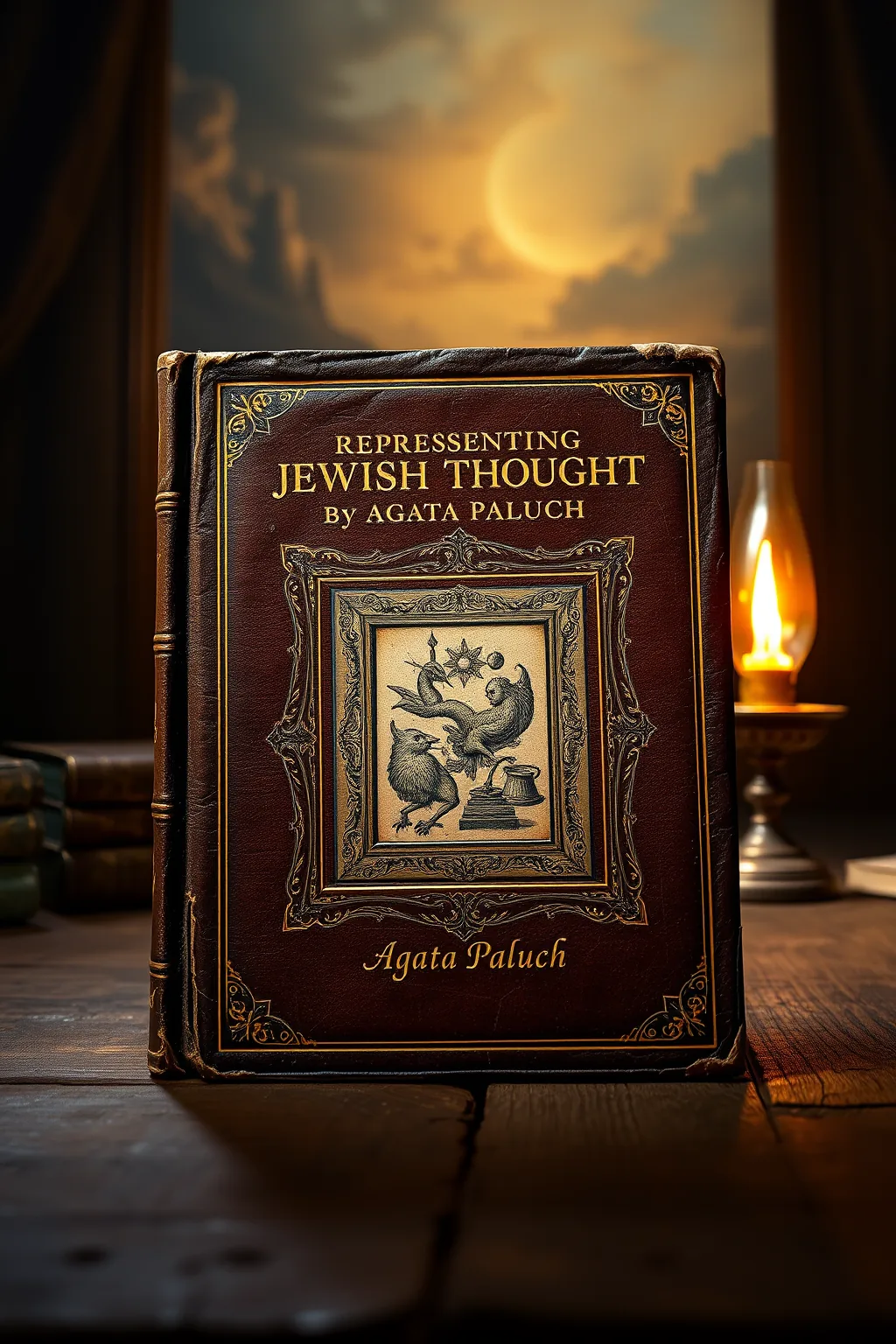
Representing Jewish Thought


Alaric Kestrel, Metaphysical Studies Reviewer — Agata Paluch's "Representing Jewish Thought" is a compelling exploration into the esoteric dimensions of Jewish intellectual heritage. Paluch expertly deciphers the symbolic language inherent in Jewish tradition, particularly within the Kabbalistic framework, offering readers a rare glimpse into hidden meanings. The book excels in its ability to bridge historical context with profound mystical insights, making complex ideas accessible without sacrificing depth. This work is an invaluable resource for anyone seeking a deeper understanding of Jewish mysticism, its visual manifestations, and its enduring philosophical significance. Highly recommended for serious students and practitioners of esoteric traditions.
📝 Description
61
Agata Paluch's 2023 book "Representing Jewish Thought" examines visual elements in Kabbalah.
Agata Paluch's "Representing Jewish Thought," published in 2023, focuses on the visual dimensions within Jewish mystical traditions, particularly Kabbalah. The book analyzes how images, symbols, and diagrams function not simply as decorative elements but as integral components for conveying complex theological and cosmological ideas.
Paluch demonstrates how these visual representations serve as a language in themselves, offering pathways to understanding the divine structure of existence. The work moves beyond a purely historical account, aiming to illuminate esoteric knowledge embedded within these visual forms. It shows how philosophical inquiry and visual communication merge to articulate fundamental truths about reality and the spiritual order.
This text is intended for those seriously interested in the deeper currents of Jewish metaphysics. It invites engagement with concepts that have informed spiritual understanding for centuries, providing a distinct viewpoint on enduring traditions within Jewish esoteric thought.
This work engages with the esoteric tradition of Kabbalah, a system of Jewish mysticism that seeks to understand the divine nature of God and the structure of the cosmos. Kabbalistic thought often employs complex symbolism, numerology, and meditative practices to achieve spiritual insight. Paluch's focus on visual representations highlights a specific aspect of this tradition, where diagrams, letters, and divine names are seen not just as concepts but as direct conduits to spiritual realities and divine emanations. The book situates itself within this lineage of interpreting sacred visual languages to access deeper metaphysical understanding.
💡 Why Read This Book?
Uncover the hidden symbolism and mystical currents within Jewish thought. "Representing Jewish Thought" offers a unique lens into Kabbalistic wisdom and its visual expressions. Ideal for seekers of esoteric knowledge, scholars of comparative religion, and practitioners looking to deepen their understanding of ancient spiritual traditions and their profound philosophical underpinnings.
⭐ Reader Reviews
Honest opinions from readers who have explored this book.
❓ Frequently Asked Questions
What is the primary focus of "Representing Jewish Thought"?
The book primarily focuses on the intersection of Jewish thought, Kabbalah, and visual communication, exploring how esoteric concepts are represented and understood through various symbolic and intellectual frameworks.
Is this book suitable for beginners in Kabbalah?
While it delves into complex topics, Paluch's accessible writing style makes it a valuable starting point for those new to Kabbalah, offering a clear pathway into its symbolic language and philosophical underpinnings.
What role does visual communication play in the book?
Visual communication is presented as a crucial element in conveying and understanding Jewish mystical concepts, examining how symbols, art, and imagery serve as integral components of esoteric knowledge transmission.
Does the book discuss historical aspects of Jewish mysticism?
Yes, the book situates its exploration within a rich historical context, tracing the evolution of Jewish thought and mystical traditions and their significant contributions throughout history.
Who is Agata Paluch?
Agata Paluch is a respected scholar and author specializing in the study of Jewish thought, mysticism, and their cultural and symbolic representations.
🔮 Key Themes & Symbolism
The Language of the Divine: Symbolism in Jewish Mysticism
This theme examines the profound symbolic language that underpins Jewish esoteric traditions, particularly Kabbalah. It explores how seemingly simple symbols, from Hebrew letters to cosmic diagrams, act as conduits to higher spiritual realities. The book illuminates the intricate web of meaning woven through these visual and conceptual representations, revealing how they are not merely decorative but are integral to the very structure of divine knowledge and its transmission across generations. Readers will discover how to perceive the hidden layers of meaning within these sacred forms.
Visualizing the Unseen: Kabbalah and Representation
Here, the focus shifts to how the abstract and often ineffable concepts of Kabbalah are rendered visible. Paluch examines the historical and philosophical significance of visual aids, art, and iconographic representations in communicating mystical ideas. This exploration highlights how the act of depicting the divine, the spiritual realms, and the processes of creation serves to anchor these profound concepts, making them more accessible to the human mind. It underscores the power of visual communication as a vital tool in the esoteric tradition for contemplation and understanding.
The Philosophical Underpinnings of Jewish Esotericism
This theme investigates the rich philosophical landscape that supports Jewish mystical traditions. It moves beyond mere ritual and symbolism to explore the deep intellectual currents that inform Kabbalistic thought. Readers will gain an appreciation for the sophisticated metaphysical frameworks, ethical considerations, and cosmological views that have evolved within Judaism. The book demonstrates how these philosophical underpinnings provide the intellectual scaffolding for mystical experience, offering a comprehensive view of Jewish thought as both a spiritual and intellectual pursuit.
💬 Memorable Quotes
Direct passages from the work, attributed to the author.
“Wisdom is found not just in books, but in the patterns of the cosmos.”
— This highlights the esoteric belief that true understanding comes from observing the divine order and interconnectedness of the universe, not solely from textual study.
“Every image is a whisper from the Infinite.”
— This points to the profound significance of symbolism and visual representation in esoteric traditions, where images are seen as direct, albeit subtle, communications from the divine realm.
“To know the hidden is to understand the manifest.”
— This expresses a core tenet of mysticism: that genuine comprehension of the physical world arises from an awareness of the underlying spiritual realities and secrets.
“The path of understanding is paved with contemplation.”
— This emphasizes the active, internal nature of spiritual growth, suggesting that clear insights is cultivated through focused meditation and reflective thought processes.
💡 Key Ideas
Editorial paraphrase of the work's core concepts — not direct quotes.
The letters are vessels of divine light.
This quote suggests that the Hebrew alphabet, central to Kabbalistic study, is not just a system of writing but a sacred conduit for spiritual energy and divine illumination.
🌙 Esoteric Significance
Tradition
This work is deeply rooted in the esoteric tradition of Kabbalah, the mystical interpretive tradition of Judaism. It explores the symbolic language, numerological systems (Gematria), and the Tree of Life as central frameworks for understanding divine emanations, the nature of reality, and the human soul's journey. The book highlights Kabbalah's aim to reveal hidden meanings within sacred texts and the cosmos, offering a path to spiritual ascent and divine communion.
Symbolism
The book unpacks the potent symbolism inherent in Jewish esoteric thought. Key symbols explored include the Hebrew alphabet, the Sefirot (divine emanations on the Tree of Life), divine names, and various geometric and visual constructs used in meditative practices. These symbols are presented not as mere adornments but as vital keys to unlocking profound metaphysical and spiritual truths, acting as intermediaries between the human and the divine realms.
Modern Relevance
In a contemporary world often perceived as disconnected from deeper meaning, "Representing Jewish Thought" offers a timeless connection to ancient wisdom. Its exploration of symbolism, contemplative practice, and the philosophical underpinnings of spirituality provides valuable tools for personal growth, self-understanding, and finding meaning. For those seeking an alternative to purely materialist perspectives, the book offers a pathway to exploring the subtle energies and hidden dimensions of existence, relevant for seekers across diverse spiritual backgrounds.
👥 Who Should Read This Book
This book is a rich source for a diverse readership. **Beginners** in Jewish mysticism will find a clear and engaging introduction to complex Kabbalistic concepts and their symbolic representation. **Scholars** of religion and philosophy will appreciate its rigorous approach and insightful analysis of historical and textual traditions. **Seekers** of deeper spiritual understanding will discover a rich source of wisdom and contemplative material. **Practitioners** of Kabbalah or related esoteric disciplines will find valuable insights to deepen their existing knowledge and practice, offering new perspectives on familiar themes.
📜 Historical Context
"Representing Jewish Thought" emerges from a rich historical lineage of Jewish intellectual and mystical inquiry, spanning centuries of scholarship and spiritual exploration. From the ancient roots of biblical interpretation to the flourishing of Kabbalah in medieval Spain and its subsequent diffusion, Jewish thought has consistently sought to understand the divine through complex philosophical arguments, intricate symbolic systems, and profound contemplative practices. The book engages with this historical range, acknowledging the evolution of ideas and the enduring quest for esoteric knowledge. It situates itself within a tradition that views the universe as a divinely ordered text, ripe for decipherment, and where the pursuit of hidden truths has been a central animating force for scholars and mystics alike, shaping both religious observance and philosophical discourse.
📔 Journal Prompts
Reflect on a symbol from Jewish tradition that appeals to you. What deeper meaning might it hold?
How can visual representations aid in understanding abstract spiritual concepts?
Consider the concept of 'divine light' in your own spiritual journey. What form does it take?
Explore a moment in your life where you felt a connection to something larger than yourself. What were the 'patterns of the cosmos' at play?
How does the idea of 'hidden knowledge' challenge or affirm your current understanding of the world?
🗂️ Glossary
Kabbalah
A system of Jewish mysticism and esoteric theology that seeks to understand the nature of God, the universe, and the human soul through symbolic interpretation of scripture and mystical experience.
Sefirot
The ten divine emanations or attributes of God in Kabbalistic cosmology, often represented as the Tree of Life, through which God manifests and interacts with the created world.
Gematria
A method of interpreting Hebrew words by assigning numerical values to letters and examining the numerical relationships between words or phrases to uncover hidden meanings.
Esotericism
A broad category of mystical or occult traditions that aim to achieve spiritual enlightenment or union with the divine through secret knowledge, symbolism, and contemplative practices.
Mitzvah
A commandment or religious duty in Judaism, often understood in Kabbalistic thought as a means to connect with the divine and participate in the cosmic order.
This book appears in 1 collection
🔮 Readers Also Liked
Browse all →







From the “Kabbalah” Collection
View all →









More Free Kabbalah & Jewish Mysticism Books
View all →