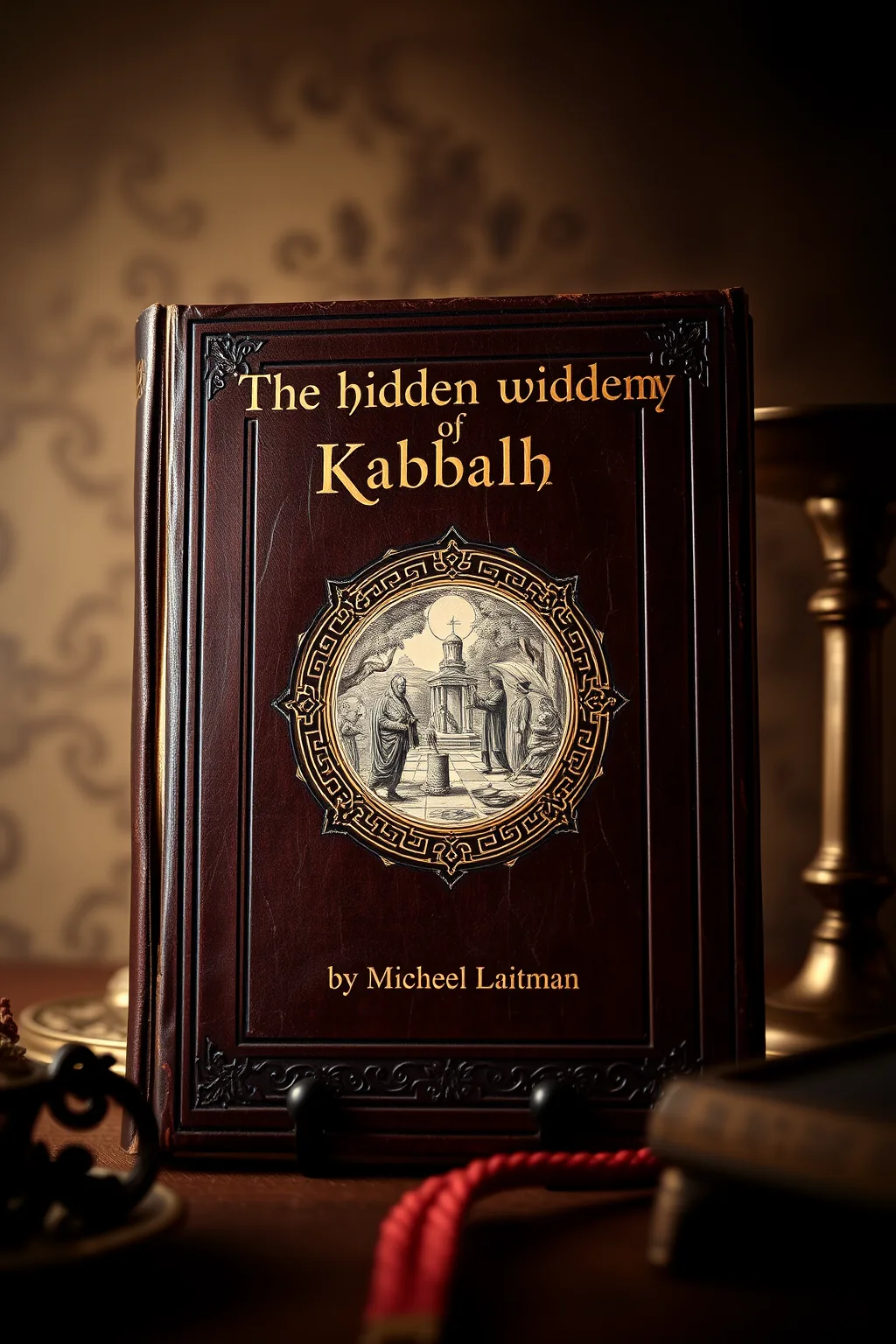
The hidden wisdom of Kabbalah
 61
61

The hidden wisdom of Kabbalah


As the Alchemy & Hermeticism Editor, I find Michael Laitman's 'The Hidden Wisdom of Kabbalah' to be a remarkably accessible yet deeply insightful exposition of this ancient esoteric discipline. Laitman expertly navigates the labyrinthine concepts, presenting the core tenets of Kabbalah with clarity and profound respect. His ability to connect the abstract symbolism to practical spiritual application is a significant strength, making the teachings resonate with contemporary seekers. The work illuminates the hidden architecture of creation and the spiritual journey, offering a valuable lens for understanding the universe and our place within it. It is an indispensable resource for students of mysticism and those yearning for a more profound connection to the divine.
📝 Description
61
Michael Laitman's 2007 book, 'The Hidden Wisdom of Kabbalah,' deciphers complex Kabbalistic symbolism.
This book examines the core principles of Kabbalah, a mystical tradition focused on understanding reality, the soul, and the divine. Michael Laitman interprets the symbolic language and philosophical underpinnings of Kabbalistic texts, making them accessible to contemporary readers. It presents Kabbalah not only as a historical subject but also as a guide for personal spiritual development. The work aims to show readers how to connect with the fundamental forces of creation and realize their own potential.
The text invites engagement with a wisdom tradition that has influenced spiritual thought for centuries. It seeks to provide a clear path toward self-awareness and a sense of universal unity. This book is for those who are curious about the fundamental questions of existence and desire more than just intellectual knowledge, seeking genuine personal change.
Kabbalah is a system of Jewish mysticism that originated in the medieval period. It seeks to explain the relationship between the divine, the created world, and humanity. Kabbalistic texts often employ complex symbolism and allegory to describe spiritual concepts. The tradition has influenced various esoteric and spiritual movements throughout history, focusing on divine emanation and the path to spiritual perfection.
💡 Why Read This Book?
Uncover the veiled secrets of creation and the human soul. 'The Hidden Wisdom of Kabbalah' offers a clear path to understanding the esoteric underpinnings of existence. Ideal for spiritual seekers, students of mysticism, and anyone yearning to connect with a profound, ancient wisdom that offers practical guidance for personal transformation and a deeper perception of reality.
⭐ Reader Reviews
Honest opinions from readers who have explored this book.
❓ Frequently Asked Questions
What is the primary aim of Kabbalistic study as presented in this book?
The primary aim is to understand the hidden structure of reality and the spiritual forces that govern it. It seeks to guide the reader toward spiritual attainment and a conscious connection with the Divine.
Is prior knowledge of Jewish texts required to understand this book?
While familiarity with Jewish tradition can enhance understanding, Laitman's work is designed to be accessible to those new to Kabbalah, explaining complex concepts clearly and progressively.
How does this book differ from other introductions to Kabbalah?
This book emphasizes the practical, spiritual application of Kabbalistic principles for personal transformation and spiritual ascent, moving beyond purely academic or historical approaches.
What kind of symbolism is explored in 'The Hidden Wisdom of Kabbalah'?
The book delves into the rich symbolic language of Kabbalah, including the Sefirot, the Tree of Life, and the divine names, explaining their deeper esoteric meanings.
Can this book be considered a guide for meditation or spiritual practice?
Yes, the teachings within are intended to inspire and guide practical spiritual work, helping readers to internalize the concepts and apply them to their inner development and connection with the Creator.
🔮 Key Themes & Symbolism
The Tree of Life and the Sefirot
This central pillar of Kabbalistic cosmology, the Tree of Life, is explored in detail. Its ten Sefirot (divine emanations) are presented not as abstract concepts, but as dynamic forces and stages of creation, mapping the path from the Infinite Creator to our perceived reality. The book elucidates how these divine attributes manifest within the universe and within the human soul, offering a blueprint for understanding spiritual evolution and the interconnectedness of all existence. It reveals the interconnected flow of divine energy and its influence on all levels of being.
The Nature of the Soul and Spiritual Ascent
Central to Kabbalistic thought is the profound exploration of the human soul's origin, purpose, and its inherent connection to the Divine. 'The Hidden Wisdom of Kabbalah' explores the soul's journey, its descent into the material world, and its ultimate aspiration for return and reunification with its source. The book illuminates the spiritual path, outlining the necessary internal work and ethical development required for spiritual growth and achieving a higher state of consciousness. It offers a framework for understanding one's true essence and the potential for transcendence.
The Language of Symbolism and Divine Revelation
Kabbalah is a tradition deeply rooted in symbolic language, where every letter, word, and concept carries multiple layers of hidden meaning. This work meticulously deciphers this sacred lexicon, revealing how ancient texts like the Zohar were designed to transmit divine wisdom in a veiled form. Laitman guides the reader to perceive the underlying spiritual realities that these symbols represent, fostering a deeper appreciation for the divine intelligence embedded within creation and the useful insights that can be accessed through attentive study of these esoteric keys.
💬 Memorable Quotes
Direct passages from the work, attributed to the author.
“The purpose of life is to bestow delight upon the Creator.”
— This profound statement expresses the core Kabbalistic objective: aligning one's actions and intentions with the divine will, thereby contributing to cosmic harmony and spiritual fulfillment.
“We must build the bridge between the spiritual and the material.”
— This emphasizes the Kabbalistic endeavor to integrate the higher spiritual realms with our earthly existence, transforming the mundane into a sacred space through conscious spiritual practice.
“The true seeker looks inward for the divine.”
— This highlights the introspective nature of spiritual discovery in Kabbalah, suggesting that the answers and the connection to the divine are found not externally, but within the depths of one's own consciousness.
“Love of others is the foundation of spiritual attainment.”
— This points to the ethical dimension of Kabbalah, emphasizing that altruism and connection with fellow beings are crucial steps towards achieving spiritual unity and understanding.
💡 Key Ideas
Editorial paraphrase of the work's core concepts — not direct quotes.
Kabbalah is the wisdom of the Creator, intended for all humanity.
This quote underscores the universal nature of Kabbalistic teachings, positioning it not as exclusive knowledge, but as a divine gift meant for the spiritual enlightenment of all beings.
🌙 Esoteric Significance
Tradition
Kabbalah is a foundational esoteric tradition within Judaism, offering a mystical interpretation of the Torah and Jewish cosmology. It is a profound system of divine wisdom focused on understanding the nature of God, creation, the human soul, and the path to spiritual perfection. Its esoteric nature lies in its veiled language, complex symbolism, and the belief that its deepest insights are revealed through spiritual experience and focused study, guiding the practitioner towards a direct experience of the divine.
Symbolism
The symbolism within Kabbalah is extraordinarily rich, with the Tree of Life, composed of ten Sefirot, being its most prominent visual representation. These Sefirot symbolize divine attributes and emanations, charting the flow of spiritual energy from the Infinite (Ein Sof) to the manifest world. Other key symbols include Hebrew letters, divine names, and the concept of 'Tzimtzum' (contraction). These symbols are not mere representations but are considered active principles and pathways for spiritual connection and understanding, holding profound cosmological and psychological meanings.
Modern Relevance
In the modern era, Kabbalah offers a potent framework for spiritual seekers grappling with existential questions and the search for meaning. Its emphasis on the interconnectedness of all things, the inherent divinity within each individual, and the importance of ethical action provides a powerful counterpoint to materialistic worldviews. The practical applications of Kabbalistic principles, as presented by authors like Laitman, offer tools for personal transformation, emotional well-being, and cultivating a deeper sense of purpose and spiritual connection in an increasingly complex world.
👥 Who Should Read This Book
This informative work is essential for a diverse audience. Spiritual seekers yearning for a deeper understanding of the universe and their place within it will find useful insights. Students of comparative religion and mysticism will appreciate its scholarly yet accessible approach. Practitioners of meditation and spiritual disciplines seeking to enhance their inner work and connection with the divine will discover practical guidance. Even those new to esoteric studies will find Laitman's clear explanations a welcoming gateway into the profound depths of Kabbalistic wisdom.
📜 Historical Context
The origins of Kabbalah are shrouded in antiquity, with its roots deeply embedded in Jewish mystical traditions. While earlier forms of Jewish mysticism existed, Kabbalah as a distinct system began to flourish in medieval Spain and Provence during the 12th and 13th centuries. Key texts like the 'Sefer Yetzirah' (Book of Formation) and later the monumental 'Zohar' (Book of Splendor) became foundational, shaping the esoteric landscape. This period was marked by intellectual ferment and a yearning for deeper spiritual understanding within Jewish communities, often influenced by philosophical and cultural exchanges. Kabbalah offered a framework for comprehending God's relationship with creation, the nature of the soul, and the hidden meanings within scripture. Its influence extended beyond Jewish circles, impacting later esoteric traditions and thinkers, and continues to resonate as a profound spiritual philosophy.
📔 Journal Prompts
Reflect on a time you felt a deep connection to something larger than yourself. How might Kabbalistic concepts explain this experience?
Consider the concept of divine emanation. How do you see the 'flow' of energy or consciousness in your daily life?
What does the idea of the soul's journey and return to its source mean to you personally?
Explore a symbol from your own life or culture that holds deeper meaning. How does this compare to Kabbalistic symbolism?
How can the principle of 'love of others' be actively integrated into your daily actions to foster spiritual growth?
🗂️ Glossary
Sefirot
The ten divine emanations or attributes through which the Infinite (Ein Sof) reveals itself and creates the universe. They represent stages of divine energy and consciousness.
Ein Sof
The Infinite, the unknowable essence of God beyond all comprehension or description. It is the absolute, primordial state of divinity before any manifestation or creation.
Tzimtzum
A Hebrew term meaning 'contraction' or 'withdrawal.' It refers to the divine act of self-limitation by Ein Sof, creating a spiritual vacuum for the emergence of creation.
Zohar
The foundational text of Kabbalah, a mystical commentary on the Torah. It is written in Aramaic and is renowned for its strong symbolism and profound spiritual insights.
Shekhinah
The divine feminine presence of God, often understood as God's immanence or dwelling within the world. It represents the aspect of God that is accessible and present in creation.
This book appears in 1 collection
🔮 Readers Also Liked
Browse all →






More by Michael Laitman
All books →





From the “Kabbalah” Collection
View all →







More Free Kabbalah & Jewish Mysticism Books
View all →