Witchcraft

 75
75

Witchcraft
Marion Gibson's "Witchcraft" challenges the reader to move past sensationalist narratives. The work excels in its meticulous dissection of how the concept of 'witch' has been constructed and utilized across history, particularly its deep roots in early modern European anxieties. Gibson avoids hagiography or demonization, presenting a balanced view of historical accusations and contemporary spiritual identities. A particular strength lies in its analysis of the social functions of witch-accusations. However, for readers seeking practical magical instruction or a deep dive into specific European witch trial records, the book's academic scope might feel somewhat distant. The exploration of the *Malleus Maleficarum* as a foundational text for demonological views on witchcraft is a solid, if familiar, anchor point. Ultimately, Gibson provides a crucial, historically grounded understanding of a topic often obscured by myth.
📝 Description
75
Marion Gibson's "Witchcraft" examines historical and cultural understandings of the practice.
Marion Gibson's "Witchcraft" offers a scholarly look at how witchcraft has been understood and practiced across different times and places. The book moves past sensational stories to analyze the social, religious, and political factors that influenced views of witches, from early modern Europe to today. It looks at the accusations, beliefs, and rituals connected with witchcraft, treating them as important parts of human history and cultural expression. This work is for individuals interested in a detailed, evidence-based study of witchcraft. It should appeal to students of history, religious studies, folklore, and cultural anthropology who want to grasp the complexities of this subject. Readers who value thorough research and a balanced viewpoint, avoiding extremes of skepticism or uncritical acceptance, will find "Witchcraft" a useful resource. It is for those wishing to engage with academic discussions on historical and modern witchcraft beliefs.
This book situates the study of witchcraft within broader historical and cultural analyses. It acknowledges the historical weight of witch hunts from the 15th to 18th centuries, a period marked by religious anxiety and social shifts. By referencing texts like the "Malleus Maleficarum" and engaging with changing scholarly perspectives, Gibson connects the phenomenon to evolving understandings of magic and belief systems.
💡 Why Read This Book?
• Gain a nuanced understanding of how the concept of 'witch' has been socially and culturally constructed over centuries, moving beyond simplistic notions of magic. • Analyze the historical context of early modern witch hunts, understanding their connection to religious anxieties and social upheaval, as detailed in the historical sections. • Differentiate between historical persecution and modern spiritual practices by examining the evolution of witchcraft as a belief system and identity, as explored in key concepts.
⭐ Reader Reviews
Honest opinions from readers who have explored this book.
❓ Frequently Asked Questions
What is the primary focus of Marion Gibson's "Witchcraft"?
The book offers a scholarly examination of the historical and cultural phenomenon of witchcraft, analyzing how the 'witch' has been perceived and constructed across different eras, moving beyond sensationalism.
Does "Witchcraft" by Marion Gibson provide instructions for practicing magic?
No, the book is an academic study focused on the history, cultural context, and social construction of witchcraft beliefs and accusations, rather than a practical guide.
What historical period is particularly emphasized in the study of witchcraft?
The early modern period, especially the 15th to 18th centuries, is often a key focus due to the intense witch hunts and the influential demonological texts produced during that era.
Who would benefit most from reading Marion Gibson's "Witchcraft"?
Students of history, religious studies, folklore, and cultural anthropology, as well as general readers interested in a rigorous, evidence-based understanding of witchcraft's complex past and present.
How does the book address modern witchcraft movements?
It likely contrasts and contextualizes contemporary witchcraft as a spiritual path with its historical antecedents, examining the evolution of identity and belief systems associated with the term.
Is "Witchcraft" by Marion Gibson based on extensive historical research?
Yes, the book is presented as a scholarly work, implying thorough research into historical documents, cultural contexts, and academic discourse surrounding the subject of witchcraft.
🔮 Key Themes & Symbolism
The Social Construction of the Witch
This theme explores how the figure of the 'witch' was not a fixed entity but rather a concept shaped by societal fears, religious doctrines, and political agendas. Gibson likely examines how accusations and beliefs about witchcraft served social functions, such as scapegoating or enforcing community norms. The work may trace the evolution of this construct from early Christian demonology to the widespread panics of the early modern period, highlighting how external pressures molded the perceived identity of the witch.
Witchcraft and Religious Anxiety
A central aspect of the study is the deep connection between witchcraft beliefs and religious fervor, particularly within Christianity. The book probably analyzes how theological interpretations, especially concerning heresy and pacts with the Devil, fueled accusations and persecution. It might discuss the role of influential texts like the *Malleus Maleficarum* (1487) in codifying demonic associations with witchcraft, framing it as a threat to religious order and divine law across Europe.
Evolution of Witchcraft Beliefs
Gibson's work likely traces the transformation of witchcraft concepts over time. It would contrast the historical image of the malevolent, Devil-worshipping witch with modern interpretations, such as Wicca and other neo-pagan traditions. The theme addresses how the term 'witchcraft' has been reappropriated and redefined, shifting from a label of persecution to one of spiritual identity and empowerment, reflecting changing cultural landscapes and personal beliefs.
Folklore and Folk Magic
Beyond formal accusations and demonology, the book may explore the persistent threads of folk magic and belief systems often conflated with or distinct from witchcraft. This could involve examining charms, healing practices, and divination techniques that existed outside the demonized narrative. Understanding this dimension provides a more comprehensive view of how magical practices were perceived and enacted in various communities throughout history.
💬 Memorable Quotes
Direct passages from the work, attributed to the author.
“The 'witch' was often a label applied to those who transgressed social or religious boundaries.”
— This interpretation suggests that accusations of witchcraft were frequently rooted in social control mechanisms rather than objective evidence of magical malevolence. It highlights how societal norms and perceived threats influenced the creation and application of the 'witch' identity.
“Modern witchcraft movements often reclaim the term, divorcing it from historical persecution.”
— This idea underscores the contemporary redefinition of 'witchcraft.' It highlights how modern practitioners adopt the label as a source of spiritual identity and empowerment, consciously separating it from the negative connotations imposed during historical periods of witch hunts.
“Accusations of witchcraft could serve as a means to settle social disputes or target marginalized individuals.”
— This interpretation focuses on the socio-political utility of witchcraft accusations. It suggests that the label was sometimes employed strategically within communities to address conflicts or isolate individuals who were already socially vulnerable.
“The study of witchcraft requires distinguishing between historical reality, folklore, and later spiritual interpretations.”
— This concept emphasizes the critical approach needed when examining witchcraft. It calls for careful differentiation between documented historical events, popular folk beliefs, and contemporary spiritual movements that identify as witchcraft.
💡 Key Ideas
Editorial paraphrase of the work's core concepts — not direct quotes.
Early modern demonology heavily influenced the perception of witchcraft as a pact with Satan.
This paraphrased concept points to the significant role of theological and learned texts in shaping the image of the witch during the early modern period. It emphasizes how religious doctrine defined witchcraft as a form of devil-worship.
🌙 Esoteric Significance
Tradition
While "Witchcraft" by Marion Gibson is primarily a historical and cultural study, its subject matter intersects with various esoteric traditions that have incorporated or reinterpreted witchcraft. It doesn't belong to a single lineage like Hermeticism or Theosophy but provides foundational context for understanding the historical roots that many modern esoteric paths draw upon. The work helps situate practices historically, distinguishing between demonological witchcraft and later, often nature-based, spiritual paths that adopted the name.
Symbolism
The book likely examines symbols associated with historical witchcraft, such as the Devil's mark, familiars (like cats or toads), and Sabbatic rituals, primarily through the lens of demonological beliefs and accusations. These symbols were weaponized to demonize practitioners. In contrast, modern esoteric traditions might reclaim or reinterpret symbols like the pentagram, the moon, or specific herbs, imbuing them with positive or naturalistic meanings distinct from their historical demonized associations.
Modern Relevance
Contemporary thinkers and practitioners in fields like Neo-Paganism, Wicca, and various forms of contemporary witchcraft draw heavily on historical scholarship to understand their spiritual lineage and identity. Gibson's work is relevant for those seeking to understand the historical trajectory of beliefs and practices they engage with today. It provides critical context for modern spiritual practitioners who are re-evaluating and often reclaiming the term 'witchcraft' for personal and communal spiritual development.
👥 Who Should Read This Book
• Academic researchers in history, religious studies, and folklore seeking a comprehensive overview of witchcraft's cultural construction. • Students of esoteric traditions interested in the historical origins and societal context of practices labeled 'witchcraft'. • General readers curious about the complex history of witchcraft beyond sensationalized myths, looking for a fact-based exploration.
📜 Historical Context
Marion Gibson's "Witchcraft" engages with a field profoundly shaped by the intense persecutions of the early modern period, particularly from the 15th to the 18th centuries. This era, marked by religious upheaval and social anxieties, saw the publication of influential demonological texts like the *Malleus Maleficarum* (1487), which Gibson likely references. The academic study of witchcraft itself evolved significantly throughout the 20th century. Early scholarship often focused on the legal and theological aspects of the witch trials, sometimes influenced by the anxieties of the Cold War era and the concept of McCarthyism. Later generations of scholars, including historians like Keith Thomas and later figures engaging with gender studies and anthropology, broadened the scope to include social, cultural, and psychological dimensions. Gibson's work likely builds upon this more nuanced historiography, potentially engaging with or critiquing earlier schools of thought that viewed witchcraft solely through a lens of mass delusion or diabolical conspiracy.
📔 Journal Prompts
The social functions of witchcraft accusations in early modern Europe.
How theological doctrines shaped perceptions of the Devil's pact.
The evolution of the 'witch' archetype across different historical periods.
The distinction between historical persecution and modern spiritual witchcraft.
Reclaiming the term 'witch' in contemporary spiritual contexts.
🗂️ Glossary
Malleus Maleficarum
A notorious witch-hunting manual published in 1487, widely used by inquisitors and secular courts across Europe. It detailed supposed methods for identifying, prosecuting, and executing witches, heavily influencing demonological views.
Demonology
The study of demons or beliefs about demons. In the context of witchcraft, it refers to theological and scholarly works that classified demons, described their supposed pacts with humans, and outlined the perceived threat of witchcraft.
Witch Hunts
Periods of intense persecution and execution of individuals accused of witchcraft. The most prominent occurred in early modern Europe (roughly 15th-18th centuries), though similar phenomena have occurred elsewhere.
Folk Magic
Magical beliefs and practices transmitted orally or through tradition within communities, often distinct from formal religious doctrines. It encompasses charms, divination, healing, and other practices.
Social Construct
A concept or perception that is shaped by society and culture, rather than existing as an objective reality. The 'witch' is often analyzed as a social construct.
Heresy
Belief or opinion contrary to orthodox religious doctrine. In historical contexts, witchcraft was often framed as a form of heresy, specifically a pact with the Devil.
Neo-Paganism
A broad category of modern spiritual movements that draw inspiration from pre-Christian European religions. Many contemporary witchcraft traditions fall under this umbrella.
🔮 Readers Also Liked
Browse all →








More by Marion Gibson
All books →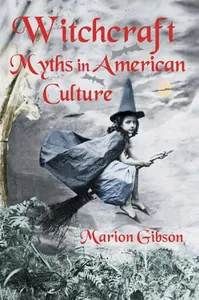


More Free Witchcraft & Paganism Books
View all →


![A Witch of the Hills, v. 1 [of 2]](/img/thumb/a-witch-of-the-hills-v-1-of-2-warden-florence.webp)