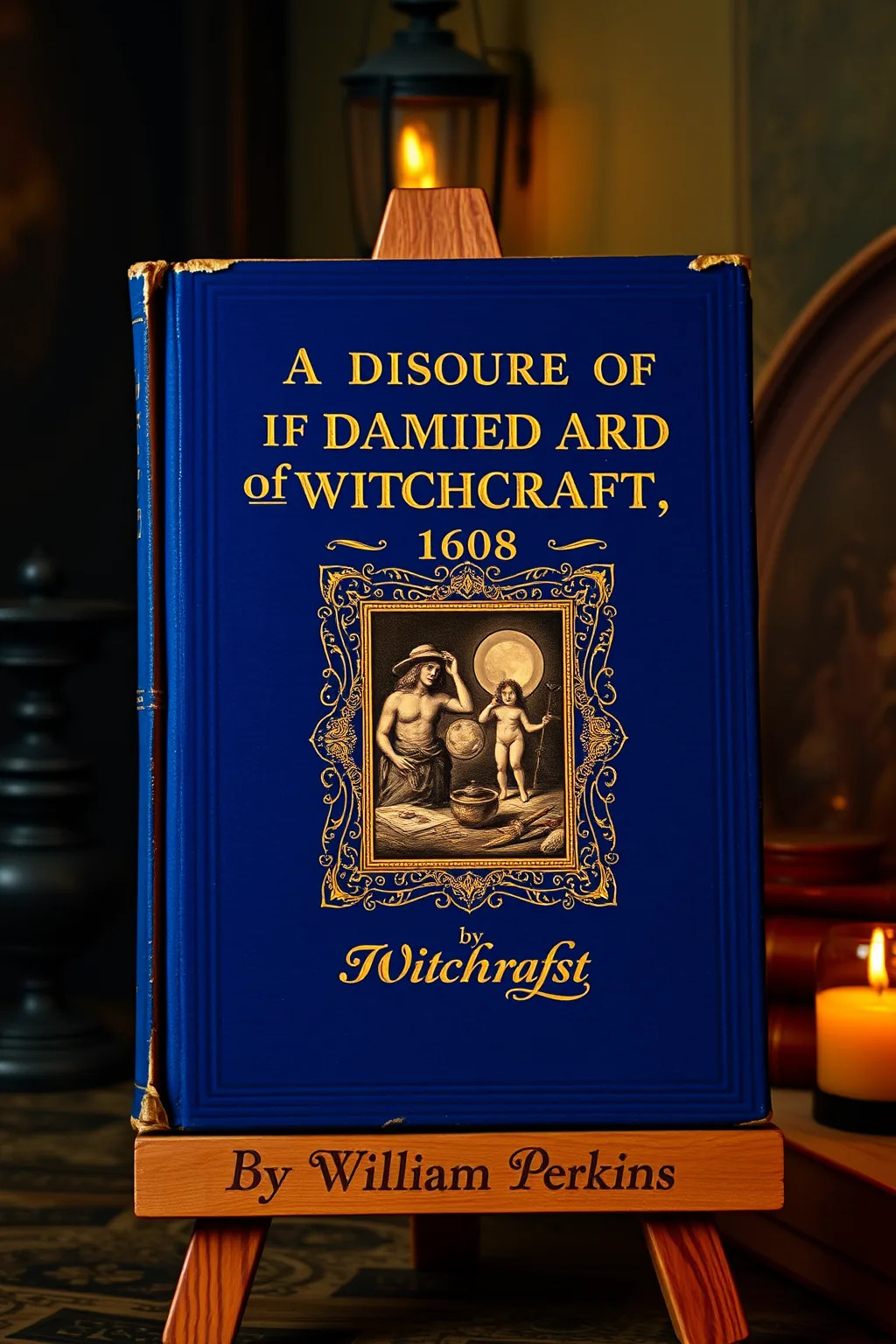
A discourse of the damned art of witchcraft; ... 1608
 78
78

A discourse of the damned art of witchcraft; ... 1608


A Discourse of the Damned Art of Witchcraft by William Perkins is a fascinating and enlightening read for anyone interested in the history of witchcraft and paganism. Published in 1608, this text offers a unique perspective on the beliefs and practices of witchcraft during the early modern period. Perkins' theological insights provide a rich context for understanding the supernatural and the occult, making this book an invaluable resource for modern esoteric seekers. The detailed examination of witchcraft practices and the role of the devil adds depth to the reader's understanding of the subject. While the language and style may be challenging for some, the content is well worth the effort. For those interested in the historical and cultural aspects of witchcraft, this book is a must-read.
📝 Description
78
William Perkins' 1608 'A Discourse of the Damned Art of Witchcraft' examines the theological and legal arguments against sorcery.
Published in 1608, William Perkins' 'A Discourse of the Damned Art of Witchcraft' approaches the subject from a Puritan theological perspective. Perkins, a prominent preacher and theologian, details his understanding of what constitutes witchcraft, distinguishing between genuine diabolical compacts and misinterpretations or false accusations. He argues that witchcraft is a sin against God and a crime against the state, rooted in a pact with the devil. The work serves as a guide for magistrates and clergy, outlining how to identify, prosecute, and punish those accused of practicing sorcery. Perkins’ text reflects the anxieties of early modern England regarding religious dissent and perceived supernatural threats.
Perkins dedicates significant attention to the scriptural basis for condemning witchcraft, drawing heavily on Old Testament prohibitions. He dissects various forms of alleged magical practices, such as divination, charms, and the use of amulets, classifying them as idolatry or demonic deception. The book is not an endorsement of occult practices but a severe denunciation intended to bolster the existing legal and religious framework against them. Its aim was to clarify doctrine and guide the application of justice in an era where witchcraft accusations were a serious concern.
While this text is a condemnation of witchcraft, it functions within the broader historical context of early modern Europe's engagement with the supernatural. The widespread belief in and fear of witchcraft, as documented in Perkins' work, is a facet of the period's worldview where the spiritual and material realms were seen as directly interacting. His theological framework, though aimed at eradication, implicitly acknowledges the perceived reality and mechanisms of demonic power that fueled much occult belief and practice. The book is thus a product of, and a reaction against, an era deeply concerned with the hidden forces attributed to both divine and diabolical agency.
💡 Why Read This Book?
Reading A Discourse of the Damned Art of Witchcraft today offers readers a deep dive into the historical context of witchcraft and paganism. This book provides valuable insights into the beliefs and practices of the early modern period, helping readers understand the cultural and religious climate of the time. For modern esoteric seekers, it serves as a foundational text for exploring the roots of pagan practices and the enduring fascination with the occult. Additionally, the theological perspectives offered by Perkins enrich the reader's understanding of the supernatural and its implications for society.
⭐ Reader Reviews
Honest opinions from readers who have explored this book.
❓ Frequently Asked Questions
Who is the author of A Discourse of the Damned Art of Witchcraft?
The author is William Perkins, a prominent Puritan theologian known for his writings on religious and esoteric topics.
What is the main focus of this book?
The main focus of the book is the exploration of witchcraft and paganism from a theological perspective, discussing the beliefs and practices of the time.
Is this book suitable for modern readers?
Yes, it is suitable for modern readers interested in the history of witchcraft and the occult, providing valuable insights into the cultural and religious climate of the 17th century.
🔮 Key Themes & Symbolism
Occult Symbolism
Perkins explores the strong symbolism of witchcraft, revealing the hidden meanings and esoteric significance behind ancient rituals and practices. This theme is crucial for understanding the deeper layers of occult knowledge and its enduring appeal.
Supernatural Beliefs
The book explores the philosophical underpinnings of supernatural beliefs, offering insights into the mystical forces that have captivated human imagination for centuries. This theme is essential for anyone seeking to understand the occult.
Historical Context
Perkins' work provides a detailed look at the historical context of witchcraft, shedding light on the beliefs and practices of the early 17th century. This theme is vital for scholars and practitioners alike, offering a window into the past that informs modern understandings.
💬 Memorable Quotes
Direct passages from the work, attributed to the author.
“The supernatural is a area of shadows and secrets.”
— Perkins emphasizes the elusive and enigmatic qualities of the supernatural, inviting readers to explore its depths.
“The occult is a language of symbols and rituals.”
— Perkins' work is rich in symbolism, offering readers a key to deciphering the esoteric language of witchcraft.
💡 Key Ideas
Editorial paraphrase of the work's core concepts — not direct quotes.
The damned art of witchcraft is a range woven with threads of hidden knowledge.
This passage highlights the esoteric nature of witchcraft, suggesting that its true power lies in its mysteries.
Witchcraft is a path to the unseen forces that govern our world.
This quote underscores the belief in the occult's ability to reveal hidden truths and supernatural influences.
The damned art of witchcraft is a journey into the unknown.
This passage invites readers to start a mystical exploration of the supernatural and its mysteries.
🌙 Esoteric Significance
Tradition
This book belongs to the Hermetic tradition, which emphasizes the pursuit of hidden knowledge and the exploration of the supernatural. It draws on ancient mystical beliefs and practices to provide a comprehensive understanding of witchcraft and its esoteric significance.
Symbolism
Key symbols in the book include rituals, incantations, and mystical sigils, each carrying deep esoteric meanings. These symbols are essential for understanding the occult practices and beliefs discussed in the text.
Modern Relevance
Today, this book remains relevant for modern practitioners and scholars of the occult. Its insights into witchcraft and paganism continue to inform contemporary practices, making it a valuable resource for those seeking to deepen their understanding of the mystical arts.
👥 Who Should Read This Book
This book is ideal for scholars of the occult, seekers of hidden knowledge, and practitioners of witchcraft and paganism. Beginners may find it challenging due to its depth and complexity, but it is an essential read for anyone interested in the mystical and esoteric. Those with a prior understanding of occult studies will find the book particularly enlightening, offering a rich exploration of the supernatural and its enduring significance.
📜 Historical Context
Published in 1608, 'A Discourse of the Damned Art of Witchcraft' reflects the intense fascination with the occult and supernatural that characterized the early 17th century. During this era, witchcraft was both feared and revered, and Perkins' work provided a detailed examination of the beliefs and practices surrounding it. The book's influence can be seen in the enduring fascination with witchcraft and the occult, making it a vital resource for scholars and practitioners today.
📔 Journal Prompts
Reflect on the esoteric symbols and rituals discussed in the book. How do they relate to your own mystical practices?
Consider the philosophical underpinnings of supernatural beliefs. How do they influence your understanding of the occult?
Explore the historical context of witchcraft as presented in the book. How does it inform your modern practices?
Think about the significance of hidden knowledge in the occult. How does it shape your mystical journey?
Reflect on the enduring fascination with witchcraft and the supernatural. What draws you to these mysteries?
🗂️ Glossary
Occult
The study of hidden knowledge and supernatural practices, often involving mystical rituals and esoteric symbols.
Witchcraft
The practice of magic and supernatural abilities, often involving rituals and incantations.
Hermetic
Relating to the mystical and philosophical teachings attributed to Hermes Trismegistus, emphasizing hidden knowledge and the pursuit of spiritual enlightenment.
Esoteric
Relating to knowledge that is understood by only a small group of people, often involving mystical or occult practices.
Paganism
A broad term for various religious traditions that are not part of the major world religions, often involving nature worship and mystical practices.
This book appears in 2 collections
🔮 Readers Also Liked
Browse all →






From the “Witchcraft” Collection
View all →







More Free Witchcraft & Paganism Books
View all →