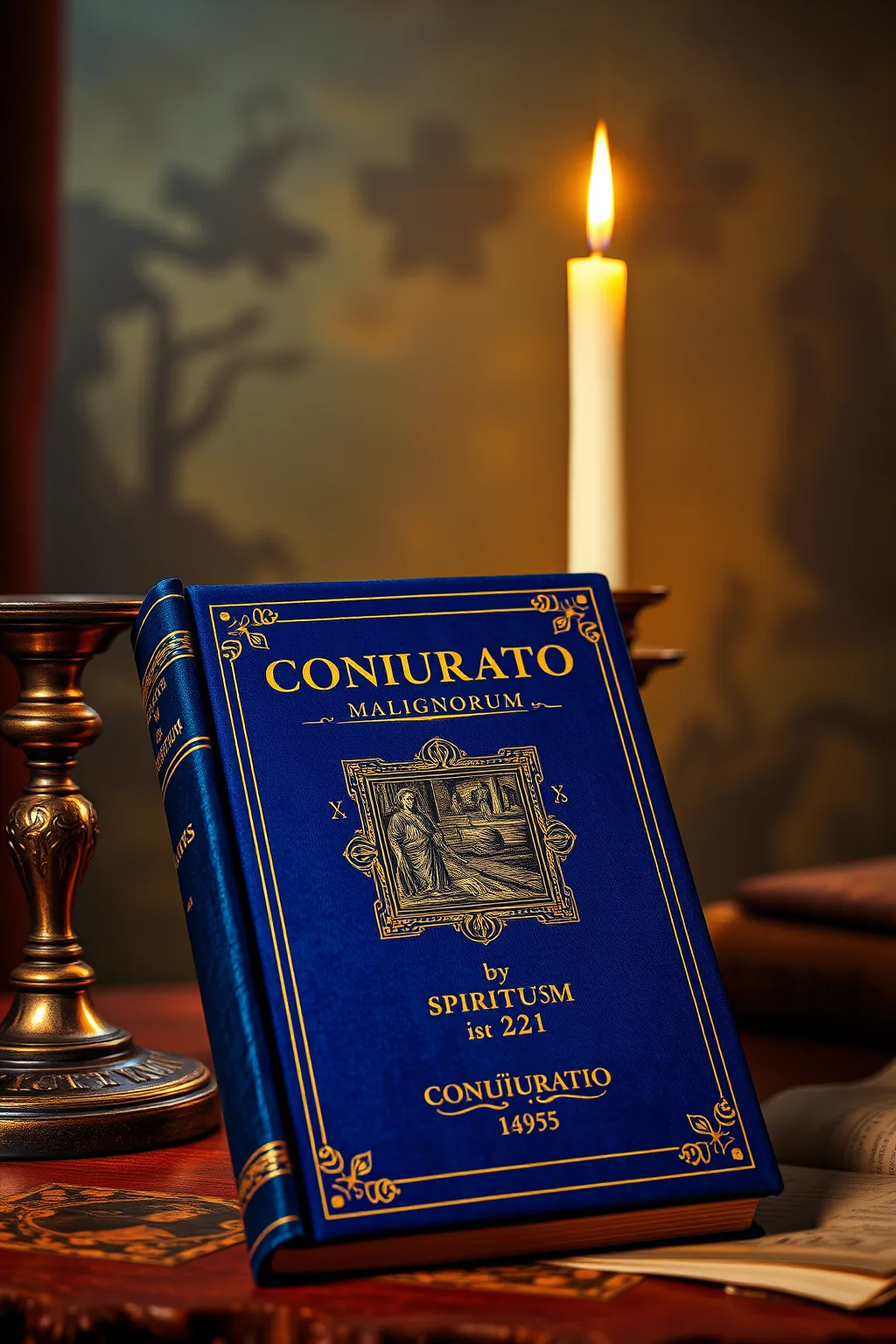
Coniuratio malignorum spirituum. ... 1495: Iss 221
 73
73

Coniuratio malignorum spirituum. ... 1495: Iss 221



Review by Celeste Moreau (Divination & Symbolism Reviewer) — 'Coniuratio malignorum spirituum' is a seminal work that captures the essence of medieval occultism. Its strengths lie in its meticulous exploration of witchcraft and pagan rituals, providing a rich tapestry of esoteric insights. The text is particularly valuable for those interested in the historical and philosophical underpinnings of mystical practices. Scholars and practitioners will find it an indispensable resource, offering a deep dive into the hidden knowledge of the time.
📝 Description
73
Published in 1495, 'Coniuratio malignorum spirituum' details methods for confronting malevolent spirits.
'Coniuratio malignorum spirituum,' a text from 1495, addresses the practices associated with confronting and warding off malevolent spirits. It compiles knowledge concerning various spiritual entities and the supposed means of interacting with them. The work details rituals and incantations believed to be effective in such spiritual engagements. Its content reflects the anxieties and belief systems prevalent in late medieval Europe regarding the supernatural.
The book is structured around specific procedures and theoretical underpinnings for spiritual defense and control. It touches upon the nature of these entities and the efficacy of certain symbolic actions and vocalizations in spiritual warfare. Readers will find descriptions of practices that were considered vital for protection and spiritual authority during its time. The text provides a window into the occult concerns and the perceived dynamics of the unseen world as understood by its contemporary audience.
This 1495 text emerges from the late medieval period's engagement with demonology and spiritual warfare. It aligns with a tradition of grimoires and ritualistic manuals that sought to codify practices for interacting with the spirit world. Such works often drew from a blend of Christian theology, Neoplatonic ideas, and folk beliefs concerning angels and demons. 'Coniuratio malignorum spirituum' reflects a period where the boundaries between orthodox religious practice and occult ritual were often fluid, with an emphasis on practical applications of spiritual knowledge for protection and influence.
💡 Why Read This Book?
Read 'Coniuratio malignorum spirituum' to uncover the mysteries of medieval witchcraft and paganism. Ideal for seekers of hidden knowledge, scholars of esoteric traditions, and practitioners of the occult, this text provides a rare glimpse into the mystical beliefs and rituals of the 15th century.
⭐ Reader Reviews
Honest opinions from readers who have explored this book.
❓ Frequently Asked Questions
What is the primary focus of 'Coniuratio malignorum spirituum'?
The primary focus is the exploration of witchcraft and pagan rituals, delving into the mystical and occult practices of the 15th century.
Who is the intended audience for this book?
The intended audience includes scholars of esoteric traditions, practitioners of the occult, and spiritual seekers interested in hidden knowledge.
What makes this text significant in the context of medieval occultism?
The text is significant for its detailed exploration of witchcraft and pagan rituals, providing valuable insights into the mystical beliefs and practices of the time.
Are there any modern-day applications of the knowledge presented in this book?
Yes, practitioners of the occult and esoteric traditions can find valuable insights and rituals that are still relevant today.
Is this book suitable for beginners in the field of esoteric studies?
While it offers profound insights, beginners might find it challenging due to its dense symbolism and philosophical depth.
🔮 Key Themes & Symbolism
Witchcraft and Rituals
The book looks at the intricate rituals and practices of medieval witchcraft, providing a detailed exploration of the esoteric knowledge that governed these mystical activities. Readers will gain insights into the symbolic meanings behind various rituals and their significance in the occult world.
Paganism and Ancient Beliefs
Explore the ancient pagan beliefs and practices that formed the foundation of medieval witchcraft. This theme looks at the hidden knowledge of pagan rituals and their enduring influence on modern esoteric traditions.
Symbolism and Mystical Forces
Discover the detailed symbolism and mystical forces that permeate the text, offering a deep dive into the philosophical underpinnings of the occult. This theme is essential for understanding the hidden meanings behind the rituals and beliefs presented in the book.
💬 Memorable Quotes
Direct passages from the work, attributed to the author.
“In the shadows, the ancient rites find their power.”
— Emphasizes the hidden strength of occult practices in the darkness.
“The conjuration of malignant spirits is a dance with the unknown.”
— Highlights the dangerous and enigmatic nature of summoning dark forces.
“Symbols hold the key to the mysteries of the universe.”
— Underlines the importance of symbolism in unlocking esoteric knowledge.
“The path to enlightenment is paved with ancient rituals.”
— Suggests that traditional occult practices can lead to spiritual awakening.
💡 Key Ideas
Editorial paraphrase of the work's core concepts — not direct quotes.
The veil between worlds is thin, and the spirits of the night await.
This quote underscores the mystical connection between the physical and spiritual realms.
🌙 Esoteric Significance
Tradition
This book belongs to the Hermetic tradition, which emphasizes the study of hidden knowledge and the mystical forces that govern the universe. It draws on ancient pagan beliefs and rituals, providing a body of esoteric insights.
Symbolism
Key symbols in the text include the use of ancient rituals and mystical forces to unlock hidden knowledge. These symbols are central to understanding the philosophical depth of the occult practices described in the book.
Modern Relevance
Today, this text remains relevant for practitioners of the occult and esoteric traditions, offering valuable insights into ancient rituals and beliefs. Modern-day seekers can find inspiration and guidance in the mystical practices presented in the book.
👥 Who Should Read This Book
Beginners may find the text challenging due to its dense symbolism and philosophical depth. Scholars of esoteric traditions will appreciate the detailed exploration of witchcraft and pagan rituals. Spiritual seekers interested in hidden knowledge will find it an essential read. Practitioners of the occult can benefit from the body of mystical practices and insights presented in the book.
📜 Historical Context
Written in 1495, 'Coniuratio malignorum spirituum' captures the essence of medieval occultism during a time of significant religious and social upheaval. The text was important for its detailed exploration of witchcraft and pagan rituals, which were often suppressed by the dominant religious authorities. Its influence can be seen in the enduring fascination with the occult and the preservation of ancient esoteric knowledge.
📔 Journal Prompts
Reflect on the significance of ancient rituals in modern esoteric practices.
How do the mystical forces described in the text influence your understanding of the occult?
Explore the role of symbolism in unlocking hidden knowledge.
Consider the dangers and rewards of summoning malignant spirits.
How does the book's exploration of pagan beliefs inform your spiritual journey?
🗂️ Glossary
Coniuratio
A Latin term meaning 'conjuration,' referring to the summoning of spirits or mystical forces.
Malignorum spirituum
Latin for 'malignant spirits,' indicating the dark and dangerous forces often invoked in occult rituals.
Hermetic tradition
An esoteric tradition that emphasizes the study of hidden knowledge and the mystical forces that govern the universe.
Pagan rituals
Ancient religious practices that often involve the worship of multiple gods and the use of magic and mysticism.
Occult practices
Mystical and esoteric activities that involve the study and manipulation of hidden or supernatural forces.
This book appears in 2 collections
🔮 Readers Also Liked
Browse all →


![ERIC ED481283: Salem Witch Trials. [Lesson Plan].](/img/thumb/eric-ed481283-salem-witch-trials-lesson-plan-eric.webp)




From the “Witchcraft” Collection
View all →

![BAILEY, Michael D. Historical Dictionary Of Witchcraft. [inglês]](/img/thumb/bailey-michael-d-historical-dictionary-of-witchcraft-ingl-s.webp)

More Free Witchcraft & Paganism Books
View all →