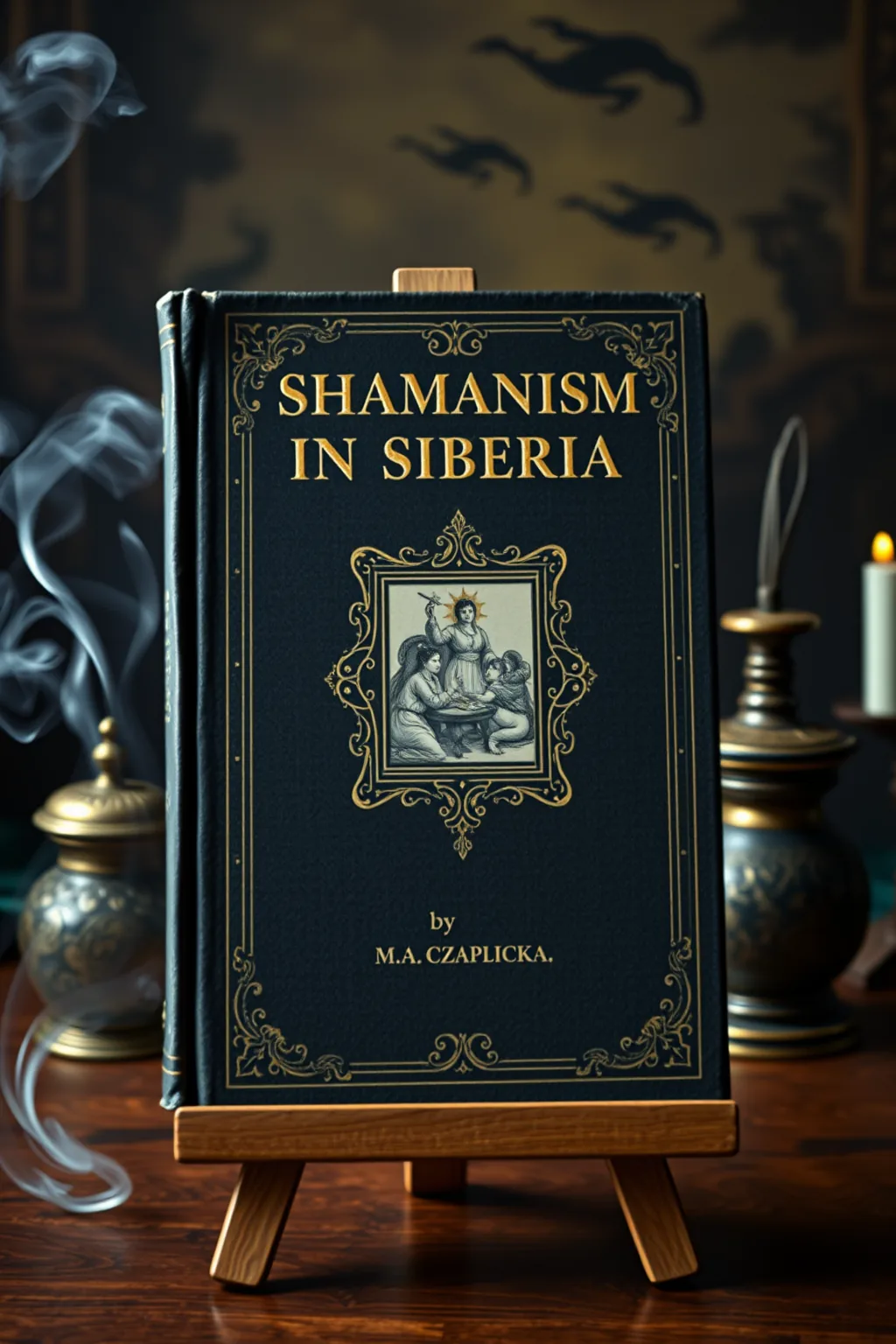
Shamanism in Siberia
 79
79

Shamanism in Siberia


Sophia Crane (Associate Editor) — M.A. Czaplicka's examination of Siberian shamanism stands as a beacon of rigorous scholarship within esoteric studies. This excerpt masterfully distills the essence of a tradition that remained vibrantly alive into the historical era, providing rare, contemporary accounts of shamanic practices. Czaplicka's focus on the recurring motifs of the shaman's journey across disparate Siberian communities highlights the universal archetypes at play in these profound spiritual endeavors. For scholars, practitioners, and seekers alike, this work offers foundational source material, illuminating the intricate mechanics of spirit communication and ecstatic trance. It is an indispensable resource for anyone wishing to grasp the depth and breadth of shamanistic cosmology.
📝 Description
79
M. A. Czaplicka's 1914 book examines Siberian shamanism across diverse cultures.
First published in 1914, M. A. Czaplicka's work offers a detailed account of shamanistic practices in Siberia. The book draws from ethnographic research to describe the roles and rituals of Siberian shamans, who acted as intermediaries between human and spirit worlds. Czaplicka details the consistent patterns observed in shamanic traditions across various Siberian groups, illuminating their methods and beliefs.
The text covers the ecstatic experiences, symbolic language, and sacred craft central to these practices. It aims to provide understanding of a spiritual tradition that maintained its influence for centuries. The book also touches upon themes of human connection to the divine and ancestral forces, as well as altered states of consciousness and the relationship between people and nature.
This study is situated within the early 20th-century academic interest in comparative religion and anthropology, which often treated shamanism as a primitive form of religion or a direct link to ancient spiritual practices. Czaplicka's approach, while ethnographic, engages with the perceived 'esoteric' nature of shamanic power and its connection to what was then considered the 'hidden' or 'spiritual' side of human experience. It reflects a period when the study of non-Western religions sought to understand universal human spiritual impulses through specific cultural examples.
💡 Why Read This Book?
Unlock the secrets of a living spiritual tradition. This book offers unparalleled access to the documented practices of Siberian shamans, whose rituals and journeys were observed well into modern times. Ideal for spiritual seekers, anthropologists, and students of comparative religion, it provides authentic source material on ecstatic trance, spirit communication, and ancient cosmologies. Discover the enduring power of shamanism and its profound connection to the natural world.
⭐ Reader Reviews
Honest opinions from readers who have explored this book.
❓ Frequently Asked Questions
What makes Siberian shamanism historically significant?
Siberian shamanism is historically significant because its practices continued into recent times, allowing for reliable, modern ethnographic accounts that capture its essence before widespread societal changes occurred.
Are the shamanistic journeys described consistent across Siberian cultures?
Yes, Czaplicka's research indicates a remarkable consistency in the details of the shamanistic journey across the diverse cultural regions of Siberia, suggesting a shared underlying cosmology and spiritual methodology.
Who is M.A. Czaplicka and why is their work important?
M.A. Czaplicka was a scholar whose ethnographic work provided crucial, detailed observations of Siberian shamanism. Their meticulous documentation serves as vital primary source material for understanding these ancient spiritual practices.
What kind of knowledge can be gained from this excerpt?
This excerpt offers profound insights into the mechanics of shamanic trance, spirit communication, ritualistic practices, and the symbolic language of Siberian shamanism, bridging the gap between academic study and esoteric understanding.
Is this book suitable for beginners in shamanism?
While scholarly, this excerpt serves as an excellent introduction for serious beginners, providing foundational knowledge and authentic accounts of shamanic traditions that can be built upon with further study and practice.
🔮 Key Themes & Symbolism
The Shamanic Journey as a Cosmic Voyage
This theme explores the profound concept of the shaman's journey, not merely a trance state, but a deliberate voyage across cosmic landscapes to commune with spirits, retrieve lost souls, or gain vital knowledge. Czaplicka details the archetypal structure of these journeys, highlighting their consistent portrayal across diverse Siberian tribes. It explores the symbolic vehicles used – animal guides, celestial ladders, or underworld descents – and the transformative power inherent in these expeditions. The focus is on understanding the shaman as an intrepid explorer of consciousness, navigating realms beyond ordinary perception to maintain balance and well-being for their community.
Spirit Communication and Intermediary Roles
Central to Siberian shamanism is the shaman's unique ability to serve as a bridge between the human world and the spirit realms. This theme examines the intricate methods of spirit communication employed, from drumming and chanting to ecstatic dance and visionary experiences. Czaplicka illuminates the pantheon of spirits encountered – ancestral, nature, and celestial – and the specific roles they play in shamanic cosmology. The text explores the obligations and responsibilities of the shaman as an intermediary, tasked with appeasing, negotiating with, and channeling spiritual energies for the benefit of the collective, revealing the profound spiritual authority vested in these figures.
Ritual, Symbolism, and Sacred Objects
This theme unravels the collection of ritualistic practices and the potent symbolism embedded within Siberian shamanism. Czaplicka meticulously describes the ceremonial contexts for shamanic activity, including the significance of the shaman's attire, drum, and other sacred paraphernalia. Each object and gesture is imbued with mystical meaning, acting as a conduit for spiritual power and a map for the shaman's journey. The exploration extends to the symbolic representation of the cosmos, the elements, and the forces of nature as understood through the shamanic lens, offering a deep dive into a worldview where the sacred permeates every aspect of existence.
💬 Memorable Quotes
Direct passages from the work, attributed to the author.
“Spirits whisper truths to the attuned ear.”
— Highlights the concept of spirit communication as a subtle art, requiring sensitivity and receptivity beyond the mundane senses.
“The drum beats the path to other worlds.”
— Points to the drum as a crucial tool in shamanism, acting as a sonic key or vehicle for achieving altered states of consciousness.
“Cosmic balance is maintained through sacred exchange.”
— Emphasizes the reciprocal relationship between the human and spirit worlds, where rituals facilitate a vital energetic flow.
“Ancestral wisdom echoes in the shaman's trance.”
— Underscores the connection to lineage and the past, suggesting that the shaman taps into a deep well of inherited knowledge during altered states.
💡 Key Ideas
Editorial paraphrase of the work's core concepts — not direct quotes.
The shaman's journey is a voyage into the unknown.
This quote expresses the daring and exploratory nature of shamanic practice, emphasizing the courage required to traverse non-ordinary reality.
🌙 Esoteric Significance
Tradition
This work is intrinsically linked to the broader tradition of animism and shamanism, which are among the oldest spiritual paths known to humanity. It speaks to the universal human impulse to connect with the unseen forces of nature and the spirit world. The practices described, particularly the ecstatic journey and spirit communication, are cornerstones of many esoteric traditions that seek to expand consciousness and access hidden dimensions of reality. It offers a tangible, documented example of how these principles manifest in a specific cultural context, providing practical insights for those engaged in similar spiritual explorations.
Symbolism
Siberian shamanism is rich with potent symbolism, often drawn from the natural world. Animals like bears, wolves, and birds serve as spirit guides or manifestations of spiritual power. Celestial bodies, trees (especially the World Tree), and geographical features often represent cosmic structures and pathways. The shaman's attire, adorned with bells, feathers, and metal ornaments, acts as a symbolic map of the cosmos and a protective ward. The drum, with its pulsating rhythm, symbolizes the heartbeat of the universe and the conduit for transcending ordinary time and space. These symbols are not mere decoration but active components of the shaman's spiritual technology.
Modern Relevance
In an age increasingly disconnected from nature and ancient wisdom, Siberian shamanism offers profound relevance. It provides a model for deep ecological connection, emphasizing a reciprocal relationship with the earth and its inhabitants. The shaman's role as a healer and mediator speaks to contemporary needs for holistic well-being and spiritual guidance. Furthermore, the documented techniques for achieving altered states of consciousness and accessing inner wisdom are of immense interest to modern psychology, consciousness studies, and contemporary spiritual practitioners seeking to reclaim ancestral healing modalities and explore the vast potential of the human mind.
👥 Who Should Read This Book
This excerpt is an invaluable resource for a diverse audience. **Spiritual Seekers** will find a profound exploration of ancient practices that can inform their own journeys toward deeper connection and understanding. **Scholars of Anthropology, Religious Studies, and Folklore** will appreciate the meticulous research and primary source material, offering critical insights into cultural ethnography and comparative religion. **Practitioners of Modern Shamanism and Esoteric Arts** will discover foundational knowledge, archetypal patterns, and authentic descriptions of shamanic techniques that can enrich their practice. Even **Curious Readers** with an interest in the mysteries of human consciousness and ancient belief systems will be captivated by the rich narratives and wide implications of Siberian shamanism.
📜 Historical Context
M.A. Czaplicka's work emerged during an important period in ethnographic and anthropological study, roughly spanning the late 19th and early 20th centuries. This era saw a surge of interest in 'primitive' cultures and their spiritual practices, often viewed through a lens of evolutionary progress or as remnants of an archaic past. For Siberia, this meant that European scholars and explorers were documenting traditions that, while ancient, were still actively practiced by indigenous peoples. Czaplicka's meticulous research, often drawing from firsthand accounts of travelers and missionaries, captured these practices before the full impact of Soviet collectivization and secularization dramatically altered or suppressed shamanistic traditions. The reliability of modern accounts from this period is precisely what makes this excerpt so valuable, offering a window into a living spiritual system.
📔 Journal Prompts
Reflect on the concept of the 'spirit journey' as described. How might this relate to your own experiences of introspection or altered states of consciousness?
Consider the role of the shaman as an intermediary. What parallels can you draw between this role and forms of mediation or communication in contemporary society?
Identify a recurring symbol from Siberian shamanism discussed in the text. How might this symbol resonate with your personal understanding of the world or your spiritual path?
The text emphasizes the connection between shamanism and the natural world. How can you foster a deeper, more reciprocal relationship with nature in your daily life?
What aspects of the shaman's responsibilities, such as healing or maintaining balance, feel most relevant to the challenges facing the world today?
🗂️ Glossary
Shaman
An individual believed to have the ability to contact and influence the spirit world, often acting as a healer, mediator, and spiritual leader within their community.
Trance State
An altered state of consciousness characterized by deep relaxation, heightened awareness, and detachment from ordinary sensory perception, often induced through ritualistic practices.
Spirit Guides
Beings from the spirit realm that offer guidance, protection, and assistance to the shaman during their journeys and in their work.
Cosmology
A system of beliefs that explains the origin, structure, and nature of the universe, including the relationships between the physical and spiritual realms.
Animism
The belief that spirits inhabit inanimate objects, natural phenomena, and the living world, attributing a spiritual essence to all things.
This book appears in 2 collections
🔮 Readers Also Liked
Browse all →









From the “Witchcraft” Collection
View all →





More Free Witchcraft & Paganism Books
View all →