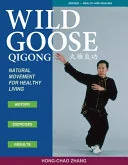
Wild Goose Qigong
 78
78

Wild Goose Qigong
Hong-Chao Zhang's "Wild Goose Qigong" offers a clear introduction to a distinct branch of this ancient Chinese art. The book excels in its straightforward presentation of the exercises, making them accessible to those unfamiliar with Qigong. The emphasis on the goose motif provides a unique visual and energetic anchor that differentiates it from other styles. However, while the instructions are practical, the text could benefit from more in-depth explanations of the underlying energetic principles beyond the surface-level benefits of youth and health. The original blurb’s promise of "young, beautiful and healthy" feels somewhat dated and lacks the deeper philosophical or spiritual dimensions often explored in esoteric texts. Nevertheless, for a practitioner seeking a concrete set of movements rooted in a specific, nature-inspired form, the book serves as a competent guide.
📝 Description
78
Wild Goose Qigong, developed by Hong-Chao Zhang, details a system of gentle movements for cultivating vital energy.
This book explains Wild Goose Qigong, a practice that uses flowing movements to develop vital energy, or 'qi'. The exercises mimic the movements of a wild goose, combining breath control with specific postures to encourage the smooth circulation of energy throughout the body. The goal is to promote longevity, physical well-being, and mental clarity.
The practice is presented as accessible for beginners to Qigong, offering a low-impact method for those interested in traditional Chinese health systems, martial arts conditioning, or energy cultivation. Experienced practitioners may find value in the unique avian-inspired forms and their subtle energetic effects. The book details the core concepts, including the distinctive movements that channel natural vitality, the coordination of breath and motion, and the circulation of qi through the body's meridians.
Wild Goose Qigong belongs to the broader tradition of Qigong, which has roots stretching back thousands of years in China, often connected to Taoism, Traditional Chinese Medicine, and martial arts. While Qigong systems are ancient, Wild Goose Qigong is a more recent formalized style. Its emphasis on fluid motion and energy circulation aligns with the core principles of many Chinese internal arts that gained wider recognition in the 20th century.
💡 Why Read This Book?
• Learn the specific 'Wild Goose' postures and movements that mimic avian grace, offering a unique approach to energy cultivation distinct from other Qigong forms. • Understand the foundational principles of qi circulation as applied through these particular exercises, enhancing your awareness of bodily energy flow. • Gain practical techniques for maintaining physical vitality and mental calm, directly applicable from the exercises presented by Hong-Chao Zhang in 2000.
⭐ Reader Reviews
Honest opinions from readers who have explored this book.
❓ Frequently Asked Questions
What is the origin of Wild Goose Qigong?
Wild Goose Qigong is a style of Qigong developed in China, drawing inspiration from the movements and vitality of the wild goose. While Qigong has ancient roots, this specific form was formalized and popularized in modern times.
Is Wild Goose Qigong suitable for beginners?
Yes, the exercises in Wild Goose Qigong are generally considered accessible to beginners. The movements are designed to be gentle and flowing, focusing on coordination and breathwork.
What are the main benefits of practicing Wild Goose Qigong?
Practitioners report benefits such as improved physical health, increased vitality, enhanced flexibility, and greater mental clarity. The practice aims to cultivate internal energy and promote overall well-being.
How does Wild Goose Qigong differ from other Qigong styles?
It is distinguished by its specific forms that imitate the wild goose, focusing on fluid, graceful movements and postures that are believed to enhance qi circulation and vitality in unique ways.
When was "Wild Goose Qigong" by Hong-Chao Zhang first published?
The book "Wild Goose Qigong" by Hong-Chao Zhang was first published in the year 2000, making it a relatively modern guide to this traditional practice.
Does this book cover advanced Qigong techniques?
The book primarily focuses on the foundational exercises of Wild Goose Qigong, designed for accessibility. While effective, it introduces the core movements rather than highly advanced or specialized techniques.
🔮 Key Themes & Symbolism
Mimicry of Nature
The core of Wild Goose Qigong lies in its direct emulation of the wild goose. This isn't mere imitation; it's a practice of embodying the natural energies and characteristics attributed to the goose – its grace, freedom, and vitality. By moving like the goose, practitioners aim to access and cultivate similar qualities within themselves. This concept aligns with broader Taoist principles of aligning human activity with natural forces and observing the wisdom inherent in the animal kingdom.
Qi Cultivation and Circulation
As with all Qigong, the central aim is the cultivation and balanced circulation of 'qi' (vital energy). Wild Goose Qigong employs specific postures and flowing movements to open the body's energetic meridians, ensuring qi can move freely. This unobstructed flow is believed to be essential for maintaining health, preventing illness, and fostering a sense of youthful vitality. The practice seeks to harmonize the internal energetic landscape.
Holistic Well-being
The exercises presented are not solely for physical conditioning. They are designed to integrate the physical, energetic, and mental aspects of a person. By coordinating breath, movement, and intention, practitioners aim for a state of balanced well-being. This holistic approach addresses not just external symptoms of imbalance but seeks to resolve them through internal energetic adjustments, promoting longevity and inner peace.
Longevity and Vitality
A primary objective of Wild Goose Qigong, as presented, is the preservation of youthfulness and the enhancement of vitality. The continuous, flowing movements are thought to invigorate the body's systems, prevent stagnation, and maintain a youthful energetic state. This focus on extending healthspan and maintaining vigor connects it to ancient Chinese health preservation arts.
💬 Memorable Quotes
Direct passages from the work, attributed to the author.
“The exercises are designed to keep you young, beautiful and healthy.”
— This phrase expresses the practical, health-oriented goals of the practice as presented in the original blurb. It highlights the tangible physical benefits sought by practitioners of traditional Chinese health arts.
“Mimicking the wild goose's movements.”
— This describes the fundamental form and inspiration behind the Qigong style. It signifies a connection to natural forms as a pathway to cultivating specific energetic qualities and physical grace.
“Simple yet effective exercises developed centuries ago.”
— This points to the accessibility and efficacy of the practice, suggesting that ancient wisdom offers potent, straightforward methods for enhancing well-being.
“Cultivate vital energy (qi).”
— This is the core energetic principle of Qigong. It emphasizes the active process of nurturing and managing the body's intrinsic life force for optimal health.
“Flowing movements and specific postures.”
— This highlights the technical components of the practice – the dynamic, continuous motion combined with precise static positions that define the method.
🌙 Esoteric Significance
Tradition
Wild Goose Qigong belongs to the broader tradition of Chinese internal martial arts and health cultivation (Neijia) with strong Taoist underpinnings. While not strictly Hermetic or Kabbalistic, its focus on cultivating and circulating internal energy (qi) through specific somatic practices echoes principles found in various esoteric disciplines concerned with subtle body manipulation and energetic alchemy. It emphasizes harmony with natural forces, a key Taoist tenet.
Symbolism
The primary symbol is the wild goose itself, representing grace, freedom, expansive movement, and keen awareness. Its flight patterns and posture are translated into specific Qigong forms designed to open the channels of the 'Eight Extraordinary Vessels' and promote unobstructed qi flow. The act of 'flying' or extending limbs in the forms symbolizes the release of energetic blockages and the expansion of one's vital field.
Modern Relevance
Contemporary practices focused on somatic awareness, energy work, and mindful movement often draw inspiration from or share common ground with Qigong. Thinkers and practitioners in fields like somatic psychology, embodied cognition, and even some branches of contemporary yoga and chi kung continue to explore the benefits of these nature-inspired, energetically-focused disciplines for physical health and mental well-being.
👥 Who Should Read This Book
['• Individuals interested in traditional Chinese health practices seeking accessible yet profound methods for cultivating vitality and physical well-being.', '• Practitioners of other Qigong or Tai Chi forms looking to explore a unique, nature-inspired style with specific movements and energetic focuses.', '• Those seeking low-impact exercise routines that also promote mental clarity and stress reduction through coordinated breath and movement.']
📜 Historical Context
Hong-Chao Zhang's "Wild Goose Qigong" emerged in 2000, a period when Qigong was experiencing significant international interest following its promotion in China. Qigong itself draws from ancient Taoist, Buddhist, and traditional Chinese medicine practices, with its roots stretching back millennia. By the late 20th century, various Qigong schools had gained prominence, often presented as methods for health preservation and spiritual cultivation. Competing with more established forms like Tai Chi or Ba Duan Jin, Wild Goose Qigong offered a distinct approach characterized by its avian-inspired movements. While not directly engaging with Western esoteric traditions like Hermeticism or Kabbalism, it represented a parallel stream of embodied, energetic practice gaining traction alongside global New Age movements.
📔 Journal Prompts
The graceful flight of the wild goose as a model for energetic flow.
Reflecting on the connection between physical posture and internal qi circulation.
How the practice of mimicking natural forms influences one's sense of vitality.
Identifying moments of stagnation in daily life and their energetic parallels.
The role of breath in coordinating the flowing movements of Wild Goose Qigong.
🗂️ Glossary
Qi (or Chi)
The fundamental concept of vital life force or energy in Traditional Chinese philosophy and medicine. Qigong aims to cultivate, balance, and circulate qi throughout the body.
Qigong
An ancient Chinese practice involving coordinated body posture, movement, breath, and meditation for the purposes of health, spirituality, and martial arts training.
Meridians
In Traditional Chinese Medicine, these are pathways through which qi circulates in the body. Qigong exercises are designed to keep these pathways open and flowing.
Postures
Specific bodily positions held or transitioned through during Qigong practice. In Wild Goose Qigong, these are inspired by the movements of the goose.
Breathwork
The conscious control and coordination of breathing during Qigong practice, integral to guiding and cultivating qi.
Vitality
The state of being energetic, healthy, and strong. Qigong practices like Wild Goose Qigong aim to enhance and maintain this quality.
Longevity
The state of having a long life. Practices aimed at maintaining health and vitality are often associated with promoting longevity.
This book appears in 1 collection
🔮 Readers Also Liked
Browse all →









From the “Qi Gong” Collection
View all →


More Free Occult Philosophy Books
View all →