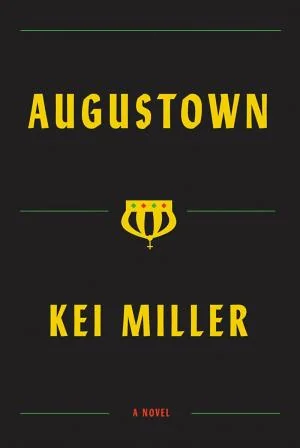
Augustown
 79
79

Augustown
Kei Miller’s Augustown is not a gentle read; it is a story that seeps into your bones, much like the spectral presence it describes. The novel’s strength lies in its unflinching portrayal of how history, particularly the traumatic legacy of colonialism in Jamaica, continues to inhabit the present. Miller masterfully employs a style that mirrors the folk beliefs he explores, making the supernatural feel not just possible, but inevitable. The narrative’s deliberate ambiguity, particularly concerning the nature of the child protagonist, is both its most compelling feature and, at times, a source of frustration. A passage detailing the shared belief in the 'duppy' as a manifestation of societal unease offers a potent glimpse into the book’s thematic core. Augustown succeeds in presenting a complex spiritual landscape that challenges Western rationalism.
📝 Description
79
Kei Miller's 2016 novel Augustown grounds Jamaican folklore in the tangible realities of post-colonial life.
Augustown examines the intersection of history, folklore, and the supernatural within Jamaica. The novel centers on 'duppyism,' the belief in ancestral spirits, and how these beliefs shape the lives and perceptions of the living. Miller structures the narrative across different periods, blending past and present, the real and the spectral.
The story engages with the lasting impact of Jamaica's colonial history, a society shaped by the transatlantic slave trade. The year 1920, a focal point for much of the action, shows a nation still reckoning with the social and spiritual consequences of slavery. This historical backdrop highlights a tension between colonial rationalism and the persistent spiritual practices of the local population.
The novel considers the fluidity of identity and the function of collective memory. It illustrates how marginalized communities employ storytelling and spiritual belief to interpret their experiences. Historical trauma, the book suggests, can manifest as supernatural events, with 'duppies' symbolizing unresolved past injustices and psychological weight.
This novel sits within a tradition that recognizes the power of spiritual beliefs and folklore to articulate historical trauma and social realities. It connects with Caribbean spiritual practices, often rooted in African diasporic traditions, where the spiritual realm is not separate from the material. The concept of 'duppies' functions not just as ghosts but as manifestations of unresolved psychic and historical burdens, a common theme in literature that explores the enduring influence of the past on the present.
💡 Why Read This Book?
• Gain an understanding of Jamaican 'duppyism' and its roots in historical trauma, moving beyond simplistic ghost stories to grasp its cultural significance. • Experience a unique narrative style that mirrors Caribbean folklore, offering a literary approach to the intersection of history and the supernatural. • Explore the concept of generational trauma and its manifestation through spectral narratives, as seen in the portrayal of the child character’s experiences.
⭐ Reader Reviews
Honest opinions from readers who have explored this book.
❓ Frequently Asked Questions
What is the significance of 'duppyism' in Augustown?
'Duppyism' in Augustown refers to the belief in spirits of the dead, or 'duppies,' which are deeply embedded in Jamaican folklore. The novel explores how these beliefs are not just superstitions but are tied to historical trauma and the psychological landscape of the community.
When was Augustown first published?
Augustown was first published in 2016 by Weidenfeld & Nicolson in London.
What literary genre does Augustown belong to?
Augustown is often categorized as magical realism, blending realistic narrative elements with supernatural and folkloric occurrences.
What historical period does Augustown draw upon?
The novel draws heavily on the historical context of Jamaica, particularly the lingering effects of colonialism and the post-emancipation era, with specific narrative threads set around 1920.
Who is the author of Augustown?
The author of Augustown is Kei Miller, a Jamaican-born writer known for his poetry, fiction, and essays.
What is the core thematic concern of Augustown?
The core thematic concern is the pervasive influence of the past, particularly historical trauma and colonial legacies, on the present, manifesting through spiritual beliefs and folklore.
🔮 Key Themes & Symbolism
Folklore and Belief Systems
Augustown places Jamaican folklore, particularly the concept of 'duppies' (spirits of the dead), at its narrative center. It presents these beliefs not as mere superstition but as a living force that shapes community identity, explains misfortune, and provides a framework for understanding historical trauma. The work contrasts these ingrained spiritual traditions with external, often colonial, rationalist perspectives, highlighting the enduring power of indigenous belief systems in the face of imposed ideologies. The narrative suggests that these folkloric elements are integral to the psychological and social fabric of the community.
Colonial Legacy and Trauma
The novel is deeply concerned with the lingering impact of Jamaica's colonial past. Historical events, particularly those surrounding slavery and its aftermath, are shown to cast long shadows, manifesting in the present through psychological burdens and the spectral 'duppies.' Miller interrogates how trauma is inherited and how communities grapple with unaddressed historical injustices. The narrative implicitly critiques the erasure or dismissal of these histories by dominant colonial narratives, suggesting that the supernatural elements are, in part, a product of unresolved collective pain.
Fluidity of Reality and Identity
Augustown challenges clear distinctions between the real and the supernatural, the past and the present. Characters' perceptions are shaped by folklore, and the presence of 'duppies' is treated with a matter-of-factness that blurs ontological boundaries. This fluidity extends to identity, particularly for the child protagonist, whose sense of self is intertwined with the spectral and the community's beliefs. The novel suggests that identity itself is a construct influenced by history, belief, and the uncanny, resisting fixed definitions.
The Power of Storytelling
Storytelling is presented as a vital mechanism for survival, meaning-making, and resistance within the community depicted in Augustown. The oral traditions and folkloric narratives are not simply entertainment but are crucial tools for processing grief, explaining the inexplicable, and preserving collective memory. The act of telling and retelling stories about 'duppies' and historical events reinforces communal bonds and provides a distinct cultural voice that exists alongside or in defiance of dominant narratives.
💬 Memorable Quotes
Direct passages from the work, attributed to the author.
“The child asked if the duppy was going to take him.”
— This simple question expresses the pervasive fear and belief in the supernatural that permeates the community, highlighting the child's vulnerability and the tangible presence of spectral entities in their lives.
“History is not a thing of the past. It is a thing of the present.”
— This statement underscores the novel's central theme: the inescapable influence of historical events, particularly colonial trauma, on contemporary life and consciousness.
“They said the duppy was made of the things that people forgot.”
— This interpretation of the 'duppy' suggests that these spectral figures are manifestations of repressed memories, historical amnesia, and unresolved societal issues, giving them a powerful symbolic weight.
“The living and the dead are not so far apart.”
— This aphorism directly addresses the novel's blurring of boundaries between the material and spiritual realms, reflecting the deeply ingrained belief in the continued presence and influence of ancestral spirits.
“The story of the duppy was also the story of what happened when the people were not listened to.”
— This interpretation links the spectral figures to silenced voices and historical grievances, positioning them as potent symbols of collective trauma and the need for recognition and remembrance.
🌙 Esoteric Significance
Tradition
Augustown engages with a tradition rooted in African diasporic spiritualities, particularly those that developed in the Caribbean under slavery and colonialism. While not strictly Hermetic or Gnostic, it shares with these traditions a focus on hidden knowledge, the interplay of spiritual and material realms, and the idea that true understanding requires looking beyond empirical reality. The concept of 'duppies' functions similarly to ancestral spirits or elemental forces in other esoteric systems, representing powers that influence human lives and the environment.
Symbolism
The primary symbol is the 'duppy' itself, representing not just a ghost but also the embodiment of historical trauma, repressed fears, and unresolved injustices. Another motif is the range of Augustown, which becomes a liminal space where the veil between the living and the dead is thin. The recurring theme of unseen forces and presences suggests a worldview where the spiritual is an active, potent dimension of existence, influencing events and shaping destinies.
Modern Relevance
Contemporary thinkers exploring post-colonial theory, trauma studies, and the intersection of spirituality and identity find Augustown highly relevant. Its exploration of how historical injustices manifest psychologically and spiritually speaks to modern discussions on ancestral trauma and collective healing. Practitioners of diasporic spiritual traditions and scholars of comparative religion can draw parallels between Miller's depiction of 'duppyism' and other animistic or ancestral veneration practices worldwide.
👥 Who Should Read This Book
• Readers interested in Caribbean literature and magical realism who seek narratives that explore the supernatural as a lens for historical and psychological truths. • Students and scholars of post-colonial studies, comparative religion, and folklore who wish to engage with a contemporary literary representation of Jamaican spiritual beliefs and their connection to history. • Individuals exploring themes of trauma, memory, and identity who are drawn to works that challenge rationalist perspectives and embrace the uncanny.
📜 Historical Context
Published in 2016, Kei Miller’s Augustown emerged from a literary landscape increasingly attentive to post-colonial narratives and the complexities of Caribbean identity. The novel is set against the backdrop of Jamaica’s historical trajectory, particularly the enduring social and spiritual repercussions of British colonialism and the transatlantic slave trade. The year 1920, a focal point for parts of the narrative, represents a period where the island was still navigating its identity after emancipation but before full independence, with deeply entrenched social hierarchies and spiritual practices like 'duppyism' persisting. Miller’s work implicitly engages with the intellectual currents that sought to validate indigenous Caribbean belief systems against the rationalist frameworks often imposed during colonial rule. It stands in dialogue with writers like Michelle Cliff and Orlando Patterson, who have explored similar themes of history, memory, and identity in the Caribbean context. The novel’s reception highlighted its contribution to contemporary literature’s engagement with supernatural elements as metaphors for historical trauma.
📔 Journal Prompts
The manifestation of 'duppies' as a response to historical trauma.
The perceived porosity between the world of the living and the dead in Augustown.
The role of storytelling in preserving memory and identity within the community.
The child’s evolving understanding of spectral presence and its connection to history.
The contrast between folkloric beliefs and external rationalist interpretations.
🗂️ Glossary
Duppy
In Jamaican folklore, a duppy is the spirit or ghost of a dead person. They are often believed to be capable of interacting with the living, influencing events, and are sometimes associated with unresolved issues or trauma.
Obeah
A system of magic and folk belief originating in West Africa and practiced in the Caribbean. It often involves spiritual healing, divination, and protection, and is sometimes associated with darker practices, though its scope is broad.
Post-colonialism
The academic study of the cultural, political, and economic legacies of colonialism and imperialism, focusing on the impact on formerly colonized societies and their people.
Magical Realism
A literary genre where magical elements are presented in an otherwise realistic setting, treated by characters and the narrator as normal or mundane.
Liminal Space
A transitional or in-between state or place, often associated with psychological or spiritual transformation. In Augustown, locations can become liminal due to the presence of spectral phenomena.
Collective Trauma
The shared experience of trauma by a group of people, often resulting from historical events like slavery, war, or natural disasters, which can impact subsequent generations.
Folklore
The traditions, customs, beliefs, and stories of a community, passed down through generations, often orally.
This book appears in 1 collection
🔮 Readers Also Liked
Browse all →









From the “Clairvoyance” Collection
View all →




More Free Occult Philosophy Books
View all →