Animism
 71
71

Animism
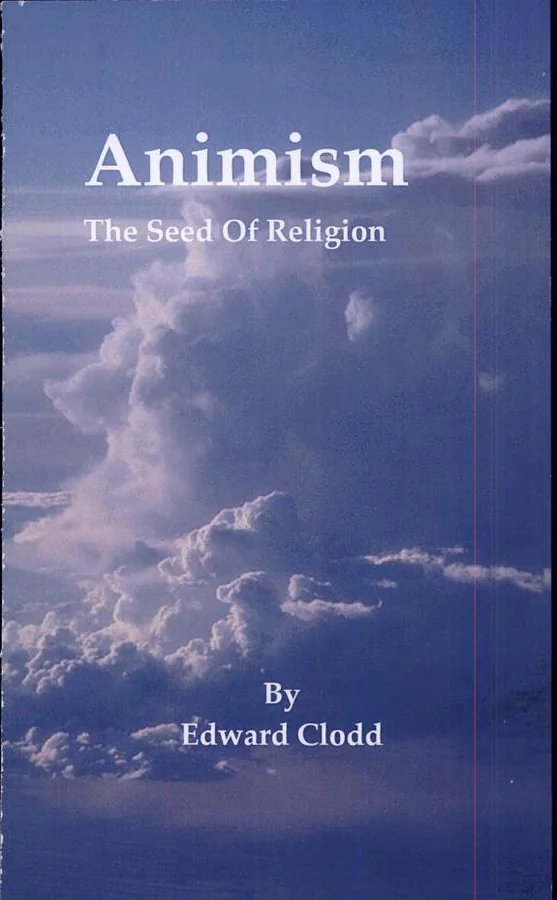
Edward Clodd’s *Animism* offers a structured, if somewhat dated, account of early spiritual beliefs. The book’s strength lies in its systematic approach, cataloging observed phenomena and attempting to derive a coherent origin for religious thought. Clodd’s exploration of how early humans perceived agency in the natural world, particularly his discussion on the attribution of spirits to inanimate objects, remains a compelling aspect of the text. However, the work is undeniably a product of its time, reflecting late Victorian anthropological perspectives and an evolutionary bias that modern scholarship has largely moved beyond. The absence of direct engagement with indigenous perspectives, relying instead on secondhand accounts and speculative reasoning, limits its contemporary utility for nuanced understanding. Despite these limitations, for scholars of intellectual history and the origins of comparative religion, *Animism* provides a valuable window into a specific historical moment of inquiry.
It is an essential, if critically viewed, piece of early anthropological literature.
📝 Description
71
Edward Clodd's 1996 book examines the earliest human beliefs about spirits in nature.
Edward Clodd's 1996 work, "Animism," investigates the origins of religious thought by focusing on the belief that natural objects and phenomena possess a spirit or soul. Clodd traces the development of these ideas from their most basic forms, examining primitive psychology and sociology. He analyzes how these early spiritual frameworks influenced social structures, rituals, and mythology, laying the groundwork for later theological systems.
The book defines animism as the belief in indwelling spirits within elements, animals, and artifacts. It explores the implications of this concept for early human societies and their interaction with the environment. Clodd also touches upon related ideas like 'mana,' an impersonal supernatural force, distinguishing it from the concept of indwelling spirits. This study provides insight into the foundational layers of spiritual belief that predated organized religions, offering a historical and psychological perspective on early human culture.
Published in 1996, Clodd's "Animism" emerged from a late 19th and early 20th-century intellectual climate that analyzed indigenous cultures through an evolutionary lens. This era was marked by extensive anthropological and sociological study, influenced by figures like E.B. Tylor. Clodd's work reflects a scientific interest in understanding the linear progression of human belief, viewing animism as a foundational stage in the development of spiritual and religious systems.
💡 Why Read This Book?
• Understand the foundational concept of animism as a belief system, learning how early humans attributed spirits to natural phenomena and objects, a core idea explored by Clodd in his analysis. • Gain insight into the intellectual climate of the late 19th century, specifically the anthropological theories prevalent around 1900, when Clodd was writing, and how they framed the study of primitive religions. • Appreciate the historical development of comparative religion studies by examining Clodd's methodology and his place alongside contemporaries like E.B. Tylor, understanding how these early works shaped subsequent academic discourse.
⭐ Reader Reviews
Honest opinions from readers who have explored this book.
❓ Frequently Asked Questions
What is the central thesis of Edward Clodd's book 'Animism'?
The central thesis is that animism, the belief in spirits inhabiting natural objects and phenomena, represents a foundational stage in the development of human religious thought and consciousness, influencing early social structures and mythologies.
When was Edward Clodd's 'Animism' first published?
Edward Clodd's 'Animism' was first published in September 1996, though the original research and conceptualization likely stem from earlier periods of anthropological study.
How does Clodd's 'Animism' relate to other early theories of religion?
Clodd's work aligns with evolutionary models of religious development prevalent in the late 19th century, similar to E.B. Tylor's theories on animism and the concept of 'mana', positioning animism as an early, fundamental belief.
What kind of evidence does Clodd use to support his claims about animism?
Clodd draws upon anthropological accounts of indigenous cultures, folklore, mythology, and comparative studies of early human societies to support his arguments about the prevalence and significance of animistic beliefs.
Is 'Animism' by Edward Clodd still considered a primary source for modern anthropology?
While not a primary source for current anthropological research, 'Animism' is valuable as a historical document illustrating the intellectual currents and methodologies of early comparative religion and anthropology, particularly from around 1900.
What distinguishes animism from other early spiritual concepts discussed by Clodd?
Clodd distinguishes animism by its focus on the belief in discrete spirits residing within specific entities (natural or man-made), contrasting it with concepts like 'mana' which refer to a more generalized supernatural force or power.
🔮 Key Themes & Symbolism
The Spirit in Nature
The book meticulously details the pervasive belief that spirits or souls inhabit not only living beings but also inanimate objects, natural phenomena like storms and rivers, and even artifacts. Clodd illustrates how this perception of inherent spiritual presence in the world formed the bedrock of early human understanding, driving rituals and mythologies aimed at appeasing or interacting with these unseen forces. This theme highlights the anthropomorphic tendency to project consciousness onto the environment.
Evolution of Religious Thought
Clodd frames animism as an early, perhaps the earliest, stage in the evolutionary trajectory of human religious consciousness. The work traces how this foundational belief system, characterized by the attribution of spiritual agency, gradually gave rise to more complex theological structures. It examines the intellectual leap from perceiving spirits to developing ancestor worship, polytheism, and eventually monotheistic concepts, situating animism as a crucial precursor.
Primitive Psychology and Sociology
Beyond mere belief, 'Animism' examines the psychological and social implications of this worldview. Clodd explores how the animistic outlook shaped early social organization, moral codes, and communal practices. The perceived spiritual essence of objects and beings influenced taboos, rituals, and the very fabric of daily life, demonstrating how fundamental beliefs dictate societal structures and individual behavior in pre-modern cultures.
Ritual and Magic
The book connects animistic beliefs directly to the development of early rituals, magic, and shamanism. Appeasing spirits, warding off malevolent entities, and harnessing spiritual power were central to survival and well-being. Clodd examines how these practices, rooted in the animistic worldview, served as early attempts to control or influence the perceived spiritual forces governing their existence, laying groundwork for later religious rites.
💬 Memorable Quotes
Direct passages from the work, attributed to the author.
“The primitive mind peoples the world with spirits.”
— This concise statement captures Clodd's core assertion that early human consciousness inherently perceived spiritual entities as active forces within the natural and social environment.
“Belief in spirits is the groundwork of primitive religion.”
— This highlights the book's central argument that animism, the belief in spirits, serves as the foundational layer from which all subsequent, more complex religious systems logically evolved.
“Ritual arises from the need to interact with these spirits.”
— This interpretation reflects Clodd's view that early religious practices and ceremonies were direct responses to the perceived presence and influence of spirits in everyday life.
“The perception of agency in the inanimate world.”
— This phrase captures the psychological shift Clodd examines, where early humans saw intention and consciousness in phenomena and objects that modern observers understand differently.
💡 Key Ideas
Editorial paraphrase of the work's core concepts — not direct quotes.
Objects of nature are endowed with souls.
This paraphrased concept illustrates the essence of animism as described by Clodd: the attribution of a vital, spiritual essence to non-living things and natural occurrences.
🌙 Esoteric Significance
Tradition
While Clodd's work is primarily anthropological and sociological, it touches upon themes relevant to esoteric studies by examining the roots of spiritual belief. It provides a historical lens through which to view the universal human impulse to connect with unseen forces, a core tenet across many esoteric traditions. Though not explicitly Hermetic or Gnostic, it explores the foundational psychological mechanisms that underpin magical and mystical worldviews, offering a secular, scientific perspective on phenomena often explored mystically.
Symbolism
The book's core 'symbol' is the concept of the spirit itself, representing consciousness, agency, and the animating force attributed to all things. Natural elements like trees, rivers, stones, and celestial bodies become symbolic vessels or manifestations of these spirits. Clodd analyzes how these perceived spiritual presences, rather than abstract symbols, formed the direct objects of early worship and ritual, shaping the symbolic language of nascent religions.
Modern Relevance
Contemporary animistic practices and neo-pagan revivals often draw upon or reinterpret historical accounts like Clodd's. Thinkers exploring ecological spirituality and deep ecology find resonance in the book's depiction of a world imbued with spirit, influencing modern earth-based spiritualities. Furthermore, psychological and philosophical discussions on consciousness and perception continue to grapple with how humans attribute agency and meaning, making Clodd's early analyses relevant to understanding these enduring cognitive patterns.
👥 Who Should Read This Book
• Students of comparative religion and mythology: They will find a structured historical overview of animism as a foundational belief system, crucial for understanding the evolution of religious thought. • Anthropologists and sociologists of culture: This work offers insight into early methodologies for studying 'primitive' societies and the origins of social structures driven by spiritual beliefs. • Philosophers of mind and consciousness: Readers interested in the historical development of how humans perceive agency, consciousness, and meaning in the world will find Clodd's analysis of early attribution relevant.
📜 Historical Context
Edward Clodd's *Animism*, first published in 1996 but rooted in earlier scholarship, emerged from a fertile period of anthropological inquiry in the late 19th and early 20th centuries. This era was characterized by figures like E.B. Tylor, whose *Primitive Culture* (1871) laid significant groundwork for the study of animism and related concepts. Clodd’s work reflects the dominant evolutionary perspective of the time, which sought to trace a linear progression of human belief systems from perceived 'primitive' to 'civilized' stages. Reception was generally within academic circles, contributing to the burgeoning field of comparative religion and sociology. While not facing direct censorship, its evolutionary framework has since been critiqued by later anthropologists who emphasize cultural relativism and challenge the notion of a single, universal path of religious development. Clodd's approach, like many of his contemporaries, relied heavily on accounts from missionaries and colonial administrators, a methodology now viewed with caution.
📔 Journal Prompts
The attribution of spirits to inanimate objects: Explore personal experiences or cultural examples.
Early human perceptions of natural phenomena (storms, seasons) as spiritual forces.
The connection between animistic beliefs and the development of early rituals or magic.
How the concept of 'mana' differs from a belief in distinct spirits.
Reflect on the psychological drive to perceive agency in the world around you.
🗂️ Glossary
Animism
The belief that natural objects, phenomena, and beings possess an independent spirit or soul. This is the central concept explored in the book, representing an early stage of religious thought.
Spirit
In the context of animism, a non-physical entity or animating force that is believed to inhabit or control natural objects, phenomena, or living beings.
Mana
A concept, often discussed alongside animism, referring to a supernatural force or power that is distributed throughout the universe, particularly potent in certain individuals or objects.
Primitive Religion
A term used in early anthropology to describe the religious beliefs and practices of pre-literate or indigenous societies, often viewed as foundational or early evolutionary stages.
Totemism
A system of belief where humans are thought to have a spiritual relationship with particular animals, plants, or natural objects (totems), often forming the basis of social organization.
Mythology
The collection of myths or stories belonging to a particular culture or religion, often explaining origins, natural phenomena, or cultural practices, frequently rooted in animistic beliefs.
Shamanism
A religious practice characterized by a practitioner (shaman) who is believed to interact with a spirit world, often acting as an intermediary between the human and spirit realms.
This book appears in 1 collection
🔮 Readers Also Liked
Browse all →








From the “Animism” Collection
View all →






More Free Sacred Texts & Gnosticism Books
View all →