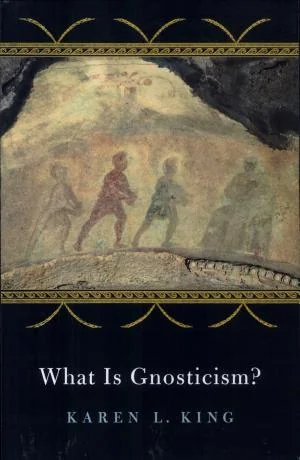
What Is Gnosticism?
 80
80

What Is Gnosticism?
Karen L. King's "What Is Gnosticism?" offers a concise yet robust introduction to a subject frequently shrouded in myth and misinterpretation. King excels at distilling complex theological and philosophical arguments into accessible prose, a feat particularly evident in her treatment of the Gnostic cosmology, which she outlines with admirable clarity. The work's strength lies in its balanced presentation of diverse Gnostic schools, avoiding the common pitfall of treating Gnosticism as a monolithic entity. However, the brevity of the book, while a virtue for introductory purposes, occasionally leaves the reader yearning for deeper engagement with specific textual evidence or more extensive comparative analysis. The discussion of the Valentinian system, for instance, while accurate, could benefit from further elaboration on its intricate mythopoetic structure. King provides a solid foundation for understanding Gnosticism's historical and intellectual landscape.
📝 Description
80
Karen L. King's 2003 book asks: what is Gnosticism?
Gnosticism, a spiritual and philosophical current named for the Greek word for knowledge ('gnosis'), flourished in the early Common Era. Its adherents believed salvation came through direct, inner knowledge of a divine element within the self. This thinking often separated a distant, supreme God from a flawed creator of the material world. King's work examines this movement's origins, which developed alongside early Christianity, Judaism, and Hellenistic philosophy. Its varied expressions and emphasis on esoteric understanding made it distinct from, and often opposed by, established religious authorities.
The book is relevant for those studying alternative spiritual paths, early Christian history, or the philosophical basis of mystical thought. It will appeal to readers interested in secret knowledge, dualistic views of existence, or the concept of an inner divine essence. King addresses core Gnostic ideas such as Sophia (Wisdom), the Archons who govern the material cosmos, the Pleroma (divine fullness), and the divine spark in humans. The material world is frequently seen as a deceptive or confining space from which the soul seeks freedom via gnosis, a process that requires recognizing one's spiritual origins and inherent divinity.
Emerging in the 2nd century CE, Gnosticism represents a significant stream within esoteric traditions that sought direct spiritual insight outside established religious structures. It engaged with and reacted against major Hellenistic and early Judeo-Christian thought, proposing a cosmology that emphasized a hidden, transcendent divinity and a critique of the material world. Its preservation in fragmented texts and later translations has made its study a complex task, but King's work addresses the central tenets that defined this diverse movement's pursuit of liberation through inner knowledge.
💡 Why Read This Book?
• Understand the core tenets of Gnosticism, including the concept of 'gnosis' and the dualistic worldview, differentiating it from mainstream religious doctrines. • Grasp the historical milieu of the 2nd century CE, recognizing Gnosticism's emergence as a distinct spiritual current within the Hellenistic world and its interaction with early Christianity. • Identify key Gnostic figures and cosmological elements like Sophia and the Archons, learning how they function within the Gnostic narrative of spiritual liberation.
⭐ Reader Reviews
Honest opinions from readers who have explored this book.
❓ Frequently Asked Questions
When did Gnosticism first emerge as a distinct movement?
Gnosticism began to emerge as a distinct spiritual and philosophical movement in the 2nd century CE, developing alongside early Christianity and other Hellenistic traditions.
What is the primary meaning of 'Gnosis' in Gnostic traditions?
'Gnosis' is the Greek word for knowledge, but in Gnostic contexts, it refers specifically to intuitive, salvific knowledge of the divine and one's true spiritual nature, distinct from intellectual understanding.
Who were some key figures or schools within early Gnosticism?
Prominent figures include Valentinus, Basilides, and Marcion, and major schools include Valentinianism and Sethianism, each with unique interpretations of Gnostic cosmology and soteriology.
How did Gnosticism view the material world and its creator?
Gnostics generally viewed the material world as flawed or evil, created by a lesser, ignorant, or malevolent deity (the Demiurge), distinct from the true, transcendent God.
What is the role of Sophia in Gnostic mythology?
Sophia, or Wisdom, is a pivotal divine emanation in many Gnostic systems. Her fall from the divine realm (Pleroma) is often seen as the catalyst for the creation of the material cosmos and the subsequent entrapment of divine sparks within it.
Is Gnosticism related to early Christianity?
Yes, Gnosticism developed in close proximity to early Christianity, sharing some figures and concepts but diverging significantly in its interpretations of Christ, salvation, and the nature of God and creation.
🔮 Key Themes & Symbolism
The Nature of Gnosis
This work illuminates 'gnosis,' the salvific knowledge central to Gnosticism. It's not mere intellectual assent but a direct, intuitive apprehension of the divine spark within and the true nature of reality. This experiential knowing is the key to liberation from the material world, distinguishing Gnosticism from systems emphasizing faith or ritual alone. The book examines how this direct access to truth was pursued and understood by various Gnostic groups, often contrasting it with external, dogmatic forms of religion prevalent in the 2nd century CE.
Cosmic Dualism and the Demiurge
A core theme is the Gnostic conception of a fundamental duality: the transcendent, unknowable God and the flawed material cosmos. The book details how this cosmos is often attributed to a lesser creator, the Demiurge, sometimes identified with the God of the Old Testament. This understanding positions the material realm as an illusion or prison, a stark departure from creation narratives that view the world as fundamentally good. The presence of divine sparks trapped within this material prison is a recurring motif.
Sophia and the Divine Emanations
The figure of Sophia (Wisdom) is explored as a crucial element in Gnostic mythology. Her role as a divine emanation whose passionate desire or error leads to the creation of the material world is a common narrative thread. The book explains how Sophia's story often serves as an allegory for the soul's descent into the material realm and its subsequent longing for return to the divine Pleroma. Her plight and eventual restoration are central to many Gnostic cosmogonies.
Spiritual Liberation and the Inner Self
The ultimate aim of Gnosticism, as presented in this work, is spiritual liberation. This is achieved not through external mediators but through the awakening of the divine element within the individual. The book discusses how Gnostics sought to understand their own divine origins and break free from the control of Archons and the limitations of the material world. The emphasis is on self-knowledge as the path to freedom and reunion with the true God.
💬 Memorable Quotes
Direct passages from the work, attributed to the author.
“The material world is a prison created by a lesser god.”
— This captures the essence of Gnostic cosmology, where the physical universe is seen as fundamentally flawed or evil, a creation of a subordinate deity (the Demiurge), contrasting sharply with the perfect, transcendent God.
“The divine spark within humanity seeks to return to its source.”
— This interpretation points to the Gnostic belief in a fragment of the divine trapped within each human soul. The ultimate goal is the recognition and liberation of this spark, enabling its ascent back to the spiritual realm.
“The Archons maintain control over the material realm.”
— This refers to the Gnostic concept of spiritual rulers or intermediaries, the Archons, who govern the cosmos and often act as obstacles to the soul's ascent, representing forces of ignorance and limitation.
“Understanding Sophia's fall explains the origin of suffering.”
— This highlights the mythological role of Sophia (Wisdom) in many Gnostic systems. Her descent or error is often depicted as the impetus for the creation of the flawed material world and the subsequent suffering experienced by beings within it.
💡 Key Ideas
Editorial paraphrase of the work's core concepts — not direct quotes.
Salvation comes through knowledge of the hidden mysteries.
This paraphrased concept highlights the Gnostic emphasis on 'gnosis' – a special, often secret, knowledge that unlocks spiritual liberation. It implies that understanding the true nature of reality and the divine is the direct path to freedom, bypassing conventional religious structures.
🌙 Esoteric Significance
Tradition
This work engages deeply with the Gnostic tradition, a complex spiritual current often intertwined with Hermeticism and early Christian mysticism. It explores Gnosticism's unique emphasis on 'gnosis' as the path to salvation, distinguishing it from faith-based religions. King's scholarship situates Gnosticism as a distinct esoteric lineage focused on the inherent divinity within the individual and the illusory nature of the material world, offering a counterpoint to more creation-affirming traditions.
Symbolism
Key symbols discussed include Sophia (Wisdom), whose fall from the divine Pleroma initiates creation, and the Archons, cosmic rulers who maintain the material prison. The 'divine spark' trapped within humanity is another potent symbol, representing the soul's true origin and its yearning for return. These symbols function within Gnostic mythology to explain the origin of the cosmos, the nature of human suffering, and the path toward spiritual liberation.
Modern Relevance
Contemporary esoteric practitioners, comparative religion scholars, and those interested in consciousness studies frequently draw upon Gnostic themes. Movements exploring Gnostic philosophy, the concept of the divine feminine (Sophia), and critiques of societal control structures find resonance in these ancient ideas. Thinkers and groups influenced by Jungian psychology's exploration of archetypes also engage with Gnostic cosmology, seeing in it profound psychological and spiritual insights relevant to the modern search for meaning.
👥 Who Should Read This Book
• Students of early Christianity and comparative religion seeking to understand diverse spiritual movements of the 2nd century CE. • Individuals interested in esoteric philosophy and mystical traditions who want to explore the concept of salvation through knowledge ('gnosis'). • Scholars and practitioners of Western esotericism looking for a clear introduction to Gnostic cosmology, key figures like Sophia, and its philosophical underpinnings.
📜 Historical Context
Karen L. King's work places Gnosticism within its critical 2nd century CE context, a period of intense spiritual and intellectual ferment. Emerging alongside nascent Christianity, it represented a significant divergence, often drawing the ire of figures like Irenaeus of Lyons, who vigorously debated and condemned Gnostic doctrines in works like 'Against Heresies'. While orthodox Christianity emphasized faith and apostolic succession, Gnosticism prioritized direct, esoteric knowledge ('gnosis'). This period also saw the influence of Neoplatonism and other mystery traditions, creating a complex intellectual landscape. King's scholarship acknowledges the diversity within Gnosticism, moving beyond earlier monolithic interpretations and highlighting its varied expressions and philosophical underpinnings, which challenged established religious and philosophical norms of the time.
📔 Journal Prompts
The concept of 'gnosis' as salvific knowledge.
Reflect on the Gnostic view of the material world as a prison.
Explore the role and symbolism of Sophia in Gnostic thought.
Consider the function of the Archons in maintaining cosmic order.
Analyze the implications of the divine spark within for personal liberation.
🗂️ Glossary
Gnosis
The Greek word for knowledge, specifically referring to intuitive, salvific knowledge of the divine and one's true spiritual nature, central to Gnostic soteriology.
Demiurge
In Gnosticism, a lesser, often ignorant or malevolent creator deity responsible for the material universe, distinct from the supreme, transcendent God.
Sophia
A key figure in Gnostic mythology, often representing Wisdom. Her fall or error from the divine realm (Pleroma) is frequently cited as the origin of the material cosmos.
Archons
Cosmic rulers or intermediaries in Gnostic cosmology, often seen as servants of the Demiurge who maintain control over the material world and obstruct the soul's ascent.
Pleroma
The divine fullness or totality, the spiritual realm inhabited by the supreme God and his emanations (Aeons) in Gnostic cosmology.
Aeons
Divine beings or emanations that originate from the supreme God in the Pleroma, often paired in Gnostic systems. Sophia is typically one of the Aeons.
Divine Spark
A fragment of the divine essence believed to be trapped within the human soul, originating from the Pleroma, which seeks liberation and return to its source.
🔮 Readers Also Liked
Browse all →







More by Karen L. King
All books →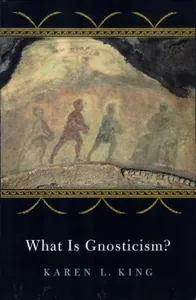


More Free Sacred Texts & Gnosticism Books
View all →