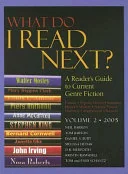
What Do I Read Next?
 84
84

What Do I Read Next?
Neil Barron's "What Do I Read Next?" offers a structured approach to literary discovery, a welcome antidote to the overwhelming deluge of new publications. Its strength lies in its methodical categorization and detailed entries, which provide specific data points like character descriptions and time periods, enabling readers to make informed choices. The 2005 edition, for instance, meticulously details entries, allowing a reader interested in, say, early 20th-century espionage to find relevant titles with ease. However, its annual publication cycle means the 'last year' of its focus is long past, rendering its core premise somewhat dated for immediate discovery. The strength of its comparative analysis is undeniable, but its utility today is primarily as a historical snapshot of literary trends and a model for thoughtful book selection rather than a current recommendation engine. The book functions best as a retrospective tool for understanding how literary connections were made accessible in the mid-2000s.
📝 Description
84
Neil Barron's 2005 guide helps readers find new books based on connections between titles.
What Do I Read Next? functions as an annual selection guide. Its purpose is to help readers discover new books on their own. The guide focuses on identifying similarities between books. This allows users to choose works published in the past year that match their interests. The guide is for avid readers wanting to find authors or genres outside their usual choices. It is particularly useful for those who like finding new books through thematic links, character types, or story structures. This approach contrasts with relying only on bestseller lists or publisher suggestions. The core idea is reader independence in choosing what to read next. By grouping books into genres and offering detailed entries, the guide encourages readers to be more active in their selection process. It highlights how literary works relate to each other, suggesting that understanding a book's parts—characters, settings, plot—leads to better choices for future reading.
While not strictly esoteric in the occult sense, this guide operates within a tradition of bibliomancy and curated knowledge, where patterns and correspondences between texts are used for guidance. It mirrors systems that seek meaning through relational analysis, akin to how practitioners might find connections between disparate symbols or texts to understand a larger whole. The book's focus on intertextual links and reader intuition in selection echoes approaches found in mystical traditions that value personal discovery through structured inquiry.
💡 Why Read This Book?
• Understand how literary connections are mapped: Learn to identify thematic links and structural similarities between diverse books, as demonstrated by the guide's genre sections and detailed entry formats from the 2005 publication. • Discover specific genres and their evolution: Gain insight into how books published around 2004-2005 were categorized and described, providing a concrete look at genre development. • Empower your own reading choices: Utilize the guide's methodology to independently select future reads based on specific criteria like character types or narrative arcs, mirroring Barron's approach.
⭐ Reader Reviews
Honest opinions from readers who have explored this book.
❓ Frequently Asked Questions
What is the primary purpose of Neil Barron's 'What Do I Read Next?'
The book serves as an annual selection guide, first published in 2005, to help readers independently choose titles of interest by identifying similarities between books published in the preceding year.
How does 'What Do I Read Next?' organize its book entries?
Entries are arranged by author within six distinct genre sections, providing details such as title, publisher, publication date, character descriptions, setting, review citations, and plot summaries.
What kind of information is provided for each book entry?
Each entry details the book's title, publisher, publication date, series information, character names and descriptions, time period and geographical setting, review citations, story types, and a brief plot summary.
When was the first edition of 'What Do I Read Next?' published?
The first edition of 'What Do I Read Next?' was published on October 21, 2005.
Is this guide updated annually with current publications?
The original publication states it is an 'annual selection guide' focusing on the 'last year' of publications. However, the 2005 edition specifically covers books from the preceding year, not ongoing annual updates.
What is the intended audience for this book guide?
The guide is for readers who wish to discover new books based on specific criteria and similarities, rather than relying on general recommendations or bestseller lists.
🔮 Key Themes & Symbolism
Reader Autonomy in Selection
The guide champions the reader's ability to make informed choices independent of market trends or algorithms. By dissecting books into components like character arcs, plot structures, and thematic elements, it equips readers with the tools to actively curate their reading lists. This approach contrasts with passive consumption, encouraging a more engaged relationship with literature, particularly evident in how it might guide a reader from a mystery novel published in 2004 to another with similar detective archetypes.
Literary Connectivity and Genre Mapping
Barron's work emphasizes that no book exists in isolation. It maps connections by genre, authorial style, and narrative elements, demonstrating how different works echo each other. For instance, a reader interested in the speculative fiction published in 2004 might be directed to other titles that explore similar dystopian themes or introduce comparable speculative technologies, illustrating the interconnectedness of literary output.
Detailed Bibliographic Analysis
Each entry offers a granular breakdown of a book's constituent parts, extending beyond a simple synopsis. Information on character names, their descriptions, the specific time period and geographical setting, and even citations from reviews provides a comprehensive profile. This depth allows readers to identify not just thematic overlaps but also specific stylistic or structural elements they might be seeking in new reading material.
Historical Literary Trends (2004-2005)
As an annual guide focusing on the previous year's publications, the 2005 edition offers a specific lens into the literary field of 2004. It captures the zeitgeist of that period, highlighting which genres, themes, and narrative approaches were prevalent. This makes the guide a valuable historical document for understanding literary output and reader interests from that particular moment in time.
💬 Memorable Quotes
Direct passages from the work, attributed to the author.
“Each entry describes a separate book, listing everything readers need to know to make selections.”
— This highlights the guide's core function: providing comprehensive, actionable data points for each book. It suggests a practical, almost encyclopedic approach to literary recommendation, moving beyond subjective opinion to objective, descriptive facts.
“Arranged by author within six genre sections, detailed entries provide: Title Publisher and publication date...”
— This points to the structured methodology of the guide. The organization by author within genres, coupled with specific bibliographic details, facilitates systematic discovery and comparison of literary works.
“By identifying similarities in various books, this annual selection guide helps readers to independently choose titles of interest...”
— This captures the book's philosophy of empowering readers. It’s not about telling people what to read, but about providing the framework for them to discover books that align with their preferences based on inherent similarities.
“Selected other...”
— This fragment suggests the guide goes beyond mere plot summaries, likely including other critical elements or comparative data points that contribute to a holistic understanding of a book's place and appeal.
“Brief plot summary...”
— This indicates that while detailed, the guide aims for conciseness in its plot descriptions, focusing on providing enough information to pique interest without revealing every detail, thereby preserving the reading experience.
🌙 Esoteric Significance
Tradition
While not overtly 'esoteric' in the occult sense, 'What Do I Read Next?' aligns with the Hermetic principle of 'As Above, So Below' by positing that understanding the structure and components of one book can illuminate others. It operates within a tradition of bibliomancy and comparative literature, where finding patterns and correspondences between texts is a form of divination for the discerning reader.
Symbolism
The guide's structure itself can be seen as symbolic. The six genre sections represent distinct realms or planes of literary experience. Within each entry, the detailed breakdown of characters, settings, and plot points acts as a symbolic map, revealing the underlying archetypes and narrative currents that connect seemingly disparate works.
Modern Relevance
In an era saturated with AI-driven recommendations, Barron's methodology offers a counterpoint. Contemporary readers and literary scholars interested in analog discovery methods, comparative literature, or the history of book recommendation systems might draw upon its structured approach. It serves as a case study in how intellectual curation can empower individual choice in the digital age.
👥 Who Should Read This Book
• Readers seeking to develop their own critical discernment: Those who want to move beyond passive consumption and learn to analyze and select books based on concrete literary elements. • Librarians and Booksellers: Professionals looking for structured methods to categorize and recommend literature, particularly those interested in comparative analysis of works from the mid-2000s. • Literary Historians: Researchers interested in understanding the field of published fiction around 2004-2005 and the prevailing methods of book discovery at the time.
📜 Historical Context
Published in October 2005, Neil Barron's 'What Do I Read Next?' arrived in a literary world rapidly evolving due to digital technologies. While Amazon's "Customers who bought this item also bought..." feature was already prominent, Barron's guide offered a more deliberate, curated approach. It countered the often-impersonal nature of algorithmic recommendations by focusing on detailed, human-crafted analyses of literary components. The early 2000s saw a surge in online book communities and blogs, yet Barron's work provided a tangible, structured resource. It competed with, or complemented, the burgeoning Goodreads platform (founded in 2006) and various literary review journals, offering a specific annual snapshot of books published around 2004. The guide's methodical breakdown of genres and entries mirrored the increasing academic interest in comparative literature and reader-response theory, though its primary audience remained the general reader.
📔 Journal Prompts
Analyze the 'character names and descriptions' provided for a specific entry and identify potential archetypes.
Compare the 'time period and geographical setting' of two different books featured in the same genre section.
Reflect on how the 'story types' listed for a book might align with or diverge from your personal preferences.
Examine the 'review citations' for a book and consider how they shape your perception of its critical reception.
Consider the 'brief plot summary' of a featured book and predict how its 'selected other' related titles might expand upon its themes.
🗂️ Glossary
Selection Guide
A reference work designed to help readers choose books by providing organized information and comparative data on published titles.
Genre Sections
The distinct categories within the guide (e.g., mystery, science fiction) used to group books with similar thematic or structural elements for easier comparison.
Entry
A detailed description of a single book within the guide, containing specific bibliographic and content-related information.
Character Descriptions
Information provided about the individuals in a book, including their roles, personalities, and significance to the plot.
Time Period and Geographical Setting
The specific era and location in which a book's narrative unfolds, crucial for understanding context and atmosphere.
Review Citations
References to critical assessments or analyses of a book from various sources, offering insight into its reception.
Story Types
The classification of narrative patterns or plot structures employed within a book, such as 'quest narrative' or 'coming-of-age'.
This book appears in 1 collection
🔮 Readers Also Liked
Browse all →







From the “Telekinesis” Collection
View all →


More Free Occult Philosophy Books
View all →