Unrest

 74
74

Unrest
Michelle Harrison's "Unrest" attempts to capture the unsettling feeling of a pervasive, unarticulated dread. The strength of the novel lies in its atmospheric construction; Harrison excels at creating a sense of unease that seeps into the reader's consciousness. However, the narrative sometimes falters in its pacing, with the central mystery occasionally becoming obscured by its own deliberate ambiguity. A particularly effective passage describes the way shadows in a familiar room seem to deepen and coalesce, hinting at an unseen presence without explicit confirmation. While the exploration of psychological fragility is commendable, the resolution feels somewhat less impactful than the build-up suggests. Ultimately, "Unrest" is a mood piece that succeeds more in evoking a feeling than in delivering a concrete narrative arc.
📝 Description
74
Michelle Harrison's 2018 novel "Unrest" examines how dread and unseen forces affect daily life.
Michelle Harrison's "Unrest" is a fictional work that probes the psychological and potentially supernatural disturbances experienced by its characters. It does not present esoteric doctrine directly, but rather shows how anxieties and unseen forces can manifest in everyday life. The novel questions the boundary between internal turmoil and external influence, suggesting a reality where the separation between worlds is less distinct than people usually believe. Harrison uses settings that contribute to this atmosphere, imbuing familiar places with a sense of unease and latent power.
This book suits readers who enjoy allegorical storytelling and psychological thrillers with a metaphysical dimension. It will appeal to those interested in how literature addresses themes of mental distress, the uncanny, and the nature of reality without relying on overt magical systems. Readers who prefer narratives that allow for interpretation and explore the less understood aspects of human experience will find "Unrest" engaging. It is for those who look beyond the surface story to discover deeper meanings.
Published in 2018, "Unrest" taps into a contemporary literary trend that uses speculative fiction to examine psychological horror and existential dread. Though not directly linked to a specific historical esoteric movement, its themes of the uncanny echo earlier works like M.R. James's ghost stories or Shirley Jackson's psychological tension. The novel's exploration of the supernatural as a metaphor for societal anxieties aligns with a resurgence of interest in folk horror and similar themes found in recent speculative fiction.
💡 Why Read This Book?
• Gain insight into how literature can explore the uncanny, similar to the subtle psychological horror found in Shirley Jackson's "The Haunting of Hill House", by examining Harrison's depiction of environmental unease. • Understand the literary exploration of anxiety as a tangible force, a concept that resonates with contemporary discussions on collective consciousness and its impact on reality. • Experience a narrative that questions the boundaries of perception and sanity, drawing parallels to the psychological depth explored in M.R. James's ghost stories from the early 20th century.
⭐ Reader Reviews
Honest opinions from readers who have explored this book.
❓ Frequently Asked Questions
What is the primary theme explored in Michelle Harrison's 'Unrest'?
The primary theme in 'Unrest' is the exploration of pervasive, unnamable dread and how it affects characters' perceptions and the environment around them. It probes the boundary between internal psychological distress and external, possibly supernatural, influences.
When was 'Unrest' by Michelle Harrison first published?
'Unrest' by Michelle Harrison was first published in 2018, placing it within the contemporary landscape of speculative and psychological fiction.
Does 'Unrest' contain explicit supernatural elements or is it more psychological?
The novel leans towards psychological exploration, suggesting supernatural elements through atmosphere and character perception rather than explicit manifestations. It blurs the lines, leaving room for interpretation about the true nature of the disturbances.
Who might enjoy reading 'Unrest'?
Readers who appreciate atmospheric psychological thrillers, allegorical storytelling, and narratives that delve into the uncanny and the darker aspects of human experience without relying on overt horror tropes will likely find 'Unrest' engaging.
What kind of literary tradition does 'Unrest' draw upon?
While contemporary, 'Unrest' echoes literary traditions exploring the uncanny and psychological unease, reminiscent of ghost stories by M.R. James or the atmospheric tension in works by Shirley Jackson.
How does 'Unrest' handle the concept of fear?
'Unrest' handles fear by presenting it as a pervasive, almost environmental force that can warp reality and perception. It suggests that anxieties, both individual and collective, can manifest in unsettling ways.
🔮 Key Themes & Symbolism
The Unnamable Dread
The work meticulously crafts an atmosphere of pervasive, unarticulated dread. This isn't a sudden fright but a creeping unease that colours the characters' perceptions and interactions. Harrison suggests that this dread can manifest in subtle environmental shifts, such as the intensification of shadows or a palpable stillness, blurring the lines between internal psychological states and an external, almost sentient, malevolence. The narrative explores how such a feeling can isolate individuals, making them question their own sanity as they grapple with an intangible threat that resists easy definition or explanation.
Perception and Reality
A central concern of 'Unrest' is the malleability of reality when filtered through intense psychological distress or exposure to uncanny forces. The book questions what is truly happening versus what is perceived. Characters struggle to discern objective truth from subjective experience, especially when the environment itself seems to conspire against them. This theme invites readers to consider the power of the mind to shape one's world and the possibility that certain states of consciousness might align with or perceive dimensions beyond the ordinary, a concept explored in various mystical traditions.
Environmental Influence
Harrison imbues settings with a potent, almost active, quality. Familiar places become imbued with a sense of latent disturbance, suggesting that locations can absorb and emanate psychic energies or historical traumas. The narrative implies that certain environments can become focal points for unease, acting as conduits for the pervasive dread that afflicts the characters. This concept of place as a repository of feeling or influence is a recurring motif in literature dealing with the uncanny and the supernatural, hinting at a deeper connection between consciousness and the physical world.
Isolation and Internal Conflict
The pervasive dread experienced in 'Unrest' often leads to profound isolation for its characters. As they grapple with inexplicable phenomena and question their own perceptions, they find it difficult to communicate their experiences or find solace in others. This isolation intensifies their internal conflicts, forcing them into a solitary confrontation with their fears and anxieties. The narrative highlights how the inability to articulate or validate one's unsettling experiences can lead to a deep sense of alienation, both from society and from one's own sense of self.
💬 Memorable Quotes
Direct passages from the work, attributed to the author.
“Shadows seemed to deepen, not from lack of light, but from an internal source.”
— This interpretation of shadows points to an unnatural phenomenon. It suggests the darkness originates from within the environment or the characters' perception, rather than from an external absence of light, reinforcing the idea of an intrinsic, unsettling quality to the surroundings.
“Was it the house that felt wrong, or was it me?”
— This question captures the central ambiguity of the narrative. It highlights the character's struggle to differentiate between external environmental disturbances and their own internal psychological state, questioning the very nature of their reality.
“A feeling clung to the air, a residue of something unseen.”
— This illustrates the concept of lingering, intangible forces. The 'residue' implies that an event or presence has occurred, leaving an invisible imprint on the atmosphere that can be sensed by those attuned to it.
“The edges of things began to blur.”
— This metaphor signifies a breakdown in the clarity of perception. It suggests that the character's ability to distinguish between different realities or even solid objects is diminishing, indicating a profound shift in their experience of the world.
💡 Key Ideas
Editorial paraphrase of the work's core concepts — not direct quotes.
The silence wasn't empty; it was watchful.
This line captures the essence of the book's atmosphere, suggesting that the absence of sound is not a void but a charged, aware presence. It implies that the surrounding stillness holds an unseen sentience, contributing to the pervasive sense of unease and surveillance.
🌙 Esoteric Significance
Tradition
While "Unrest" does not explicitly align with a singular esoteric tradition like Hermeticism or Gnosticism, it engages with themes common in Western esotericism concerning the influence of consciousness on reality and the existence of subtle energies. Its exploration of how ambient anxiety can manifest in the environment shares conceptual ground with ideas found in certain branches of occultism and parapsychology that posit a connection between collective human emotion and psychic phenomena. The work departs from dogmatic traditions by focusing on the subjective experience of these forces rather than adherence to established doctrines or rituals.
Symbolism
The pervasive darkness and deepening shadows in "Unrest" function symbolically, representing not just the absence of light but the presence of an encroaching, unnamable dread or ignorance. The concept of a 'watchful silence' symbolizes an unseen, potentially malevolent, consciousness or presence that permeates the characters' surroundings. Furthermore, the blurring of 'edges' can be interpreted as a symbol for the dissolution of clear boundaries between the internal psychological state and external reality, a common motif in mystical and occult literature exploring altered states of consciousness.
Modern Relevance
Contemporary thinkers and practitioners in fields like depth psychology, Jungian analysis, and certain subgenres of speculative fiction continue to draw on narratives like "Unrest." Its exploration of how ambient anxieties can shape subjective experience and potentially influence the perceived environment speaks to modern discussions on collective consciousness, psychological resilience, and the impact of social media on mental states. The book's focus on the uncanny within everyday life also aligns with current trends in horror and literary fiction that use the supernatural as a lens to examine contemporary societal fears and individual alienation.
👥 Who Should Read This Book
• Readers interested in psychological thrillers with a speculative edge, particularly those who appreciate atmospheric storytelling akin to Shirley Jackson's explorations of domestic unease. • Individuals curious about how literature can explore the concept of ambient dread and its impact on perception, without relying on explicit supernatural events or traditional horror tropes. • Students of contemporary fiction who are examining how authors since 2010 have used the uncanny to reflect societal anxieties and explore the boundaries of subjective reality.
📜 Historical Context
Michelle Harrison's "Unrest," published in 2018, emerged during a period of heightened interest in psychological horror and the uncanny within contemporary literature. While not directly affiliated with a specific historical esoteric movement, its thematic exploration of dread and subjective reality echoes concerns present in earlier 20th-century literature. Authors like M.R. James, writing in the early 1900s, masterfully employed atmosphere and suggestion to create unease, a technique Harrison revisits. Similarly, the psychological depth and focus on the unsettling nature of ordinary environments draw parallels to the work of Shirley Jackson, whose novels gained prominence mid-century. The 2018 release places "Unrest" within a landscape where authors such as Tamsyn Muir and Silvia Moreno-Garcia were also exploring themes of existential dread and the supernatural as metaphors for societal anxieties, demonstrating a broader cultural inclination to engage with these unsettling narratives.
📔 Journal Prompts
The nature of the 'watchful silence' in the narrative.
How the characters' internal states seem to influence their perception of the environment.
The significance of the 'blurring edges' metaphor.
Moments where the distinction between internal and external dread becomes most pronounced.
The role of isolation in amplifying the sense of unease experienced by the protagonists.
🗂️ Glossary
The Unnamable Dread
A pervasive, unarticulated feeling of anxiety or fear that permeates the narrative, affecting characters' perceptions and the environment without a clear source.
Watchful Silence
A descriptive phrase indicating that silence in the narrative is not empty but possesses an active, observant quality, contributing to the sense of being perceived.
Blurring Edges
A metaphorical description of a character's perception becoming indistinct, where the boundaries between reality, imagination, or different states of consciousness begin to dissolve.
Environmental Disturbance
Subtle or profound shifts in the physical surroundings that seem influenced by or reflective of the characters' psychological states or unseen forces.
Residue
An intangible trace or lingering effect left behind by an event or presence, often sensed psychically or emotionally rather than visually.
Internal Source
Refers to phenomena or qualities that seem to originate from within a person or place, rather than from external, conventional causes.
Psychic Phenomena
Events or experiences that suggest the influence of mind or consciousness beyond the physical realm, often subtly implied in the narrative.
🔮 Readers Also Liked
Browse all →








More by Michelle Harrison
All books →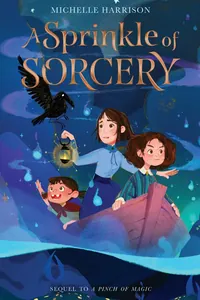
More Free Occult Philosophy Books
View all →