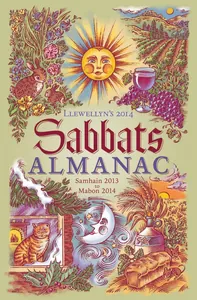
Voices from the Pagan Census
 77
77

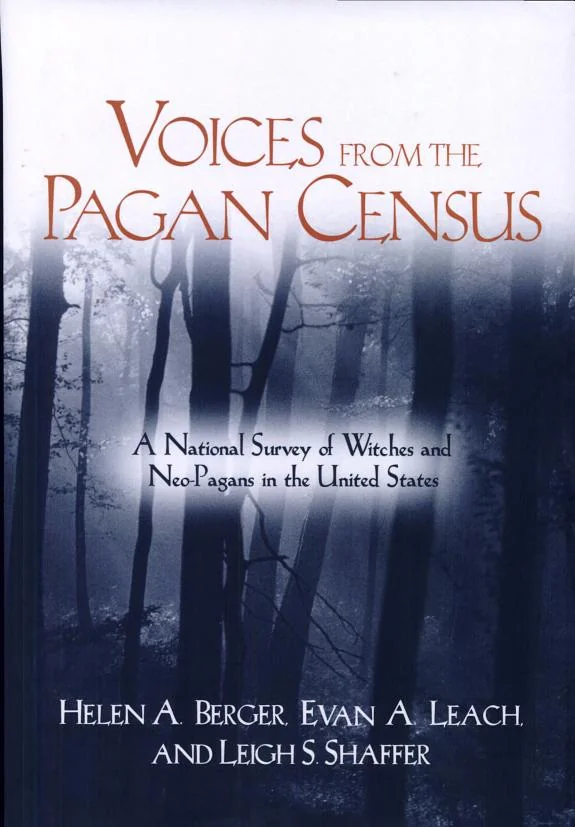
Voices from the Pagan Census
Berger, Leach, and Shaffer's *Voices from the Pagan Census* offers a crucial, albeit dry, statistical foundation for understanding Neo-Paganism in the United States. The sheer scale of the survey is its undeniable strength, providing a much-needed empirical counterpoint to generalized perceptions of Pagan identity. The authors meticulously break down demographics, revealing a more nuanced picture than many might expect. However, the analytical depth sometimes falters under the weight of raw data. While the book quantifies participation, it occasionally struggles to translate those numbers into a fully fleshed-out understanding of lived spiritual experience. A particularly illuminating section details the political activism of respondents, demonstrating a commitment to social issues often overlooked in broader discussions of the movement. Despite its academic tone, the work serves as an indispensable reference for anyone serious about the sociology of religion. *Voices from the Pagan Census* is a vital statistical snapshot of an evolving spiritual landscape.
📝 Description
77
In 2003, Voices from the Pagan Census documented Neo-Paganism in the United States.
Voices from the Pagan Census, published in 2003 by Helen A. Berger, Evan A. Leach, and Leigh S. Shaffer, presents the results of a large survey on Neo-Paganism in the United States. This work analyzes data gathered from a census initiated by Berger and the Earthspirit Community. It constructs a demographic and sociological profile of a religious movement that, at the time of its initial release, had received little attention from academic or mainstream religious organizations.
The book is valuable for academics studying religion, sociology, and anthropology, especially those interested in contemporary spiritual movements. Neo-Pagans will also find significant worth in the statistical data and analysis concerning their own communities. Researchers examining the shifts in religious expression during the late 20th and early 21st centuries will find the census data especially useful for understanding Neo-Paganism's expansion and characteristics.
This book documents a modern spiritual movement that emerged from various historical and cultural threads, often drawing on pre-Christian European traditions, nature worship, and occult philosophies. While not a direct text of ancient magical practices, it provides an empirical understanding of the people who identify with and practice contemporary Paganism. The census data sheds light on the demographics and social structures of a community that, in the early 2000s, was still solidifying its public identity and academic recognition.
💡 Why Read This Book?
• Learn the statistical breakdown of Neo-Pagan demographics in the US as presented in the 2003 survey, offering concrete data on age, gender, and geographic distribution that moves beyond anecdotal evidence. • Understand the diversity of Neo-Pagan traditions and practices through empirical analysis, moving past monolithic interpretations of the movement as detailed in the survey findings. • Discover the extent of Neo-Pagan political engagement and social activism, as revealed by the census data, illustrating their participation in civic life and contemporary issues.
⭐ Reader Reviews
Honest opinions from readers who have explored this book.
❓ Frequently Asked Questions
What was the origin of The Pagan Census discussed in the book?
The Pagan Census was initiated by Helen A. Berger and Andras Corban Arthen of the Earthspirit Community. It was designed to collect comprehensive data on Neo-Paganism in the United States, serving as the foundation for the research presented in the book.
When was Voices from the Pagan Census first published?
The book was first published in 2003. This date is significant as it reflects the state of Neo-Paganism and its study at the turn of the 21st century.
What kind of information does the book provide about Neo-Paganism?
The book provides demographic information, details on religious practices, and an examination of the political activism of Neo-Pagans in the United States, based on extensive survey data.
Who are the primary authors of Voices from the Pagan Census?
The primary authors are Helen A. Berger, Evan A. Leach, and Leigh S. Shaffer. Helen A. Berger was also instrumental in the creation of The Pagan Census itself.
Does the book offer a spiritual guide or a sociological analysis?
The book offers a sociological analysis. It presents findings from a large-scale survey rather than providing spiritual instruction or guidance.
What is the significance of the Earthspirit Community in relation to this book?
The Earthspirit Community, specifically through its representative Andras Corban Arthen, co-initiated The Pagan Census project, which provided the foundational data analyzed in the book by Berger, Leach, and Shaffer.
🔮 Key Themes & Symbolism
Demographics of Neo-Paganism
The work meticulously details the statistical makeup of Neo-Pagan practitioners in the United States as of the survey's completion. It moves beyond generalizations to present concrete data on age ranges, gender distribution, and geographical concentrations of adherents. This empirical approach allows for a clearer understanding of who identifies as Neo-Pagan, challenging preconceptions and revealing the movement's varied composition in the late 20th century.
Diversity of Practice
Beyond simple numbers, the census data allows for an examination of the breadth of religious expression within Neo-Paganism. The book highlights the plurality of paths, traditions, and belief systems that fall under the Neo-Pagan umbrella, from Wicca to Druidry and other nature-based spiritualities. This thematic exploration emphasizes that Neo-Paganism is not monolithic but a spectrum of interconnected yet distinct spiritual orientations.
Political and Social Engagement
A significant aspect of the research focuses on the political and social involvement of Neo-Pagans. The book presents findings on their participation in activism, their views on societal issues, and their engagement with civic life. This section provides evidence of Neo-Pagans as an active and often socially conscious segment of the population, contributing to public discourse and action.
The Pagan Census Project
The book is fundamentally a report on the findings of The Pagan Census, an ambitious project spearheaded by Helen A. Berger and Andras Corban Arthen of the Earthspirit Community. Understanding the census itself—its creation, methodology, and scope—is key to appreciating the data presented. It represents a significant self-documentation effort by the Neo-Pagan community.
💬 Memorable Quotes
Direct passages from the work, attributed to the author.
“The Pagan Census was designed to gather comprehensive data on the religious practices and demographics of Neo-Pagans in the United States.”
— This statement expresses the core purpose of the research underpinning the book. It highlights the foundational effort to quantify and qualify a spiritual movement that was, at the time, often poorly understood by external observers and even internally fragmented.
“Neo-Paganism is not a single religion but a constellation of diverse spiritual paths.”
— This interpretation reflects the book's emphasis on the inherent variety within Neo-Paganism. It suggests that the term 'Pagan' encompasses a wide array of beliefs and practices, defying easy categorization and highlighting the movement's pluralistic nature.
“The survey provided a statistical portrait of the Neo-Pagan population.”
— This captures the essence of the book's contribution: presenting empirical data to create a demographic and sociological picture. It emphasizes the reliance on quantitative research to understand the adherents of Neo-Pagan traditions.
“Understanding the growth and characteristics of this emerging religious community was a primary objective.”
— This statement underscores the academic and community-oriented goals behind the research. It frames the study as an effort to document and comprehend a developing religious landscape at a specific historical juncture.
💡 Key Ideas
Editorial paraphrase of the work's core concepts — not direct quotes.
Respondents indicated significant engagement with environmental issues and social justice causes.
This paraphrased concept points to the findings regarding the political and social activism of Neo-Pagans. It suggests that the spiritual beliefs of many adherents translate into concrete actions concerning ecological concerns and broader societal fairness.
🌙 Esoteric Significance
Tradition
This work primarily engages with the sociology of religion, focusing on Neo-Paganism as a contemporary spiritual phenomenon rather than aligning with a specific historical esoteric lineage like Hermeticism or Kabbalah. However, by documenting the practices and beliefs of Neo-Pagans, it indirectly sheds light on modern interpretations and adaptations of ancient nature-based spiritualities and polytheistic frameworks, which have roots in pre-Christian European traditions.
Symbolism
While the book is largely statistical, it implicitly touches upon symbols through the diversity of practices it surveys. Concepts like nature worship, earth-centered spirituality, and the cyclical understanding of seasons are foundational to many Neo-Pagan traditions documented. The book’s data on adherents engaging with these themes implicitly validates the widespread symbolic resonance of the natural world and its cycles within contemporary Paganism.
Modern Relevance
Contemporary scholars of religion and sociology continue to cite *Voices from the Pagan Census* as a foundational text for understanding the development of Neo-Paganism. Its data remains a crucial reference point for researchers examining the growth, diversification, and social integration of Pagan and Wiccan communities in the 21st century, informing current discussions on religious pluralism and alternative spiritualities.
👥 Who Should Read This Book
• Researchers in religious studies and sociology: To gain access to foundational, empirical data on Neo-Pagan demographics, practices, and activism from the early 2000s. • Practicing Neo-Pagans: To understand how their communities were statistically represented and to see comparative data on diverse traditions and engagement levels. • Students of contemporary spirituality: To develop a grounded, evidence-based understanding of a significant modern religious movement beyond common stereotypes.
📜 Historical Context
Published in 2003, *Voices from the Pagan Census* emerged at a critical juncture for Neo-Paganism. While the movement had gained some visibility throughout the 1990s, it was still largely subject to misrepresentation in popular culture and under-researched by academia. The book's significance lies in its empirical approach, providing quantitative data to counter anecdotal accounts and broad generalizations. It was contemporary with scholars like Margot Adler, whose *Drawing Down the Moon* (first published 1979, revised editions throughout) had already been instrumental in documenting Pagan traditions, but Berger et al. offered a more statistically driven, census-based analysis of the US landscape. The work addressed the need for a grounded understanding of the movement's demographics, practices, and social impact, offering a vital snapshot of a burgeoning spiritual phenomenon.
📔 Journal Prompts
The demographic breakdown of Neo-Paganism as presented in The Pagan Census.
The variety of practices identified within Neo-Paganism.
Neo-Pagan political engagement and social activism.
The role of the Earthspirit Community in initiating The Pagan Census.
The statistical portrait of Neo-Pagans in the United States.
🗂️ Glossary
Neo-Paganism
A contemporary religious movement characterized by a revival of ancient European polytheistic, nature-based, or earth-centered spiritual traditions. It encompasses a wide range of beliefs and practices, including Wicca, Druidry, and others.
The Pagan Census
A large-scale survey project initiated by Helen A. Berger and Andras Corban Arthen of the Earthspirit Community, aimed at collecting comprehensive data on Neo-Pagan adherents in the United States.
Demographics
Statistical data relating to the population and particular groups within it, such as age, gender, income, and geographic distribution, as analyzed in the book.
Adherents
Individuals who profess or are counted as following a particular religion or spiritual path, in this context, Neo-Paganism.
Sociological Analysis
The study of society, including the behavior of social groups and the structure and functioning of societies, applied here to the Neo-Pagan community.
Earthspirit Community
An organization associated with the promotion and study of Earth-centered spirituality, co-initiator of The Pagan Census that forms the basis of this book.
Political Activism
Actions taken by individuals or groups to influence political decisions or achieve social change, as observed and documented among Neo-Pagan respondents.
This book appears in 1 collection
🔮 Readers Also Liked
Browse all →![ERIC ED085284: World History. Volumes I and II. [Sahuarita High School Career Curriculum Project].](/img/thumb/eric-ed085284-world-history-volumes-i-and-ii-sahuarita-high-school-career-curriculum-project-eric.webp)









From the “Neopaganism” Collection
View all →






More Free Witchcraft & Paganism Books
View all →