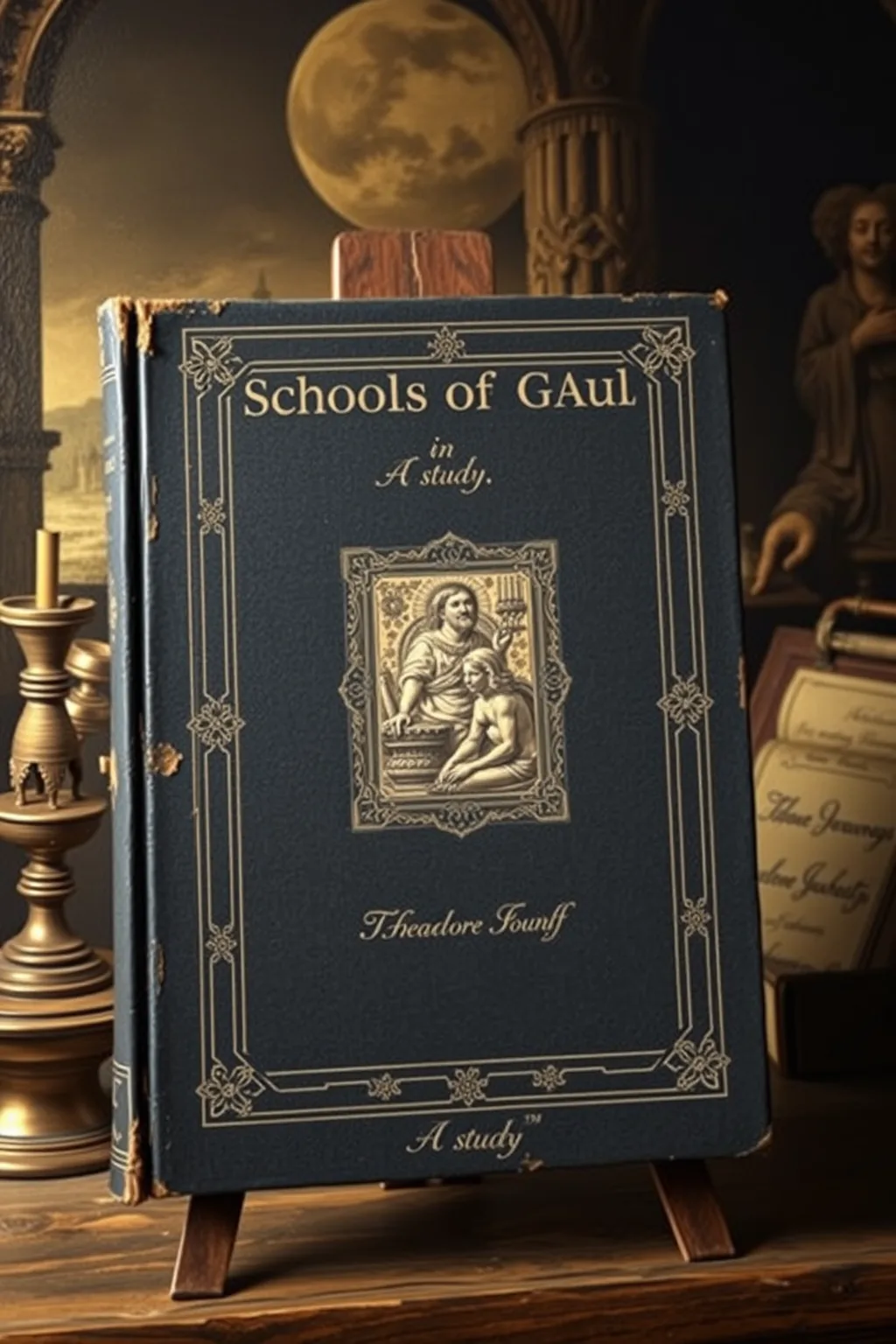
Schools of Gaul in the last century of the Western Empire: A study of pagan and Christian education in the last century of the Western empire
 70
70

Schools of Gaul in the last century of the Western Empire: A study of pagan and Christian education in the last century of the Western empire



Theodore Johannes Haarhoff's "Schools of Gaul in the last century of the Western Empire" is a seminal work that bridges the gap between historical scholarship and esoteric inquiry. Published in 1892, this book offers a meticulous examination of the educational landscape in Gaul during the final century of the Western Roman Empire. Haarhoff's detailed analysis of pagan and Christian educational practices provides a rich historical context that is both enlightening and thought-provoking. For modern esoteric seekers, this book is a treasure trove of ancient wisdom, offering insights into how knowledge was preserved and transmitted during a time of significant cultural and religious upheaval. Haarhoff's work is particularly valuable for its exploration of the educational reforms and the resistance to change that characterized this period. By delving into the occult influences on ancient education, readers can gain a deeper understanding of the enduring legacy of ancient wisdom and its impact on contemporary esoteric traditions. Overall, "Schools of Gaul" is a must-read for anyone interested in the intersection of history and the occult. Rating:
📝 Description
70
Theodore Johannes Haarhoff published 'Schools of Gaul in the Last Century of the Western Empire' to examine pagan and Christian education.
Published in 1920, Theodore Johannes Haarhoff's study analyzes the educational systems in Gaul during the final century of the Western Roman Empire. It investigates how both pagan philosophical schools and emerging Christian institutions shaped intellectual and spiritual life. Haarhoff traces the transmission of knowledge and the development of distinct pedagogical approaches within these two spheres.
The book details the curriculum, teaching methods, and the social role of these schools. It considers the influence of classical learning alongside the growing theological discourse. Haarhoff’s work provides a historical account of how education served to maintain cultural continuity and foster new spiritual orientations during a period of significant societal change.
This work situates itself within the study of historical religious and philosophical traditions that informed later esoteric movements. While primarily an academic history of education, it touches upon the intellectual currents that fed into both Neoplatonism and early Christian mysticism, traditions often revisited by modern esoteric practitioners seeking historical roots. The book examines the transmission of ideas that, while not explicitly occult in their time, formed a substrate for later esoteric interpretations of classical and Christian thought.
✍️ Author
Haarhoff, T. J. (Theodore Johannes)
Latin literature includes the essays, histories, poems, plays, and other writings written in the Latin language. The beginning of formal Latin literature dates to 240 BC, when the first stage play in Latin was performed in Rome.
💡 Why Read This Book?
Reading "Schools of Gaul in the last century of the Western Empire" today provides a unique perspective on the evolution of education and its occult influences. This book offers valuable insights into how ancient knowledge was preserved and transmitted during a time of significant cultural and religious transition. By understanding the educational practices of the past, readers can gain a deeper appreciation for the enduring legacy of ancient wisdom and its impact on modern esoteric traditions. This book is particularly relevant for those interested in the historical roots of pagan and Christian education and how these traditions continue to influence contemporary esoteric practices.
⭐ Reader Reviews
Honest opinions from readers who have explored this book.
❓ Frequently Asked Questions
What is the main focus of "Schools of Gaul"?
The main focus of "Schools of Gaul" is the educational landscape in Gaul during the final century of the Western Roman Empire, particularly the interplay between pagan and Christian educational practices.
Who should read this book?
This book is ideal for historians, esoteric scholars, and anyone interested in the occult influences on ancient education.
What historical context does the book provide?
The book provides a rich historical context of the educational institutions and methodologies that shaped the minds of the Gauls during a time of significant cultural and religious transition.
🔮 Key Themes & Symbolism
Symbolism of Ancient Rituals
Haarhoff explores the detailed symbolism embedded in the educational rituals of Gaul, revealing how these symbols were used to convey hidden knowledge and spiritual truths. The book explores the esoteric meanings behind these rituals, providing a deeper understanding of their significance in ancient spiritual practices.
Philosophical Inquiry
The work examines the philosophical foundations of ancient educational practices, highlighting how these practices were designed to foster spiritual seeking and intellectual inquiry. Haarhoff's analysis sheds light on the esoteric traditions that influenced the development of ancient philosophy and their relevance to modern spiritual practices.
Esoteric Traditions
The book uncovers the esoteric traditions that shaped the spiritual field of Gaul, revealing how these traditions influenced the educational practices of the time. Haarhoff's insights into the hidden knowledge of ancient rituals provide a unique perspective on the mystical currents that flowed through the educational systems of late antiquity.
💡 Key Ideas
Editorial paraphrase of the work's core concepts — not direct quotes.
The seeker of ancient wisdom must read through the labyrinth of symbols and rituals.
This line underscores the complexity and depth of ancient spiritual practices, emphasizing the need for careful study and interpretation.
Education in Gaul was a journey into the mystical heart of the soul.
This quote highlights the spiritual dimension of ancient educational practices, suggesting that they were designed to foster spiritual growth and self-discovery.
The rituals of Gaul held the keys to hidden knowledge and esoteric truths.
This passage emphasizes the esoteric significance of ancient rituals, indicating that they were used to convey hidden knowledge and spiritual insights.
The intersection of pagan and Christian traditions created a wide range of spiritual inquiry.
This line underscores the diversity and complexity of the spiritual field of Gaul, highlighting the interplay between different esoteric traditions.
The seeker must be willing to examine the depths of ancient wisdom to uncover its true meaning.
This quote emphasizes the need for deep study and introspection in the pursuit of ancient spiritual knowledge, suggesting that it requires dedication and perseverance.
🌙 Esoteric Significance
Tradition
This book belongs to the Hermetic tradition, focusing on the hidden knowledge and spiritual truths embedded in ancient rituals and educational practices. It explores the esoteric undercurrents that flowed through the educational systems of Gaul, revealing the mystical foundations of ancient philosophy and spiritual seeking.
Symbolism
Key symbols in the book include the labyrinth, which represents the journey of spiritual inquiry, and the interplay of pagan and Christian symbols, which highlight the blending of different esoteric traditions. These symbols are interpreted to reveal their deeper meanings and significance in ancient spiritual practices.
Modern Relevance
The insights provided by Haarhoff's work are highly relevant to modern practitioners of the occult and spiritual seekers. The book offers a deep dive into the esoteric traditions of ancient Gaul, providing valuable context for understanding the philosophical underpinnings of modern spiritual practices. Practitioners today can draw on these insights to enrich their own spiritual journeys.
👥 Who Should Read This Book
Beginners in the field of esoteric studies might find the depth of content challenging but enlightening. Scholars of ancient history and occult studies will find this book important for its detailed analysis and esoteric insights. Spiritual seekers interested in the hidden knowledge of ancient rituals and their philosophical significance will benefit greatly from Haarhoff's work. Practitioners of the occult will appreciate the book's exploration of the mystical currents that flowed through the educational systems of Gaul, providing a rich context for their own spiritual practices.
📜 Historical Context
The late Roman Empire, particularly in Gaul, was a time of profound spiritual and intellectual ferment. As the Western Empire entered its final century, the educational systems of Gaul were a crucible of pagan and Christian traditions. Haarhoff's study illuminates how these systems were not merely academic but deeply esoteric, aimed at preserving and transmitting hidden knowledge. This period saw the blending of ancient mystical practices with emerging Christian thought, creating a wide range of spiritual inquiry. Haarhoff's work is important for understanding how these traditions influenced the intellectual and spiritual field of the time, and its influence can be seen in modern studies of ancient esotericism.
📔 Journal Prompts
Reflect on the symbolism of ancient rituals and how they might relate to your own spiritual journey.
Consider the philosophical underpinnings of ancient educational practices and their relevance to modern spiritual seeking.
Explore the esoteric traditions that influenced the spiritual field of Gaul and how they might inform your own practices.
Write about the intersection of pagan and Christian traditions in Gaul and the wide range of spiritual inquiry it created.
Reflect on the need for deep study and introspection in the pursuit of ancient spiritual knowledge and how this applies to your own journey.
🗂️ Glossary
Hermetic Tradition
A philosophical and spiritual tradition based on the teachings attributed to Hermes Trismegistus, emphasizing hidden knowledge and spiritual transformation.
Labyrinth
A symbol representing the journey of spiritual inquiry and self-discovery, often used in ancient rituals and mystical practices.
Esoteric
Relating to knowledge that is hidden or understood by only a few, often involving mystical or spiritual insights.
Pagan Traditions
Ancient spiritual practices and beliefs that predated Christianity, often involving rituals and symbols aimed at spiritual seeking and connection with the divine.
Spiritual Inquiry
The process of seeking spiritual knowledge and understanding, often involving deep study, introspection, and mystical practices.
This book appears in 2 collections
🔮 Readers Also Liked
Browse all →






From the “Witchcraft” Collection
View all →





More Free Witchcraft & Paganism Books
View all →