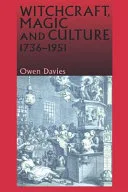
Witchcraft, Magic and Culture, 1736-1951
 83
83

Witchcraft, Magic and Culture, 1736-1951
Davies’s meticulous research into the post-witch-trial era of magic and witchcraft offers a vital corrective to narratives that end with the 18th century. The book excels in detailing the legal contortions and societal undercurrents that allowed belief in witchcraft and the practice of magic to persist long after they were officially proscribed. Its strength lies in uncovering the administrative and judicial responses to continued magical claims, particularly through the lens of the Fraudulent Mediums Act of 1951. However, the narrative occasionally feels dense, prioritizing legislative detail over the lived experiences of those engaging with magic. A particularly compelling section details the prosecution of fortune-tellers under the Vagrancy Act, illustrating how magical practices were reframed as fraud rather than genuine occult power. It is a scholarly and necessary contribution to understanding the long tail of witchcraft belief.
📝 Description
83
Owen Davies' 2018 book traces witchcraft beliefs in Britain from 1736 to 1951.
Owen Davies' "Witchcraft, Magic and Culture, 1736-1951" examines the persistence of belief in witchcraft and the use of magic in Britain after the formal end of the witch trials. The book covers the period from the Witchcraft Act of 1736, which removed witchcraft as a statutory crime, to the Fraudulent Mediums Act of 1951, which addressed the final legislative remnants concerning these practices. This study is situated in a critical transitional era for Britain, moving from Enlightenment rationalism toward the modern age. While the 1736 Act represented a legal change, societal fears and magical practices continued. Davies shows how these beliefs adapted, persisted, and were sometimes targeted under new laws, revealing a tension between legal statutes and public consciousness.
The book investigates the evolution of folk magic, the role of cunning folk, the impact of spiritualism, and the legal actions against those accused of witchcraft or fraudulent mediumship. It clarifies the difference between statutory witchcraft and the actual practices of magic and divination that remained common. These practices often operated without official acknowledgment but were deeply ingrained in community life. This work is for historians of magic, folklorists, and students of British social history, as well as anyone interested in the continuity of magical belief and practice beyond periods of persecution.
This book situates the study of witchcraft and magic within a specific historical and cultural framework. It moves beyond the sensationalism of witch trials to examine the everyday beliefs and practices that continued long after legal persecution ceased. By focusing on the period after 1736, Davies highlights how magic and occult beliefs adapted to changing social, legal, and intellectual environments. The work connects to broader interests in the history of popular belief, the sociology of magic, and the enduring presence of the occult in modernizing societies, demonstrating that such traditions were not simply relics of the past but active elements within British culture.
💡 Why Read This Book?
• Understand the legal and social evolution of witchcraft belief in Britain from 1736 to 1951, moving beyond the witch trials era. • Explore the persistence of folk magic and cunning folk traditions through specific case studies and societal attitudes documented by Davies. • Gain insight into how the Fraudulent Mediums Act of 1951 finally removed the last legal framework associated with witchcraft, impacting modern spiritualist practices.
⭐ Reader Reviews
Honest opinions from readers who have explored this book.
❓ Frequently Asked Questions
What historical period does Owen Davies' book "Witchcraft, Magic and Culture" cover?
The book meticulously examines the era from the Witchcraft Act of 1736, which officially ended witch trials in Britain, up to the Fraudulent Mediums Act of 1951.
Did witchcraft beliefs disappear after the 1736 Witchcraft Act?
No, Davies demonstrates that despite the legal repeal of witchcraft as a crime, popular belief in witches and the use of magic continued significantly throughout the 18th, 19th, and early 20th centuries.
What was the significance of the Fraudulent Mediums Act of 1951?
This act finally removed the last legislative connection to witchcraft from British statute books by criminalizing fraudulent spiritualist mediums, effectively closing a long chapter on legal definitions of witchcraft.
What types of magical practices are discussed in the book?
The book covers a range of practices including folk magic, divination, charms, and the activities of cunning folk, as well as the emergence of spiritualism and its intersection with legal definitions of magic.
How did the legal system treat magic after the Witchcraft Act of 1736?
After 1736, individuals practicing magic were often prosecuted under other laws, such as the Vagrancy Act, for fraud or deception, rather than for witchcraft itself.
Is this book about the historical witch trials?
While it acknowledges the end of the witch trials, the book's primary focus is on the period *after* 1736, exploring the continuation and evolution of witchcraft beliefs and magical practices.
🔮 Key Themes & Symbolism
Legal Frameworks and Belief
The work meticulously charts how legal statutes evolved concerning witchcraft and magic from 1736 onwards. It highlights the crucial distinction between witchcraft as a crime under the old laws and the subsequent, often indirect, legal treatments of magical practices, such as fraud and vagrancy. Davies shows that the repeal of the Witchcraft Act did not eradicate belief but merely shifted its societal and legal perception, leading to new forms of regulation.
Folk Magic and Cunning Folk
Davies investigates the enduring presence of folk magic and the figures of cunning folk who offered magical services for healing, protection, or divination. These practices, often operating at the community level, persisted despite official skepticism and legal pressures. The book examines how these traditions adapted and continued to serve societal needs, even as spiritualism gained prominence.
Spiritualism and Mediumship
The rise of spiritualism in the 19th and 20th centuries is a significant thread. The book explores how spiritualist mediums and practices interacted with existing beliefs in magic and the occult. It details how the later legislation, particularly the Fraudulent Mediums Act of 1951, was designed to combat charlatanism within spiritualism, effectively marking the end of legal ambiguity surrounding supernatural claims.
The Persistence of Fear
Despite the Enlightenment and subsequent legal reforms, the underlying fear of witchcraft and malevolent magic remained a potent force in British society. Davies illustrates how this fear manifested in continued accusations, anxieties, and the demand for protective charms or counter-magic, demonstrating a deep-seated cultural undercurrent that legal pronouncements could not easily erase.
💬 Memorable Quotes
Direct passages from the work, attributed to the author.
“The passing of the Witchcraft Act of 1736 did not end the fear of witchcraft.”
— This core assertion emphasizes that legal abolition of a concept does not equate to its disappearance from popular consciousness or practice, setting the stage for the book's exploration of continued belief.
“Magic continued to be practiced and believed in long after the witch trials.”
— This highlights the book's central argument: the period after the official end of witch persecutions was not an end to magic, but a transformation and continuation of its presence in society.
“The Fraudulent Mediums Act of 1951 finally removed witchcraft from the statute books.”
— This pinpoints the legislative endpoint of the book's study, showing how legal definitions eventually adapted to encompass and criminalize the perceived remnants of witchcraft under the guise of fraud.
“Cunning folk continued to offer services to communities.”
— This points to the enduring role of traditional magical practitioners, illustrating the practical application of folk magic and its social function in the period studied.
“Societal anxieties about malevolent forces persisted.”
— This interpretation underscores the psychological and cultural underpinnings of witchcraft beliefs, suggesting that fear and the desire for protection drove continued engagement with magical ideas.
🌙 Esoteric Significance
Tradition
While not strictly aligned with a single esoteric lineage like Hermeticism or Theosophy, this work is vital for understanding the cultural soil from which modern esoteric practices grew. It situates the continued practice and belief in magic within a broader social and legal history, providing context for how esoteric ideas were perceived and sometimes persecuted or regulated by the mainstream.
Symbolism
The book implicitly deals with symbols of protection and divination prevalent in folk magic, though it focuses more on legal and social aspects than symbolic interpretation. Concepts like the 'evil eye' or charms for luck, while not explicitly analyzed in depth, represent recurring motifs of magical intent and perceived efficacy that persisted culturally.
Modern Relevance
Contemporary practitioners of modern witchcraft, occultists, and scholars of esoteric traditions find this work important for understanding the historical trajectory of their interests. It illuminates the resilience of magical thinking and practice, informing discussions on the secularization of magic and its re-emergence in various subcultures and spiritual movements.
👥 Who Should Read This Book
• Historians of British social and cultural history seeking to understand continuities in belief systems beyond official legal pronouncements. • Students and practitioners of witchcraft and folk magic interested in the historical context and survival of these practices post-1736. • Researchers of legal history and the sociology of belief, examining how societies codify and react to non-mainstream spiritual and magical phenomena.
📜 Historical Context
Owen Davies' "Witchcraft, Magic and Culture, 1736-1951" emerged in 1999, a period of burgeoning academic interest in the history of magic and witchcraft, moving beyond the earlier focus on demonology and trials. This work offered a crucial expansion, shifting attention to the long aftermath of the persecutions. It engaged with a historical milieu where Enlightenment rationalism was increasingly challenged by the rise of Spiritualism and occult revival movements. Contemporaries like Richard Kieckhefer had already explored the medieval context, but Davies specifically addressed the legal and social vacuum created by the Witchcraft Act of 1736. His research provided a detailed counter-narrative to the idea that belief in magic evaporated with rationalism, showing its persistence and adaptation through various social and legislative changes, particularly under the Vagrancy Act and later the Fraudulent Mediums Act.
📔 Journal Prompts
The persistence of belief in witchcraft after 1736.
The legal reframing of magical practices post-1736.
The role of cunning folk in community life.
The societal impact of the Fraudulent Mediums Act of 1951.
How societal fears influenced the perception of magic.
🗂️ Glossary
Witchcraft Act of 1736
The British statute that repealed earlier laws against witchcraft, making it illegal to accuse someone of witchcraft but not to practice harmful magic.
Fraudulent Mediums Act of 1951
Legislation aimed at prosecuting individuals who claimed to channel spirits or communicate with the dead for financial gain, effectively criminalizing spiritualist fraud.
Cunning Folk
Individuals in historical Britain who practiced folk magic, offering services such as healing, divination, and protection against malevolent forces for a fee.
Folk Magic
Traditional magical practices, often passed down orally, that are rooted in popular beliefs and customs, typically used for practical purposes like healing or good fortune.
Spiritualism
A religious movement prominent in the 19th and 20th centuries that affirmed the possibility of communicating with the spirits of the dead.
Vagrancy Act
Legislation under which individuals practicing fortune-telling or other forms of divination were often prosecuted after 1736, as it was a way to criminalize magical activities without referencing witchcraft.
Esoteric
Relating to or concerned with the occult, mysticism, or the supernatural; often understood as knowledge or practice intended for or understood by only a small number of people.