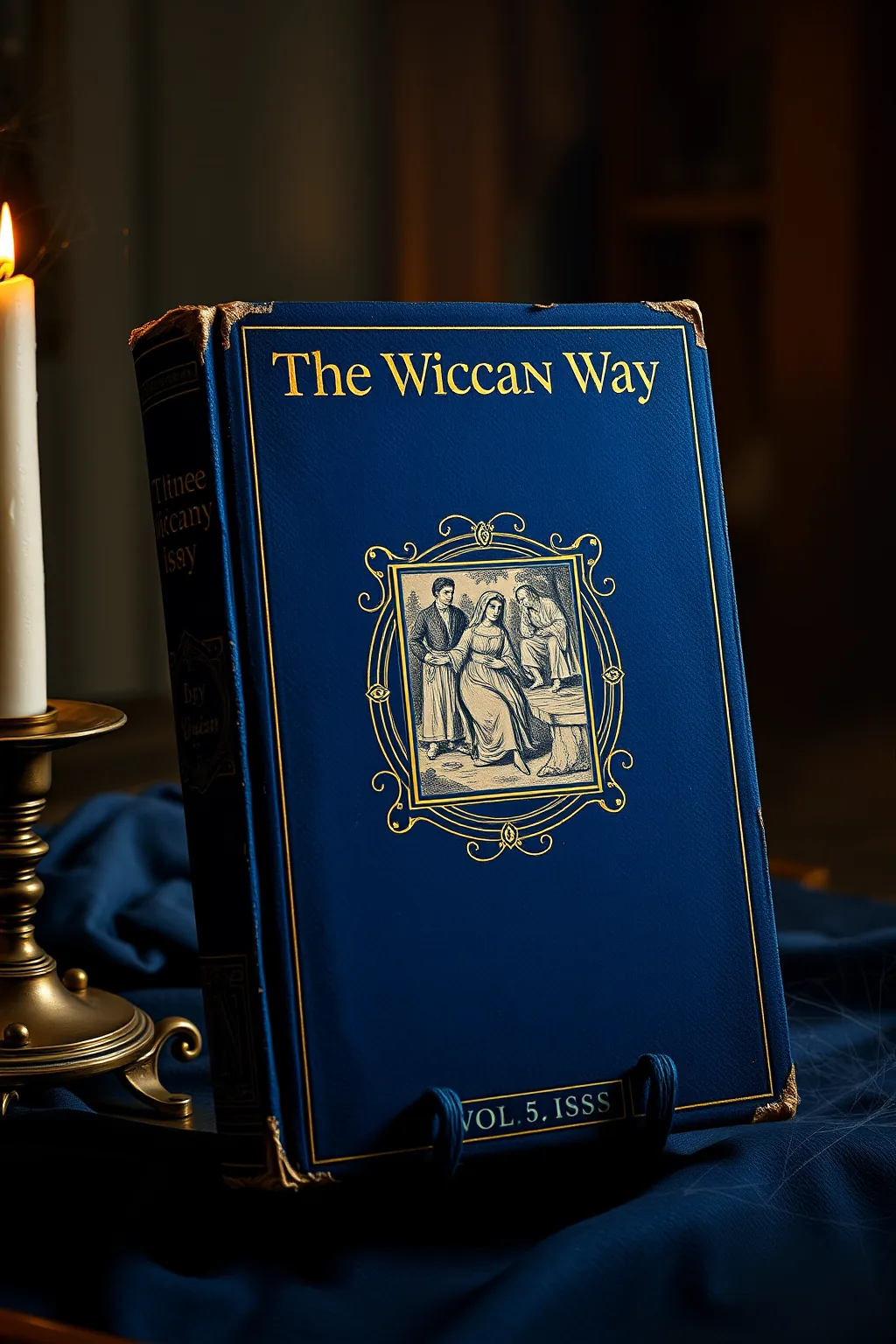
The Wiccan Way 1985: Vol 5 Iss 3
 76
76

The Wiccan Way 1985: Vol 5 Iss 3



Celeste Moreau (Divination & Symbolism Reviewer) — This installment of 'The Wiccan Way' offers a compelling glimpse into the vibrant landscape of 1980s pagan thought. The unknown authors skillfully weave together practical advice with profound philosophical contemplation, making it an accessible yet deeply enriching read. Its strength lies in its unpretentious exploration of core Wiccan principles, providing a grounding for both novice and seasoned practitioners. The issue excels at demystifying complex concepts, presenting them with clarity and a palpable sense of reverence for the Craft. It's a valuable resource for anyone seeking to understand the spiritual and practical dimensions of modern witchcraft, offering a balanced perspective on its tenets and traditions. An essential read for those dedicated to the path.
📝 Description
76
'The Wiccan Way,' Volume 5, Issue 3, published in 1985, details aspects of witchcraft and paganism.
This 1985 issue of 'The Wiccan Way' examines various elements of witchcraft and paganism for the serious practitioner or student. It contains information on forgotten lore, elemental forces, and symbolism related to living in tune with natural cycles. The content guides readers toward understanding ritual practices, how to venerate deities, and the personal changes that come from dedicated spiritual work.
This edition is suited for individuals drawn to older traditions. It offers insights valuable for those actively practicing, studying these beliefs, or simply curious about the deeper connections between the earth and the spirit. The material invites a reawakening of primal energies and an understanding of cosmic rhythms, encouraging the activation of inner power through focused intent and respect.
Published in 1985, this issue of 'The Wiccan Way' belongs to a period of significant growth and diversification within modern paganism. It reflects a continued interest in reclaiming and reinterpreting older European folk magic and nature-based spiritualities. The focus on ritual, elemental work, and personal transformation aligns with the broader Neopagan movement's efforts to establish distinct traditions and practices outside mainstream Western religions.
💡 Why Read This Book?
Unlock ancient secrets and deepen your connection to the earth's magic. This issue is essential for practitioners seeking authentic ritual guidance, scholars exploring the evolution of modern paganism, and seekers drawn to the profound wisdom of the Craft. Discover foundational principles and practical applications that foster spiritual growth.
⭐ Reader Reviews
Honest opinions from readers who have explored this book.
❓ Frequently Asked Questions
What is 'The Wiccan Way'?
'The Wiccan Way' is a historical journal dedicated to exploring the principles, practices, and philosophy of Wicca and related pagan traditions. This particular edition is Volume 5, Issue 3 from 1985.
Is this issue suitable for beginners?
Yes, the clear explanations and foundational content make it accessible for those new to Wicca, while offering depth for experienced practitioners.
What topics are generally covered in 'The Wiccan Way'?
The journal typically covers a range of subjects including spellcraft, ritual design, deity worship, seasonal celebrations, esotericism, and the philosophy of witchcraft.
How can I access this specific issue?
This issue is available digitally, having been digitized from a previous source (IA40330209-01), and can be read online.
Who is the intended audience for this journal?
The intended audience includes practicing Wiccans, neopagans, occultists, students of comparative religion, and anyone interested in esoteric traditions and earth-centered spirituality.
🔮 Key Themes & Symbolism
The Sacredness of Nature and the Elements
This issue profoundly emphasizes the intrinsic connection between humanity and the natural world, positing the earth not merely as a resource but as a living, sentient entity. It explores the elemental forces—Earth, Air, Fire, and Water—as fundamental building blocks of existence and potent tools for magical work. Readers are guided to understand the subtle energies that permeate nature, encouraging a mindful observance of seasonal cycles, lunar phases, and the innate magic present in flora, fauna, and celestial movements. This theme encourages a re-enchantment with the world, fostering a sense of stewardship and reverence for all life, a central to authentic Wiccan practice and pagan philosophy.
Ritual as a Path to Transformation
Central to this volume is the exploration of ritual not as mere performance, but as a transformative practice that bridges the mundane and the sacred. The journal illustrates how carefully crafted rituals, imbued with intention and symbolism, can facilitate personal growth, invoke spiritual energies, and manifest desired outcomes. It discusses the importance of sacred space, the power of spoken word and visualization, and the role of tools in focusing intent. By explaining the construction and execution of effective rituals, 'The Wiccan Way' empowers readers to engage with the divine and the subtle realms, fostering a deeper understanding of their own inner power and connection to the greater cosmic flow.
Symbolism and Archetypal Resonance
This issue explores the body of symbolism that forms the language of the Craft. It explores how universal archetypes and specific symbols, from ancient deities to natural phenomena, resonate deeply within the human psyche and the collective unconscious. Readers are encouraged to interpret these symbols not just intellectually, but intuitively, understanding their power to communicate profound truths and unlock hidden potentials. The journal highlights how embracing this symbolic language can deepen one's understanding of oneself, the universe, and the interconnectedness of all things, offering a pathway to esoteric knowledge and spiritual awakening through the mindful contemplation of sacred imagery.
💬 Memorable Quotes
Direct passages from the work, attributed to the author.
“In the circle, we find the infinite reflected in the finite.”
— This highlights the sacred geometry of the ritual circle, symbolizing the microcosm of the universe within a defined sacred space, where profound spiritual connections can be made.
“Intent is the seed; ritual is the soil; magic is the bloom.”
— A concise metaphor illustrating the essential components of spellcraft: the vital importance of clear intention, the structured practice of ritual, and the manifestation of desired results.
“Seek wisdom not only in books, but in the rustling leaves and the silent stars.”
— This encourages experiential learning and observation of the natural world as a primary source of esoteric knowledge, complementing textual study.
“The Old Ways are not lost, only waiting to be remembered.”
— This speaks to the enduring nature of ancient spiritual practices and the belief that they can be rediscovered and revitalized in the modern era.
💡 Key Ideas
Editorial paraphrase of the work's core concepts — not direct quotes.
The earth breathes, and we, its children, must learn to breathe with it.
This quote captures the core tenet of animism and earth-centered spirituality, urging practitioners to attune themselves to the rhythms of nature and recognize their intrinsic connection to the planet.
🌙 Esoteric Significance
Tradition
This issue is deeply rooted in the Western Esoteric Tradition, specifically within the Neopagan and Wiccan branches that gained significant traction in the latter half of the 20th century. It draws upon older magical traditions, folklore, and earth-centered spirituality, reinterpreting and synthesizing them for contemporary practitioners. The focus on ritual, elemental forces, and the divine feminine aligns it with key tenets of Wicca, emphasizing personal gnosis and the inherent sacredness of nature as pathways to spiritual understanding.
Symbolism
The journal likely employs a rich lexicon of symbols drawn from nature, mythology, and ancient cultures. Expect references to lunar phases, solar cycles, the elements (earth, air, fire, water), trees, animals, and archetypal deities. These symbols are not merely decorative but are understood as potent keys to unlocking deeper truths about the cosmos and the human psyche, serving as focal points for meditation, ritual, and magical working.
Modern Relevance
Even decades after its publication, this issue of 'The Wiccan Way' retains significant relevance for modern seekers. It provides a valuable historical perspective on the development of contemporary paganism, offering insights into foundational beliefs and practices that continue to resonate. For those interested in earth-based spirituality, ritualcraft, and the exploration of personal power, the timeless wisdom contained within its pages offers guidance and inspiration for reading through the spiritual field of today.
👥 Who Should Read This Book
This particular issue of 'The Wiccan Way' is a treasure for a diverse readership. For **beginners**, it offers a clear and accessible introduction to core Wiccan concepts and practices. **Scholars** of religious studies and folklore will find it an invaluable primary source for understanding the evolution of modern paganism in the late 20th century. **Seekers** drawn to earth-centered spirituality and nature-based magic will discover a wealth of inspiration and practical guidance. **Practitioners** looking to deepen their understanding of ritual, symbolism, and the philosophical underpinnings of the Craft will find its insights enriching and thought-provoking.
📜 Historical Context
Published in 1985, 'The Wiccan Way' Volume 5, Issue 3 emerges during a vibrant period for modern paganism and witchcraft revitalization. The late 20th century saw a significant increase in interest and public awareness of these traditions, moving them from the shadows into more visible forms of expression. This era was characterized by a burgeoning community of practitioners, the establishment of various covens and organizations, and a growing body of literature that sought to define, explain, and disseminate Wiccan and pagan beliefs and practices. The journal reflects a desire to codify aspects of the Craft, share knowledge, and foster a sense of identity within a burgeoning spiritual movement. It represents a snapshot of a tradition actively shaping its contemporary identity, drawing from historical roots while adapting to modern contexts.
📔 Journal Prompts
Reflect on the elemental energies present in your immediate environment. How can you consciously engage with them?
Describe a personal ritual that holds significant meaning for you. What makes it transformative?
Explore a symbol that resonates deeply with you. What archetypal energies does it represent?
How does your understanding of nature's cycles influence your daily life and spiritual practice?
Consider a personal goal. How could you design a ritual to focus your intention towards its manifestation?
🗂️ Glossary
Wicca
A modern pagan, esoteric religion that emphasizes witchcraft. It is often characterized by a reverence for nature, a duotheistic belief in a God and Goddess, and the practice of ritual magic.
Paganism
A broad term encompassing a range of spiritual paths and traditions that are typically polytheistic, nature-centered, and often draw from pre-Christian European indigenous religions.
Ritual
A ceremonial, often symbolic act performed in a prescribed order, used to achieve a specific spiritual, magical, or personal transformation.
Esotericism
The study of mystical, spiritual, or occult traditions that are typically accessible only to a select group of initiates or those with specialized knowledge.
Coven
A traditional gathering or group of witches, often led by a High Priestess and/or High Priest, who come together to practice their craft and celebrate Sabbats and Esbats.
This book appears in 2 collections
🔮 Readers Also Liked
Browse all →







From the “Witchcraft” Collection
View all →







More Free Witchcraft & Paganism Books
View all →