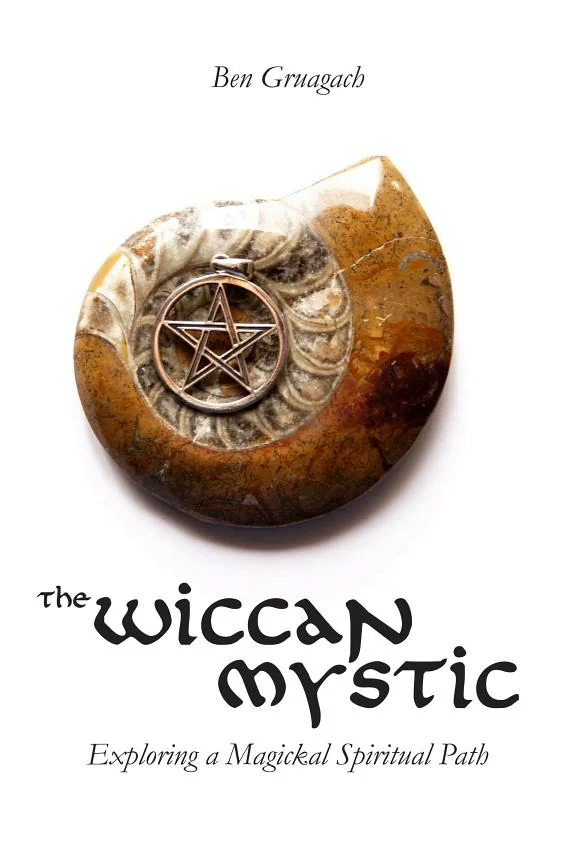
The Wiccan Mystic
 81
81

The Wiccan Mystic
Ben Gruagach’s *The Wiccan Mystic* attempts to situate Wicca within the venerable tradition of mystery religions, a compelling framing that promises intellectual rigor. The book succeeds in articulating Wicca’s potential for deep spiritual engagement, particularly in its focus on cultivating a direct relationship with the Divine. Gruagach’s exposition on how Wiccan practices can serve as vehicles for personal revelation is well-reasoned. However, the work occasionally feels overly academic, perhaps missing opportunities to fully convey the visceral, lived experience of magick. For instance, the discussion on the 'living mystical core' is more conceptual than evocative. Despite this, the text provides a solid foundation for understanding Wicca’s philosophical underpinnings. It serves as a valuable, if sometimes dry, exploration for those seeking to grasp the esoteric architecture of this modern path.
📝 Description
81
Ben Gruagach's 2007 book, The Wiccan Mystic, examines Wicca as a mystery religion.
Published in 2007, The Wiccan Mystic by Ben Gruagach presents a detailed look at Wicca, viewing it as a mystery religion. The book moves past simple descriptions to discuss the core principles that shape Wiccan practices. Gruagach seeks to clarify the spiritual heart of this path, encouraging readers to connect with its living nature. This work is for those who want to understand Wiccan philosophy and practice more deeply. It will appeal to people drawn to Wicca as a system for spiritual growth, not just a collection of rituals. Readers aiming to improve their personal connection to the Divine and develop their spiritual awareness will find it useful. The book encourages developing critical thinking to support spiritual life and foster personal spiritual development.
The Wiccan Mystic places contemporary Wicca within the historical framework of ancient mystery schools. Emerging in the early 21st century, this work addresses a time of significant change and expansion in modern Pagan and Wiccan communities. Gruagach builds upon earlier explorations of Wicca's connections to broader esoteric traditions, offering a perspective that emphasizes shared structures and aims common to these ancient initiatory systems.
💡 Why Read This Book?
• Gain a structured understanding of Wicca’s classification as a mystery religion, learning how its ritual and philosophical components align with ancient traditions, a concept explored in Chapter 1. • Develop enhanced critical thinking skills specifically applied to spiritual practice, empowering your personal journey and fostering a direct connection with the Divine, as advocated throughout the text. • Discover the inherent mystical core of Wiccan practice, moving beyond superficial observance to engage with its deeper energetic and symbolic dimensions, a central thesis of the book.
⭐ Reader Reviews
Honest opinions from readers who have explored this book.
❓ Frequently Asked Questions
What is the primary goal of The Wiccan Mystic?
The book's primary goal is to explore Wicca as a mystery religion, encouraging readers to understand its mystical core and strengthen their personal, direct relationship with the Divine through structured thinking and practice.
Who is Ben Gruagach?
Ben Gruagach is the author of The Wiccan Mystic, first published in 2007. Their work focuses on the deeper philosophical and mystical aspects of Wicca.
How does The Wiccan Mystic compare Wicca to other religions?
It compares Wicca to ancient mystery religions, examining shared structures and purposes in spiritual initiation and personal transformation.
What kind of skills does the book aim to develop in readers?
The book aims to develop strong thinking skills and a direct, personal connection with the Divine, empowering the reader's spiritual life and exploration.
When was The Wiccan Mystic first published?
The Wiccan Mystic was first published in 2007, placing it within the early 21st-century discourse on modern Paganism and Wicca.
Does the book offer practical Wiccan rituals?
While focusing on the foundational ideas and mystical core, the book encourages readers to strengthen their own practice, implying a grounding in practical application of its philosophical concepts.
🔮 Key Themes & Symbolism
Wicca as Mystery Religion
The book frames Wicca within the historical and philosophical context of ancient mystery religions, such as the Eleusinian or Orphic mysteries. It posits that like these traditions, Wicca emphasizes direct personal experience, initiation, and the revelation of sacred knowledge. This approach moves beyond viewing Wicca as simply a nature-based spirituality to understanding its potential as a path for profound inner transformation and spiritual awakening.
The Living Mystical Core
A central theme is the identification and cultivation of Wicca's 'living mystical core.' This refers to the inherent, dynamic spiritual energy and direct connection to the Divine that underpins the practice. The text encourages readers to tap into this core, fostering an authentic and vibrant spiritual life independent of rigid dogma, emphasizing personal gnosis and direct apprehension of the sacred.
Empowerment Through Direct Experience
The Wiccan Mystic advocates for empowering one's spiritual life through direct engagement with the Divine. It stresses building a personal relationship with the sacred, rather than relying on intermediaries or prescribed doctrines. This emphasis on individual authority and direct experience is presented as a key characteristic that aligns Wicca with other esoteric traditions focused on self-realization.
Cognitive Skills in Spirituality
The work highlights the importance of developing strong thinking skills as a foundation for spiritual exploration. By fostering critical analysis and reflective practice, readers are encouraged to approach their spiritual path with greater clarity and discernment. This integration of intellect and intuition aims to open new vistas for personal growth and understanding.
💬 Memorable Quotes
Direct passages from the work, attributed to the author.
“Wicca fits the pattern of a mystery religion.”
— This statement suggests that Wicca shares fundamental characteristics with ancient mystery traditions, implying a shared purpose of spiritual initiation and revelation accessible through direct experience.
“Discover the living mystical core of Wiccan practice.”
— This encourages a search for the dynamic, energetic heart of Wicca, moving beyond ritual mechanics to the direct experience of spiritual presence and connection.
“Establish strong thinking skills to empower your spiritual life.”
— The concept emphasizes that intellectual development and critical reflection are not separate from, but integral to, a robust and authentic spiritual journey.
“Open up new vistas for exploration.”
— This highlights the transformative potential of engaging with Wicca's mystical aspects, suggesting it can lead to expanded awareness and new perspectives on life and the cosmos.
“Tap into your individual direct relationship with the Divine.”
— This points to the ultimate goal of personal spiritual work: cultivating an unmediated, unique connection to the sacred that is central to the Wiccan path.
🌙 Esoteric Significance
Tradition
The Wiccan Mystic aligns Wicca with the broad lineage of Western esotericism, particularly its expressions as a mystery religion. It draws parallels to traditions like Gnosticism and Hermeticism, which emphasize direct spiritual apprehension and initiation. By framing Wicca within this context, the work positions it not as a novel invention but as a modern manifestation of ancient paths focused on inner transformation and the revelation of divine knowledge.
Symbolism
While not explicitly detailing specific symbols, the book's focus on the 'living mystical core' implies engagement with inherent symbolic energies within nature and consciousness. The concept of 'mystery religion' itself is symbolic, representing hidden truths and transformative journeys. The 'Divine' as a direct point of contact suggests a symbolism of immanence and personal divinity, moving away from solely external deities.
Modern Relevance
Contemporary practitioners and scholars of modern Paganism and Wicca continue to engage with the idea of Wicca as a mystery religion. Gruagach's work speaks to modern thinkers who seek to understand the psychological and spiritual depth of ritual. It informs discussions on comparative religion and the evolution of esoteric traditions in the 21st century, particularly for those interested in the philosophical underpinnings of contemporary witchcraft.
👥 Who Should Read This Book
• Initiates and seasoned practitioners of Wicca seeking to deepen their theoretical understanding of the tradition's place within the broader history of esoteric thought. • Students of comparative religion or comparative esotericism interested in analyzing modern spiritual movements through the lens of ancient mystery schools. • Individuals exploring personal spiritual development who are drawn to philosophies that emphasize direct experience of the Divine and the cultivation of critical thinking skills.
📜 Historical Context
First published in 2007, *The Wiccan Mystic* emerged during a period of significant maturation and academic interest in modern Pagan and Wiccan traditions. Following the foundational work of figures like Gerald Gardner in the mid-20th century and Doreen Valiente's contributions, the early 21st century saw a proliferation of texts exploring Wicca's philosophical depth and historical connections. Ben Gruagach's work situates itself within this discourse, specifically aligning Wicca with the ancient tradition of mystery religions, a lineage explored by scholars and practitioners alike. This framing sought to legitimize Wicca within broader esoteric and comparative religious studies, moving beyond earlier perceptions. The book contributed to a trend of deeper theoretical exploration, contrasting with earlier, more practical guides, and engaged with contemporary discussions on spirituality that often debated the nature of 'authentic' religious experience versus cultural appropriation.
📔 Journal Prompts
The living mystical core of Wiccan practice: what does this phrase evoke for your current spiritual path?
Reflect on the characteristics shared between Wicca and ancient mystery religions as presented in the text.
How can establishing strong thinking skills enhance your personal relationship with the Divine?
Consider the concept of Wicca as a mystery religion; what elements feel most resonant or challenging?
Beyond ritual, what are the potential 'new vistas for exploration' that a deeper engagement with Wicca might offer you?
🗂️ Glossary
Mystery Religion
An ancient religious or spiritual tradition characterized by secret rites, initiation ceremonies, and the promise of spiritual salvation or enlightenment for its adherents.
Mystical Core
The essential, dynamic spiritual essence or energetic heart of a practice or tradition, often accessed through direct experience and intuition.
The Divine
The ultimate reality, supreme being, or sacred force that is the object of worship or spiritual pursuit; in this context, emphasizing a personal and direct connection.
Esoteric
Intended for or likely to be understood by only a small number of people with a specialized knowledge or interest; relating to hidden or secret knowledge.
Initiation
A formal admission or acceptance into a group or organization, often involving a ritual or ceremony that marks a transition or confers special knowledge.
Gnosis
Knowledge of spiritual matters, especially concerning the nature of divinity and the path to salvation, typically attained through direct experience or intuition.
Vistas
A long, narrow view; a mental or imaginative prospect, often implying new opportunities or expanded perspectives.
This book appears in 1 collection
🔮 Readers Also Liked
Browse all →






From the “Neopaganism” Collection
View all →





More Free Witchcraft & Paganism Books
View all →