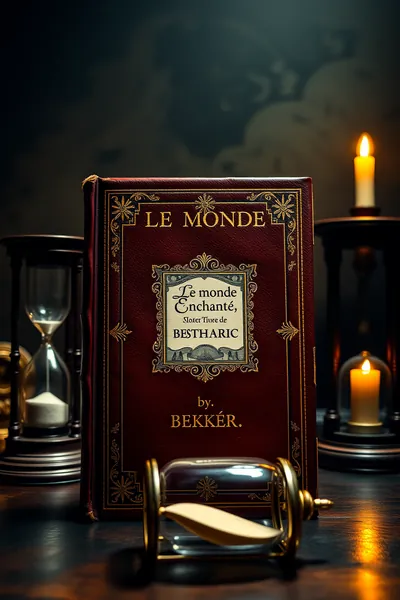
A history of the ridiculous extravagancies of Monsieur Oufle; occasion'd by his reading books treating of magick, the black-art, daemoniacks, conjurers, witches ... 1711: Iss 143

 77
77

A history of the ridiculous extravagancies of Monsieur Oufle; occasion'd by his reading books treating of magick, the black-art, daemoniacks, conjurers, witches ... 1711: Iss 143



Ophelia Vance (Mystical Literature Reviewer) — Laurent Bordelon's "A History of the Ridiculous Extravagancies of Monsieur Oufle" is a richly textured early 18th-century examination of the societal and psychological underpinnings of occult belief. Far from a simple catalog of superstitions, it delves into the very nature of fascination with magick, demonology, and witchcraft, offering a surprisingly nuanced perspective on the era's anxieties. Bordelon's satirical yet insightful prose illuminates how literature and rumor could ignite fervent, often irrational, obsessions. This work is essential for scholars of early modern occultism and for seekers interested in the historical construction of magical thinking, providing a unique lens through which to view the interplay of belief and reality.
📝 Description
77
Laurent Bordelon's 1711 "A History of the Ridiculous Extravagancies of Monsieur Oufle" satirizes early modern obsessions with magic.
Laurent Bordelon published "A History of the Ridiculous Extravagancies of Monsieur Oufle" in 1711. The book recounts the story of Monsieur Oufle, a man whose reading of texts on magic, the black arts, demons, and witchcraft leads him to absurd beliefs and actions. Bordelon uses Oufle's delusions to critique the widespread fascination with the occult and the credulity of the era.
The narrative dissects the psychological underpinnings of superstition and the societal anxieties that gave rise to such beliefs. It examines how fear and a desire for hidden knowledge could warp perception and lead individuals to embrace the fantastical. The work is noted for its dark humor, using Oufle's extreme case to comment on the broader cultural susceptibility to supernatural explanations. It questions the boundaries between rational thought and irrational conviction.
Published in 1711, Bordelon's work engages with the popular fascination with magic and the supernatural that characterized periods of European history. It reflects a cultural moment where demonology, witchcraft accusations, and arcane arts were subjects of both serious inquiry and widespread public discussion. The book's satirical approach, however, positions it as a critique rather than an endorsement of these esoteric traditions, using the character of Monsieur Oufle to expose the perceived irrationality and absurdity inherent in such pursuits.
💡 Why Read This Book?
Uncover the roots of modern esoteric thought and the historical anxieties surrounding magick. This book offers a unique, often humorous, perspective on how beliefs in witchcraft and the occult took hold. Ideal for seekers of hidden knowledge, scholars of early modern history, and anyone fascinated by the psychology of belief and the power of forbidden texts.
⭐ Reader Reviews
Honest opinions from readers who have explored this book.
❓ Frequently Asked Questions
What is the primary subject matter of Monsieur Oufle's extravagancies?
Monsieur Oufle's extravagancies stem from his obsessive reading of books on magick, the black art, demonology, conjurers, and witchcraft, leading him to embrace fantastical and often irrational beliefs.
What is the historical period of this book?
The book was originally published in 1711, placing it firmly within the early 18th century, a period marked by evolving scientific thought alongside persistent folk beliefs and occult fascinations.
Is this book a factual account of historical events or a fictionalized narrative?
While framed as a 'history,' the work often employs satire and exaggeration to critique the credulity of individuals like Monsieur Oufle and the prevalence of occult beliefs, making it a blend of social commentary and narrative.
What is the author's perspective on magick and witchcraft?
Laurent Bordelon appears to adopt a skeptical, rationalist stance, using Monsieur Oufle's experiences to highlight the 'ridiculous' and irrational nature of unchecked belief in the occult.
Who would find this book most interesting?
Scholars of early modern history, religious studies, folklore, and those interested in the psychology of belief, superstition, and the cultural impact of occult literature will find this book particularly engaging.
🔮 Key Themes & Symbolism
The Power of Belief and Superstition
This theme explores how written word, particularly texts on the arcane and forbidden, could ignite profound and often irrational beliefs in individuals. Bordelon meticulously illustrates how the allure of hidden knowledge, demonology, and witchcraft could warp perception, leading to 'ridiculous extravagancies.' The book examines the societal susceptibility to such beliefs and the fine line between intellectual curiosity and outright delusion, offering a timeless commentary on the human psyche's capacity for both reason and fervent conviction in the face of the unknown.
The Evolving Range of Esotericism
Published in 1711, this work provides a valuable snapshot of the intellectual and cultural milieu concerning esoteric practices and beliefs. It reflects a period where the Enlightenment's rationalism was beginning to challenge older superstitions, yet the fascination with magick, the black art, and witchcraft remained potent. The book serves as a historical document, showcasing how such subjects were discussed, perceived, and often satirized, revealing the complex transition from medieval occultism to more modern, critical examinations of these phenomena.
Satire as a Tool for Critical Inquiry
Bordelon employs sharp wit and satirical observation to dissect the follies of Monsieur Oufle and, by extension, the broader societal embrace of what he deems absurd occult notions. The 'ridiculous extravagancies' serve as a comedic, yet pointed, critique of intellectual credulity and the dangers of unchecked imagination when fueled by esoteric literature. This theme highlights the use of humor and irony not merely for entertainment, but as a powerful instrument for social commentary and the promotion of rational thought in an era grappling with profound shifts in understanding the world.
💬 Memorable Quotes
Direct passages from the work, attributed to the author.
“The black-art, a phantom conjured by fear and whispered tales.”
— This suggests that the concept of the 'black art' was largely a construct of human anxiety and oral tradition, rather than a tangible, understood practice, underscoring the role of psychology in shaping belief.
“Daemoniacks and witches, shadows dancing at the edge of reason.”
— This evokes the spectral and uncertain nature of belief in supernatural entities, positioning them as figures that exist on the periphery of rational understanding, often fueled by imagination and fear.
“He saw conjurers in every hearth and pacts in every shadow.”
— This illustrates the extreme paranoia and delusion that gripped Monsieur Oufle, where his readings led him to perceive supernatural elements in mundane occurrences, demonstrating the power of obsessive thought.
“The extravagance of his beliefs outstripped the wildest tales.”
— This highlights the extreme and unbelievable nature of Monsieur Oufle's adopted worldview, suggesting that his interpretation of occult texts led him to fantastical conclusions that surpassed even the sensational narratives he consumed.
💡 Key Ideas
Editorial paraphrase of the work's core concepts — not direct quotes.
His mind, a fertile soil, readily embraced every seed of sorcery and diabolical lore.
This quote vividly describes Monsieur Oufle's susceptibility to occult ideas, portraying his intellect as a receptive field for 'forbidden' knowledge, highlighting the ease with which his imagination was captivated by dark arts.
🌙 Esoteric Significance
Tradition
While not explicitly promoting a specific esoteric tradition, this work serves as a critical examination of the popular understanding and fear surrounding occult practices prevalent in early modern Europe. It indirectly engages with the historical context of demonology, witchcraft lore, and folk magic, which formed a significant, albeit often demonized, part of the European spiritual landscape. Its significance lies in its historical documentation of these beliefs and the societal reactions they evoked, providing context for the evolution of occult studies.
Symbolism
The text implicitly engages with symbolism by dissecting the symbols and narratives that constituted early modern occult beliefs. The 'black-art,' 'daemoniacks,' and 'witches' themselves become symbols of societal fears, hidden desires, and the perceived threat of malevolent forces. Monsieur Oufle's 'extravagancies' symbolize the dangers of unchecked imagination and the potential for literature to shape an individual's perception of reality, turning everyday objects and occurrences into potent, often terrifying, symbolic representations of the arcane.
Modern Relevance
In an age saturated with information and misinformation, Bordelon's work remains remarkably relevant. It offers a historical lens through which to examine the psychology of belief, the power of narrative, and the persistent human fascination with the unexplained and the extraordinary. The book serves as a cautionary tale about critical thinking and the potential for sensationalism to distort perception, resonating with contemporary discussions on conspiracy theories, misinformation, and the enduring allure of the mystical in a secularizing world.
👥 Who Should Read This Book
This work is a treasure for scholars of early modern European history, folklore, and the history of religion, offering a unique perspective on societal beliefs and anxieties. Seekers of esoteric knowledge will find value in understanding the historical context and popular perception of witchcraft and magick that shaped later occult traditions. Practitioners interested in the evolution of magical thinking will gain insight into the cultural forces that influenced and demonized such practices. Beginners to the subject will find Bordelon's satirical approach accessible and engaging, providing a humorous yet informative introduction to the historical interplay between reason and superstition in the area of the occult.
📜 Historical Context
The early 18th century in Europe was a period of profound intellectual transition. The burgeoning Enlightenment championed reason, scientific inquiry, and empirical evidence, challenging centuries of ingrained superstition and religious dogma. Yet, concurrently, a deep-seated fascination with the occult, magick, witchcraft, and demonology persisted, often fueled by folklore, religious anxieties, and the legacy of earlier witch trials. Laurent Bordelon's "A History of the Ridiculous Extravagancies of Monsieur Oufle" emerges from this complex cultural landscape. It reflects the growing skepticism of the era towards unsubstantiated beliefs, using satire to critique the lingering hold of the supernatural on the popular imagination. The book stands as a evidence of the ongoing dialogue between emerging rationalism and enduring esoteric traditions, offering insight into how societies navigated the perceived boundaries between the natural and supernatural worlds.
📔 Journal Prompts
Reflect on a time when a book or story significantly influenced your perception of the world or a specific subject.
How does Bordelon's portrayal of Monsieur Oufle's obsession with occult texts compare to modern obsessions with digital content or fringe theories?
Consider the role of fear and desire in shaping belief systems, both historically and in contemporary society.
What symbolic interpretations can be drawn from the commonly held beliefs about witchcraft and demonology in the 17th and 18th centuries?
How can satire be used effectively as a tool for social commentary and critical examination of societal trends?
🗂️ Glossary
Black-Art
A term used historically to refer to malevolent or forbidden forms of magic, often associated with sorcery, necromancy, and pacts with demonic entities.
Daemoniacks
Individuals believed to be possessed by demons or evil spirits, a concept prevalent in religious and occult discourse of the period.
Conjurers
Practitioners of magic or illusionism, often associated with invoking supernatural powers or performing feats that appeared to defy natural laws.
Witches
Individuals, typically women, accused of practicing witchcraft, often believed to have made pacts with the devil and to wield supernatural powers for harmful purposes.
Extravagancies
In this context, refers to absurd, irrational, or wildly fanciful notions and behaviors, particularly those stemming from an overactive imagination or excessive belief.
This book appears in 2 collections
🔮 Readers Also Liked
Browse all →






More by BORDELON, Laurent 1653-1730.
All books →
From the “Witchcraft” Collection
View all →







More Free Witchcraft & Paganism Books
View all →