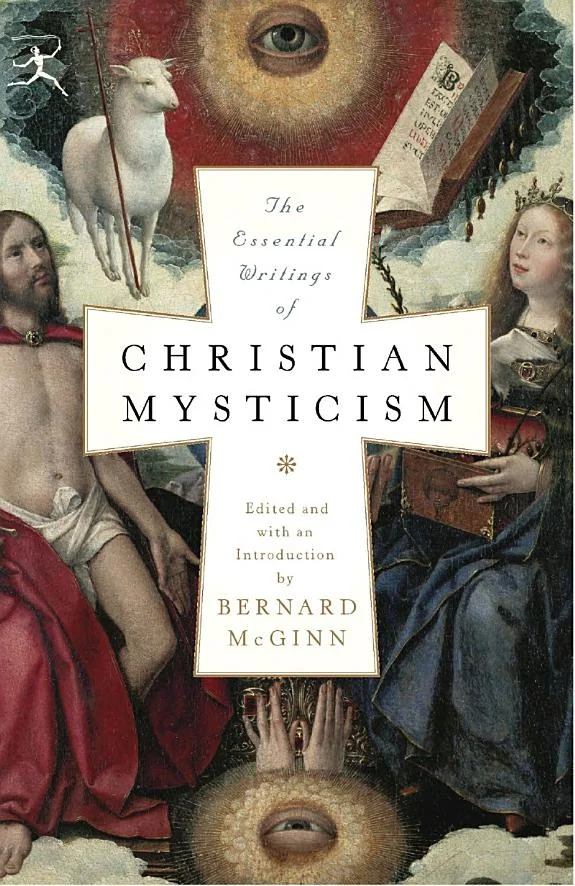
The Essential Writings of Christian Mysticism
 79
79

The Essential Writings of Christian Mysticism
Bernard McGinn's compilation offers a rigorous, subject-driven exploration of Christian mysticism, moving beyond mere chronological surveys. Its strength lies in its thematic organization, allowing the reader to see how concepts like 'divine darkness' or 'the ascent of the soul' are addressed across centuries and by disparate figures. For instance, placing Meister Eckhart's insights on the 'Godhead' alongside Teresa of Ávila's 'Interior Castle' reveals a shared pursuit of interior union despite different theological frameworks. However, the sheer density of material, culled from such a vast historical sweep, can feel overwhelming for those not already possessing a firm grounding in patristic and medieval theology. The lack of extensive authorial commentary within each excerpt, while respecting the primary sources, sometimes leaves the reader yearning for more context directly from McGinn. Ultimately, this is an indispensable, albeit demanding, resource for serious study of the contemplative tradition.
📝 Description
79
Bernard McGinn curated nearly one hundred selections from a millennium of Christian mystical thought.
Bernard McGinn's anthology gathers almost one hundred texts from Christian mystical traditions, covering a thousand years of thought. Instead of organizing by author, McGinn arranges the selections by theme. This approach allows readers to follow specific spiritual inquiries, such as the ascent of the soul or divine union, across different historical periods. The collection begins with figures like Origen of Alexandria from the 3rd century and extends to 20th-century writers like Thomas Merton. McGinn, a recognized historian of Western mysticism, aimed to map the diverse ways Christians have sought direct experience of the divine. This volume is suited for those with a serious interest in Christian spirituality, comparative mysticism, or theological history. It offers primary source material for understanding the development of mystical thought and specific contemplative practices. The book is not intended as an introduction but rather for readers already engaged with religious studies.
This collection situates Christian mysticism within a broader esoteric tradition that seeks direct, unmediated experience of the divine. It traces a lineage of spiritual practice and theological reflection focused on inner transformation and union with God, distinct from purely dogmatic or institutional religion. By organizing texts thematically, McGinn highlights recurring patterns in the Christian pursuit of the sacred, connecting early monastic traditions with later contemplative movements.
💡 Why Read This Book?
• Gain a nuanced understanding of Christian contemplative traditions by examining specific thematic threads, such as the concept of 'divine darkness' as explored by figures from Pseudo-Dionysius to John of the Cross, revealing consistent yet evolving spiritual inquiries across centuries. • Access foundational texts from pivotal figures like Origen of Alexandria (3rd century) and Julian of Norwich (14th century) in a single volume, allowing for direct engagement with primary source material without needing to consult multiple specialized editions. • Grasp the practical application of mystical theology by studying how concepts like the 'ascent of the soul' are presented by different authors, offering varied perspectives on spiritual discipline and the human encounter with the divine.
⭐ Reader Reviews
Honest opinions from readers who have explored this book.
❓ Frequently Asked Questions
What historical periods are covered in The Essential Writings of Christian Mysticism?
The anthology spans over 1,700 years of Christian mystical literature, beginning with the 3rd-century theologian Origen of Alexandria and extending to 20th-century mystics such as Thomas Merton.
How is the book organized, and why is that significant?
Unlike many anthologies, this book is organized thematically rather than by author. This structure allows readers to trace specific mystical concepts and spiritual journeys across different historical periods and authors.
Who is Bernard McGinn, and what is his expertise?
Bernard McGinn is a renowned theologian and historian specializing in Western mysticism. His extensive scholarship provides the foundation for the careful selection and organization of these essential texts.
Are there writings from well-known mystics included?
Yes, the collection features excerpts from many prominent Christian mystics, including Meister Eckhart, Julian of Norwich, Teresa of Ávila, John of the Cross, and Thomas Merton, among others.
What kind of mystical experiences are explored in the book?
The writings explore various facets of mystical experience, including the search for direct contact with the divine, the contemplative life, divine union, and the transformation of human life through spiritual practice.
Is this book suitable for beginners in Christian mysticism?
While comprehensive, the book is geared towards serious students and scholars due to the depth and breadth of the primary source material. Beginners might find it beneficial to have some prior familiarity with theological concepts.
🔮 Key Themes & Symbolism
The Ascent of the Soul
This theme, central to Christian contemplative traditions, explores the soul's journey towards union with God. McGinn includes writings that detail stages of this ascent, from initial purification to ecstatic union. For example, the works of mystics like John of the Cross illustrate the soul's arduous path through spiritual darkness towards divine embrace. The selections demonstrate how this concept evolved, from Neoplatonic influences in early Christian writers like Origen to its sophisticated articulation in medieval and Counter-Reformation spirituality, emphasizing interior transformation.
Divine Union and Contemplative Prayer
Central to Christian mysticism is the pursuit of direct, unmediated experience of God, often termed divine union. This anthology presents various approaches to contemplative prayer, the disciplined practice aimed at achieving this union. Selections from figures like Meister Eckhart and Teresa of Ávila explore the nature of this encounter, detailing states of prayer from 'acquired contemplation' to 'infused contemplation'. The texts highlight the role of grace and the transformative power of abiding in God's presence, moving beyond intellectual knowledge to direct spiritual apprehension.
The Transformative Power of Mystical Experience
The writings collected herein consistently address how direct encounters with the divine fundamentally alter the individual's life and perception. This transformation is not merely emotional but a reorientation of the entire being. Authors like Julian of Norwich, in her Revelations of Divine Love, describe visions that imbue her with a profound sense of God's love and the meaning of suffering. The anthology showcases how this transformative element is a hallmark of Christian mysticism, leading to a life lived in greater accordance with divine will and love.
Scripture and Tradition as Mystical Guides
While Christian mysticism emphasizes direct experience, the texts underscore the crucial role of Sacred Scripture and Church Tradition in guiding the mystical journey. Selections reveal how mystics interpret biblical narratives and theological doctrines through the lens of their contemplative experiences. Figures like Bernard of Clairvaux show how the Song of Songs can be read as an allegory for the soul's union with Christ. The anthology illustrates that for these mystics, divine revelation is a continuous dialogue, with Scripture providing a foundational framework for understanding divine encounters.
💬 Memorable Quotes
Direct passages from the work, attributed to the author.
“The soul seeks to be united with God.”
— This concise statement expresses the core aspiration of Christian mysticism. It highlights the inherent human longing for divine connection and the ultimate goal of spiritual practice: a deep, intimate union with the Creator.
“Contemplation moves beyond words and concepts.”
— This interpretation points to the ineffable nature of mystical experience. It suggests that the deepest encounters with the divine transcend ordinary language and intellectual understanding, entering a area of direct spiritual apprehension.
“Divine light transforms the seeker.”
— This idea emphasizes the active, clear role of God in the mystical process. It suggests that the experience of the divine is not passive but actively re-forms and enlightens the individual's consciousness and being.
“Union with God is the ultimate fulfillment.”
— This statement articulates the teleological drive within Christian mysticism. It posits that the deepest human desire and purpose are found in achieving complete oneness with the divine source of all being.
💡 Key Ideas
Editorial paraphrase of the work's core concepts — not direct quotes.
The spiritual path involves purification and ascent.
This paraphrased concept reflects the common structure of mystical journeys described in the texts. It signifies a process of shedding worldly attachments and vices, followed by a deliberate, often arduous, upward movement towards God.
🌙 Esoteric Significance
Tradition
While rooted in the canonical Christian tradition, this work illuminates aspects that resonate with broader esoteric currents, particularly concerning the direct apprehension of the divine and the transformative journey of the soul. It aligns with the Hermetic principle of 'as above, so below' by exploring the microcosm of the human soul reflecting the macrocosm of God. McGinn's selection often emphasizes the Gnostic quest for gnosis, or direct knowledge of the divine, albeit within a strictly orthodox framework. The emphasis on interior experience and symbolic interpretation of scripture places it within a lineage that values inner revelation alongside external dogma.
Symbolism
Key symbols explored include the 'dark night' of the soul, representing periods of spiritual trial and purification that paradoxically lead to deeper divine union, famously articulated by John of the Cross. The 'Interior Castle' of Teresa of Ávila serves as a potent metaphor for the soul's inner landscape, with its various mansions representing stages of spiritual progress. Light and darkness are recurring motifs, symbolizing divine presence and the soul's journey through unknowing towards ultimate illumination, reflecting ancient traditions of divine light as the ultimate reality.
Modern Relevance
Contemporary spiritual seekers, particularly those interested in contemplative Christianity, mindfulness, and the integration of psychological and spiritual growth, draw heavily on the traditions presented here. Thinkers and practitioners in fields like depth psychology (e.g., Jungian analysis's interest in archetypes and the unconscious) and integral spirituality find valuable source material in these writings. The emphasis on direct experience and inner transformation continues to inform modern spiritual methodologies and personal development practices seeking a connection beyond material existence.
👥 Who Should Read This Book
• Students of Comparative Religion: Individuals seeking to understand the distinct contemplative paths within Christianity and how they relate to or diverge from mystical traditions in other faiths. • Scholars of Western Esotericism: Researchers interested in the historical development of mystical thought and its occasional overlaps or influences on broader esoteric movements, appreciating primary texts from a major theological perspective. • Contemplative Practitioners: Individuals engaged in or exploring Christian prayer, meditation, and spiritual disciplines who wish to ground their practice in the wisdom of historical masters and understand the theological underpinnings.
📜 Historical Context
Bernard McGinn's anthology arrives in 2006, building upon decades of scholarly work that re-evaluated Christian mysticism beyond its perceived marginalization. The compilation situates itself within a rich historical current, tracing threads from the Patristic era, where figures like Origen of Alexandria (c. 185 – c. 254) integrated Neoplatonic philosophy with Christian doctrine to articulate early mystical concepts. It moves through the medieval period, a high point for Western mysticism, encompassing thinkers like Meister Eckhart and the anchoress Julian of Norwich, whose writings explored profound theological depths. The collection implicitly engages with the legacy of the Reformation and Counter-Reformation, including the intense mystical theology of Teresa of Ávila and John of the Cross. McGinn's thematic organization offers a counter-narrative to purely author-centric histories, highlighting continuities and divergences in how Christian mystics across centuries grappled with similar spiritual questions, often in dialogue with or reaction to prevailing scholasticism.
📔 Journal Prompts
The concept of the 'ascent of the soul' as presented by different authors.
The symbolic meaning of 'divine darkness' in the writings of John of the Cross.
Reflecting on the transformative impact of mystical encounters described by Julian of Norwich.
The role of 'contemplative prayer' in achieving union with God.
Comparing the approaches to 'divine union' in the works of Meister Eckhart and Teresa of Ávila.
🗂️ Glossary
Contemplation
A form of prayer or spiritual practice characterized by a sustained focus on God, involving stillness, receptivity, and direct experience rather than discursive thought or petitionary prayer.
Divine Union
The ultimate goal of Christian mysticism, understood as a profound, transformative, and often ineffable communion or oneness between the soul and God.
Ascent of the Soul
A metaphorical journey or process by which the human soul moves from a state of earthly attachment and imperfection towards spiritual enlightenment and union with the divine.
Gnosis
Greek for 'knowledge'; in mystical contexts, it refers to direct, intuitive, experiential knowledge of the divine, often contrasted with purely intellectual or doctrinal understanding.
The Cloud of Unknowing
A significant 14th-century English mystical text, likely included in McGinn's broader scope, advocating for a direct, non-intellectual approach to God through a 'cloud of unknowing' that separates the soul from conceptual knowledge.
Active Contemplation
A stage of prayer where the individual consciously directs their mind and will towards God, often involving meditation on scripture or divine attributes.
Passive Contemplation
A later stage where prayer becomes less a matter of personal effort and more a direct infusion of divine presence and understanding, often referred to as infused contemplation or the gift of contemplation.
This book appears in 1 collection
🔮 Readers Also Liked
Browse all →




From the “Christian Mysticism” Collection
View all →





More Free Mysticism & Contemplation Books
View all →