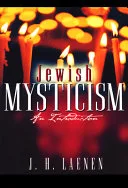
Jewish Mysticism
 71
71

Jewish Mysticism
The anonymous author of "Jewish Mysticism" approaches a vast and often esoteric subject with commendable scholarly rigor. The book's strength lies in its lucid presentation of complex lineages, particularly its clear delineation of Hekhaloth mysticism from later Kabbalistic developments. The section on Lurianic Kabbalah, with its intricate cosmology, is handled with particular care. However, the sheer scope means certain areas, like the figure of Shabbetai Zevi, feel somewhat compressed, lacking the deep dive some readers might expect. The narrative tends to remain descriptive, offering less in the way of critical analysis of the mystical claims themselves. Despite this, it serves as a reliable, if dry, introduction to a rich field of study. It is a useful, if unexciting, overview for the serious student.
📝 Description
71
Published in 2001, this volume surveys Jewish mystical traditions from early Hekhaloth literature to Hasidism.
This book surveys Jewish mystical traditions, tracing their development across centuries. It examines the evolution of thought from early Hekhaloth literature through the complex theological frameworks of Kabbalah, including the Lurianic school, the figure of Shabbetai Zevi, and the devotionalism of Hasidism. The work aims to illuminate the interconnectedness and divergences among these distinct yet related currents of Jewish esoteric thought.
Scholars of religion, comparative mysticism enthusiasts, and serious students of Jewish history will find this book valuable. It suits those seeking a structured, academic understanding of the subject matter, moving beyond superficial interpretations. Readers interested in the historical trajectory of spiritual movements within Judaism, and their philosophical underpinnings, will appreciate its depth. The book situates its subject within the broad sweep of Jewish intellectual and spiritual history, acknowledging ancient roots and medieval flourishing.
Central to the text are explorations of divine ascent (Hekhaloth), the nature of the Godhead and its emanations (Sefirot in Kabbalah), messianic movements and their theological justifications, and the practice of ecstatic prayer and community found in Hasidism. The work grapples with the conceptual challenges of interpreting mystical experiences and texts across different historical epochs and interpretive frameworks.
Jewish mysticism, or Kabbalah, represents a tradition of esoteric interpretation and practice within Judaism. Its roots extend to ancient speculative traditions, with major developments in medieval Spain and Safed. The book covers key movements like the Hekhaloth literature, which described ascents through heavenly palaces, and Kabbalah, with its complex doctrines of divine emanations (Sefirot) and cosmic processes. It also addresses later phenomena such as the Sabbatean movement and the rise of Hasidism, a modern devotional movement with mystical underpinnings. The text places these within the broader history of Jewish thought.
💡 Why Read This Book?
• Gain a structured understanding of Kabbalah's development, including specific concepts like the Sefirot, as presented from its classical to Lurianic phases, moving beyond generalized notions of Jewish mysticism. • Grasp the historical and theological context of figures and movements such as Shabbetai Zevi and Hasidism, understanding their place within the broader Jewish tradition as detailed in the text. • Trace the lineage of Hekhaloth mysticism, recognizing its unique characteristics and its relationship to later Kabbalistic thought, providing a foundational understanding of early Jewish esoteric practices.
⭐ Reader Reviews
Honest opinions from readers who have explored this book.
❓ Frequently Asked Questions
What are the main periods of Jewish mysticism covered in this book?
The book covers several key periods, including early Hekhaloth mysticism, classical Kabbalah, the specific developments of Lurianic Kabbalah, the messianic movement of Shabbetai Zevi, and the devotional Hasidic movement.
Is "Jewish Mysticism" suitable for beginners?
While it provides a historical overview, the book's depth and academic tone make it more suitable for students or readers with a prior interest in religious studies or Jewish history seeking a structured introduction.
What is Hekhaloth mysticism?
Hekhaloth mysticism refers to early Jewish mystical traditions, roughly from the Talmudic period, focused on visionary ascents through heavenly palaces (hekhaloth) to encounter divine realms and angels.
Who was Shabbetai Zevi?
Shabbetai Zevi (1626–1676) was a Kabbalist who declared himself the Messiah, leading a significant, albeit ultimately apostate, messianic movement that profoundly impacted subsequent Jewish thought and mysticism.
What is Lurianic Kabbalah?
Lurianic Kabbalah, developed by Isaac Luria in the 16th century, introduced complex doctrines such as Tzimtzum (divine contraction), Shevirat ha-Kelim (shattering of the vessels), and Tikkun (rectification), offering a new framework for understanding creation and redemption.
Does the book explain Hasidism?
Yes, the book includes Hasidism as a major trend in Jewish mysticism, detailing its emphasis on divine immanence, ecstatic prayer, the role of the Tzaddik (righteous leader), and its communal devotional practices.
🔮 Key Themes & Symbolism
Divine Ascent Traditions
The work examines the ancient Hekhaloth literature, detailing visionary journeys through celestial palaces. This tradition, predating formal Kabbalah, focused on ecstatic experiences and encounters with angelic hierarchies. It represents an early attempt within Judaism to articulate mystical cosmology and the means by which the human soul could approach the divine presence, often involving complex ascent narratives and magical formulae.
Kabbalistic Cosmology
Central to the text is the exposition of Kabbalah, particularly Lurianic Kabbalah. This includes core concepts like the Sefirot, the ten divine emanations through which God manifests in creation, and the intricate drama of Tzimtzum (divine contraction) and Tikkun (cosmic rectification) introduced by Isaac Luria. The book seeks to clarify these complex theological frameworks and their symbolic representations of divine unity and multiplicity.
Messianic Movements
The book addresses the phenomenon of messianic fervor within Jewish mysticism, exemplified by the movement surrounding Shabbetai Zevi. It explores the theological underpinnings and social impact of such figures, examining how expectations of messianic redemption intersected with mystical interpretations of scripture and tradition, often leading to dramatic schisms and reinterpretations.
Hasidic Devotionalism
The emergence and characteristics of Hasidism are presented as a later, vital current. This section likely details its emphasis on joy, divine immanence in everyday life, the importance of the Tzaddik (spiritual leader), and ecstatic prayer. Hasidism represents a democratizing and experiential approach to mysticism, making divine connection accessible through fervent devotion and community.
💬 Memorable Quotes
Direct passages from the work, attributed to the author.
“The interconnectedness of Hekhaloth mysticism, Kabbalah, and Hasidism.”
— This phrase expresses the book's core objective: to demonstrate that these seemingly distinct movements are not isolated phenomena but rather parts of a continuous, evolving mystical tradition within Judaism.
“Lurianic Kabbalah's intricate doctrines of creation and redemption.”
— This highlights the sophisticated and often challenging theological concepts introduced by Isaac Luria, such as divine contraction and cosmic repair, which profoundly reshaped Kabbalistic thought.
“The historical impact of Shabbetai Zevi's messianic claims.”
— This points to the significant, and at times tumultuous, influence of Shabbetai Zevi on Jewish spiritual life, illustrating the potent intersection of mysticism and messianic expectation.
“The experiential and devotional focus of Hasidism.”
— This interpretation emphasizes the practical, heartfelt nature of Hasidic practice, contrasting it with purely intellectual or speculative mystical systems and highlighting its focus on immanent divine presence.
“Theological frameworks explaining divine emanations (Sefirot).”
— This refers to the Kabbalistic concept of the Sefirot as divine attributes or vessels through which God interacts with the world, a foundational element for understanding Kabbalistic metaphysics.
🌙 Esoteric Significance
Tradition
This work firmly belongs within the Kabbalistic and Hasidic lineages of Jewish esoteric practice. It navigates the complex terrain of Jewish mysticism, distinguishing its various historical manifestations. While rooted in traditional Jewish texts and concepts, it presents them in a manner accessible to a broader academic audience, acting as a bridge between specialized scholarship and general interest in Western esotericism.
Symbolism
Key symbols explored include the Sefirot, the ten divine emanations representing God's attributes and creative force, crucial to understanding Kabbalistic cosmology. The Zohar, the foundational text of Kabbalah, is implicitly referenced through its rich symbolic language. The concept of Tzimtzum (divine contraction) from Lurianic Kabbalah, symbolizing the necessary self-limitation of God to allow for creation, is another potent motif.
Modern Relevance
Contemporary thinkers and practitioners interested in the origins of Western esotericism, comparative mysticism, and the philosophical underpinnings of Jewish spiritual traditions find this book essential. It provides a historical bedrock for understanding how Kabbalistic ideas have influenced various spiritual movements, including some forms of New Age thought and contemporary Jewish renewal movements seeking to reconnect with their mystical heritage.
👥 Who Should Read This Book
• Students of comparative religion seeking to understand the development of a major Western esoteric tradition, benefiting from the book's historical tracing of movements. • Academic researchers in Jewish studies or the history of mysticism, who require a structured overview of key figures, texts, and concepts like Hekhaloth and Lurianic Kabbalah. • Individuals interested in the philosophical and theological evolution of Jewish thought, particularly those curious about the mystical dimensions that lie beyond standard historical accounts of Judaism.
📜 Historical Context
Published in 2001, "Jewish Mysticism" emerged during a period of significant academic and popular engagement with esoteric traditions. The late 20th century saw a surge in scholarship on Kabbalah, spurred by figures like Gershom Scholem, who largely defined the academic study of Jewish mysticism. This book benefits from that scholarly foundation, offering a synthesized historical overview. It implicitly engages with Scholem's work by tracing the lineages he meticulously researched. Unlike popular syncretic works, this volume maintains a historical and textual focus, situating movements like Hekhaloth mysticism and the later Hasidism within their specific Jewish contexts. The relative anonymity of the author might reflect a desire to present the material objectively, without the filter of a prominent contemporary scholar's personal interpretation, perhaps aiming for a reception grounded in pure scholarship rather than personality cult.
📔 Journal Prompts
The concept of divine ascent in Hekhaloth mysticism.
Lurianic Kabbalah's doctrines of Tzimtzum and Tikkun.
The historical context of the Shabbetai Zevi movement.
Hasidism's emphasis on immanence and ecstatic prayer.
The symbolic meaning of the Sefirot.
🗂️ Glossary
Hekhaloth Mysticism
An early form of Jewish mysticism (c. 200–1000 CE) characterized by visionary ascents through heavenly palaces (hekhaloth) to perceive the divine throne.
Kabbalah
The esoteric system of Jewish mysticism, originating in the medieval period, focused on interpreting the hidden meanings of the Torah and understanding the nature of God and creation.
Lurianic Kabbalah
The system of Kabbalah developed by Rabbi Isaac Luria in the 16th century, introducing concepts like Tzimtzum, Shevirat ha-Kelim, and Tikkun.
Shabbetai Zevi
A 17th-century Kabbalist who proclaimed himself the Messiah, leading a widespread messianic movement that ultimately ended in apostasy.
Hasidism
A spiritual revival movement within Judaism that arose in Eastern Europe in the 18th century, emphasizing joy, devotion, and the presence of God in all things.
Sefirot
The ten divine emanations or attributes in Kabbalistic cosmology, through which God interacts with and sustains the universe.
Tikkun
A central concept in Lurianic Kabbalah, referring to the 'rectification' or 'repair' of the cosmic or spiritual world, often through human actions.