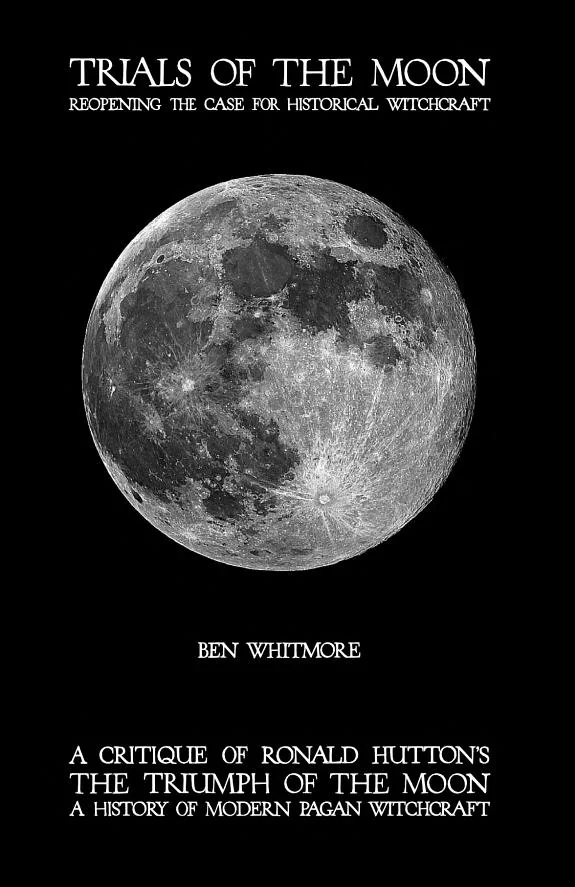
Trials of the Moon
 75
75

Trials of the Moon
Ben Whitmore's "Trials of the Moon" is a necessary, if sometimes dry, interrogation of the historical foundations of modern witchcraft and Paganism. It directly confronts the scholarly consensus, most notably that of Ronald Hutton, asking not if the old myths were true, but if their wholesale dismissal obscured potential historical continuities. Whitmore's strength lies in his meticulous deconstruction of claims, particularly regarding Gerald Gardner's initiation and the supposed ancient lineage of Wicca. He highlights how readily accepted narratives can obscure complex realities. However, the book's relentless focus on academic debate can sometimes make it less accessible to the casual reader seeking spiritual inspiration. A particularly sharp passage questions the archaeological evidence for "witch cults" pre-1700, forcing a re-evaluation of what constitutes proof. Ultimately, "Trials of the Moon" serves as a vital corrective, urging critical engagement with the past, even when that past is foundational to present-day belief.
📝 Description
75
Ben Whitmore's 2010 book critically re-examines the historical roots of modern witchcraft and Paganism.
Published in 2010, 'Trials of the Moon' by Ben Whitmore scrutinizes the historical accounts that form the basis of contemporary witchcraft and Paganism. The book challenges popular origin stories, including those presented by Ronald Hutton's 'The Triumph of the Moon.' Whitmore questions traditional beliefs about the antiquity of witchcraft, the historical reality of pre-Christian deities, and the authenticity of Wiccan initiations linked to figures like Gerald Gardner. He systematically analyzes both academic and popular narratives that have influenced recent Pagan and Wiccan history, proposing an alternate view supported by thorough research and a fresh look at source materials.
This work is intended for dedicated students of modern Paganism and witchcraft who desire a more critical and thorough grasp of their traditions' past. It will also interest scholars of religious history, especially those studying Western Esotericism and new religious movements. Readers who value careful historical investigation, enjoy questioning established narratives, and are prepared to confront conventional academic views will find 'Trials of the Moon' especially rewarding. It is for those who understand that comprehending the past, even its less comfortable aspects, is vital for spiritual practice today and tomorrow.
Emerging in 2010, 'Trials of the Moon' engages with a scholarly discourse on modern Paganism and witchcraft heavily influenced by earlier works that sought to establish historical lineages. Whitmore's book acts as a direct response to narratives that either romanticized or, conversely, rigorously debunked ancient origins, particularly in the wake of Ronald Hutton's influential studies. It situates itself within the academic study of Western Esotericism, questioning how historical interpretation shapes contemporary religious identity and practice.
💡 Why Read This Book?
• Understand the critical debate surrounding the historical origins of modern witchcraft, moving beyond simplistic acceptance of narratives, as explored in the sections discussing Gerald Gardner's claims. • Gain a nuanced perspective on the "creation myths" of Paganism by examining Whitmore's challenge to the idea that these traditions truly "died out" centuries ago. • Appreciate the complexities of historical reconstruction in esoteric traditions, learning to critically assess evidence concerning the "Gods of Wicca" and their Romantic-era influences.
⭐ Reader Reviews
Honest opinions from readers who have explored this book.
❓ Frequently Asked Questions
Does Ben Whitmore's "Trials of the Moon" argue that modern witchcraft is ancient?
No, Whitmore critically examines claims of ancient origins. He questions whether established narratives, like those popularized by Ronald Hutton, may have oversimplified or dismissed potential historical continuities of witchcraft and Pagan practices.
What is "The Triumph of the Moon" and how does it relate to "Trials of the Moon"?
"The Triumph of the Moon" by Ronald Hutton (1999) argued that many modern Pagan and Wiccan traditions originated in the 20th century. Whitmore's "Trials of the Moon" (2010) engages directly with Hutton's work, questioning if his debunking of older "creation myths" also discarded valid historical evidence.
What does the book say about Gerald Gardner?
Whitmore scrutinizes the historical accounts of Gerald Gardner's initiation into witchcraft. He investigates the veracity of these claims and their impact on the development of modern Wicca, questioning the commonly accepted narrative of his lineage.
Is "Trials of the Moon" a practical guide to witchcraft?
No, this book is a scholarly and critical historical analysis. It does not provide practical instructions for magical practice but rather examines the historical claims and debates surrounding modern witchcraft and Paganism.
What is the main argument about the "Gods of Wicca"?
Whitmore questions the notion that the Gods revered in Wicca have direct, unbroken links to ancient pre-Christian deities. He explores the influence of the Romantic movement and later interpretations on the formation of these deities' modern identities.
Who is Ben Whitmore?
Ben Whitmore is an author and researcher known for his critical historical work on modern Paganism and witchcraft. His 2010 book, "Trials of the Moon," is a significant contribution to the academic discourse on the subject.
🔮 Key Themes & Symbolism
Challenging Creation Myths
Whitmore directly confronts the "creation myths" surrounding modern witchcraft and Paganism, particularly those suggesting deep ancient roots. He argues that in dismissing romanticized narratives, scholars might have also discarded potential historical truths. The book scrutinizes claims about the continuity of witchcraft, questioning if it truly "died out" or simply transformed, and examines how these narratives are constructed and perpetuated in contemporary Pagan discourse.
Gerald Gardner and Wiccan Origins
A significant focus is placed on the historical figure of Gerald Gardner and the foundational claims of Wicca. Whitmore critically analyzes the accounts of Gardner's initiation into witchcraft, investigating the evidence and questioning the accepted timeline and authenticity of his lineage. This exploration looks at how Gardner's narrative shaped modern Wicca and the scholarly debates that ensued.
The Gods of Wicca
The book tackles the perceived antiquity of the "Gods of Wicca." Whitmore explores the argument that many conceptions of these deities may have been significantly influenced by the Romantic movement and subsequent scholarly interpretations, rather than solely by direct inheritance from ancient traditions. This theme investigates the historical construction of divine figures within modern esoteric practices.
Historical Methodology
Underpinning the entire work is an examination of historical methodology itself, especially as applied to esoteric and marginalized religious movements. Whitmore highlights the challenges of reconstructing the past based on fragmented evidence, the biases inherent in historical accounts, and the potential for scholarly consensus to become entrenched. The book encourages a more rigorous and critical approach to the history of witchcraft and Paganism.
💬 Memorable Quotes
Direct passages from the work, attributed to the author.
“Did paganism really die out centuries ago?”
— This question captures Whitmore's challenge to the idea of a complete historical break in Pagan traditions. It prompts a re-evaluation of whether practices simply evolved or went underground, rather than vanishing entirely, inviting a more nuanced understanding of continuity.
“Were the Gods of Wicca really born out of the Romantic movement?”
— This query directly addresses the influence of Romanticism on modern Pagan theology. It suggests that the perceived ancient origins of Wiccan deities might be a more recent construction, shaped by 19th-century ideals and romanticized views of the past.
“Did Gerald Gardner lie about his initiation into witchcraft?”
— This provocative question targets the core of Wicca's historical claims. Whitmore explores the evidence and arguments surrounding Gardner's initiation, encouraging readers to critically assess the foundation upon which modern Wicca was built.
“Are some truths also hidden in the rubble?”
— This metaphor suggests that even when debunking popular myths, valuable historical insights might be overlooked. It encourages a careful sifting of evidence, implying that a complete dismissal of older narratives could lead to the loss of potentially accurate historical fragments.
“Whitmore has retraced many of...”
— This phrase, likely from the original blurb, indicates the book's investigative nature. It suggests a detailed, step-by-step examination of historical claims and sources, aiming to uncover a more accurate historical account through diligent research.
🌙 Esoteric Significance
Tradition
This work falls within the critical historiography of Western Esotericism, specifically focusing on modern Paganism and Wicca. It departs from purely devotional or historical-descriptive approaches by employing rigorous, critical analysis. While not adhering to a specific lineage like Hermeticism or Gnosticism, it engages with the historical claims made by traditions that draw upon these broader esoteric currents, seeking to establish a more accurate historical foundation for contemporary practices.
Symbolism
The 'Moon' in the title is a primary symbol, representing cycles, the feminine divine, and often, the hidden or nocturnal aspects of magic and spirituality that are central to Wicca. The 'Trials' themselves symbolize the rigorous process of historical investigation and the challenging of established beliefs. The book implicitly engages with the symbolism of 'myth' versus 'history,' exploring how foundational stories, whether factual or fabricated, shape spiritual identity and practice.
Modern Relevance
Contemporary scholars and practitioners interested in the historical accuracy of Pagan and Wiccan origins continue to engage with Whitmore's work. It is particularly relevant for those involved in academic study of new religious movements or those seeking to understand the historical debates that inform current Wiccan theology and practice. Thinkers who prioritize historical evidence and critical analysis in their understanding of esoteric traditions find value in its methodology.
👥 Who Should Read This Book
["• Students of Western Esotericism: Those researching the historical development of modern magical and Pagan movements will find Whitmore's critical analysis of source materials invaluable.", "• Practitioners of Wicca and Modern Paganism: Individuals seeking a deeper, evidence-based understanding of their traditions' origins, beyond popular mythologies, will benefit from this rigorous examination.", '• Comparative Religion Scholars: Researchers studying the evolution of religious beliefs and the construction of religious narratives will find this book a case study in historical debate and revisionism.']
📜 Historical Context
In 2010, "Trials of the Moon" entered a field already significantly reshaped by Ronald Hutton's "The Triumph of the Moon" (1999). Hutton had largely dismantled the "witch-cult" theories, arguing that most modern Pagan and Wiccan traditions were relatively recent, largely 20th-century creations. Whitmore's work acts as a critical engagement with this prevailing academic view. While not defending the discredited "creation myths," he poses a crucial question: did Hutton's demolition also obliterate potentially valid historical threads? The book navigates the intellectual currents of Western Esotericism scholarship, a field where the historical continuity of magical and Pagan practices is a subject of intense debate. It implicitly engages with scholars who, like Hutton, prioritize documentary evidence, while also probing the limitations of such approaches when dealing with suppressed or orally transmitted traditions. The reception of Hutton's work had set a high bar, and Whitmore's book sought to refine the discussion, urging a more nuanced interpretation of the evidence.
📔 Journal Prompts
The "creation myths" of modern witchcraft: How have these narratives shaped your understanding?
Gerald Gardner's claimed initiation: What historical evidence would convince you of its authenticity?
The "Gods of Wicca" and Romanticism: Explore the influence of historical periods on divine conceptions.
Re-evaluating the "death" of witchcraft: Consider what historical continuity might look like beyond popular narratives.
The rubble of debunked myths: What potential truths might be found in discredited historical accounts?
🗂️ Glossary
Creation Myths
Narratives, often traditional or foundational, that explain the origin of a religion, practice, or worldview. In this context, it refers to the stories about the ancient origins and continuity of modern witchcraft and Paganism.
Triumph of the Moon
A seminal 1999 book by historian Ronald Hutton that challenged traditional beliefs about the antiquity of witchcraft and Paganism, arguing for their largely 20th-century origins. Whitmore's work directly engages with Hutton's conclusions.
Gerald Gardner
Considered by many to be the founder of modern Wicca, Gardner claimed initiation into an ancient witchcraft tradition in the early 20th century. His accounts are a key focus of historical debate.
Witch Cult Theory
An older, largely discredited theory proposing that witchcraft was a continuous, nature-based religion dating back to pre-Christian times. Hutton's work significantly challenged this.
Romantic Movement
An artistic, literary, and intellectual movement in Europe originating in the late 18th century, emphasizing emotion, individualism, and a glorification of the past and nature. Its influence on esoteric thought is explored.
Paganism
A broad term for modern spiritual paths often drawing inspiration from pre-Christian European religions. It encompasses diverse practices and beliefs, including various forms of Wicca.
Esotericism
Systems of thought and practice concerned with hidden knowledge or spiritual truths, often involving mysticism, magic, and alchemy. Modern Paganism and Wicca are often studied within this broader category.
This book appears in 1 collection
🔮 Readers Also Liked
Browse all →







From the “Neopaganism” Collection
View all →








More Free Witchcraft & Paganism Books
View all →