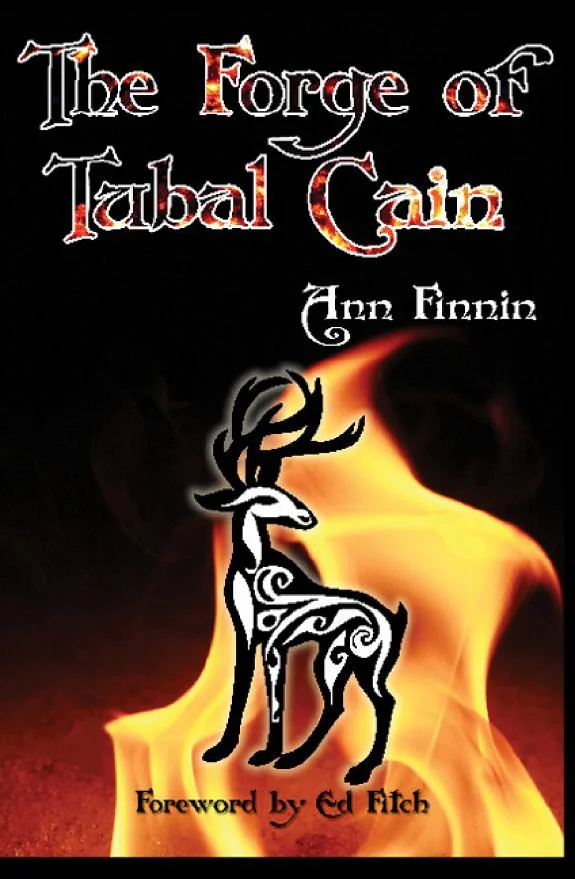
The Forge of Tubal Cain
 71
71

The Forge of Tubal Cain
Ann Finnin's "The Forge of Tubal Cain" offers a rare glimpse into the inner workings of a traditional witchcraft coven, the Roebuck, directly linked to the lineage of Robert Cochrane. The strength of this book lies in its unvarnished account of coven life, moving beyond generalized witchcraft lore to present specific practices and historical developments. Finnin details the coven's roots in English Traditional Craft, providing a valuable historical anchor. A limitation, however, is the book's internal focus; while illuminating for those within or studying this specific tradition, it offers less for the broader occult practitioner seeking comparative magical systems. The section detailing the initiation rites, while factual, could benefit from more explicit symbolic interpretation to contextualize its significance for the uninitiated reader. Ultimately, "The Forge of Tubal Cain" serves as a vital, if niche, historical document for students of modern witchcraft's lineage-based covens.
📝 Description
71
Ann Finnin documents the history and practices of the Roebuck coven, tracing its lineage to English Traditional Craft.
This book details the Roebuck coven, a traditional witchcraft group with roots in Robert Cochrane's English Traditional Craft. Finnin provides an insider's view of the coven's organization, beliefs, and magical practices. The work examines how knowledge is passed down within a private group, how unique rituals develop, and the difficulties in preserving esoteric traditions as times change.
It is aimed at readers interested in the history of modern witchcraft, particularly the evolution of traditional covens. Students of esoteric traditions will find it informative for understanding witchcraft's development in 20th and 21st century Southern California. The book situates the Roebuck coven within the broader revival of witchcraft in the mid-to-late 20th century, a period marked by attempts to reconstruct or preserve older forms of folk magic and ritual.
The Roebuck coven's connection to Robert Cochrane's Traditional Craft places it within a specific stream of 20th-century witchcraft revivalism. This tradition sought to move away from ceremonial magic and Gardnerian Wicca, emphasizing folk magic, witchcraft "Old Laws," and the reconstruction of pre-modern practices. Finnin's work situates these efforts within the broader occult milieu of Southern California, showing how these specific magical lineages developed and maintained their practices.
💡 Why Read This Book?
• Learn about the specific historical trajectory of the Roebuck coven, a Southern California group with direct ties to Robert Cochrane's English Traditional Craft, offering unique insights into coven development post-1960s witchcraft revival. • Understand the practical application of traditional witchcraft within a specific coven structure, detailing ritual elements and organizational principles that deviate from more generalized accounts of modern paganism. • Gain knowledge of Tubal Cain's symbolic importance within this lineage, examining his role as a patron of smithcraft and magic as presented by Ann Finnin in her exploration of the Roebuck's foundational myths.
⭐ Reader Reviews
Honest opinions from readers who have explored this book.
❓ Frequently Asked Questions
What is the primary historical lineage of the Roebuck coven discussed in "The Forge of Tubal Cain"?
The Roebuck coven, as detailed in Ann Finnin's work, traces its roots directly to the English Traditional Craft established by Robert Cochrane (Roy Bowers). This lineage emphasizes a specific form of folk magic and ritual practice.
Who was Robert Cochrane and why is he significant to this book?
Robert Cochrane, also known as Roy Bowers, was a pivotal figure in 20th-century witchcraft, founding the 1734 Tradition. His teachings and practices form the direct ancestral line for the Roebuck coven, making his influence central to the book's historical narrative.
What kind of practices are described in "The Forge of Tubal Cain"?
The book describes the practical workings and rituals of the Roebuck coven, offering insights into their magical practices, coven structure, and the transmission of knowledge within their specific traditional witchcraft lineage.
Where did the Roebuck coven originate geographically?
The Roebuck coven, whose history is chronicled in "The Forge of Tubal Cain," is based in Southern California. Its establishment there represents the spread and adaptation of English Traditional Craft principles.
Is "The Forge of Tubal Cain" suitable for beginners in witchcraft?
While informative about a specific tradition, the book offers an insider's perspective on an established coven. Beginners might find it more beneficial after gaining foundational knowledge in broader witchcraft studies, as it focuses on a particular lineage's history and practice.
What is the significance of Tubal Cain in the context of this book?
Tubal Cain is presented as a significant figure within the Roebuck's tradition, often associated with smithcraft, metalworking, and a certain type of earth-based magic. His symbolism is explored in relation to the coven's practices and identity.
🔮 Key Themes & Symbolism
Lineage and Traditional Craft
The book emphasizes the importance of direct lineage in witchcraft, tracing the Roebuck coven's practices back to Robert Cochrane's 1734 Tradition. It explores how this specific form of English Traditional Craft was preserved and adapted in Southern California, highlighting the transmission of knowledge and ritual forms through a defined succession. This focus distinguishes it from more eclectic or solitary witchcraft paths, underscoring the value placed on historical continuity and authentic practice within this particular coven.
Coven Structure and Practice
Finnin provides an insider's view of the Roebuck coven's internal organization, hierarchy, and magical operations. The text details the practical execution of rituals, the roles of members, and the communal aspects of their spiritual work. This section moves beyond theoretical discussions to offer a grounded account of how a traditional coven functions on a day-to-day basis, including initiation processes and the maintenance of their esoteric tradition over time.
Symbolism of Tubal Cain
The figure of Tubal Cain is central to the coven's identity and magical framework. The work explores his association with smithcraft, earth energies, and the transformative power of fire and metal. This symbolism is interpreted within the context of traditional witchcraft, connecting the craft of the blacksmith to the 'forge' of magical creation and the shaping of spiritual energies by the coven members.
Adaptation and Preservation
This theme addresses the challenges and methods involved in preserving an esoteric tradition across geographical and temporal shifts. The book examines how the Roebuck coven maintained its connection to English Traditional Craft while developing its own unique character in Southern California. It illustrates the dynamic interplay between adhering to foundational principles and allowing for organic growth within a specific cultural and environmental context.
💬 Memorable Quotes
Direct passages from the work, attributed to the author.
“The Roebuck drew its roots from the English Traditional Craft of Robert Cochrane.”
— This statement establishes the foundational lineage of the coven, anchoring its practices and beliefs within a specific, historically recognized stream of modern witchcraft, differentiating it from other magical traditions.
“Our work is in the forge, shaping spirit as the smith shapes metal.”
— This metaphorical concept highlights the active, transformative nature of the coven's magic, likening their ritual efforts to the blacksmith's craft of creation and refinement through heat and force.
“Tradition is not static; it is a living stream.”
— This interpretation emphasizes that while the coven adheres to a specific lineage, their practice is not rigid. It suggests an evolution and adaptation of their craft, allowing for growth while maintaining the core essence of their tradition.
“Coven structure provided the necessary vessel for our shared mysteries.”
— This points to the importance of community and organized structure in facilitating and safeguarding esoteric knowledge and ritual practice within the Roebuck tradition.
“Tubal Cain is our patron of the hammer and the hearth.”
— This identifies Tubal Cain not just as a symbolic figure but as an active patron and source of inspiration for the coven's specific magical work, linking their practice to primal forces of creation and domestic stability.
🌙 Esoteric Significance
Tradition
This work is firmly situated within the Western Esoteric Tradition, specifically concerning modern witchcraft and folk magic. It belongs to the lineage of Robert Cochrane's 1734 Tradition, which itself draws upon older European folk magic and pre-Christian European beliefs. The book departs from more ceremonial or Kabbalistic systems by focusing on earth-based, lineage-bound practices and the role of specific deities or ancestral figures like Tubal Cain.
Symbolism
Key symbols include Tubal Cain, representing the smithcraft, transformation, and earth-bound magic central to the coven's practice. The 'forge' itself symbolizes a place of creation and refinement, both material and spiritual. The act of smithing is mirrored in the ritual shaping of energies and the forging of the coven's collective identity and magical power.
Modern Relevance
Contemporary practitioners interested in lineage-based witchcraft, traditional coven structures, and the specific teachings of Robert Cochrane find this book invaluable. It informs discussions on the preservation of esoteric traditions and the practical application of folk magic in modern contexts. Thinkers exploring the sociology of esoteric groups or the historical development of post-Gardnerian witchcraft often reference such detailed coven histories.
👥 Who Should Read This Book
• Students of traditional witchcraft seeking to understand lineage-based covens distinct from Gardnerian or Alexandrian traditions will find specific historical and practical details. • Researchers of modern occult history interested in the post-1960s witchcraft revival and the development of specific traditions like Robert Cochrane's will gain primary source material. • Practicing witches interested in comparative studies of coven structures, ritual forms, and the symbolism of figures like Tubal Cain will find unique insights into a specific path.
📜 Historical Context
Published in 2008, "The Forge of Tubal Cain" emerged during a period of increased academic and popular interest in the history of modern witchcraft. The book's focus on the Roebuck coven and its direct link to Robert Cochrane's 1734 Tradition places it within the ongoing discourse surrounding the origins and evolution of English Traditional Craft. This lineage, established by Cochrane in the mid-20th century, represented a distinct path within the burgeoning witchcraft revival, often contrasting with Gardnerian or Alexandrian traditions. Ann Finnin's work provides a valuable primary source for understanding how these specific traditions were maintained and practiced by covens operating outside the more widely documented circles. The book's specificity addresses a need for detailed accounts of lineage-based covens, contributing to a more nuanced understanding of witchcraft's diverse landscape in the late 20th and early 21st centuries.
📔 Journal Prompts
The Roebuck coven's connection to Robert Cochrane's English Traditional Craft.
Reflect on the symbolism of Tubal Cain as presented in the book.
Consider the importance of lineage in maintaining esoteric practices.
Analyze the described coven structure and its function.
How does the concept of the 'forge' apply to personal magical development?
🗂️ Glossary
Roebuck
The name of the traditional witchcraft coven whose history and practices are documented in this book, with roots in English Traditional Craft.
English Traditional Craft
A specific stream of modern witchcraft practice and belief system, strongly associated with Robert Cochrane (Roy Bowers), emphasizing lineage and folk magic.
Robert Cochrane (Roy Bowers)
The founder of the 1734 Tradition of English Traditional Craft, whose teachings and practices form the basis for the Roebuck coven's lineage.
Tubal Cain
A biblical figure, son of Lamech, traditionally associated with metalworking and smithcraft. In this context, he serves as a patron figure for the coven's magical work.
Coven
A group or assembly of witches, typically with a defined structure and leadership, dedicated to practicing magic and celebrating religious rites.
Lineage
In esoteric traditions, the direct succession of knowledge, authority, and practice from a teacher or founder to their students and subsequent generations.
Forge
Literally a blacksmith's workshop; symbolically, in this book, it represents the place where magical transformations and creations occur within the coven.
This book appears in 1 collection
🔮 Readers Also Liked
Browse all →








From the “Neopaganism” Collection
View all →






More Free Witchcraft & Paganism Books
View all →