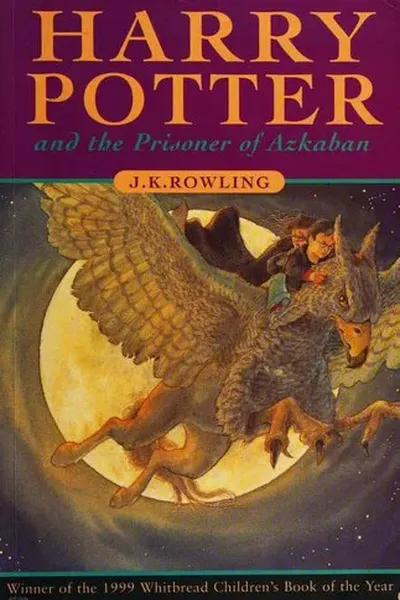
Harry Potter and the Prisoner of Azkaban

 75
75

Harry Potter and the Prisoner of Azkaban
Rowling’s third Potter novel, *Prisoner of Azkaban*, marks a distinct tonal shift, moving away from straightforward magical mysteries towards a more psychologically complex narrative. The introduction of Sirius Black and the exploration of his alleged betrayal, alongside the introduction of the Dementors, injects a palpable sense of dread and moral ambiguity not as pronounced in earlier books. A notable strength is the intricate plotting, particularly the revelation concerning Peter Pettigrew, which recontextualizes much of the preceding narrative. However, the resolution, while clever, relies on a rather convenient time-turner device that some readers might find stretches credulity. The depiction of the Dementors as psychic parasites, though, offers a potent symbolic layer. Ultimately, *Prisoner of Azkaban* elevates the series by grappling with darker truths and the unreliability of memory.
📝 Description
75
Published in 1999, Harry Potter and the Prisoner of Azkaban deepened the series' engagement with darker magic and complex character arcs.
The third Harry Potter novel, released in 1999, marks a shift toward more mature themes and psychological depth. Harry's third year at Hogwarts introduces significant new threats and unearths crucial details about his past. The story focuses on confronting past traumas and understanding the nature of justice.
This book resonates with readers who appreciate narratives that grow alongside their characters. Those interested in mythology, archetypal stories, and the examination of consequences will find its substance rewarding. It particularly appeals to readers drawn to fantasy that subtly questions societal norms and personal fate.
While ostensibly a children's fantasy, Prisoner of Azkaban engages with occult concepts through its depiction of spectral beings like Dementors, which embody psychic vampirism and feed on happiness. The book also touches on themes of transformation and the hidden workings of institutions, mirrored in the Marauder's Map. These elements connect to broader traditions of exploring inner demons and the unseen forces that shape human experience, framed within a narrative of personal growth and confronting shadowy aspects of reality.
💡 Why Read This Book?
• Learn about the symbolic weight of Dementors, spectral entities representing emotional despair and psychic vampirism, offering a potent allegory for overcoming personal darkness. • Understand the narrative significance of the Marauder's Map, a magical artifact that illustrates themes of hidden knowledge and the mapping of unseen realities within Hogwarts. • Explore the concept of justice and its fallibility through the lens of Sirius Black's wrongful imprisonment, prompting reflection on how past judgments shape present truths.
⭐ Reader Reviews
Honest opinions from readers who have explored this book.
❓ Frequently Asked Questions
What is the significance of the Marauder's Map in Harry Potter and the Prisoner of Azkaban?
The Marauder's Map is a magical document that reveals the entire layout of Hogwarts, including secret passages and the real-time location of everyone within the castle. It symbolizes hidden knowledge and the interconnectedness of individuals within a complex system.
Who are the Dementors and what do they represent?
Dementors are dark, spectral creatures that guard Azkaban prison. They feed on human happiness, leaving their victims with despair. They represent profound emotional desolation and the psychic toll of trauma.
What is a Time-Turner and how is it used in the book?
A Time-Turner is a magical device that allows the user to travel back in time for short periods. In Prisoner of Azkaban, Hermione uses it to attend multiple classes simultaneously and, critically, to save Sirius Black and Buckbeak.
What is the concept of Animagus in the context of the book?
An Animagus is a witch or wizard who can transform into a specific animal at will. Sirius Black is revealed to be an unregistered Animagus who can transform into a large black dog, aiding his escape and interactions.
How does Prisoner of Azkaban differ from the first two Harry Potter books?
Prisoner of Azkaban marks a tonal shift, introducing darker themes, greater moral ambiguity, and a focus on Harry's past and family history. It moves beyond simple mystery plots to explore psychological depth and consequence.
What is the role of Sirius Black in the narrative?
Sirius Black is initially presented as a dangerous fugitive believed to be responsible for betraying Harry's parents. His true role as Harry's godfather and a wrongly accused man forms a central mystery and emotional arc.
🔮 Key Themes & Symbolism
Memory and Identity
The narrative deeply probes how distorted memories and false narratives shape identity. Harry grapples with the 'truth' about his parents' death and Sirius Black's alleged treachery. The concept of memory as a subjective and fallible construct is central, particularly as characters confront past events and their consequences. The work suggests that identity is not solely defined by objective facts but by how individuals interpret and integrate their experiences, highlighting the psychological weight of repressed or misunderstood history.
Justice and Redemption
A core theme is the flawed nature of justice systems, exemplified by Sirius Black's wrongful imprisonment in Azkaban. The book questions the reliability of accusations and the consequences of hasty judgments. It explores the possibility of redemption for those wrongly condemned and the arduous path to reclaiming one's life and reputation. The narrative posits that true justice requires understanding context and challenging accepted truths, a significant departure from simplistic notions of guilt and innocence.
Facing Inner Darkness
The introduction of Dementors as creatures that feed on happiness serves as a powerful metaphor for confronting internal struggles and negative emotions. Harry's vulnerability to them reflects his unresolved trauma and grief. The Patronus Charm, conjured from happy memories, represents the active process of overcoming despair and asserting one's inner light against encroaching darkness. This theme encourages readers to recognize and actively combat psychological burdens.
The Nature of Truth
This installment significantly challenges the reader's perception of truth. What is initially presented as fact—Sirius Black's guilt—is gradually revealed to be a carefully constructed lie. The narrative emphasizes that truth is often many-sided and obscured, requiring critical examination of evidence and motivations. The reliance on memory, hearsay, and hidden evidence underscores the difficulty in discerning objective reality from subjective interpretation or deliberate deception.
💬 Memorable Quotes
Direct passages from the work, attributed to the author.
“It is our choices, Harry, that show what we truly are, far more than our abilities.”
— This statement, attributed to Albus Dumbledore, emphasizes the ethical dimension of character. It suggests that true identity is forged not by inherent talents or magical prowess, but by the moral decisions individuals make when faced with challenges and temptations.
“I solemnly swear that I am up to no good.”
— This incantation, used to activate the Marauder's Map, highlights the theme of duality and hidden potential. It signifies that even within an esteemed institution like Hogwarts, there exists a field of mischief, secret knowledge, and unconventional exploration.
“You think the dead we loved ever truly leave us?”
— This poignant question, posed by Sirius Black, speaks to the enduring impact of loved ones, even after their physical departure. It suggests a spiritual or energetic connection that transcends mortality, offering solace and a sense of continued presence.
“Fear of a name only increases fear of the thing itself.”
— This observation, made by Hermione, underscores the power of language and perception. By refusing to name Voldemort, the wizarding community grants his name undue power. It advocates for confronting fears directly rather than allowing them to fester through avoidance.
“The Dementors descend, and it's the end of happiness for a long, long time.”
— This description captures the overwhelming despair associated with the Dementors. It symbolizes the lasting impact of negative psychic forces and the struggle to maintain hope and well-being when confronted by overwhelming emotional darkness.
🌙 Esoteric Significance
Tradition
The work draws implicitly from Western Hermeticism and Jungian psychology. The exploration of the shadow self through characters like Sirius Black and the Dementors, along with the symbolic journey of self-discovery, aligns with archetypal psychology. The magical system, while fantastical, operates with internal logic suggestive of ceremonial magic, where intent and belief shape reality, echoing Hermetic principles of "As Above, So Below."
Symbolism
The Dementors function as potent symbols of psychic vampirism and the externalization of inner despair, a concept found in various occult traditions concerning malevolent entities or psychic pollution. The Animagus transformation (Sirius Black as Padfoot) represents mastery over one's form and the ability to move between different states of consciousness or physical manifestation, a theme present in shamanic and alchemical lore.
Modern Relevance
Contemporary explorations of mental health in fiction often echo the Dementors' depiction of overwhelming depression and anxiety. Furthermore, the series' continued popularity fuels interest in narrative archetypes and the concept of a 'chosen one,' influencing modern fantasy authors and discussions on mythopoeia and the hero's journey in popular culture.
👥 Who Should Read This Book
• Young adult readers seeking narratives that mature alongside their protagonists, exploring complex themes of justice, memory, and confronting inner darkness. • Aspiring writers and storytellers interested in intricate plotting, character development, and the symbolic layering of fantasy elements within a relatable setting. • Adult readers who appreciate fantasy literature that offers allegorical depth and psychological resonance beyond simple adventure narratives.
📜 Historical Context
Published in 1999, *Harry Potter and the Prisoner of Azkaban* arrived as the fantasy genre was experiencing a renaissance, with authors like Neil Gaiman and Ursula K. Le Guin exploring darker, more complex mythologies. Rowling's work, while rooted in British boarding school narratives, distinguished itself by subtly integrating elements that resonated with deeper archetypal patterns. Unlike the more overtly allegorical fantasy of C.S. Lewis, Rowling’s magic felt grounded in relatable adolescent anxieties. The book’s reception was overwhelmingly positive, though it was notably not shortlisted for the Whitbread Children's Award, a decision that sparked some debate among critics regarding its perceived literary merit compared to other contemporary children's fiction.
📔 Journal Prompts
The Marauder's Map's ability to reveal hidden passages and individuals.
Sirius Black's transformation into Padfoot, the black dog.
The conjuration of the Patronus Charm against Dementors.
Peter Pettigrew's deceptive nature and survival tactics.
The temporal paradoxes introduced by the Time-Turner.
🗂️ Glossary
Dementor
Spectral, soul-sucking creatures that guard Azkaban prison. They feed on happiness and induce despair, representing profound emotional emptiness and psychic dread.
Animagus
A witch or wizard capable of transforming into a specific animal at will. Sirius Black is an unregistered Animagus who can become a large black dog, known as Padfoot.
Marauder's Map
A magical map of Hogwarts created by Moony, Wormtail, Padfoot, and Prongs. It displays the castle's layout, secret passages, and the real-time location of everyone within its grounds.
Time-Turner
A magical hourglass-shaped device that allows the user to travel back in time for short periods. Hermione Granger uses one extensively in her third year.
Patronus Charm
A powerful defensive charm used to repel Dementors. It requires conjuring a powerful, happy memory, which then manifests as a silvery guardian animal.
Azkaban
The wizarding prison, guarded by Dementors. It is depicted as a place of extreme despair and psychological torment, from which escape is considered nearly impossible.
Werewolf
A person who transforms into a wolf or wolf-like creature during the full moon. Professor Lupin is a werewolf, a condition that significantly impacts his life and interactions.
🔮 Readers Also Liked
Browse all →





More by J. K. Rowling
All books →


More Free Witchcraft & Paganism Books
View all →