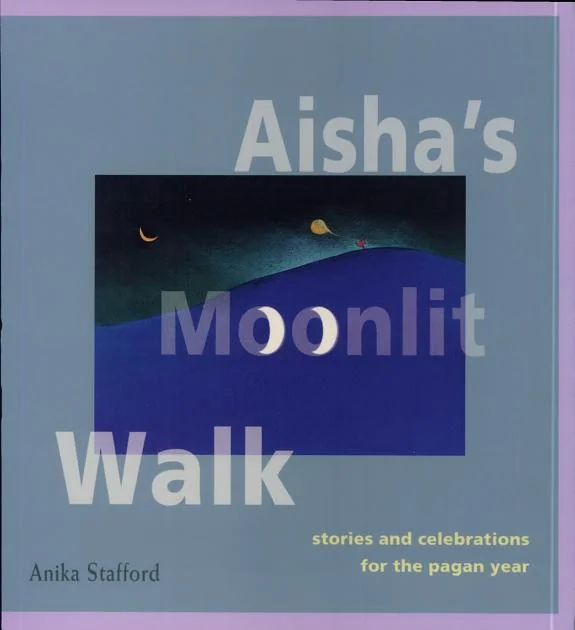
Aisha's Moonlit Walk
 83
83

Aisha's Moonlit Walk
Anika Stafford’s Aisha's Moonlit Walk offers a commendable depiction of Pagan holidays through the eyes of two families. Its strength lies in the integration of discussion guides and activities, making abstract concepts tangible for younger readers and their guardians. The narrative flows well, presenting festivals like Samhain and Yule not as mere dates on a calendar but as lived experiences. However, the book occasionally leans towards a simplified portrayal of complex traditions, which, while suitable for its target audience, might leave more seasoned practitioners wanting deeper theological or historical nuance. A particularly effective passage details the preparation for a Beltane bonfire, grounding the ritual in sensory details and collaborative effort. Ultimately, it functions effectively as a primer for introducing young families to nature-based spirituality.
📝 Description
83
Anika Stafford's 2005 book, Aisha's Moonlit Walk, recounts two families' Pagan holiday celebrations.
Aisha's Moonlit Walk, published in 2005 by Anika Stafford, details the experiences of two families as they observe various Pagan holidays. The book acts as a straightforward guide to seasonal celebrations and the core ideas of nature reverence and community spirit. It is particularly suited for families who want to practice Pagan traditions in a practical, active way. Stafford aimed this work at parents and children seeking materials that combine stories with educational exercises. This approach helps build a shared awareness of seasonal patterns and their related rituals. The book emphasizes themes of natural cycles, honoring natural events, and passing down generational knowledge within a spiritual framework. It focuses on 'sacred time' connected to solstices, equinoxes, and harvest festivals, presenting these as chances for families to connect and grow spiritually together.
Published in the early 21st century, Aisha's Moonlit Walk appeared as neo-paganism and earth-centered spirituality gained wider recognition beyond niche circles. Stafford’s book offered a gentle introduction for families during a time when accessible resources for these practices were scarce. It fit into a broader cultural conversation about religious diversity, providing a practical entry point for those interested in these traditions.
💡 Why Read This Book?
• You will learn practical methods for celebrating Pagan holidays by engaging with the specific discussion guides and activities designed for families, as detailed in sections covering holidays like Samhain and Yule. • You will gain an understanding of how to frame seasonal cycles as sacred time through the book's narrative, exemplified by the depiction of preparations for the Beltane bonfire. • You will experience the value of intergenerational knowledge transfer in spiritual practices, as demonstrated by the interactions between Aisha, Heather, and their families throughout the year.
⭐ Reader Reviews
Honest opinions from readers who have explored this book.
❓ Frequently Asked Questions
What Pagan holidays are discussed in Aisha's Moonlit Walk?
The book covers a range of Pagan holidays, including Samhain, Yule, and Beltane, presenting them through the lens of family celebrations and community gatherings.
Is Aisha's Moonlit Walk suitable for very young children?
Yes, the book is designed for families and includes discussion guides and activities, making it accessible for parents to share with children, fostering an early appreciation for nature-based spirituality.
What kind of activities are included in the book?
Activities are geared towards hands-on engagement with holiday themes, potentially including craft ideas, simple rituals, and discussion points related to the natural world and seasonal changes.
When was Aisha's Moonlit Walk first published?
Aisha's Moonlit Walk was first published in 2005, placing it within a period of increasing interest in accessible introductions to Paganism.
Who is the author of Aisha's Moonlit Walk?
The author is Anika Stafford, whose work aims to demystify and share Pagan traditions with a family audience.
Does the book provide historical background on the holidays?
While the focus is on contemporary family celebration, the book implicitly touches upon the historical significance of seasonal observances as it explains their connection to natural cycles.
🔮 Key Themes & Symbolism
Family Pagan Celebrations
The core of Aisha's Moonlit Walk revolves around the shared experiences of two families celebrating various Pagan holidays together. It emphasizes how these observances are woven into the fabric of family life, providing opportunities for connection, learning, and spiritual growth across generations. The narrative highlights the joy and communal spirit found in these traditions, showcasing how rituals and festivities become cherished memories.
Seasonal Cycles and Nature Worship
A significant theme is the deep connection to the Earth's cycles and the worship of natural phenomena. The book illustrates how Pagan holidays are intrinsically linked to the solstices, equinoxes, and harvest times, encouraging an appreciation for the natural world. It presents these cycles not just as astronomical events but as sacred periods that offer opportunities for reflection and spiritual attunement.
Educational Integration
Aisha's Moonlit Walk distinguishes itself by integrating educational components directly into the narrative. The inclusion of discussion guides and activities serves a dual purpose: to make the content accessible and engaging for younger audiences and to equip families with tools for deeper exploration. This approach transforms the book from a simple story into a practical resource for learning about Paganism.
Community and Belonging
The book fosters a sense of community and belonging, not only within the two families featured but also by extension to the reader. By depicting shared celebrations and mutual support, Stafford underscores the importance of collective spiritual practice. This theme highlights how traditions, when shared, strengthen bonds and create a supportive environment for exploring esoteric paths.
💬 Memorable Quotes
Direct passages from the work, attributed to the author.
“Aisha and Heather learned about the turning of the year through stories and songs.”
— This emphasizes the transmission of knowledge within the family unit, showing how Pagan traditions are passed down through oral tradition and engaging activities, connecting the children to the rhythm of the seasons.
“Samhain was a time to remember those who came before, lighting candles for their spirits.”
— This captures the essence of Samhain as a festival of remembrance and connection to ancestors, illustrating a core concept of honoring the past within the Pagan framework.
“Each holiday brought a new lesson about the earth and its magic.”
— This interpretation suggests that the book presents Pagan holidays as pedagogical tools, offering continuous learning opportunities about the natural world and its inherent spiritual qualities.
💡 Key Ideas
Editorial paraphrase of the work's core concepts — not direct quotes.
Preparing for Beltane meant gathering wood for the bonfire, each family bringing something special.
This passage highlights the collaborative spirit and shared effort involved in a significant Pagan ritual. It illustrates how community participation is central to the celebration, making the event a collective endeavor rather than an individual pursuit.
The families found joy in simple acts: making wreaths, sharing meals, and watching the stars.
This paraphrase points to the book's focus on the tangible, everyday aspects of Pagan celebration, showing that spirituality is often found in simple, shared activities and a connection to the cosmos.
🌙 Esoteric Significance
Tradition
While not explicitly tied to a single esoteric lineage like Hermeticism or Kabbalah, Aisha's Moonlit Walk aligns with the broader currents of modern Paganism and earth-centered spirituality. It draws from the cyclical worldview prevalent in many folk traditions and Neo-Pagan revivals, emphasizing nature, seasons, and community. Its approach is more devotional and experiential than strictly theoretical, fitting within a contemporary spiritual landscape that often synthesizes various ancient and modern practices.
Symbolism
The book likely employs symbols common to seasonal Paganism. The Moon, as suggested by the title, symbolizes lunar cycles, intuition, and the feminine divine, often associated with the goddess. Bonfires, particularly for Beltane, represent purification, solar energy, and the transition of seasons. The turning of the year itself, marked by solstices and equinoxes, symbolizes life, death, and rebirth, fundamental concepts in nature-based spiritualities.
Modern Relevance
In contemporary circles, works like Aisha's Moonlit Walk remain relevant for their focus on accessible, family-friendly spiritual education. They provide a foundational understanding for individuals and families drawn to modern Paganism, particularly those seeking practical ways to connect with seasonal cycles and nature worship outside of more structured or dogmatic religious frameworks.
👥 Who Should Read This Book
• Parents and guardians seeking to introduce children to Pagan holidays and nature-based spirituality in an age-appropriate, engaging manner. • Individuals new to Paganism looking for a gentle, narrative-driven primer that explains seasonal observances through relatable family experiences. • Educators or community leaders interested in resources for teaching about comparative religion or celebrating seasonal festivals with a focus on nature and community.
📜 Historical Context
Aisha's Moonlit Walk emerged in 2005, a period marked by the increasing visibility of Neo-Paganism in Western societies. Following the counterculture movements of the 1960s and 70s, and the subsequent academic attention from figures like Margot Adler, authors began to craft more accessible introductions to earth-centered spiritualities. Stafford’s work appeared as many were seeking alternatives to mainstream religions, and it catered to a growing demographic of families interested in exploring these paths together. While contemporary authors like Doreen Valiente were already establishing foundational texts for Wicca, Stafford focused on a more generalized, family-friendly approach to seasonal Pagan celebrations, distinct from specific initiatory traditions. The book’s publication coincided with a broader cultural dialogue on religious diversity, offering a gentle entry point for those unfamiliar with Paganism, without engaging directly with the more esoteric or academic debates of the time.
📔 Journal Prompts
Reflect on the significance of Aisha and Heather's family preparations for the Beltane bonfire.
Consider the role of storytelling in passing down traditions, as depicted in the book.
Analyze how the concept of 'sacred time' is illustrated through the various holidays.
Explore the symbolism of the moon in the context of the family's celebrations.
Document your own family's traditions and how they connect you to nature or community.
🗂️ Glossary
Pagan holidays
Festivals and observances rooted in pre-Christian European traditions, often celebrating the cycles of nature, the seasons, and agricultural rhythms.
Samhain
An ancient Celtic festival marking the end of the harvest season and the beginning of winter, often associated with honoring ancestors and the thinning veil between worlds.
Yule
A festival celebrated around the winter solstice, historically associated with the rebirth of the sun and often involving evergreens, feasting, and gift-giving.
Beltane
A festival celebrated around May 1st, marking the height of spring and the beginning of summer, traditionally associated with fertility, bonfires, and the union of masculine and feminine energies.
Seasonal cycles
The recurring pattern of changes throughout the year—spring, summer, autumn, winter—which are central to many nature-based spiritual traditions and influence rituals and celebrations.
Nature worship
A spiritual practice that venerates the natural world, seeing divinity or sacredness in natural phenomena, elements, and living beings.
Discussion guides
Sections within a book designed to prompt conversation and deeper thinking about the material presented, often used in educational or group settings.
This book appears in 1 collection
🔮 Readers Also Liked
Browse all →








From the “Neopaganism” Collection
View all →







More Free Witchcraft & Paganism Books
View all →