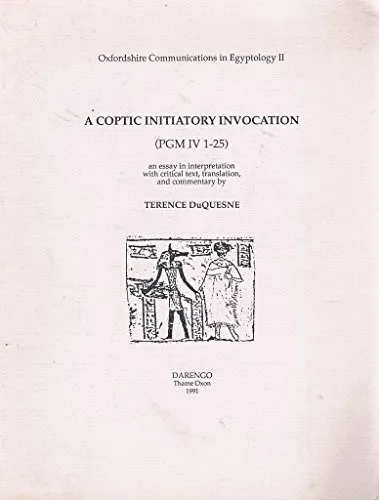
At the court of Osiris
 61
61

At the court of Osiris


Cassian Rothmann (Senior Critic, Ancient Wisdom) — Terence DuQuesne's 'At the Court of Osiris' is an indispensable key to unlocking the profound esoteric dimensions of Egyptian funerary practices. DuQuesne masterfully deciphers the complex symbolism embedded within these ancient rites, revealing a sophisticated cosmology of death and rebirth. His deep scholarship illuminates the transformative journey of the soul, offering practitioners and scholars alike a rare glimpse into potent magical traditions. This work is not merely an academic treatise but a vital guide for those seeking to understand the eternal quest for immortality and the hidden pathways to spiritual liberation within the Egyptian paradigm. A truly illuminating contribution to occult studies.
📝 Description
61
Terence DuQuesne's 'At the Court of Osiris' reconstructs Egyptian funerary rituals and cosmology.
This book examines the ancient Egyptian beliefs about death, rebirth, and the afterlife. DuQuesne details the rituals and incantations used to guide souls through the Duat, the Egyptian underworld. He draws upon ancient papyri and Coptic traditions to reconstruct these practices. The work also discusses the philosophical ideas behind Egyptian cosmology, including divine judgment and resurrection.
It aims to provide readers with an understanding of how ancient Egyptians conceptualized the transition from mortal life to eternal existence. The focus is on the magical and religious systems that informed their funerary practices and their worldview. The book presents this information for those interested in ancient religions and ceremonial magic.
This work fits within the study of ancient Egyptian religion and its esoteric traditions. It looks at the magical and spiritual practices surrounding death, which were central to Egyptian civilization. The book connects these practices to their broader cosmological views. It also acknowledges the continuity of some traditions into Coptic Egypt. The approach seeks to understand the inner meaning of these rites beyond simple historical description.
💡 Why Read This Book?
Embark on a profound journey into the heart of Egyptian esotericism. 'At the Court of Osiris' offers unparalleled insight into ancient funerary magic, resurrection beliefs, and the spiritual landscape of the afterlife. Ideal for seekers of hidden knowledge, scholars of ancient religions, and practitioners of ritual magic yearning for authentic wisdom.
⭐ Reader Reviews
Honest opinions from readers who have explored this book.
❓ Frequently Asked Questions
What ancient texts are central to this exploration?
The book heavily draws upon ancient Egyptian papyri, including funerary texts like the Book of the Dead and the Pyramid Texts, alongside Coptic manuscripts that preserve later phases of Egyptian religious and magical traditions.
Who is Osiris and why is he significant?
Osiris is a central deity in ancient Egyptian religion, representing the afterlife, the underworld, resurrection, and fertility. His myth and cult are fundamental to understanding Egyptian beliefs about death and eternal life.
What is the 'Duat'?
The Duat is the realm of the dead, the Egyptian underworld, which the deceased soul traverses during the night before being reborn with the sun each morning. It is a perilous journey filled with trials and divine encounters.
Does the book discuss practical magical applications?
While deeply rooted in historical and textual analysis, the book explores the magical principles and rituals used by ancient Egyptians for spiritual transformation and passage into the afterlife, offering insights for modern practitioners.
What is the connection between Coptic language and Egyptian magic?
Coptic is the final stage of the Egyptian language, written with Greek letters. Coptic texts often contain magical spells, incantations, and religious folklore that demonstrate the continuity and adaptation of ancient Egyptian beliefs into later periods.
🔮 Key Themes & Symbolism
The Egyptian Conception of the Afterlife
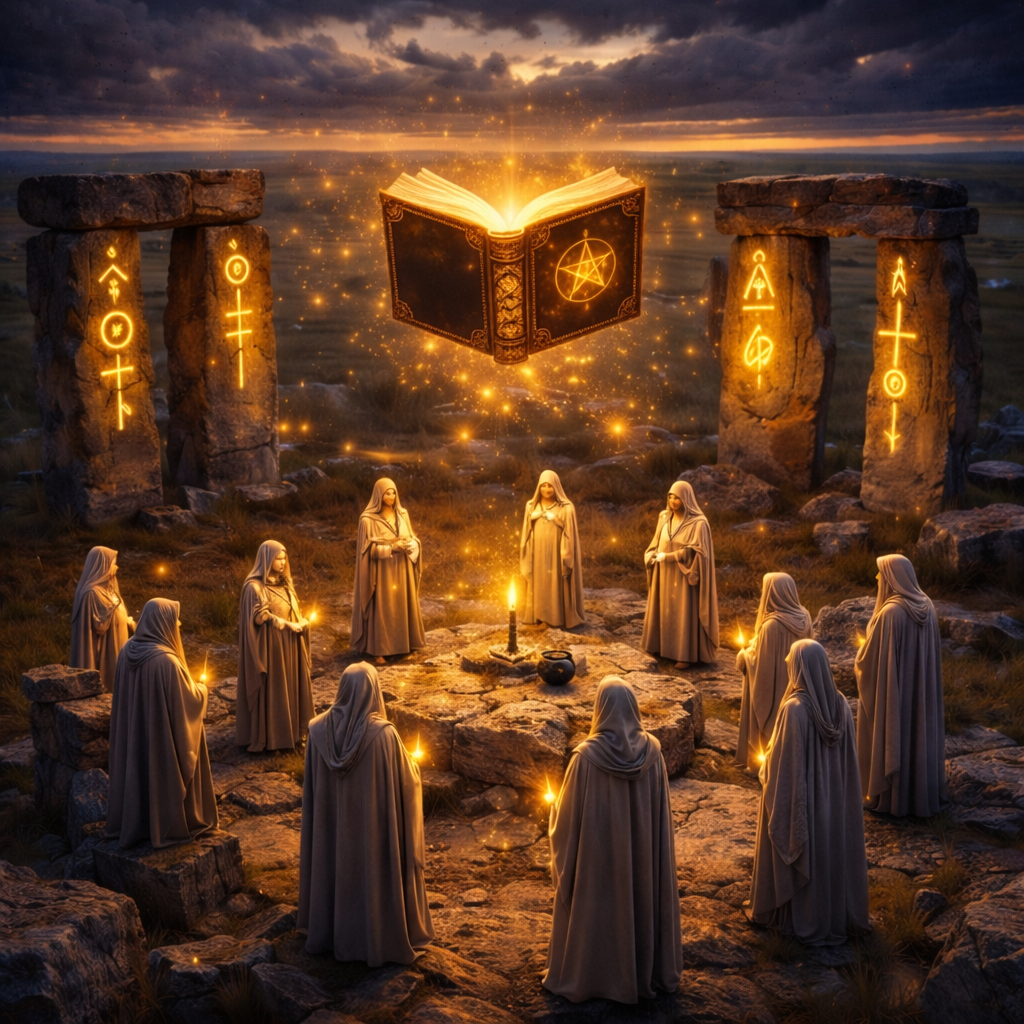
This theme examines the intricate collection of the ancient Egyptian belief system concerning the afterlife. It explores the journey of the soul through the perilous Duat, the divine judgment before Osiris, and the ultimate goal of achieving eternal life in the Field of Reeds. The book meticulously details the rituals, spells, and incantations designed to protect and guide the deceased, revealing a sophisticated cosmology that viewed death not as an end, but as a transition to a higher plane of existence, imbued with profound spiritual significance and magical efficacy.
Resurrection and the Transformative Power of Ritual
Central to Egyptian esotericism is the concept of resurrection, embodied by the myth of Osiris. This theme examines how funerary rites, embalming practices, and the recitation of sacred texts were not mere ceremonies, but potent acts of magical transformation. The book illustrates how these rituals aimed to facilitate the deceased's spiritual rebirth, reconstituting their being and ensuring their eternal existence. It highlights the dynamic interplay between the physical body, the spiritual essence (Ka, Ba, Akh), and the divine forces that orchestrated this miraculous rebirth.
The Esoteric Wisdom of Egyptian Papyri
This theme focuses on the invaluable insights gleaned from ancient Egyptian papyri, particularly funerary texts. DuQuesne's work deciphers the hidden meanings and esoteric doctrines embedded within these sacred documents. It reveals how these papyri served as magical guidebooks, providing the knowledge necessary to read through the afterlife and appease the gods. The exploration extends to the influence of Coptic traditions, showcasing the enduring legacy of Egyptian magical and religious thought through subsequent historical periods and linguistic shifts.
💬 Memorable Quotes
Direct passages from the work, attributed to the author.
“Death is but the threshold to a more profound awakening.”
— Highlights the Egyptian perspective of death as a transition, a portal to a higher state of consciousness and eternal existence, rather than an absolute cessation.
“Osiris, the resurrected king, offers the promise of eternal life to all who seek him.”
— Emphasizes the central role of Osiris as the divine exemplar of resurrection and the benevolent deity who bestows the gift of immortality upon the worthy.
“The spells are keys, the rituals are the paths, leading to the divine court.”
— Illustrates the practical, magical aspect of Egyptian funerary practices, where specific incantations and ceremonies were tools for spiritual navigation and access to the divine realms.
“To know the names is to possess the power.”
— Reflects the ancient magical principle that knowledge of divine names and their associated powers was crucial for influencing spiritual forces and achieving desired outcomes.
💡 Key Ideas
Editorial paraphrase of the work's core concepts — not direct quotes.
The soul's journey is a cosmic drama, played out in the halls of judgment.
This quote expresses the belief that the passage through the afterlife was not passive but an active, divinely orchestrated event, fraught with spiritual significance and requiring preparation.
🌙 Esoteric Significance
Tradition
This work is deeply embedded within the esoteric tradition of Hermeticism and ancient Egyptian magic. It explores a lineage of thought that views the material world as a reflection of divine principles and emphasizes the potential for human transformation through gnosis and ritual. The Egyptian system, with its intricate pantheon, complex cosmology, and focus on the soul's journey, offered a powerful framework for understanding spiritual evolution and achieving union with the divine, influencing later mystical and magical systems across the Mediterranean and beyond.
Symbolism
The symbolism within 'At the Court of Osiris' is rich and complex. Key symbols include the Ankh (life), the Djed pillar (stability, resurrection), the Eye of Horus (protection, healing), and the scarab beetle (rebirth, transformation). The Duat itself is a profound symbolic landscape representing the challenges and purification necessary for spiritual rebirth. The judgment scene before Osiris symbolizes the weighing of the heart against the feather of Ma'at (truth and justice), representing the ethical and spiritual integrity required for eternal life. These symbols are not mere decorative elements but potent keys to understanding the Egyptian worldview and its magical practices.
Modern Relevance
In an age often characterized by materialism and existential uncertainty, the ancient Egyptian focus on eternal life and spiritual transformation offers profound relevance. 'At the Court of Osiris' provides seekers with a framework for contemplating their own mortality and the potential for spiritual continuity. For practitioners of Western esotericism, it offers authentic source material for understanding the roots of magical traditions and the universal human quest for meaning and transcendence, demonstrating that the desire for spiritual fulfillment is an enduring aspect of the human condition.
👥 Who Should Read This Book
This book is a treasure for a diverse audience. For the **curious beginner**, it offers an accessible yet profound introduction to the mystical dimensions of ancient Egypt, explaining complex beliefs. **Scholars** of Egyptology and comparative religion will find DuQuesne's meticulous research and unique interpretations useful for their academic pursuits. **Spiritual seekers** yearning for deeper insights into life, death, and the nature of existence will be captivated by the profound philosophical and spiritual underpinnings. **Practitioners of ceremonial magic** will discover authentic rituals and potent symbolism, enriching their understanding and practice of ancient magical arts.
📜 Historical Context
Terence DuQuesne's "At the Court of Osiris" emerges from a rich scholarly tradition dedicated to deciphering the esoteric dimensions of ancient Egyptian civilization. The book engages with a period that spans millennia, from the Old Kingdom's Pyramid Texts to the later Ptolemaic and Roman periods, where Egyptian religion intertwined with Hellenistic and Coptic traditions. This era was marked by a profound focus on the afterlife, driven by the Nile's cyclical inundation and the Egyptians' deep-seated desire for continuity and immortality. The development of complex funerary rituals, elaborate tomb constructions, and sophisticated theological doctrines reflects a society deeply preoccupied with cosmic order and the spiritual fate of the individual. The preservation of these beliefs through papyri and monumental inscriptions provides a unique window into a worldview that sought to master death through divine favor and magical knowledge.
📔 Journal Prompts
Reflect on a personal symbol that represents your journey through life's challenges. How might this symbol be interpreted within an ancient Egyptian context?
Consider the concept of 'resurrection' in your own life. What forms of spiritual or personal rebirth have you experienced or do you aspire to?
Imagine you are preparing for a journey through an unknown realm. What knowledge, tools, or spiritual companions would you seek to ensure a safe passage?
How does the ancient Egyptian emphasis on cosmic order and divine judgment resonate with your own ethical framework and understanding of universal laws?
Meditate on the concept of 'eternal life' as presented in the book. What does this concept mean to you on a personal and spiritual level?
🗂️ Glossary
Duat
The ancient Egyptian underworld or area of the dead, a mystical landscape through which the soul journeys after death, facing trials and judgment.
Osiris
The Egyptian god of the afterlife, the underworld, resurrection, and fertility. His death and resurrection myth is central to Egyptian beliefs about eternal life.
Ka
A vital spiritual component of the ancient Egyptian soul, often translated as 'life force' or 'double,' which required sustenance in the afterlife.
Ba
Another spiritual component, often depicted as a human-headed bird, representing the personality and mobility of the soul, able to move between the tomb and the living world.
Akh
The transfigured, glorified spirit of the deceased, achieved after successful passage through the underworld and judgment, capable of interacting with the divine.
This book appears in 3 collections
🔮 Readers Also Liked
Browse all →





More by Terence DuQuesne
All books →
From the “Ritual Magic” Collection
View all →






More Free Magic & Ritual Books
View all →