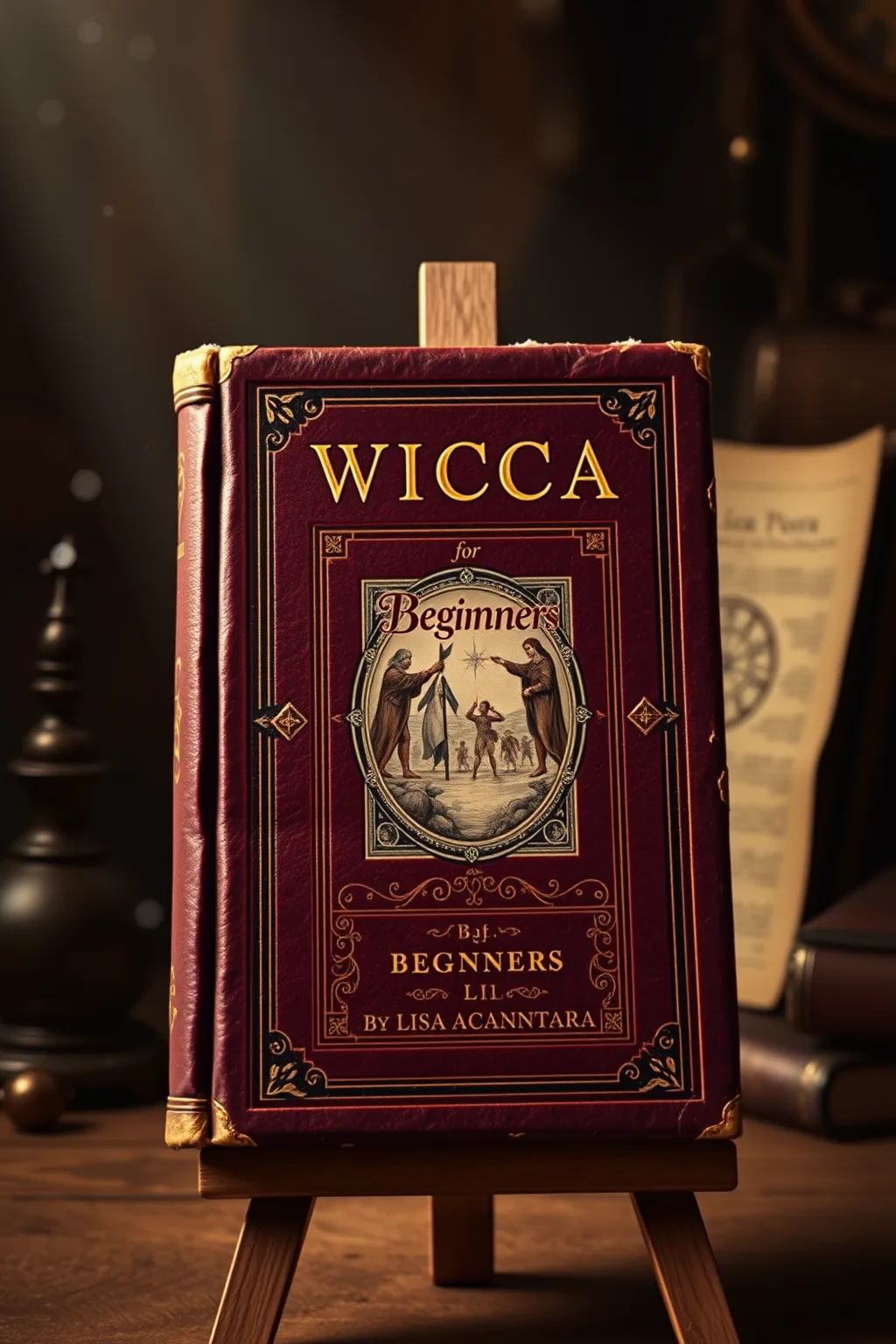
Wicca for Beginners
 62
62

Wicca for Beginners


Silas Hawthorne, Hermetic Studies Editor: Lisa Alcantara's 'Wicca for Beginners' serves as an exceptional primer for those drawn to the revitalized ancient ways. Her approach is both accessible and deeply respectful of the tradition, illuminating the core tenets of Wicca with clarity and grace. The book skillfully navigates the essential elements of ritual, the Wheel of the Year, and ethical considerations, offering practical guidance without sacrificing esoteric depth. Alcantara's ability to translate arcane concepts into actionable wisdom makes this an invaluable resource for the aspiring witch, the curious scholar, and anyone seeking a spiritual path rooted in nature's embrace. A truly illuminating introduction.
📝 Description
62
Lisa Alcantara's 'Wicca for Beginners' was published in 2010.
This book introduces the core tenets of Wicca for individuals new to the practice. It covers fundamental concepts such as the principles of magic, the structure of rituals, and the balance of divine masculine and feminine energies. The author aims to make these ideas accessible, showing how they relate to the natural world and its cycles. Readers will find guidance on cultivating personal power and developing a connection with the universe. The text also touches on ethical living and developing psychic awareness.
The book serves as a starting point for those interested in earth-centered spirituality. It explains how to engage with the cycles of the Earth and encourages a life guided by intention. Alcantara's approach is designed to demystify Wiccan practices, presenting them as a path to self-discovery and a more harmonious existence. It is written for the beginner, aiming to provide clear instruction without overwhelming the reader.
As an introduction to Wicca, this book fits within the broader category of modern Pagan and nature-based spiritual traditions. It draws from established Wiccan practices that emphasize reverence for nature, the divine feminine and masculine, and the use of ritual and magic for personal growth and connection to the cosmos. It aims to present these elements in a way that is understandable to those unfamiliar with esoteric paths, situating Wicca as a living tradition connected to the Earth's cycles.
💡 Why Read This Book?
This book is an essential first step for anyone sensing a call to the Craft. It provides a safe and insightful entry point into the world of Wicca, demystifying its core principles and practices. If you're a seeker yearning for a deeper connection to nature, spiritual growth, or a more intentional way of living, 'Wicca for Beginners' offers the foundational knowledge and encouragement you need to begin your sacred journey.
⭐ Reader Reviews
Honest opinions from readers who have explored this book.
❓ Frequently Asked Questions
What is Wicca?
Wicca is a modern, nature-based spirituality that reveres the divine in both its masculine and feminine aspects, often honoring a God and Goddess. It emphasizes ethical living, personal responsibility, and a deep connection to the Earth's cycles and energies.
Is Wicca a religion?
Yes, Wicca is recognized as a religion by many, though it is diverse and decentralized. It offers a spiritual path for its adherents, focusing on personal experience, ritual, and a reverence for nature, rather than dogma or rigid doctrine.
Do Wiccans worship Satan?
No, Wiccans do not worship Satan. The concept of Satan is largely absent from Wiccan theology. Their reverence is directed towards the divine forces of nature and the archetypal God and Goddess.
What are the basic practices in Wicca?
Basic practices include celebrating the Sabbats (seasonal festivals) and Esbats (full moon rituals), casting spells with ethical intent, meditation, divination, and developing a personal relationship with the divine and the natural world.
Can anyone practice Wicca?
Yes, Wicca is an open path. While traditions and lineages exist, many individuals learn and practice independently, guided by principles of respect, personal growth, and harmony with nature.
🔮 Key Themes & Symbolism
The Sacredness of Nature
This book profoundly explores the Wiccan worldview where nature is not merely a backdrop but a living, breathing entity imbued with divine energy. It studies the cycles of the seasons, the power of the elements (Earth, Air, Fire, Water), and the inherent magic present in the natural world. Readers are encouraged to develop a deep, reciprocal relationship with the Earth, understanding its rhythms and honoring its bounty. This theme fosters a sense of stewardship and interconnectedness, vital for any aspiring practitioner seeking authentic spiritual grounding.
The Divine Duality
A core part of Wicca is the reverence for the Divine as both masculine and feminine, often symbolized by the God and Goddess. Alcantara illuminates this duality, explaining how these archetypes represent complementary forces of creation, destruction, and renewal. Understanding this balance is crucial for comprehending Wiccan cosmology and ritual. It encourages practitioners to recognize and integrate these energies within themselves and the world, fostering wholeness and a more nuanced perception of the sacred.
Intentional Magic and Ethical Practice
The book clarifies the practice of magic, framing it as the art of directing energy with focused intent for positive change. Alcantara emphasizes the ethical underpinnings of Wiccan magic, particularly the Wiccan Rede: 'An it harm none, do what ye will.' This principle guides practitioners to use their power responsibly, ensuring that their actions bring no harm to themselves or others. The focus is on personal empowerment, manifestation, and fostering harmony rather than manipulation.
💬 Memorable Quotes
Direct passages from the work, attributed to the author.
“Magic is the art of knowing, and the will to do.”
— This expresses the essence of Wiccan magic: it requires both intuitive understanding and the focused intention to manifest desired outcomes ethically and responsibly.
“In every leaf, a whispered secret.”
— This evokes the hidden wisdom and subtle magic found within the natural world, encouraging the reader to be observant and attuned to the spiritual messages present in their surroundings.
“The Goddess smiles upon those who honor her creation.”
— This speaks to the benevolent nature of the Divine Feminine in Wicca and the reciprocal relationship of respect and reverence that fosters spiritual blessings and connection.
“The circle is a sacred space, a bridge between worlds.”
— This illustrates the symbolic and functional importance of ritual space in Wicca, defining it as a liminal zone for connecting with the divine, inner self, and unseen energies.
💡 Key Ideas
Editorial paraphrase of the work's core concepts — not direct quotes.
The earth breathes, and we breathe with her.
This quote highlights the fundamental Wiccan principle of interconnectedness with nature, emphasizing a symbiotic relationship where human life is intrinsically linked to the planet's vitality.
🌙 Esoteric Significance
Tradition
Wicca draws heavily from Neopaganism, a broad category of spiritual paths rooted in pre-Christian European traditions. It incorporates elements of folk magic, shamanism, and ceremonial practices, reinterpreting them through a modern lens. The emphasis on the Goddess, the God, and nature-based cycles places it firmly within traditions that seek to reconnect humanity with the immanent divine present in the cosmos and the Earth.
Symbolism
Key symbols include the Pentacle (representing the five elements and spirit), the Triple Moon (symbolizing the Maiden, Mother, and Crone aspects of the Goddess), and the Wheel of the Year (marking the eight major festivals and the Earth's cycles). These symbols are not merely decorative but serve as focal points for meditation, ritual, and understanding the interconnectedness of life, death, and rebirth.
Modern Relevance
In an era often characterized by disconnection from nature and spiritual materialism, Wicca offers a potent antidote. Its focus on ecological awareness, personal empowerment, and ethical living resonates deeply with contemporary concerns. The emphasis on self-discovery and the inherent divinity within each individual provides a framework for navigating modern life with intention, mindfulness, and a profound sense of belonging to the greater web of existence.
👥 Who Should Read This Book
This book is an indispensable companion for the nascent spiritual seeker, particularly those feeling a pull towards nature-based practices and earth-centered spirituality. It is ideal for absolute beginners who have little to no prior knowledge of Wicca, providing a clear and non-intimidating introduction. Scholars of comparative religion and esoteric traditions will find it a valuable case study in modern pagan revivalism. For practitioners of other paths seeking to broaden their understanding or incorporate elements of earth magic, it offers foundational insights. Ultimately, anyone yearning for a more intentional, connected, and magically infused life will find profound guidance within its pages.
📜 Historical Context
Emerging into prominence in the mid-20th century, Wicca represents a fascinating revival and reinterpretation of ancient pagan traditions. Influenced by the anthropological works of Margaret Murray, early figures like Gerald Gardner sought to reconnect with perceived pre-Christian earth-centered spiritualities. This period, marked by a burgeoning interest in the esoteric, counterculture movements, and a growing dissatisfaction with established religious norms, provided fertile ground for Wicca's growth. The book's accessibility reflects a broader societal shift towards personal spirituality and a desire for practices that honor the natural world and empower the individual. It stands as a proof of the enduring human quest for meaning and connection beyond the material.
📔 Journal Prompts
Reflect on your earliest memories of feeling a connection to nature. What emotions or insights arise?
Consider the concept of the God and Goddess. How do these archetypal energies manifest in your life?
Write about a time you felt a strong sense of personal power. What were the circumstances, and how did you harness that energy?
Describe the natural environment closest to you. What do you observe about its cycles, its inhabitants, and its 'spirit'?
If you were to cast a spell for positive change in your life, what would be your intention, and how would you ensure it aligns with the principle of 'harm none'?
🗂️ Glossary
Wiccan Rede
A central ethical guideline in Wicca, famously stating: 'An it harm none, do what ye will.' It emphasizes personal freedom coupled with the responsibility to avoid causing harm to oneself or others.
Sabbat
One of the eight major seasonal festivals celebrated in Wicca, marking significant points in the Earth's annual cycle, such as Samhain, Yule, and Beltane.
Esbat
Rituals or celebrations held during the full moon, often seen as a time of heightened lunar energy and potency for magic and divination.
Pentacle
A five-pointed star, typically enclosed within a circle. It symbolizes the five elements (Earth, Air, Fire, Water, Spirit) and is often used as a protective symbol or altar adornment.
Coven
A group of Wiccans, traditionally numbering thirteen, who gather for ritual and mutual support. While covens are common, solitary practice is also widely accepted.
This book appears in 2 collections
🔮 Readers Also Liked
Browse all →









From the “Ritual Magic” Collection
View all →






More Free Magic & Ritual Books
View all →