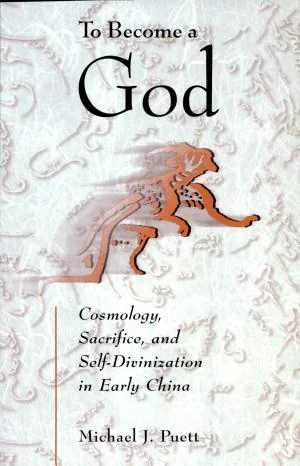
To Become a God
 73
73

To Become a God
Puett's examination of early Chinese discourse on divinity is a scholarly triumph, cutting through centuries of accumulated interpretation to reveal a vibrant intellectual debate. The strength of "To Become a God" lies in its granular analysis of textual evidence, demonstrating how concepts of human potential and divine power were contested and redefined. The work is particularly adept at showcasing the shift from propitiatory rituals to aspirational transcendence. A limitation, perhaps inherent in its academic focus, is that the dense scholarly apparatus might prove challenging for the casual reader. The detailed exploration of Western Han memorials, for instance, while illuminating, demands sustained attention. However, the clarity with which Puett presents the contrasting poles of the human-divine relationship—one of separation and appeasement, the other of potential assimilation—makes the core argument accessible and compelling. It offers a vital corrective to monolithic understandings of ancient Chinese spirituality.
📝 Description
73
Michael J. Puett's 2002 book examines a core debate in early Chinese thought: can humans become gods?
Michael J. Puett's "To Become a God" investigates a central debate in early Chinese thought about the relationship between humans and the divine. The book analyzes evidence from Shang dynasty oracle bones to Western Han imperial memorials. It traces a persistent discussion on whether the human and divine were separate, requiring appeasement through divination and sacrifice, or interconnected, offering a path for humans to achieve divinity and influence.
The period covered, from the Shang Dynasty (c. 1600–1046 BCE) to the Western Han Dynasty (206 BCE–9 CE), was a critical time for Chinese intellectual and religious development. This era saw shifts from direct communication with spirits and ancestors toward more structured philosophical and cosmological systems. The rise of Confucianism and Daoism during this time significantly shaped understandings of the divine and human potential. Puett's work highlights how these ideas were applied in governance and social order, using texts like imperial memorials as evidence.
This book engages with the long tradition of seeking transcendence and power within early Chinese religious and philosophical systems. It examines how ancient Chinese thinkers conceptualized the possibility of human beings achieving divine status or cosmic influence, a theme present in various historical and religious texts. The work situates these debates within the specific historical context of the Shang and Han dynasties, showing how beliefs about the divine and human potential were articulated and utilized in governance and societal structure.
💡 Why Read This Book?
• Grasp the ancient Chinese debate on human divinity by analyzing evidence from Shang oracle bones, understanding how early thinkers viewed the potential for human transcendence versus divine separation. • Explore the role of ritual and sacrifice in early China, as detailed in the examination of practices aimed at appeasing or influencing gods during the Western Han period. • Understand the philosophical underpinnings of cosmological control, as the book investigates claims that humans could achieve divinity and thereby influence the cosmos.
⭐ Reader Reviews
Honest opinions from readers who have explored this book.
❓ Frequently Asked Questions
What historical periods does Michael J. Puett's "To Become a God" primarily focus on?
The book centers on early China, specifically examining evidence from the Shang Dynasty (c. 1600–1046 BCE) through the Western Han Dynasty (206 BCE–9 CE), a crucial era for the development of Chinese thought and religion.
What was the central debate discussed in "To Become a God"?
The core debate revolves around the relationship between humans and gods: whether they were separate and adversarial, requiring appeasement, or interconnected, with humans capable of achieving divinity.
What types of evidence does Puett use to support his arguments?
Puett draws upon a range of primary sources, including inscriptions on Shang oracle bones and memorials submitted to Western Han emperors, to reconstruct this ancient intellectual discourse.
Does the book argue that humans in ancient China believed they could literally become gods?
The work explores the *debate* surrounding this possibility, presenting arguments that humans *could* achieve divinity and influence the cosmos, rather than asserting a universal belief.
Who would benefit most from reading "To Become a God"?
Scholars of early Chinese religion and philosophy, comparative religion students, and anyone interested in the historical evolution of cosmological ideas and the human place within them will find this book valuable.
What is the significance of the Western Han Dynasty in this context?
The Western Han period is significant as it saw the submission of memorials to emperors, indicating that these debates about divinity and human potential were relevant to statecraft and political ideology.
🔮 Key Themes & Symbolism
Divine-Human Separation
This theme addresses the ancient Chinese perspective where the human and divine realms were viewed as distinct and often antagonistic. The work details how this viewpoint necessitated specific practices, such as divination to discern divine will and sacrifices to appease or influence the gods. Evidence from Shang oracle bones illustrates the direct engagement with spiritual forces, reflecting a world where maintaining balance between these spheres was paramount for societal order and individual well-being.
Potential for Human Divinity
Contrasting with the separationist view, this theme examines the belief that humans could achieve divine status. The book explores texts, including memorials to Western Han emperors, that articulate this aspirational perspective. It suggests that through specific practices, knowledge, or perhaps inherent potential, individuals could transcend their mortal limitations and gain a measure of control over the cosmos. This concept challenges notions of fixed divine authority and introduces a human-centric element into cosmology.
Cosmic Control and Agency
Central to the debate is the question of who, or what, holds sway over the universe. The theme of cosmic control investigates the implications of both divine authority and human aspiration. If gods are separate, their will must be managed; if humans can become divine, they gain agency. This dynamic reflects a profound engagement with questions of power, destiny, and the human capacity to shape reality, moving beyond passive acceptance towards active participation in cosmic order.
Ritual and Governance
The book links these cosmological debates to practical applications, particularly in governance during the Western Han Dynasty. Memorials submitted to emperors often addressed the proper relationship with the divine, influencing state rituals, political legitimacy, and social stability. Understanding the prescribed methods of communication—whether through divination, sacrifice, or the pursuit of divine emulation—reveals how abstract religious and philosophical ideas were integrated into the functioning of the state.
💬 Memorable Quotes
Direct passages from the work, attributed to the author.
“Evidence from Shang oracle bones to memorials submitted to Western Han emperors attests to a long-lasting debate in early China over the proper relationship between humans and gods.”
— This foundational statement sets the stage, highlighting the historical depth and textual basis for the core inquiry into divine-human interaction in ancient China.
“One pole of the debate saw the human and divine realms as separate and agonistic and encouraged divination to determine the will of the gods and sacrifices to appease and influence them.”
— This describes the adversarial view, emphasizing ritualistic approaches designed to manage a perceived gulf between mortals and deities through specific propitiatory practices.
“The opposite pole saw the two realms as related and claimed that humans could achieve divinity and thus control the cosmos.”
— This expresses the transformative perspective, suggesting a fluid boundary where human beings could attain divine status and exert influence over universal forces.
“This work examines the intellectual currents shaping early Chinese understandings of transcendence and cosmic order.”
— This interpretation highlights the book's focus on the philosophical and religious ideas that defined the ancient Chinese worldview regarding humanity's place in the universe.
“The debate involved how humans should interact with the divine: through appeasement or aspiration.”
— This concise summary captures the essence of the central tension explored: whether the path to divine favor lay in submission and ritual, or in the pursuit of achieving divine qualities.
🌙 Esoteric Significance
Tradition
While "To Become a God" primarily engages with historical and philosophical texts from early China, its exploration of humans achieving divinity and controlling the cosmos touches upon universal esoteric themes. It aligns with concepts found in Hermeticism, Gnosticism, and various shamanistic traditions that posit the potential for human apotheosis or direct communion with the divine. The work departs from Western esoteric lineages by analyzing these ideas within a distinct cultural and historical framework, offering a non-Western perspective on transcendence and spiritual attainment.
Symbolism
The book implicitly engages with symbols of power and transcendence prevalent in early Chinese thought. The oracle bones themselves are potent symbols of communication between worlds, representing a direct link to the divine will. The concept of achieving divinity can be seen as a symbolic aspiration for ultimate knowledge, control, and liberation from mortal constraints. The emperor, as a figure who mediates between heaven and earth, also embodies the potential for human connection to the divine, symbolizing the ideal ruler who embodies cosmic order.
Modern Relevance
Contemporary thinkers in comparative religion, philosophy of mind, and those exploring consciousness studies can draw parallels from "To Become a God." The book's examination of human potential for transcendence and self-transformation appeals to modern self-help movements, transhumanist thought, and contemporary spiritual practices that emphasize personal empowerment and the cultivation of inner divinity. Scholars of mythology and comparative mysticism find value in understanding these ancient Chinese concepts as part of a global discourse on humanity's relationship with the sacred and the ultimate nature of reality.
👥 Who Should Read This Book
• Scholars of early Chinese history and religion seeking a deep dive into the intellectual debates surrounding divinity and human potential. • Students of comparative philosophy and mythology interested in understanding non-Western perspectives on transcendence and cosmic order. • Readers fascinated by the historical evolution of religious thought and the ways ancient societies conceptualized the relationship between the human and the divine.
📜 Historical Context
The intellectual field of early China, particularly during the Shang (c. 1600–1046 BCE) and Western Han (206 BCE–9 CE) dynasties, was a fertile ground for profound debates on cosmology and the human condition. "To Become a God" situates itself within this dynamic period, a time when foundational philosophical and religious systems were solidifying. The Shang dynasty's reliance on oracle bone divination reveals a direct engagement with the spiritual world, while the Western Han saw the integration of these concerns into imperial ideology and governance, as evidenced by memorials submitted to emperors. This era witnessed the rise of schools of thought like Confucianism, which emphasized social order and ethical conduct, and Daoism, which explored naturalness and transcendence. Puett’s work engages with this intellectual milieu by focusing on a specific, yet crucial, debate concerning human potential and divine interaction, demonstrating how these ideas were contested and evolved.
📔 Journal Prompts
The debate between divine-human separation and relation, as presented in the work.
The implications of achieving divinity for human agency and cosmic control.
The function of divination and sacrifice in early Chinese religious practice.
The evidence from Shang oracle bones regarding human-divine interaction.
Memorials submitted to Western Han emperors concerning the divine realm.
🗂️ Glossary
Shang Oracle Bones
Scapulae of oxen or plastra of turtles inscribed with questions for divination, used in ancient China during the Shang Dynasty (c. 1600–1046 BCE). They provide crucial early evidence of Chinese writing and religious beliefs.
Western Han Dynasty
The first phase of the Han Dynasty in China, ruling from 206 BCE to 9 CE. This period was significant for political consolidation, economic development, and intellectual flourishing, including the formalization of state ideology.
Divination
The practice of seeking knowledge of the future or the unknown by supernatural means. In early China, this often involved interpreting the cracks on heated oracle bones or other ritualistic methods.
Sacrifice
An act of offering something to a deity or supernatural power, typically for appeasement, atonement, or to gain favor. In early China, sacrifices involved animals, food, and other valuable items.
Agonistic
In this context, referring to a relationship characterized by struggle, conflict, or opposition. The debate describes the human and divine realms as potentially adversarial.
Cosmos
The universe seen as a well-ordered whole. In early Chinese thought, maintaining the harmony of the cosmos was often linked to the proper relationship between humanity, nature, and the divine.
Memorials
Formal written petitions or reports submitted to a superior, particularly in the context of imperial China. Those submitted to Western Han emperors often discussed matters of state, policy, and religious affairs.
This book appears in 1 collection
🔮 Readers Also Liked
Browse all →









From the “Divination” Collection
View all →
![CIA Reading Room cia-rdp84-00022r000200150084-5: ORIENTATION COURSE LECTURE ON 'SERVICES OF [ ] [ ]'](/img/thumb/cia-reading-room-cia-rdp84-00022r000200150084-5-orientation-course-lecture-on-services-of-cia-reading-room.webp)





More Free Occult Philosophy Books
View all →