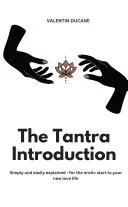
The Tantra Introduction Simply and easily explained - for the erotic start to your new love life
 74
74

The Tantra Introduction Simply and easily explained - for the erotic start to your new love life
Valentin Ducane's "The Tantra Introduction" tackles the often-misunderstood subject of Tantra with commendable clarity, aiming to demystify it for a Western audience. Its strength lies in its straightforward language, stripping away esoteric jargon to present practical applications for enhancing erotic life. Ducane’s accessible style is particularly effective in his explanation of mindful touch, which avoids sensationalism and focuses on genuine connection. However, the book's brevity, while a virtue for beginners, might leave those with prior knowledge seeking more depth. A limitation is the occasional oversimplification of complex philosophical underpinnings, particularly concerning its origins in ancient Indian traditions. The chapter on "Awakening Sensual Energy" offers a particularly concrete example of how to integrate breath and presence, a key takeaway for many readers. Ultimately, this introduction serves as a gentle, effective primer for those curious about exploring Tantra's potential for a richer love life.
📝 Description
74
Valentin Ducane's 2025 book simplifies Tantra for a more fulfilling love life.
Valentin Ducane's "The Tantra Introduction" presents Tantra as a practical method for deepening intimacy and sexual fulfillment. The book aims to clarify its core principles for those unfamiliar with the tradition. Ducane frames Tantra as a way to improve connection through mindful awareness and conscious engagement with sensuality. It focuses on techniques that can be applied in daily life, helping individuals and couples build a more vibrant love life.
This guide is specifically for newcomers to Tantric philosophy and practice, especially those wanting to enhance romantic or sexual relationships. It suits anyone interested in exploring eroticism beyond typical limits, fostering stronger emotional bonds, and approaching intimacy with more mindfulness. Ducane's approach works for both solitary practice and partnered exploration, offering guidance for a wide audience seeking an accessible entry into this subject.
The practices discussed have roots in Indian traditions, with Tantra developing as a distinct lineage around the Gupta Empire. While often misunderstood, Tantra involves practices like meditation and yoga to harness energy for spiritual and worldly aims. Ducane's work engages with a modern interpretation of these teachings, influenced by Western interest in Eastern spiritualities that grew in the mid-20th century.
💡 Why Read This Book?
• You will learn how to integrate mindful presence into sexual encounters, transforming them into opportunities for deeper connection, as explained in the section on "Conscious Touch." • You will gain practical techniques for enhancing eroticism through breathwork and sensory awareness, drawing on principles introduced by Ducane in his accessible guide to Tantric fundamentals. • You will discover how to perceive and honor divine energies in your partner and yourself, fostering a more spiritual and fulfilling approach to intimacy, a concept central to the book's Tantric philosophy.
⭐ Reader Reviews
Honest opinions from readers who have explored this book.
❓ Frequently Asked Questions
What is the primary goal of "The Tantra Introduction" by Valentin Ducane?
The primary goal is to provide a simple, easy-to-understand introduction to Tantra for beginners, focusing on how it can enrich erotic life and foster deeper connection in relationships.
Is this book suitable for people who are new to Tantra?
Yes, it is explicitly designed for beginners. Valentin Ducane avoids complicated jargon and offers clear explanations of fundamental Tantric concepts for an erotic start to love life.
Can "The Tantra Introduction" be used by individuals as well as couples?
Absolutely. The book offers guidance for both solo exploration and partnered practice, enabling readers to rediscover eroticism and connection regardless of their relationship status.
When was "The Tantra Introduction" by Valentin Ducane first published?
The book was first published on April 11, 2025, making it a contemporary guide to Tantric principles for modern relationships.
What kind of practices does the book suggest for enhancing love life?
It suggests practices focused on mindfulness, conscious touch, breathwork, and re-discovering eroticism. The aim is to cultivate deeper emotional and physical connection.
Does the book explain the historical origins of Tantra?
While focusing on practical application, the book touches upon the ancient Indian roots of Tantra and how its principles can be understood in a modern context.
🔮 Key Themes & Symbolism
Mindful Eroticism
This theme explores how to bring conscious awareness to sexual experiences, moving beyond mechanical performance to a place of deep sensory engagement. Ducane emphasizes that true eroticism is amplified by presence, allowing individuals to fully inhabit their bodies and connect with their partners on multiple levels. It's about transforming sex into a sacred practice, fostering intimacy and pleasure through focused attention and deliberate sensation, rather than simply a physical release.
Connection Beyond the Physical
The book posits that Tantra offers a pathway to profound connection that transcends mere physical intimacy. By practicing mindfulness and conscious communication, individuals can develop a deeper understanding of themselves and their partners. This theme highlights how Tantric principles encourage seeing the divine in one's beloved, fostering emotional resonance, trust, and a sense of sacred union that enriches the relationship holistically.
Accessible Spiritual Growth
Ducane presents Tantra as a spiritual discipline that is not confined to asceticism or complex rituals. Instead, it's framed as a practical approach to personal growth that can be integrated into everyday life, particularly within the context of romantic relationships. This theme focuses on how the book explains spiritual concepts, making them actionable for anyone seeking self-discovery and a more meaningful existence through their intimate connections.
Rediscovering Sensuality
A central focus is on reawakening and appreciating one's sensual nature. The book guides readers to explore their senses with renewed curiosity, encouraging them to find pleasure and connection in touch, breath, and presence. It advocates for a holistic approach to sensuality, emphasizing its role in fostering vitality, joy, and deeper intimacy within oneself and with a partner, moving away from societal conditioning.
💬 Memorable Quotes
Direct passages from the work, attributed to the author.
“What is Tantra really – and how can it enrich your love life?”
— This question frames the book's central inquiry, positioning Tantra not as an esoteric mystery but as a practical tool for enhancing romantic and sexual fulfillment in accessible ways.
“Free from complicated jargon but full of heart and clarity.”
— This highlights the author's intention to make Tantric teachings understandable and relatable, prioritizing genuine emotional connection and clear communication over complex theoretical frameworks.
“An erotic start into a new love life.”
— This phrase suggests that the book is a practical guide for initiating or revitalizing romantic and sexual relationships, focusing on the immediate and tangible benefits of Tantric practice.
“Simple and easy to understand.”
— This emphasizes the book's beginner-friendly nature, assuring readers that the concepts presented are accessible and not overwhelming, designed for those completely new to the subject.
💡 Key Ideas
Editorial paraphrase of the work's core concepts — not direct quotes.
Rediscover eroticism, mindfulness, and deep connection – on your own or with a partner.
This quote expresses the book's core promise: a balanced approach to intimacy that benefits both solitary exploration and partnered relationships, emphasizing presence and profound connection.
🌙 Esoteric Significance
Tradition
While rooted in ancient Indian Tantric traditions, this work functions as a modern, secularized interpretation. It departs from traditional lineages by focusing on psychological and relational benefits rather than solely on spiritual liberation or adherence to specific deity worship. It aligns more with the New Age movement's adaptation of Eastern philosophies for personal development and relationship enhancement, emphasizing universal energies and mindfulness.
Symbolism
The book likely engages with symbols of energetic union, such as the interplay of masculine and feminine principles (Shiva-Shakti). It might also touch upon the concept of the 'divine spark' within each individual, encouraging readers to see themselves and their partners as sacred beings. Another potential symbol is the breath (prana) as a life force that connects mind, body, and spirit, central to many Tantric practices.
Modern Relevance
This work speaks to contemporary trends in somatic experiencing, mindfulness-based therapies, and the broader self-help movement focused on improving relationship dynamics and sexual well-being. Thinkers and practitioners advocating for conscious relationships, mindful sex, and the integration of spirituality into everyday life, such as those influenced by Esther Perel's work on intimacy, find common ground with Ducane's accessible approach to Tantric principles.
👥 Who Should Read This Book
• Individuals curious about deepening their romantic or sexual relationships who seek practical, non-dogmatic guidance on intimacy. • Beginners to Tantra looking for an accessible introduction that explains the practice and focuses on connection and sensuality. • Couples interested in exploring new ways to enhance their erotic connection and emotional bond through mindfulness and conscious engagement.
📜 Historical Context
Valentin Ducane's "The Tantra Introduction" (2025) emerges in an era where interest in Eastern spiritualities, particularly Tantra, has evolved significantly since its introduction to the West. The mid-20th century saw figures like Marshall McLuhan and others begin to explore Eastern philosophies, often filtered through a lens of countercultural exploration. By the late 20th and early 21st centuries, Tantra became associated with both spiritual growth and sexual liberation, sometimes leading to sensationalism or misinterpretations. Ducane's work appears to address the need for a grounded, accessible approach, countering the more esoteric or overtly sexualized portrayals that have circulated. This book arrives in a landscape influenced by contemporary wellness culture and a renewed focus on mindfulness and authentic connection, distinguishing itself from earlier, more academic or niche explorations of Tantric traditions.
📔 Journal Prompts
Reflect on the concept of 'conscious touch' and how it might alter a typical intimate interaction.
Consider the balance of 'divine feminine' and 'divine masculine' energies within your own being.
Explore personal associations with 'mindful presence' in relation to sensuality.
How can the practice of breathwork, as suggested in the introduction, foster deeper connection?
Identify one aspect of 'rediscovering eroticism' you wish to explore further.
🗂️ Glossary
Tantra
An ancient Indian tradition encompassing spiritual practices, rituals, and philosophies aimed at harnessing energy for spiritual and worldly goals, often misunderstood in the West as solely focused on sexuality.
Mindfulness
The practice of paying attention to the present moment without judgment, often applied to enhance awareness of thoughts, feelings, bodily sensations, and the surrounding environment.
Eroticism
The cultivation and appreciation of sensual and sexual feelings and experiences, viewed here as a pathway to deeper connection and self-discovery.
Conscious Touch
A Tantric practice involving deliberate, mindful, and intentional physical contact, used to foster intimacy, presence, and heightened sensory awareness between partners.
Divine Feminine/Masculine
Concepts representing archetypal energies often associated with Yin and Yang, emphasizing complementary qualities like receptivity, intuition (feminine) and action, logic (masculine), seen as balancing forces within individuals and relationships.
Breathwork
Techniques that involve conscious control of breathing patterns to influence physical, emotional, and mental states, used in Tantra to generate energy and deepen connection.
Connection
In this context, refers to the deep emotional, energetic, and spiritual bond between individuals, cultivated through mindful presence and shared intimacy.