Ghost Hunting
 80
80

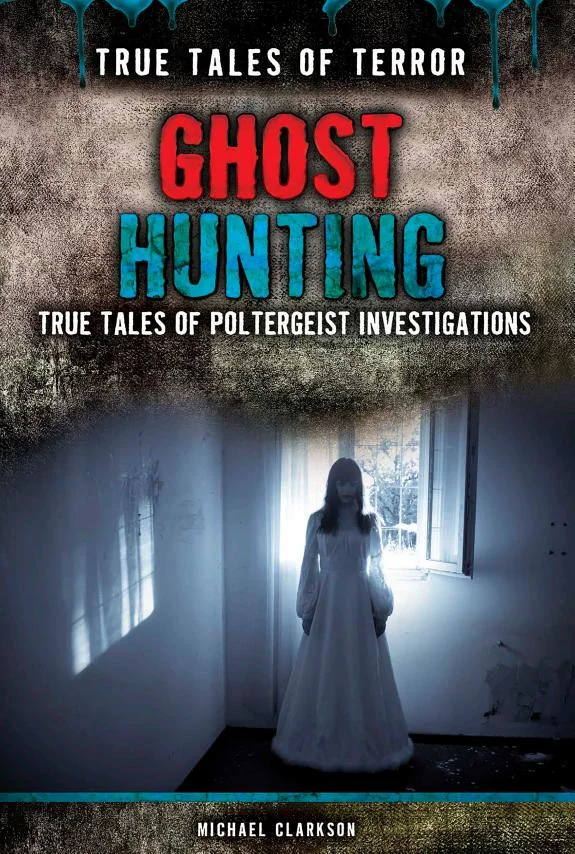
Ghost Hunting
Clarkson’s "Ghost Hunting" attempts a commendable feat: to inject a semblance of scientific discipline into the often-muddled world of spectral investigations. The book's strength lies in its detailed exposition of procedural checklists and equipment considerations, offering a practical guide that feels grounded. However, the inherent challenge of quantifying or empirically verifying ghostly activity remains a significant hurdle. A passage detailing the analysis of EMF readings, for instance, highlights the reliance on interpreting ambiguous data. While the intention is to provide a robust methodology, the ultimate success hinges on the reader's ability to reconcile objective data with subjective experience, a tension the book acknowledges but doesn't fully resolve.
It provides a structured approach for the earnest inquirer.
📝 Description
80
Michael Clarkson's 2015 book "Ghost Hunting" provides a structured framework for paranormal investigation.
Published in 2015, Michael Clarkson's "Ghost Hunting" approaches the study of paranormal phenomena with a methodical mindset. It aims to move past sensationalism and offer a system for understanding and recording alleged encounters with spirits. The book details ways to gather evidence and make sense of unclear findings. This work seeks to introduce a level of seriousness to a field often filled with personal stories.
This book is for those seriously interested in the practical side of ghost investigation. It speaks to readers who want to go beyond simple curiosity and examine the subject using systematic methods. Amateur investigators, students of folklore, and even skeptics looking for organized approaches will find it useful. Clarkson's approach encourages careful observation and critical thinking.
While published in 2015, "Ghost Hunting" connects to a long history of interest in spiritualism and psychic phenomena. This tradition stretches back to the 19th century Spiritualist movement, which sought to communicate with the dead and understand the nature of consciousness beyond the physical body. Clarkson's work fits within this lineage by attempting to apply structured inquiry to experiences that fall outside conventional scientific understanding, bridging the gap between anecdotal reports and more empirical investigation.
💡 Why Read This Book?
• Gain a structured methodology for approaching alleged paranormal events, moving beyond anecdotal evidence by learning about the specific evidence-gathering techniques discussed in chapters on environmental readings. • Develop a more critical lens for evaluating claims of hauntings by understanding the proposed methods for differentiating subjective experiences from objective data, as outlined in the analysis of ambiguous findings. • Understand the historical lineage of ghost investigation practices by contextualizing the book's approach within the broader history of parapsychological inquiry, referencing its 2015 publication date.
⭐ Reader Reviews
Honest opinions from readers who have explored this book.
❓ Frequently Asked Questions
What are the primary methods for ghost hunting suggested by Michael Clarkson?
Clarkson's "Ghost Hunting" emphasizes systematic observation, detailed environmental readings, and careful documentation of subjective experiences. The book outlines specific checklists and protocols for investigators to follow during an investigation.
Does "Ghost Hunting" by Michael Clarkson offer scientific proof of ghosts?
The book does not claim to offer definitive scientific proof of ghosts. Instead, it focuses on providing a methodical framework for investigating paranormal claims and interpreting collected data.
What kind of equipment is recommended in "Ghost Hunting"?
The work discusses various equipment often used in paranormal investigations, including devices for measuring electromagnetic fields (EMF) and recording audio and visual data, stressing their use as tools for data collection.
Who is the intended audience for Michael Clarkson's "Ghost Hunting"?
The book is aimed at serious amateur investigators, researchers of folklore and the paranormal, and those seeking a structured, less sensational approach to understanding alleged hauntings.
When was Michael Clarkson's "Ghost Hunting" first published?
"Ghost Hunting" by Michael Clarkson was first published in 2015, placing it within a contemporary landscape of paranormal media and investigation.
How does this book approach the subjective nature of paranormal experiences?
Clarkson's work acknowledges the subjective element of hauntings by advocating for detailed personal experience logs alongside objective data collection, seeking to contextualize individual accounts.
🔮 Key Themes & Symbolism
Methodical Investigation
The central theme is the application of a structured, almost procedural, approach to investigating alleged paranormal activity. Clarkson moves away from purely intuitive or sensational methods, instead advocating for detailed checklists and systematic data collection. This involves documenting environmental conditions, personal experiences, and any perceived anomalies. The aim is to create a repeatable process that allows for more objective analysis of the phenomena encountered, distinguishing it from casual ghost stories.
Evidence Interpretation
A significant aspect of "Ghost Hunting" concerns the interpretation of the evidence gathered. Clarkson addresses the ambiguity inherent in many paranormal findings, such as fluctuating EMF readings or unexplained noises. The book guides readers on how to critically assess potential sources of error or misinterpretation, including psychological factors and environmental influences, rather than jumping to supernatural conclusions.
Skepticism and Open-mindedness
The work strikes a balance between maintaining a skeptical outlook and remaining open to the possibility of unexplained phenomena. It encourages investigators to seek rational explanations first but does not dismiss the potential for genuine anomalies. This dual perspective is crucial for credible investigation, allowing for thorough debunking while leaving room for the genuinely unexplained.
The Nature of Hauntings
Clarkson explores various theories and concepts related to the nature of hauntings themselves. This includes discussions on residual energy, intelligent hauntings, and the psychological impact on witnesses. The book presents these ideas not as definitive answers but as frameworks for understanding the diverse range of experiences reported by individuals claiming encounters with the paranormal.
💬 Memorable Quotes
Direct passages from the work, attributed to the author.
“Document everything: the time, the place, the people present, and every sensory detail.”
— This highlights the book's core tenet of thorough record-keeping as foundational to any credible investigation. It emphasizes that even seemingly minor details can be crucial for later analysis and identifying patterns or explanations.
“Subjective experiences require careful notation alongside objective data.”
— This points to the dual nature of paranormal investigation. While objective measurements are valuable, the personal accounts and perceptions of witnesses are also critical data points that need to be recorded and analyzed.
“A structured approach reduces the likelihood of confirmation bias.”
— This interpretation suggests that by following a predefined methodology, investigators are less likely to selectively notice or interpret evidence in a way that confirms their pre-existing beliefs about the paranormal.
“The goal is understanding, not necessarily proof.”
— This reflects a mature perspective on ghost hunting. It implies that the pursuit is about gaining insight into anomalous phenomena and human experience, rather than solely aiming to definitively prove the existence of ghosts.
💡 Key Ideas
Editorial paraphrase of the work's core concepts — not direct quotes.
Consider environmental factors before attributing anomalies to the supernatural.
This quote underscores the importance of a grounded, rational approach. It suggests that logical explanations, such as drafts, faulty wiring, or infrasound, should be thoroughly investigated before entertaining paranormal hypotheses.
🌙 Esoteric Significance
Tradition
While not strictly tied to a single esoteric lineage like Hermeticism or Kabbalah, "Ghost Hunting" draws from the broader tradition of Western Esotericism's interest in the unseen and the afterlife. It shares common ground with Spiritualism's historical focus on communication with spirits and the Theosophical exploration of non-physical realms, but approaches it through a lens of empirical methodology rather than direct spiritualistic communication or abstract metaphysics.
Symbolism
The book itself, as a practical guide, doesn't heavily rely on overt esoteric symbolism. However, the very act of 'ghost hunting' can be seen as a modern ritualistic engagement with the liminal spaces between life and death, the known and the unknown. The equipment used, such as EMF meters, can be viewed as tools to detect subtle energies, echoing ancient attempts to perceive unseen forces or auras.
Modern Relevance
Contemporary paranormal investigation groups and even some fringe scientific researchers still reference and adapt the methodical approaches outlined in books like Clarkson's. Its emphasis on data collection and critical analysis remains relevant for anyone attempting to investigate anomalous phenomena, providing a foundational text for practical fieldwork in a field that continues to fascinate and elude definitive explanation.
👥 Who Should Read This Book
• Aspiring paranormal investigators seeking a structured, non-sensationalist framework for conducting investigations, moving beyond common tropes. • Researchers of folklore and cultural studies interested in the contemporary practices and methodologies surrounding ghost lore and belief. • Skeptics who wish to understand the systematic approaches employed by ghost hunters and evaluate the claims critically.
📜 Historical Context
Published in 2015, Michael Clarkson's "Ghost Hunting" arrived at a time when paranormal investigation had a significant popular footprint, fueled by reality television and online communities. Yet, it remained largely outside mainstream academic discourse, often contrasted with more rigorous parapsychological research from institutions like Duke University's Parapsychology Laboratory, which had been active since the early 20th century. Clarkson's work aimed to bridge this gap by offering a practical, procedural manual that sought to elevate the field beyond sensationalism. It emerged within a landscape where figures like Hans Bender in Germany were also advocating for more systematic approaches to studying psychic phenomena, though Bender's work had a stronger academic grounding. The reception of such books typically involved interest from amateur groups and the paranormal community, while facing skepticism from the scientific establishment.
📔 Journal Prompts
The role of environmental readings in shaping your perception of a haunting.
Anomalous sensory experiences and their potential explanations.
The balance between subjective feeling and objective data in paranormal investigation.
Documenting a personal experience of the unexplained with the rigor Clarkson suggests.
How confirmation bias might influence your interpretation of ambiguous phenomena.
🗂️ Glossary
EMF Meter
A device used to measure electromagnetic fields. In ghost hunting, it's often employed to detect fluctuations that some believe may indicate paranormal presence.
Residual Haunting
A theory suggesting that certain locations replay past events like a recording, without conscious intelligence behind them. Often perceived as environmental or atmospheric.
Intelligent Haunting
A type of haunting believed to involve a conscious, interactive entity or spirit that can respond to investigators and affect its environment.
Confirmation Bias
The tendency to search for, interpret, favor, and recall information in a way that confirms one's pre-existing beliefs or hypotheses.
Subjective Experience
An experience that is personal and dependent on the individual's consciousness, feelings, and perceptions, as opposed to objective, verifiable facts.
Environmental Readings
Measurements taken of the physical conditions in a location, such as temperature, humidity, and electromagnetic fields, to rule out natural causes for perceived anomalies.
Paranormal Phenomena
Events or experiences that are considered beyond the scope of normal scientific understanding or explanation, often involving alleged supernatural or psychic activity.
🔮 Readers Also Liked
Browse all →









More by Michael Clarkson
All books →




More Free Occult Philosophy Books
View all →