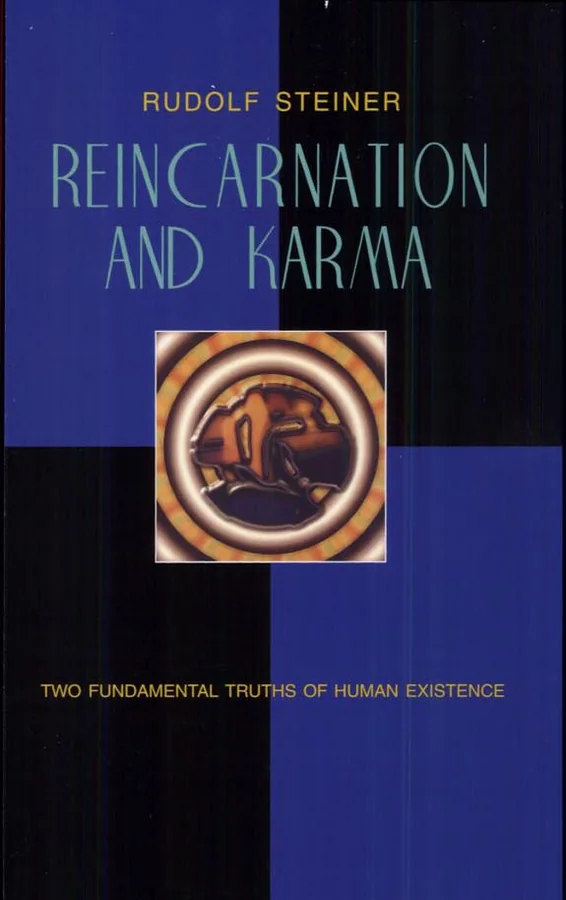
Reincarnation and Karma
 73
73

Reincarnation and Karma
Rudolf Steiner’s "Reincarnation and Karma" is less a narrative and more a series of intellectually rigorous lectures that demand focused attention. The strength of this work lies in Steiner’s consistent effort to ground abstract spiritual concepts in observable human experience and moral development, particularly evident when he discusses how karmic consequences manifest not as punishment, but as opportunities for learning. A limitation, however, is the density of the material; readers unfamiliar with Anthroposophical terminology may find the initial sections challenging without supplementary context. The discussion on the 'etheric body' as a vehicle for karmic impressions, for instance, requires careful consideration. Overall, this collection offers a structured, albeit demanding, perspective on spiritual causality.
📝 Description
73
Rudolf Steiner delivered lectures on reincarnation and karma in the early 20th century.
Rudolf Steiner's "Reincarnation and Karma" collects lectures that address the spiritual laws governing human existence and its evolution. The book frames life's events, including personal struggles and growth, not as random occurrences but as direct results of actions and intentions carried across multiple lives. Steiner seeks to establish a logical foundation for spiritual understanding, making it comprehensible to contemporary minds. This volume is for individuals interested in spiritual causality, particularly those engaging with the Anthroposophical viewpoint. It addresses questions about destiny, individual accountability, and the mechanics of spiritual progress. The work is suited for readers who appreciate detailed intellectual examination of metaphysical topics and want to apply these ideas to their lives and the wider human situation.
These lectures were given during a time when spiritual science offered an alternative to purely materialistic philosophies. Steiner, a significant figure in early esoteric thought, expanded upon ideas from earlier movements like Theosophy before developing his own path. His objective was to reconcile scientific investigation with spiritual insight, responding to a need for meaning in a rapidly industrializing and secularizing Europe. The compilation of these lectures into a single volume in 1992 made them accessible to a new generation.
Steiner delivered these lectures as part of his broader work in spiritual science, which sought to provide a framework for understanding the spiritual dimensions of existence. Building on traditions like Theosophy, he established Anthroposophy as a distinct path. His lectures on reincarnation and karma aimed to present these concepts within a rational, modern framework, differentiating his approach from mere superstition or dogma. This work is situated within early 20th-century esoteric movements that offered alternatives to prevailing materialistic worldviews, emphasizing the reality of spiritual forces and processes.
💡 Why Read This Book?
• Gain a structured understanding of karma beyond simplistic notions of reward and punishment, learning how Steiner presents it as a dynamic force tied to moral freedom, a concept explored in his lecture cycles. • Grasp Steiner's particular view of reincarnation as a purposeful process for soul evolution, not mere repetition, as detailed in his discussions on life between death and rebirth. • Develop a framework for interpreting life events as consequences of past actions and intentions, fostering personal responsibility and conscious spiritual development through the Anthroposophical lens.
⭐ Reader Reviews
Honest opinions from readers who have explored this book.
❓ Frequently Asked Questions
What is Rudolf Steiner's perspective on karma in "Reincarnation and Karma"?
Steiner presents karma not as rigid destiny, but as a spiritual law of cause and effect. Actions and intentions create forces that return, shaping future experiences as opportunities for learning and soul evolution, a process he detailed in lectures post-1900.
How does "Reincarnation and Karma" explain the purpose of multiple lifetimes?
The book posits that reincarnation serves as a necessary cycle for the human soul to acquire specific experiences and develop spiritual faculties. Each life offers unique lessons essential for evolutionary progress, as outlined in Steiner's broader works on spiritual science.
Is "Reincarnation and Karma" suitable for beginners in esotericism?
While foundational, the book's dense, lecture-based format and specific Anthroposophical terminology may present a learning curve for absolute beginners. It's best approached by those with some prior interest in spiritual philosophy or metaphysics.
What is the connection between karma and free will according to Steiner in this book?
Steiner emphasizes that while karma establishes the conditions and tendencies one encounters, human beings possess free will to respond to these karmic influences. This free response then shapes future karmic outcomes, creating a dynamic interplay.
When were these lectures by Rudolf Steiner originally presented?
While the book "Reincarnation and Karma" was first published in 1992, the individual lectures it comprises were delivered by Rudolf Steiner in the early 20th century, primarily between 1904 and 1924.
Does "Reincarnation and Karma" discuss the soul's journey after death?
Yes, the work touches upon the intermediate state between death and rebirth, explaining how the soul processes its earthly life and prepares for its next incarnation, connecting the experiences of one life to the next.
🔮 Key Themes & Symbolism
Karmic Causality
The work elaborates on karma not as fatalistic predetermination, but as a precise spiritual law of cause and effect. Steiner illustrates how individual actions, thoughts, and intentions set in motion consequences that manifest across lifetimes. This perspective shifts understanding from external judgment to internal moral responsibility, suggesting that karmic patterns are encountered to facilitate conscious learning and spiritual growth for the individual soul.
The Evolutionary Purpose of Reincarnation
Reincarnation is presented as a fundamental process for the soul's development and evolution. Steiner outlines how each earthly life provides a unique stage and set of challenges designed to cultivate specific virtues, overcome limitations, and acquire essential spiritual knowledge. The goal is not mere survival, but the progressive refinement of human consciousness and the integration of spiritual realities into earthly existence.
Spiritual Science and Human Consciousness
Steiner frames his teachings as 'Spiritual Science,' aiming to apply rigorous, observational methods to the spiritual realm. This book explores how understanding reincarnation and karma can awaken higher faculties of perception within the human being. By internalizing these cosmic laws, individuals can move towards a more conscious participation in their own evolution, transforming mundane experience into a path of spiritual realization.
Ethics and Moral Development
A significant aspect of the book connects the laws of karma and reincarnation directly to ethics. Steiner suggests that true ethical understanding arises from recognizing the far-reaching consequences of one's actions, not just in this life but across multiple incarnations. This framework encourages a profound sense of personal accountability and promotes the development of inner moral strength as the basis for spiritual progress.
💬 Memorable Quotes
Direct passages from the work, attributed to the author.
“Karma is not a system of reward and punishment, but a process of learning.”
— This interpretation highlights Steiner's emphasis on karma as an educational force. It suggests that challenging life circumstances are not punitive but are divinely orchestrated opportunities for the soul to learn specific lessons and evolve.
“Each incarnation is a step in the soul's journey towards greater self-awareness.”
— This captures the essence of Steiner's view on reincarnation as a purposeful, progressive cycle. It implies that the cumulative experiences across multiple lives contribute to the soul's gradual awakening and spiritual maturation.
“Understanding karma requires looking beyond a single lifetime.”
— This emphasizes the trans-temporal nature of karmic law as presented by Steiner. It challenges a linear perception of time and causality, urging the reader to consider the broader cosmic framework of existence.
“The consequences of our choices shape our future spiritual development.”
— This underscores the active role of free will within the karmic system. It posits that while circumstances may be karmically influenced, our responses and subsequent choices are critical in determining future spiritual evolution.
“Spiritual science offers a rational basis for understanding life's mysteries.”
— This statement defines the project of Spiritual Science itself. It aims to provide a coherent, intellectual framework for exploring profound questions about existence, death, and the nature of the soul, bridging the gap between faith and reason.
🌙 Esoteric Significance
Tradition
Steiner's work on reincarnation and karma is rooted in the Western esoteric tradition, drawing from Gnostic, Neoplatonic, and Theosophical streams, yet forging a unique path with Anthroposophy. While earlier traditions often focused on liberation from the cycle of rebirth or cosmic destiny, Steiner emphasizes reincarnation and karma as conscious processes for individual moral and spiritual evolution, accessible through specific cognitive and spiritual training.
Symbolism
Key symbols include the 'etheric body,' representing the life forces and the vehicle for karmic impressions and renewal, and the concept of 'spiritual hierarchies,' celestial beings who guide human evolution. The cyclical nature of life, death, and rebirth itself serves as a primary symbol for the ongoing, purposeful journey of the soul through cosmic time and earthly experience.
Modern Relevance
Steiner's detailed exploration of karma and reincarnation continues to influence contemporary spiritual thinkers, Waldorf education, biodynamic agriculture, and various therapeutic modalities. Modern Anthroposophists and related spiritual paths engage with his work to understand personal challenges, global events, and the potential for conscious evolution in the 21st century.
👥 Who Should Read This Book
• Students of Anthroposophy seeking foundational texts on core spiritual laws. • Individuals exploring the philosophical underpinnings of Eastern concepts like karma and reincarnation from a Western esoteric perspective. • Seekers interested in understanding life events as part of a larger spiritual evolutionary process guided by personal responsibility.
📜 Historical Context
Rudolf Steiner delivered these lectures on reincarnation and karma in the early 20th century, a period marked by intense interest in spiritualism, Theosophy, and alternative philosophies across Europe. As the world grappled with industrialization and the perceived limitations of materialism, thinkers like Steiner offered frameworks that sought to integrate spiritual understanding with scientific inquiry. Steiner, who had previously been active in the Theosophical Society under Helena Blavatsky, later founded Anthroposophy, developing his own distinct approach. While figures like Annie Besant and C.W. Leadbeater were popularizing Eastern concepts of karma and reincarnation within Theosophy, Steiner’s lectures focused on a more specific, individualized path of spiritual development for Western consciousness, emphasizing the moral and cognitive aspects. His work aimed to provide a 'spiritual science' that could be studied with the same rigor as natural science, offering a counterpoint to the prevailing scientific positivism and the burgeoning psychological explorations of figures like Freud and Jung.
📔 Journal Prompts
Reflect on the concept of karmic causality as a learning process.
Consider the purpose of reincarnation for the evolution of consciousness.
Analyze a personal challenge through the lens of potential karmic influences.
How does the idea of 'spiritual science' alter your perception of reality?
Examine the relationship between free will and predetermined karmic tendencies.
🗂️ Glossary
Karma
In Steiner's view, the spiritual law of cause and effect governing moral and spiritual development, where actions and intentions create consequences that influence future experiences across lifetimes.
Reincarnation
The process by which the human soul undergoes successive earthly lives, each serving as an opportunity for learning, development, and spiritual evolution.
Spiritual Science (Anthroposophy)
Rudolf Steiner's term for a rigorous, observational approach to understanding the spiritual world and its relationship to the physical world and human consciousness.
Etheric Body
The subtle body responsible for life processes, growth, and reproduction; Steiner described it as the bearer of karmic impressions and the medium for renewal.
Spiritual Hierarchies
Classes of spiritual beings (e.g., Angels, Archangels, Thrones) that Steiner described as guiding cosmic and human evolution.
Ahriman
A spiritual being Steiner identified as promoting materialism, intellectual rigidity, and a purely mechanistic view of the universe, posing a challenge to human spiritual freedom.
Lucifer
A spiritual influence Steiner associated with fantasy, illusion, and premature spiritual knowledge, which can lead individuals away from earthly reality.