Green Darkness
 74
74

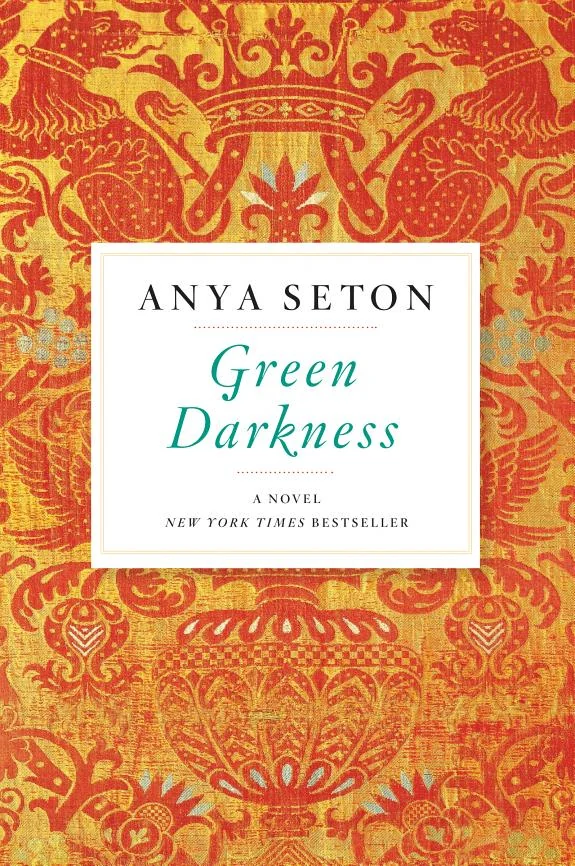
Green Darkness
Anya Seton's *Green Darkness* tackles reincarnation with an ambitious scope, linking souls across Tudor England and the 20th century. The premise, exploring karmic connections and the law of cause and effect through a central love story, is compelling. Seton’s strength lies in her vivid historical settings, particularly the depiction of the Tudor era, which feels palpable and rich. However, the narrative can sometimes feel weighed down by its own thematic density; the spiritual concepts, while central, occasionally overshadow the character development, making certain emotional arcs feel less organic than they might. The exploration of Richard and Celia’s relationship, for instance, feels more like a vehicle for demonstrating reincarnation than a fully realized emotional journey in its own right. Despite this, the novel offers a unique perspective on enduring love and destiny. *Green Darkness* is a noteworthy if somewhat uneven exploration of past lives shaping present realities.
📝 Description
74
Anya Seton's 1950 novel, Green Darkness, traces soul connections across centuries.
Published in 1950, Green Darkness by Anya Seton centers on the concept of reincarnation. The story posits that souls are bound by karmic ties and past-life connections that shape present circumstances. Seton illustrates the law of cause and effect, showing how actions in one era reverberate through subsequent existences. The narrative unfolds against the backdrop of two distinct periods in English history: Tudor England and the mid-twentieth century. These settings, one marked by religious upheaval and courtly intrigue, the other by modern life, serve as stages for the drama of interconnected souls. Human passion and spiritual struggle, Seton suggests, remain constant.
The novel is built around the idea that souls encounter each other repeatedly, often in different relationships, across lives. This cyclical view of existence is tied to karma, implying that present attractions and conflicts often stem from past actions or intentions. The book also addresses spiritual love, which it presents as a force that persists beyond mortal life and earthly limits. Readers interested in metaphysical themes, particularly reincarnation and soul mates, will find this work engaging. It suits those who enjoy historical fiction blended with mystical elements and appreciate explorations of love and destiny that extend beyond a single lifetime.
Green Darkness engages with the esoteric concept of reincarnation, a core tenet in traditions like Hinduism and Buddhism, which posits the transmigration of souls. The novel examines how past lives influence present experiences, aligning with the principle of karma, where actions in one life have consequences in future lives. Seton explores the idea of soul mates, individuals destined to meet and interact across different lifetimes, often driven by unresolved issues or deep spiritual connections. This cyclical perspective on existence and relationships places the book within a broader exploration of spiritual continuity and destiny that has long fascinated occult and metaphysical writers.
💡 Why Read This Book?
• Understand how past lives might influence present relationships and conflicts, as demonstrated through the intertwined fates of characters across Tudor England and the twentieth century. • Explore the concept of karmic ties and the law of cause and effect, illustrated by the recurring patterns of love and struggle faced by specific souls over centuries. • Experience a unique blend of historical fiction and metaphysical exploration, particularly engaging with Seton's portrayal of spiritual love as a force that endures beyond mortal existence.
⭐ Reader Reviews
Honest opinions from readers who have explored this book.
❓ Frequently Asked Questions
What is the central theme of Anya Seton's *Green Darkness*?
The central theme is reincarnation, with the novel attempting to show the interplay of cause and effect, good and evil, among certain souls across two periods of English history.
What historical periods does *Green Darkness* cover?
The book spans two distinct periods in English history: Tudor England and the twentieth century. These settings provide the backdrop for the narrative's exploration of reincarnation and karmic connections.
What is the relationship between Richard Marsdon and Celia in the book?
Richard Marsdon is an Englishman who marries his young American wife, Celia. Their marriage becomes a focal point for exploring the themes of reincarnation and enduring love across lifetimes.
Does *Green Darkness* focus on a specific esoteric tradition?
While not strictly tied to one tradition, the book prominently features concepts common in spiritualist and New Age thought, such as reincarnation, karma, and the persistence of soul connections beyond death.
When was *Green Darkness* first published?
*Green Darkness* was first published in 1950. It has since been reissued, with a notable edition appearing in 2013.
What kind of love story is presented in *Green Darkness*?
It presents a love story characterized by mysticism, suspense, and mystery, where forces of good and evil are seen to operate across different life spans, linking individuals through profound, enduring connections.
🔮 Key Themes & Symbolism
Reincarnation and Soul Bonds
The core of *Green Darkness* is the belief that souls are immortal and repeatedly inhabit different bodies, forming complex relationships across lifetimes. Anya Seton posits that certain individuals are bound by powerful karmic ties, leading them to seek each other out in new existences. This theme is explored through the narrative's dual timeline, suggesting that the love and conflicts experienced by characters in the twentieth century have roots in their past lives, particularly during the turbulent Tudor period.
The Law of Cause and Effect
Seton uses the narrative to illustrate the principle of karma, where actions in one life have consequences that ripple into future incarnations. The novel examines how past deeds, both positive and negative, shape the present circumstances and challenges faced by the protagonists. This exploration highlights a spiritual cosmology where individuals are accountable for their choices, and the unfolding of their destiny is intrinsically linked to their past actions and intentions.
Enduring Spiritual Love
Beyond mere romantic attraction, *Green Darkness* explores a profound, spiritual form of love that transcends time and physical death. This enduring connection is depicted as a powerful force that draws souls together across centuries, irrespective of the obstacles they face. The novel suggests that such love is a evidence of the soul's journey, a constant thread combining through the cyclical nature of reincarnation and the lessons learned in each life.
The Interplay of Good and Evil
The narrative frames the experiences of its characters within a cosmic struggle between forces of good and evil. These forces are not external entities but rather inherent aspects of the soul's journey and its interactions across lifetimes. The challenges and tragedies faced by the protagonists are presented as manifestations of this interplay, where past mistakes and spiritual growth are constantly tested by the enduring influence of these opposing energies.
💬 Memorable Quotes
Direct passages from the work, attributed to the author.
“The marriage of the Englishman Richard Marsdon and his young American wife, Celia, slowly turns tragic as Richard...”
— This phrase sets the stage for the novel's exploration of fate and reincarnation, indicating that the marital struggles of Richard and Celia are not isolated incidents but are influenced by deeper, possibly past-life, forces.
“The theme of this book is reincarnation, an attempt to show the interplay the law of cause and effect, good and evil, among certain individual souls in two periods of English history.”
— This direct statement from the original blurb captures the book's core metaphysical intent: to demonstrate how spiritual principles like karma and karmic relationships manifest across different historical epochs.
“Green Darkness is the story of a great love, a love in which mysticism, suspense, and mystery form a web of good and evil forces that stretches from Tudor England to the England of the twentieth century.”
— This highlights the genre blend and the overarching narrative structure, emphasizing that the love story is a vehicle for exploring enduring spiritual battles and connections that transcend time.
“Certain individual souls in two periods of English history.”
— This phrase points to the focus on a select group of souls whose journeys are central to the plot, suggesting a predestined or karmically bound group whose interactions are key to understanding the novel's themes.
“The law of cause and effect, good and evil.”
— These concepts are presented as the fundamental mechanisms driving the narrative, indicating that the characters' experiences are a direct result of their past actions and the ongoing spiritual battles they face.
🌙 Esoteric Significance
Tradition
The work draws heavily from concepts prevalent in Theosophy and modern spiritualism, particularly the doctrines of reincarnation and karma. While not strictly adhering to any single esoteric lineage, it aligns with the broader Western esoteric tradition that seeks to understand the soul's journey and its cyclical nature. Seton's approach emphasizes the interconnectedness of souls and the persistent influence of past actions on present lives, a common theme in New Age spirituality and reincarnationist thought.
Symbolism
The "Green Darkness" itself can be interpreted as a symbol of the primal, fertile field of the subconscious or the unknown spiritual plane from which souls emerge and to which they return. The recurring encounters between specific souls across different eras symbolize the enduring nature of karmic bonds and spiritual evolution. The contrast between the historical settings, particularly the volatile Tudor period and the more modern era, serves to highlight the constancy of the human spirit and its spiritual journey amidst changing worldly circumstances.
Modern Relevance
In contemporary times, *Green Darkness* appeals to the ongoing interest in past-life regression, soulmate connections, and understanding personal challenges through a karmic lens. Thinkers and practitioners in fields like transpersonal psychology and spiritual coaching often explore similar themes of soul evolution and karmic patterns. The book’s exploration of enduring love and spiritual destiny continues to appeal to those seeking meaning beyond conventional material explanations for life’s experiences and relationships.
👥 Who Should Read This Book
• Readers interested in reincarnation and karma: Those seeking fictional explorations of how past lives and actions influence present circumstances and relationships will find this book particularly engaging. • Fans of historical fiction with a metaphysical twist: Individuals who enjoy historical settings but are looking for narratives that incorporate spiritual or esoteric themes will appreciate Seton's blend of eras and mystical concepts. • Seekers of spiritual love stories: Readers drawn to narratives about profound, enduring connections that transcend time and physical limitations, exploring the deeper bonds between souls across lifetimes.
📜 Historical Context
Anya Seton's *Green Darkness*, first published in 1950, emerged during a period of renewed interest in spiritualism and Eastern philosophies in the West, influenced by figures like Helena Blavatsky and the Theosophical Society. While mainstream literary circles often focused on social realism or existentialism, Seton’s work tapped into a growing audience fascinated by reincarnation, karma, and past lives, a trend also seen in authors like L. Frank Baum’s later works or early New Age literature. The novel's exploration of enduring soul connections and spiritual destiny offered an alternative to prevailing secular narratives. Seton's detailed historical settings, particularly the Tudor era, were also characteristic of popular historical fiction of the time, but she uniquely infused them with metaphysical depth, setting her apart from contemporaries like Daphne du Maurier, whose works often explored psychological suspense rather than spiritual continuity.
📔 Journal Prompts
The enduring karmic ties between souls across Tudor England and the twentieth century.
Reflecting on the law of cause and effect as illustrated by Richard and Celia's experiences.
The symbolism of 'Green Darkness' as a spiritual plane or state of being.
Contemplating the nature of spiritual love versus earthly passion within the narrative.
Examining the interplay of good and evil forces within the context of reincarnation.
🗂️ Glossary
Reincarnation
The philosophical or religious concept that the non-physical essence of a living being begins a new life in a different physical form or body after biological death.
Karma
In many Eastern religions, the spiritual principle of cause and effect where intent and actions of an individual influence the future of that individual. It's often seen as a mechanism for spiritual learning and evolution across lifetimes.
Law of Cause and Effect
A fundamental principle stating that every effect has a cause, and every cause produces an effect. In a metaphysical context, it refers to how actions in one life inevitably lead to consequences in the same or subsequent lives.
Tudor England
The period in English history during the reign of the House of Tudor, which lasted from 1485 to 1603. This era was marked by significant political, religious, and social changes.
Soul Mates
In esoteric belief, individuals whose souls are believed to be destined to meet and be together, often across multiple lifetimes, suggesting a deep, preordained spiritual connection.
Spiritual Love
A profound and enduring affection that is believed to stem from the soul's connection rather than purely physical or superficial attraction, often seen as a force that transcends earthly limitations.
Mysticism
The pursuit of achieving communion with, identity in manifestation with, divinity, the Absolute, or spiritual truth through direct experience, intuition, instinct or insight, rather than through rational thought or empirical measurement.
This book appears in 1 collection
🔮 Readers Also Liked
Browse all →









From the “Reincarnation” Collection
View all →


More Free Occult Philosophy Books
View all →