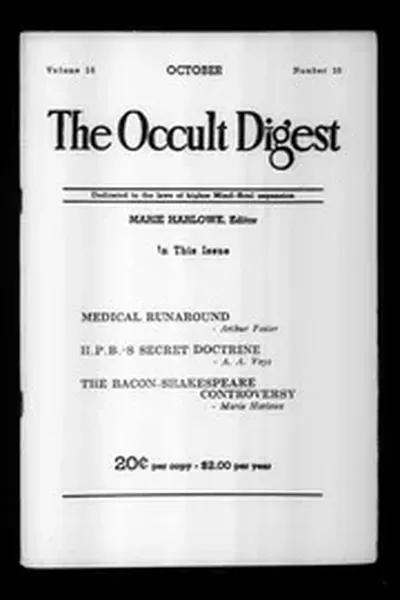
Sleep Paralysis 65 Success Secrets - 65 Most Asked Questions on Sleep Paralysis - What You Need to Know
 77
77

Sleep Paralysis 65 Success Secrets - 65 Most Asked Questions on Sleep Paralysis - What You Need to Know
Doris Lloyd's "Sleep Paralysis 65 Success Secrets" attempts a comprehensive cataloging of questions surrounding this unsettling phenomenon. The sheer volume of queries addressed, 65 in total, is its most striking feature, promising an exhaustive resource. The strength lies in its breadth, touching upon aspects that might be overlooked in more narrowly focused texts. However, the work's primary limitation is its somewhat unsystematic presentation; the "success secrets" framing feels more like a marketing angle than a pedagogical approach. A particularly notable passage discusses the sensation of a "heavy presence" in the room, a common hallucination that Lloyd attempts to contextualize through various belief systems, though the depth of analysis varies. The book functions best as a reference for specific questions rather than a cohesive exploration of the topic. It offers a wide net of information, but the reader must discern the most valuable catches.
📝 Description
77
Doris Lloyd's 2014 book answers 65 questions about sleep paralysis.
Doris Lloyd's volume addresses sleep paralysis through 65 specific questions and answers. It aims to give readers detailed information and references, including material not previously published. The guide focuses on important knowledge and understanding of the phenomenon.
This book is for people who want to understand sleep paralysis more deeply, especially those who have experienced it. It offers clarity on its appearances, causes, and possible meanings. The work is suited for those with specific questions about this state.
The book covers the main parts of sleep paralysis. These include the feeling of being unable to move, seeing figures, and the fear that accompanies it. It looks at the mental and physical sides, along with spiritual ideas found in different traditions.
Published in 2014, this book emerged when sleep paralysis discussions grew in both scientific and spiritual communities. Online groups shared personal accounts, seeking explanations outside standard medical views. Lloyd's work situates itself within this modern esoteric interest, connecting personal experiences with broader spiritual and afterlife interpretations.
💡 Why Read This Book?
• Gain specific answers to 65 common sleep paralysis questions, moving beyond general descriptions to detailed explanations as presented in "65 Most Asked Questions on Sleep Paralysis". • Understand potential interpretations of sleep paralysis experiences, informed by the extensive details and references provided in the book's unique approach. • Discover insights that "have never before been offered in print," according to the book's promotional material, offering a novel perspective on a frequently misunderstood state.
⭐ Reader Reviews
Honest opinions from readers who have explored this book.
❓ Frequently Asked Questions
What are the primary causes of sleep paralysis according to Doris Lloyd's research?
Doris Lloyd's work suggests that sleep paralysis is often linked to the transition between wakefulness and REM sleep. The book details how the brain can become active while the body remains temporarily paralyzed, leading to the characteristic sensations.
How does the book differentiate between scientific and esoteric explanations of sleep paralysis?
The book aims to bridge these perspectives by presenting 65 questions and answers that explore both the physiological mechanisms of sleep paralysis and various cultural, spiritual, and metaphysical interpretations that have arisen throughout history.
What types of hallucinations are commonly reported in sleep paralysis experiences discussed in the book?
The book addresses common hallucinations such as the sensation of a 'heavy presence' in the room, auditory disturbances like voices or footsteps, and visual apparitions, providing numerous answers related to these phenomena.
When was Doris Lloyd's book on sleep paralysis first published?
Doris Lloyd's "Sleep Paralysis 65 Success Secrets" was first published on September 25, 2014, making it a contemporary exploration of the subject.
Does the book offer practical advice for managing sleep paralysis episodes?
While primarily focused on answering questions and providing information, the comprehensive nature of the 65 secrets implies that understanding the phenomenon, as detailed in the book, is a key step toward managing the experience.
What makes this sleep paralysis guide different from others available?
The book distinguishes itself by offering 65 distinct answers, claiming comprehensive details and references with insights "never before offered in print," aiming for an all-embracing view of key knowledge.
🔮 Key Themes & Symbolism
The Nature of Paralysis
This theme examines the core experience of sleep paralysis: the profound inability to move despite full consciousness. The book addresses the physiological mechanisms that cause this temporary motor inhibition, a key aspect of REM sleep atonia. It also explores the psychological impact of this immobility, particularly when combined with other phenomena like hallucinations, framing it as a central mystery to be unraveled through its 65 distinct questions and answers.
Perceived Entities and Hallucinations
A significant portion of the book tackles the common reports of encountering perceived entities or experiencing vivid hallucinations during sleep paralysis. It examines the spectral figures, shadowy presences, and auditory disturbances that many individuals report. The work seeks to provide explanations, ranging from psychological interpretations to more esoteric viewpoints, attempting to clarify these often terrifying encounters by offering extensive details and references.
Bridging Science and Metaphysics
This theme highlights the book's unique approach in connecting scientific understanding with esoteric interpretations of sleep paralysis. By posing 65 questions, Lloyd aims to address both the biological underpinnings of the condition and the historical, cultural, and spiritual beliefs that have sought to explain it. The work introduces information that may not be found in purely clinical texts, offering a broader perspective.
The Quest for Understanding
Underlying the entire work is the drive to provide clarity and understanding for those experiencing sleep paralysis. The emphasis on "65 Success Secrets" and "What You Need to Know" underscores a commitment to delivering actionable knowledge and comprehensive answers. This theme focuses on empowering the reader with information, presented through detailed insights and references, to better comprehend and potentially manage their experiences.
💬 Memorable Quotes
Direct passages from the work, attributed to the author.
“A Sleep paralysis look that's entirely new.”
— This statement sets the stage for the book's intended contribution, suggesting it offers a fresh perspective or novel approach to understanding sleep paralysis, distinct from existing literature.
“There has never been a Sleep paralysis Guide like this.”
— This assertion emphasizes the unique structure and content of the book, highlighting its 65-question format and claiming originality in its comprehensive approach to the subject.
“It contains 65 answers, much more than you can imagine; comprehensive answers and extensive details and references.”
— This highlights the book's primary methodology: a deep dive into 65 specific questions, promising a level of detail and factual support that aims to exceed reader expectations.
“Get the information you need--fast!”
— This suggests the book is designed for efficiency, providing quick access to crucial knowledge about sleep paralysis, making it a practical resource for those seeking immediate answers.
“This all-embracing guide offers a thorough view of key knowledge and detailed insight.”
— This emphasizes the book's comprehensive scope, promising a complete overview of essential information and in-depth understanding regarding the phenomenon of sleep paralysis.
🌙 Esoteric Significance
Tradition
This work touches upon several esoteric traditions by attempting to explain sleep paralysis through lenses beyond conventional psychology. While not strictly adhering to a single lineage like Hermeticism or Kabbalah, it engages with the broader concept of spiritual encounters and astral projection, themes common in 19th and 20th-century occultism and New Age thought.
Symbolism
The primary symbolic motif is the 'shadow figure' or 'intruder' often perceived during paralysis, representing a confrontation with the subconscious, primal fears, or even external spiritual forces depending on the interpretive framework. The immobility itself can symbolize a state of spiritual vulnerability or a forced introspection.
Modern Relevance
Contemporary spiritual seekers and practitioners of lucid dreaming or astral projection may find value in Lloyd's compilation, as it addresses phenomena often discussed in these communities. It appeals to modern interests in consciousness studies and the exploration of non-ordinary states of awareness.
👥 Who Should Read This Book
• Individuals experiencing sleep paralysis who are seeking a wide array of potential explanations beyond standard medical diagnoses, as offered by the 65 detailed answers. • Students of consciousness and anomalous experiences interested in comparing clinical descriptions with historical and anecdotal esoteric interpretations. • Those curious about the intersection of psychology and the supernatural, looking for a resource that compiles common questions and provides diverse perspectives on sleep paralysis.
📜 Historical Context
Published in 2014, Doris Lloyd's "Sleep Paralysis 65 Success Secrets" emerged during a period when online discourse significantly amplified personal accounts of paranormal and anomalous experiences. While the medical community, represented by figures like the neurologist Oliver Sacks who discussed sleep disorders in works like 'The Man Who Mistook His Wife for a Hat' (1985), focused on physiological explanations, a growing number of individuals sought alternative frameworks. This era saw the proliferation of forums and blogs where users shared experiences of sleep paralysis, often interpreting them through spiritual or occult lenses. Lloyd's work taps into this contemporary fascination, offering a compilation of answers that attempts to satisfy both curiosity about the phenomenon's mechanics and a desire for deeper, perhaps metaphysical, meaning, positioning itself against purely clinical narratives.
📔 Journal Prompts
The experience of perceived immobility during sleep paralysis.
Interpreting the 'heavy presence' sensation.
Visual hallucinations encountered during episodes.
The transition from sleep to wakefulness.
Connecting personal sleep paralysis experiences with the 65 secrets.
🗂️ Glossary
Sleep Paralysis
A temporary inability to move or speak that occurs while falling asleep or waking up. It is often accompanied by hallucinations and a feeling of pressure or dread.
REM Sleep
Rapid Eye Movement sleep, the stage of sleep characterized by rapid eye movements, vivid dreams, and muscle atonia (temporary paralysis).
Atonia
The temporary loss of muscle tone that prevents sleepers from acting out their dreams. In sleep paralysis, this atonia persists briefly after waking.
Hallucinations
Sensory experiences that appear real but are created by the mind. In sleep paralysis, these can be visual, auditory, tactile, or olfactory.
Intruder Hallucination
A common type of hallucination during sleep paralysis where the person perceives a malevolent presence or entity in their room.
Astral Projection
An esoteric interpretation where the consciousness or spirit is believed to leave the physical body and travel in an astral or spiritual form.
Lucid Dreaming
A state of dreaming where the dreamer is aware they are dreaming and can sometimes exert control over the dream narrative.