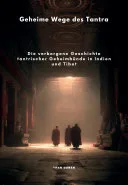
Geheime Wege des Tantra
 75
75

Geheime Wege des Tantra
Duran Than's "Geheime Wege des Tantra" offers a welcome corrective to the pervasive, often sexualized, Western stereotypes of Tantra. By focusing on the historical integration of Tantric practice with political and social structures in medieval India and Tibet, Than grounds the subject in empirical research rather than speculative mysticism. The strength lies in its detailed examination of the Geheimbünde (secret societies) and their tangible influence, moving beyond abstract spiritual concepts. A minor limitation is the density of the historical analysis, which may occasionally feel overwhelming for readers unfamiliar with the period's specific socio-political contexts. The discussion of how ritualistic transgression served not just spiritual but also sociopolitical ends, particularly within the context of royal patronage, is particularly illuminating. This is essential reading for anyone seeking a historically informed understanding of Tantrism.
📝 Description
75
Duran Than's Geheime Wege des Tantra (Secret Paths of Tantra) examines Tantrism's historical role in medieval India and Tibet.
This study moves beyond sensationalized portrayals to detail the historical reality of Tantric traditions in medieval India and Tibet. Duran Than investigates the social and political integration of Tantric practitioners, showing them as figures who influenced cultural norms and power structures, not simply isolated ascetics. The book challenges common perceptions by demonstrating Tantrism's deep connections to statecraft and religious institutions.
Central to the work is an analysis of Tantric rituals, symbolism, and the organizational methods of their societies. Than explains how these practices served both spiritual goals and the pursuit of social and political influence. The text reveals a complex interaction between the sacred and the secular in the historical development of these traditions.
Geheime Wege des Tantra places itself within the study of esoteric history by focusing on the historical development and societal integration of a tradition often misunderstood. It examines Tantrism not as a monolithic entity, but as a set of historical practices with specific doctrines, rituals, and organizational structures that interacted with political and religious power in medieval South and Central Asia. The book aims to reconstruct the historical context of these practices, moving beyond later interpretations and popular mythologies.
💡 Why Read This Book?
• Understand the historical integration of spiritual power with political authority in medieval India and Tibet, moving beyond modern sensationalism. • Analyze the specific societal roles and organizational structures of historical Tantric secret societies, as detailed in the book's exploration of Geheimbünde. • Grasp the complex symbolism and ritualistic practices that served dual purposes—spiritual advancement and sociopolitical influence—as presented in the book's analysis.
⭐ Reader Reviews
Honest opinions from readers who have explored this book.
❓ Frequently Asked Questions
What historical period does "Geheime Wege des Tantra" primarily cover?
The book focuses significantly on the medieval period in India and Tibet, exploring the development and influence of Tantric traditions during these centuries.
How does this book differ from popular Western notions of Tantra?
It moves beyond modern, often sexualized, interpretations to examine the historical Tantric traditions' deep entanglement with political structures, secret societies, and societal influence in ancient India and Tibet.
Are specific Tantric rituals discussed in detail?
Yes, the book delves into the rituals, symbolism, and power dynamics of historical Tantric schools, explaining their function within both spiritual and sociopolitical contexts.
Who were the key figures or groups explored in the book?
The work examines historical Tantric practitioners and the secret societies (Geheimbünde) they formed, highlighting their impact on the spiritual and political fabric of medieval India and Tibet.
Is "Geheime Wege des Tantra" suitable for beginners interested in esotericism?
While providing a scholarly foundation, the book's focus on historical and political context makes it most suitable for those with some background or a strong interest in esoteric history and comparative religion.
What is the original publication year of "Geheime Wege des Tantra"?
The book was first published on September 8, 2025.
🔮 Key Themes & Symbolism
Tantra and Statecraft
This theme explores the historical entanglement of Tantric practices with the political machims of medieval India and Tibet. It moves past the simplistic notion of spirituality as separate from power, demonstrating how Tantric schools and practitioners actively influenced royal courts, governance, and social hierarchies. The book examines specific instances where ritualistic knowledge and esoteric doctrines were leveraged to consolidate or challenge authority, revealing a complex interplay between the sacred and the secular that profoundly shaped historical societies.
Secret Societies and Esoteric Knowledge
Focusing on the concept of 'Geheimbünde' (secret societies), this theme explores the organizational structures and transmission of esoteric knowledge within historical Tantric traditions. It elucidates how these clandestine groups maintained their doctrines, rituals, and symbols, often operating outside mainstream religious or political institutions. The work analyzes the mechanisms by which this hidden knowledge was preserved and utilized, contributing to both spiritual advancement and the maintenance of specific social or political advantages for their members.
Ritual Transgression and Social Order
This theme investigates the role of ritualistic transgression within historical Tantric practices. Contrary to popular misunderstandings, the book posits that acts challenging societal taboos were often not mere provocation but calculated methods to dismantle conventional perceptions and facilitate spiritual or sociopolitical transformation. It examines how such practices were integrated into the symbolic language and power structures of Tantric groups, serving to redefine boundaries and influence the broader social and religious range of medieval India and Tibet.
Symbolism in Power Structures
The book highlights the critical function of Tantric symbolism in both spiritual and political contexts. It explores how specific icons, diagrams, and ritualistic objects were imbued with layers of meaning, serving to communicate esoteric truths while simultaneously reinforcing the authority and identity of Tantric practitioners and their associated secret societies. This theme underscores the deliberate use of symbolic language as a tool for maintaining influence, transmitting knowledge, and establishing a distinct social and spiritual order.
💬 Memorable Quotes
Direct passages from the work, attributed to the author.
“Mythen, Geheimnisse und Missverständnisse ranken sich um den Tantrismus.”
— This introductory statement sets the stage for the book's central aim: to explain Tantrism by separating historical fact from centuries of accumulated legend and Western misinterpretation.
“Geheimbünde, deren Rituale, Symboliken und Machtstrukturen das spirituelle und politische Gefüge Indiens und Tibets im Mittelalter prägten.”
— This highlights the core focus on historical Tantric secret societies, emphasizing their significant impact not just on spiritual life but also on the political and social structures of medieval India and Tibet.
“Spiritualität und Politik untrennbar verflochten waren.”
— This phrase captures the fundamental argument that, in its historical context, Tantrism was not solely a spiritual pursuit but was deeply integrated with political power dynamics and social influence.
“Tabubrüche nicht der Provokation dienten...”
— This points to the book's nuanced exploration of ritualistic transgression, suggesting that historical Tantric practices that challenged norms had deeper, often sociopolitical, objectives beyond simple shock value.
“...sondern Teil eines umfassenderen Systems zur Umgestaltung der Realität waren.”
— This expands on the previous point, indicating that the seemingly transgressive acts within Tantra were part of a coherent system aimed at altering both individual perception and the external social or political reality.
🌙 Esoteric Significance
Tradition
This work engages with the historical development of Tantra, a complex and diverse set of traditions originating primarily in India, with significant branches in Tibetan Buddhism and certain Hindu lineages. While often categorized broadly within Hinduism and Buddhism, Tantra represents a distinct esoteric current characterized by ritualistic dynamism, tantras (esoteric texts), and specific yogic and meditative practices aimed at transformation. "Geheime- Wege des Tantra" fits within this lineage by focusing on its historical manifestations, particularly its less-understood sociopolitical dimensions, departing from solely meditative or ritualistic analyses.
Symbolism
Key symbols explored include the mandala, representing the cosmos and the initiated practitioner's purified mindscape, often used in visualizations and ritual construction. The lingam and yoni, while often reduced to sexual interpretations, historically symbolized the union of divine masculine and feminine energies (Shiva and Shakti) crucial for creation and spiritual realization. The book also examines the symbolism embedded in specific ritual actions and initiations, which served to encode esoteric knowledge and signify the practitioner's progression through different stages of spiritual and social power.
Modern Relevance
Contemporary thinkers and practitioners in fields ranging from comparative religious studies to critical psychology find value in Than's historical analysis. Modern Tantric practitioners, seeking to distance their path from commercialized or sexualized Western interpretations, often refer to such works to understand the tradition's original depth and complexity. Furthermore, scholars examining power dynamics within religious movements or the historical interplay between spirituality and politics can draw upon the book's detailed case studies of medieval Indian and Tibetan societies.
👥 Who Should Read This Book
• Scholars of South Asian religions and comparative esotericism: Gain a nuanced understanding of Tantra's historical integration with political power and social structures, moving beyond common misconceptions. • Students of medieval Indian and Tibetan history: Discover how esoteric traditions like Tantra actively shaped the sociopolitical landscape, influencing governance and societal norms. • Practitioners seeking authentic historical context: Understand the deeper roots of Tantric practices, distinguishing historical applications from modern, often diluted, interpretations.
📜 Historical Context
Published in 2025, "Geheime Wege des Tantra" arrives at a time when academic and popular interest in esoteric traditions continues to grow, yet often remains mired in sensationalism. The book directly confronts the legacy of Western Orientalism and New Age appropriations that have distorted understandings of Tantra since the 19th century. Its focus on the medieval period (roughly 8th to 15th centuries CE) places it within a crucial era of Tantric development in India and Tibet, a time when figures like Padmasambhava were active in Tibet, and various Tantric schools flourished across the subcontinent. The work implicitly engages with scholars like Gavin Flood and David Gordon White, who have previously explored the complex relationship between ritual, power, and South Asian religions. By detailing the integration of Tantric practices into political structures and secret societies, Than offers a counter-narrative to purely monastic or individualistic interpretations, highlighting Tantra's role as a force shaping historical societies, rather than merely a detached spiritual path.
📔 Journal Prompts
The historical integration of Tantra with political power structures.
The specific functions and doctrines of medieval Tantric secret societies (Geheimbünde).
Ritual transgression as a tool for sociopolitical change in historical Tantra.
The dual role of Tantric symbolism in spiritual and political contexts.
Analyzing the distinction between historical Tantric aims and modern interpretations.
🗂️ Glossary
Tantra
A complex set of esoteric traditions originating in India, characterized by specific ritualistic, yogic, and meditative practices aimed at spiritual transformation and sometimes sociopolitical influence.
Geheimbünde
A German term meaning 'secret societies,' used in the book to refer to the clandestine groups of Tantric practitioners who held and transmitted esoteric knowledge and wielded social or political influence.
Ritual Transgression
Acts within Tantric practice that challenge societal norms or taboos, employed not for mere provocation but as a method for dismantling conventional perceptions and facilitating spiritual or sociopolitical transformation.
Mandala
A complex symbolic diagram representing the cosmos, a deity's palace, or the purified mindscape of a practitioner, used in Tantric visualization and ritual.
Shakti
The divine feminine energy, often personified as a goddess, considered the creative force in the universe within Hindu Tantrism; its union with Shiva (the divine masculine) is central to Tantric cosmology.
Tantras
The esoteric texts that form the scriptural basis for Tantric traditions, containing rituals, philosophies, and doctrines.
Medieval India and Tibet
The historical period roughly spanning the 8th to the 15th centuries CE, during which Tantric traditions significantly developed and influenced the cultural, spiritual, and political landscapes of these regions.