Theosophy Vol-III,No-10,August 1915

 73
73

Theosophy Vol-III,No-10,August 1915

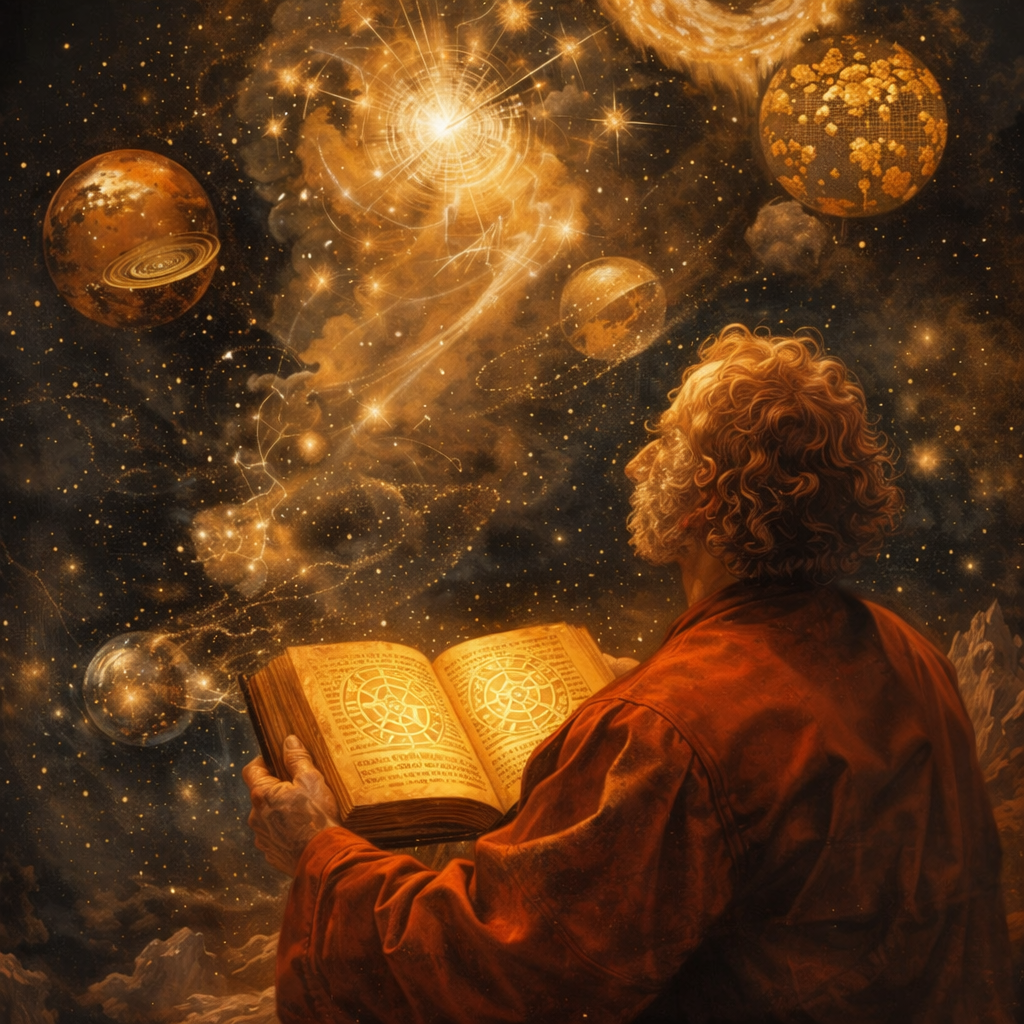

Review by Isolde Whitaker (Sacred Texts Editor) — This August 1915 issue of 'Theosophy' stands as a testament to the enduring power of foundational esoteric thought. The anonymous authors, channeling the spirit of the age, delve into profound spiritual mechanics, offering clarity on concepts often shrouded in mystery. Its strength lies in its accessible yet deeply philosophical approach to theosophical tenets, making complex ideas digestible for serious students. This edition is an invaluable resource for anyone seeking to understand the roots of modern spiritual movements and the perennial wisdom they aim to revive. It is particularly suited for those dedicated to the path of inner enlightenment and the study of ancient wisdom traditions.
📝 Description
73
The August 1915 issue of 'Theosophy' presents discussions on the nature of occult science and spiritual evolution.
This issue of 'Theosophy' from August 1915 contains articles that examine occult science and its relation to spiritual progress. It touches upon the symbolism found in ancient traditions and its application to understanding the wider universe and individual consciousness. The content encourages deep thought for students of esoteric philosophy, aiming to connect them with fundamental principles of existence.
Readers will find discussions that aim to reveal realities beyond the everyday. The volume invites engagement with ideas that go beyond common perceptions, seeking to illuminate the unity underlying all things. It addresses those who desire a more thorough grasp of spiritual development and the interconnectedness of the cosmos.
Published in 1915, this issue of 'Theosophy' comes from a period when occult and esoteric movements were gaining traction in the West. It reflects the Theosophical Society's interest in synthesizing Eastern and Western mystical thought, often interpreting ancient scriptures and philosophies through a modern, spiritual lens. The articles likely engage with concepts like karma, reincarnation, and the hidden laws governing the universe, aiming to provide a framework for understanding human existence and its spiritual dimensions.
💡 Why Read This Book?
Delve into the foundational texts of a movement that reshaped spiritual discourse. This issue offers profound insights into cosmic laws, soul evolution, and the interconnectedness of all life. It is essential reading for students of comparative religion, occult philosophy, and those seeking a deeper understanding of the human psyche and its spiritual destiny. Discover timeless wisdom that continues to resonate with modern seekers.
⭐ Reader Reviews
Honest opinions from readers who have explored this book.
❓ Frequently Asked Questions
What is Theosophy?
Theosophy, as presented in this volume, is a spiritual philosophy seeking to understand the underlying unity of all religions and philosophies, emphasizing divine wisdom and the evolution of consciousness through reincarnation and karma.
Who was the author?
The author is listed as 'Unknown,' reflecting the collective and often anonymous nature of early Theosophical writings, channeling universal wisdom rather than individual ego.
What is the historical significance of this publication?
Published in August 1915, this issue provides a snapshot of Theosophical thought during a pivotal era, influencing spiritual and intellectual movements globally amidst significant world events.
Is this suitable for beginners?
While rich in depth, the philosophical nature may require dedicated study. It is best suited for those with an existing interest in spirituality, metaphysics, or comparative religious studies.
What kind of esoteric knowledge is contained herein?
The volume explores concepts such as karma, reincarnation, the nature of the soul, hidden spiritual hierarchies, and the subtle planes of existence, offering a framework for understanding universal laws.
🔮 Key Themes & Symbolism
Cosmic Evolution and the Seven Planes
This volume intricately details the Theosophical concept of cosmic evolution, positing that the universe and all within it unfold through a series of grand cycles across seven distinct planes of existence. It explores the monadic essence, its descent into materiality, and its eventual ascent back to spiritual unity. The text illuminates the hierarchical structure of the cosmos, from the most subtle spiritual realms to the densest physical manifestations, offering a comprehensive framework for understanding universal progression and the intricate dance of creation and dissolution.
The Nature of the Soul and Reincarnation
Central to this issue is a profound exploration of the human soul, often referred to as the 'divine spark' or 'ego.' The authors look at its multi-layered constitution, distinguishing between the transient personality and the eternal individuality. The principle of reincarnation is presented not merely as a belief but as a fundamental law governing spiritual growth, explaining the soul's journey through successive lifetimes to learn, evolve, and ultimately achieve self-mastery and reunion with the divine source. This theme offers a compelling perspective on life's purpose and the ongoing process of spiritual development.
Symbolism and Hidden Meanings
Theosophy Vol-III, No-10, August 1915, is replete with symbolic language, inviting readers to look beyond the literal to uncover deeper esoteric truths. Symbols are presented as keys to unlocking the mysteries of existence, representing spiritual principles, cosmic forces, and stages of consciousness. The issue guides the reader in deciphering these archetypal images found in ancient scriptures, myths, and nature itself, suggesting that a true understanding of the universe requires an intuitive grasp of its symbolic language. This emphasis on symbolism encourages a more profound and mystical engagement with spiritual knowledge.
💬 Memorable Quotes
Direct passages from the work, attributed to the author.
“Karma is the unerring law of cause and effect, shaping destiny across lifetimes.”
— This highlights the fundamental concept of karma as a cosmic justice system, emphasizing personal responsibility for actions and their consequences through the cycle of rebirth.
“The veil of illusion hides the true nature of reality.”
— This speaks to theosophy's focus on overcoming ignorance and superficial perception to grasp the deeper, spiritual truths of existence.
“Within each soul lies the potential for divinity.”
— This inspirational quote emphasizes the inherent spiritual nature of humanity and the capacity for self-realization and enlightenment.
“Esoteric knowledge is the key to unlocking the doors of perception.”
— This underscores the importance of hidden wisdom in expanding consciousness and understanding the more subtle aspects of reality.
💡 Key Ideas
Editorial paraphrase of the work's core concepts — not direct quotes.
The universe is a thought of God, and we are but ripples upon its surface.
This quote captures the pantheistic and holistic view of theosophy, suggesting that all existence is interconnected and stems from a divine consciousness.
🌙 Esoteric Significance
Tradition
This volume is deeply rooted in the Western Esoteric Tradition, particularly influenced by the late 19th and early 20th-century Theosophical movement founded by Helena Blavatsky. It draws heavily from Eastern philosophies, especially Hinduism and Buddhism, synthesizing them with Western Hermeticism, Gnosticism, and Neoplatonism. The teachings presented aim to unveil the 'Wisdom Religion' – a universal spiritual knowledge believed to underlie all faiths and philosophies, focusing on the evolution of consciousness, the nature of the cosmos, and the divine potential within humanity.
Symbolism
The issue is rich in esoteric symbolism, employing archetypal imagery to convey complex spiritual concepts. Key symbols likely include the Triangle (representing the Trinity or divine aspects), the Circle (unity, eternity), the Serpent (wisdom, cyclic time, kundalini), and various geometric figures that represent cosmic order and the unfolding of creation. These symbols serve as mnemonic devices and visual keys, inviting the reader to engage with the text on multiple levels, unlocking deeper layers of meaning beyond the literal interpretation and fostering intuitive understanding of spiritual laws.
Modern Relevance
The themes explored in this 1915 publication remain remarkably relevant today. In an era of information overload and existential uncertainty, theosophical concepts like karma, reincarnation, and the interconnectedness of all life offer a profound framework for personal growth and understanding. The emphasis on inner development, ethical living, and the search for universal truths speaks to contemporary spiritual seekers. Furthermore, the critique of materialism and the exploration of consciousness continue to inform New Age thought, mindfulness practices, and the burgeoning interest in quantum physics' implications for understanding reality, making this historical text a valuable resource for contemporary spiritual exploration.
👥 Who Should Read This Book
This volume is essential for devoted students of Theosophy and Anthroposophy seeking foundational texts. Scholars of comparative religion, Western Esotericism, and intellectual history will find it important for understanding the early 20th-century spiritual landscape. Aspiring practitioners of meditation and inner development who are drawn to ancient wisdom traditions will discover clear insights into the nature of consciousness and the path of evolution. Seekers of a deeper, more meaningful understanding of life, purpose, and the universe will find this issue a potent catalyst for their journey, offering a comprehensive spiritual philosophy.
📜 Historical Context
Published in the tumultuous year of 1915, amidst the devastating throes of World War I, 'Theosophy Vol-III, No-10' emerged from a spiritual and intellectual milieu yearning for deeper meaning and solace. The early 20th century was a fertile ground for esoteric thought, with movements like Theosophy offering alternative paradigms to prevailing materialism and religious dogma. Helena Blavatsky's foundational works had already ignited a global interest in ancient wisdom, Eastern philosophies, and the potential for human spiritual evolution. This specific issue reflects the ongoing discourse within the Theosophical Society, aiming to disseminate its teachings on karma, reincarnation, and the hidden spiritual hierarchies to a readership seeking order and enlightenment in a world fractured by conflict. It represents a significant articulation of perennial philosophy during a period of profound global upheaval and societal transformation.
📔 Journal Prompts
Reflect on a personal experience that could be understood through the lens of karma. How did your actions lead to the outcome?
Consider the concept of the 'divine spark' within you. How can you nurture and express this inner divinity in your daily life?
Identify a symbol from nature or mythology that holds personal significance. What deeper meaning might it convey about your own journey?
Explore the idea of 'veils of illusion' in your own life. What perceptions might be limiting your understanding of reality?
How does the concept of reincarnation offer a new perspective on your current challenges and aspirations?
🗂️ Glossary
Monad
In Theosophy, the ultimate spiritual principle or divine spark within every being, considered eternal and indivisible, the source of individual consciousness.
Karma
The universal law of cause and effect, where actions (causes) inevitably lead to corresponding consequences (effects), shaping an individual's destiny across lifetimes.
Reincarnation
The doctrine that the soul, after the death of the physical body, is reborn into a new physical form to continue its evolutionary journey through successive lives.
The Seven Planes
A Theosophical model describing distinct levels or dimensions of existence, ranging from the purely spiritual to the physical, through which consciousness evolves.
Ego
In Theosophical terminology, the immortal spiritual self or individuality, distinct from the transient personality that experiences earthly life.
This book appears in 2 collections
🔮 Readers Also Liked
Browse all →




From the “Theosophy” Collection
View all →




More Free Theosophy & Anthroposophy Books
View all →