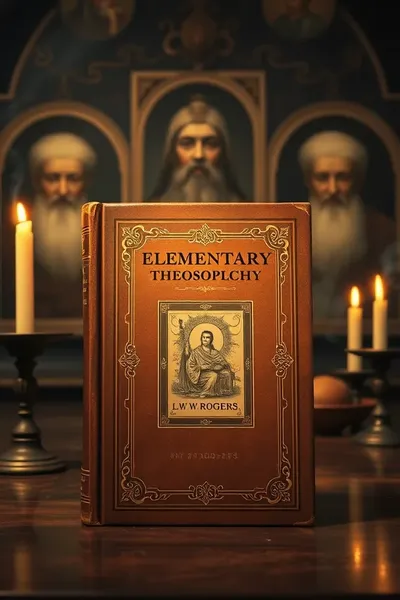
Elementary theosophy
 80
80

Elementary theosophy
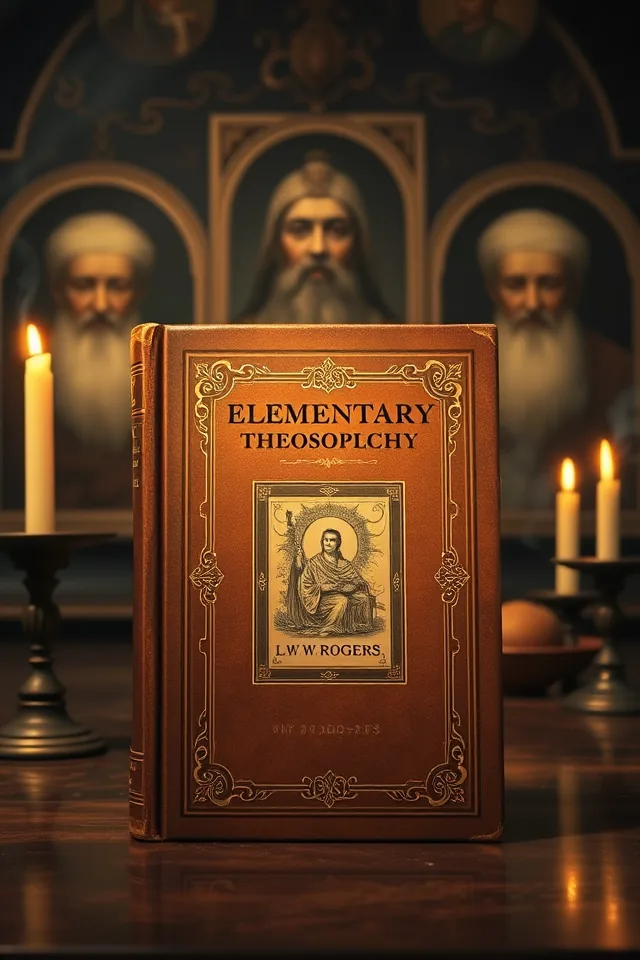
L. W. Rogers' *Elementary Theosophy* endeavors to distill the expansive philosophy of Theosophy into digestible portions. Its strength lies in its systematic approach, laying out concepts like karma and reincarnation with a clarity that avoids the more arcane terminology sometimes associated with the movement. The 1956 publication date positions it within a specific lineage of Theosophical literature, offering a glimpse into how these ideas were presented to a mid-20th-century Western audience. However, the book's primary limitation is its inherent simplification; in aiming for accessibility, it sometimes sacrifices the depth and nuanced paradoxes that make Theosophy a subject of ongoing study. A particularly illustrative section is its explanation of the different human 'bodies' or planes of existence, which, while clear, feels somewhat diagrammatic. Rogers’ work serves as a functional primer, but readers seeking the full speculative richness of Blavatsky's *The Secret Doctrine* will find it a starting point rather than a destination.
📝 Description
80
L. W. Rogers published *Elementary Theosophy* in 1956 to simplify Theosophical ideas.
This book presents the fundamental principles of Theosophy for newcomers. Rogers aimed to make complex doctrines understandable, focusing on how these ideas apply to daily life rather than offering a deep scholarly analysis. The text breaks down concepts into clear parts, prioritizing accessibility for readers new to spiritual philosophy.
*Elementary Theosophy* targets individuals curious about Theosophy who might find other texts too challenging. It is for those interested in spiritual knowledge, comparative religion, or the Western Esoteric Tradition. Readers looking for a straightforward introduction to core Theosophical concepts such as karma, reincarnation, and consciousness will find Rogers' method systematic and helpful. It serves as a gentle entry point for those who have heard of these ideas and want to grasp their basic meaning.
Published in 1956, *Elementary Theosophy* arrived during a time of increased Western interest in Eastern philosophies. Theosophy, started by Helena Blavatsky in the late 19th century, had a notable following. Rogers' book appeared when Theosophical societies were actively spreading Blavatsky's teachings and those of successors like Annie Besant and C.W. Leadbeater. This period saw many books trying to connect Western occultism with Eastern mysticism. Rogers' work fits into this trend of attempts to bridge these traditions.
💡 Why Read This Book?
• Understand the core mechanics of Karma and Reincarnation, as presented in the context of spiritual evolution, to grasp a foundational principle of Western Esotericism. • Grasp the Theosophical model of the human constitution, detailing the interplay between physical, astral, and mental 'bodies' as outlined in the text. • Explore the concept of universal unity and the evolutionary journey of consciousness, providing a framework for understanding existence beyond the physical realm.
⭐ Reader Reviews
Honest opinions from readers who have explored this book.
❓ Frequently Asked Questions
When was L. W. Rogers' Elementary Theosophy first published?
L. W. Rogers' *Elementary Theosophy* was first published in 1956, making it a mid-20th-century introduction to Theosophical concepts.
What are the main topics covered in Elementary Theosophy?
The book covers fundamental Theosophical ideas such as karma, reincarnation, the multiple bodies of a human being (physical, astral, mental), spiritual evolution, and the principle of unity.
Is Elementary Theosophy suitable for beginners in esoteric studies?
Yes, the book is specifically designed to present Theosophical concepts in an accessible way for those new to the subject, avoiding overly complex jargon.
Who was Helena Blavatsky in relation to Theosophy?
Helena Blavatsky was the co-founder of the Theosophical Society in 1875 and the principal author of its foundational texts, such as *The Secret Doctrine*.
What is the significance of the 'planes' or 'bodies' discussed in the book?
The book explains that Theosophy posits humans possess multiple vehicles of consciousness beyond the physical body, including astral, mental, and higher spiritual planes, which are crucial for understanding karma and reincarnation.
How does Elementary Theosophy relate to other spiritual philosophies?
It serves as an introduction to Theosophy, a spiritual philosophy that sought to synthesize Eastern (like Hinduism and Buddhism) and Western esoteric traditions, influencing later New Age thought.
🔮 Key Themes & Symbolism
Karma and Reincarnation
The book presents karma not as fatalistic punishment but as a law of cause and effect, integral to the soul's journey through successive lives via reincarnation. Rogers elaborates on how actions in one life shape circumstances in future existences, emphasizing the ethical implications of this cycle. This concept is central to understanding personal responsibility and the gradual unfolding of consciousness towards spiritual perfection, a core tenet within the Theosophical framework.
The Human Constitution
Rogers details the Theosophical understanding of a multi-layered human being, often described as composed of various 'bodies' or 'planes.' This includes the physical, astral (or emotional/desire), and mental bodies, extending to higher spiritual principles. Understanding these distinct yet interconnected vehicles is presented as essential for comprehending consciousness, psychic phenomena, and the process of spiritual awakening.
Spiritual Evolution
A fundamental theme is the idea that the universe and all its inhabitants are engaged in a vast process of evolution. Rogers explains Theosophy's view of consciousness progressing from simple to complex forms over immense periods, encompassing multiple planetary cycles and incarnations. This evolutionary drive is presented as an inherent cosmic principle, guiding individuals toward the realization of their divine potential.
The Unity of All Life
Theosophy posits an underlying oneness connecting all existence. Rogers explores this principle, suggesting that apparent separation is an illusion of the lower, material planes. Recognizing this fundamental unity is portrayed as a crucial step in spiritual development, fostering compassion, brotherhood, and a deeper understanding of one's place within the cosmic whole.
💬 Memorable Quotes
Direct passages from the work, attributed to the author.
“The law of cause and effect governs all things.”
— This statement expresses the Theosophical concept of Karma, presented here not as a punitive force but as a natural, impersonal principle guiding the unfolding of existence and individual spiritual progress.
“Man is not merely a physical body, but a complex of several vehicles.”
— This highlights the Theosophical doctrine of the human constitution, asserting that our identity extends beyond the physical form to include subtler bodies like the astral and mental, which are essential for understanding consciousness and rebirth.
“Reincarnation is the process by which the soul evolves.”
— This succinctly explains the role of reincarnation within Theosophy: it's the mechanism through which the immortal spiritual essence (the soul) gains experience and progresses through successive physical existences.
“Theosophy offers a rational explanation for life's mysteries.”
— This interpretation suggests the book's aim: to provide a coherent philosophical and spiritual framework that addresses common existential questions about life, death, and purpose.
💡 Key Ideas
Editorial paraphrase of the work's core concepts — not direct quotes.
All life is interconnected and springs from a single source.
This paraphrased concept points to the Theosophical principle of universal unity, emphasizing that despite apparent diversity, all beings and phenomena are expressions of one fundamental reality.
🌙 Esoteric Significance
Tradition
This work is firmly rooted in the Theosophical tradition, established by Helena Blavatsky. It adheres to the lineage that sought to synthesize Eastern (Vedanta, Buddhism) and Western esoteric thought (Neoplatonism, Hermeticism). *Elementary Theosophy* functions as an introductory text within this tradition, aiming to present its core metaphysical and ethical principles clearly, distinguishing it from more complex or polemical works.
Symbolism
The book frequently employs the concept of the 'Seven Rays' as a symbolic framework for understanding divine energies and their manifestation in the cosmos and human consciousness. Another key symbolic motif is the 'Great White Brotherhood,' representing enlightened masters or guides who are believed to oversee humanity's spiritual evolution. These symbols function as conceptual tools for illustrating complex Theosophical doctrines.
Modern Relevance
Rogers' accessible presentation of Theosophical ideas continues to influence contemporary spiritual seekers. Concepts like karma, reincarnation, and the interconnectedness of all life, as articulated in this book, echo in modern New Age thought, mindfulness practices, and holistic wellness movements. Thinkers and practitioners exploring comparative spirituality or the history of esoteric movements often reference mid-20th-century Theosophical literature for foundational understanding.
👥 Who Should Read This Book
• Aspiring students of Theosophy seeking a clear, step-by-step introduction to its fundamental doctrines like karma and reincarnation. • Individuals interested in comparative religion or the history of Western Esotericism looking for accessible explanations of 19th and 20th-century spiritual movements. • Seekers of a philosophical framework for understanding life's purpose and the nature of consciousness beyond conventional materialism.
📜 Historical Context
When *Elementary Theosophy* was published in 1956, the Theosophical movement, initiated by Helena Blavatsky in 1875, was well-established yet undergoing shifts. The mid-20th century saw a continued interest in spiritualism and Eastern philosophies in the West, partly fueled by post-war introspection and global connectivity. Rogers' work emerged in a landscape populated by various esoteric orders and spiritual philosophies, including Anthroposophy (developed by Rudolf Steiner, a former Theosophist) and various forms of Western Hermeticism. While Blavatsky's monumental *The Secret Doctrine* (1888) was the foundational text, many authors, including Annie Besant and C.W. Leadbeater, had already worked to popularize and interpret its complex ideas. Rogers' book belongs to this stream of accessible Theosophical literature, aiming to make its core tenets understandable to a broader audience during a time when spiritual inquiry was increasingly diverse.
📔 Journal Prompts
The law of Karma as a principle of spiritual evolution.
Reincarnation as a vehicle for soul development.
The interplay between the physical and subtler human bodies.
The concept of universal unity in diverse manifestations.
The evolutionary path of consciousness toward higher states.
🗂️ Glossary
Theosophy
A spiritual philosophy founded in the late 19th century by Helena Blavatsky, aiming to synthesize Eastern and Western esoteric traditions and explore the divine wisdom underlying all religions and sciences.
Karma
In Theosophy, the universal law of cause and effect; actions and their consequences that shape an individual's present and future experiences across lifetimes.
Reincarnation
The Theosophical doctrine that the immortal spiritual essence (soul) is reborn into successive physical bodies to learn lessons and evolve spiritually.
Astral Body
A subtle, non-physical body associated with emotions, desires, and the dream state, considered a vehicle of consciousness intermediate between the physical and mental bodies.
Mental Body
The Theosophical vehicle of thought and intellect, responsible for reasoning, abstract concepts, and the formation of ideas. It is considered subtler than the astral body.
Spiritual Evolution
The Theosophical concept that consciousness progresses through stages of development over vast periods, involving multiple incarnations and cosmic cycles.
Unity
The Theosophical principle that all existence is fundamentally interconnected and originates from a single, divine source, despite the appearance of separation.
🔮 Readers Also Liked
Browse all →



More by L. W. Rogers
All books →




More Free Theosophy & Anthroposophy Books
View all →